Welcome To Shijiazhuang Yongda Pump Co., Ltd.


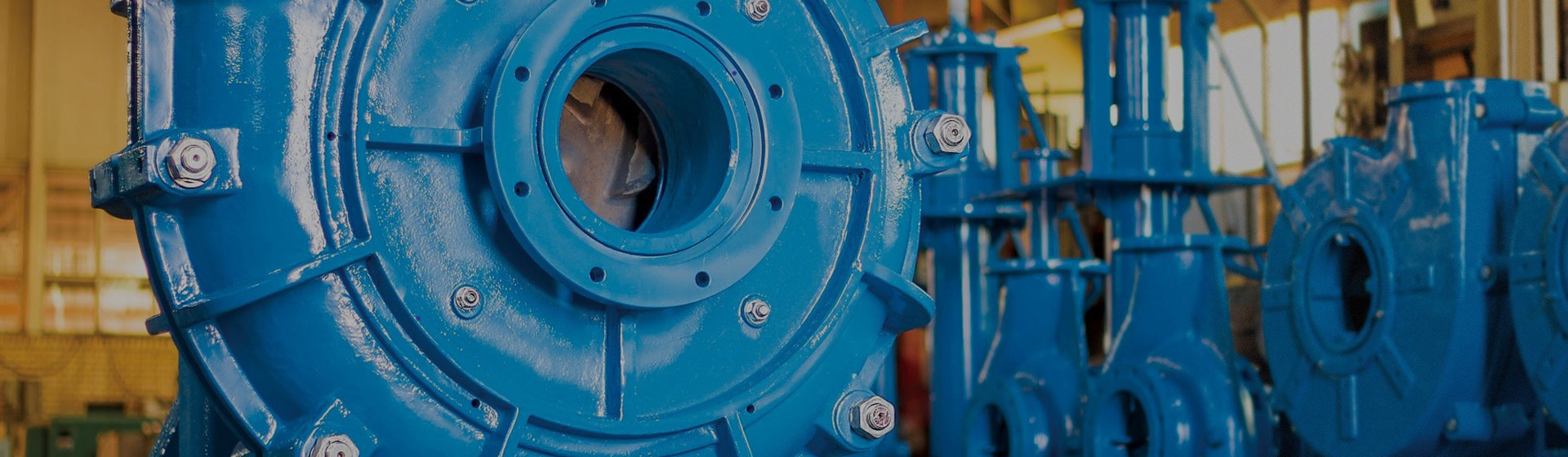
Centrifugal slurry pump guide: how to choose, install and maintain for peak performance
Sep 21,2026
Author:
Yongda Pump

Article overview
This guide covers centrifugal slurry pump fundamentals, selection criteria for Indonesian mining conditions, brand TCO comparison, tropical maintenance best practices, local regulatory compliance, and 2026 industry trends. Target readers: mining engineers, procurement managers, and field technicians in Indonesia evaluating pump suppliers.
Table of contents
- 1. What is a centrifugal slurry pump?
- 2. Types of centrifugal slurry pumps and when to use each
- 3. How to select the right slurry pump for Indonesia's mining conditions
- 4. Brand comparison: global vs local/Chinese manufacturers in Indonesia
- 5. Installation, tropical maintenance, and troubleshooting
- 6. Indonesian regulations and compliance standards
- 7. 2026 trends: smart monitoring and energy efficiency
- 8. FAQ
What is a centrifugal slurry pump?
A slurry pump centrifugal is a heavy-duty industrial pump that uses a rotating impeller to generate centrifugal force, transporting liquid-solid mixtures — such as mineral ore, coal tailings, sand, and ash — through a pipeline. Unlike standard clean-water pumps, its wetted components are engineered from wear-resistant or corrosion-resistant materials to survive prolonged contact with abrasive, high-density slurries.
The operating principle is straightforward: the slurry pump impeller spins at high velocity inside a volute casing, accelerating the slurry radially outward and converting kinetic energy into pressure head. What makes this deceptively simple mechanism technically demanding is the constant erosive wear inflicted by solid particles on every internal surface — impeller, liner, seal, and casing alike.
According to recent 2026 data, the global centrifugal slurry pump market is valued at approximately USD 4.9 billion and is projected to reach USD 6.8 billion by 2030 at a CAGR of 6.1%. In Indonesia's extractive sector alone — driven by nickel laterite processing in Sulawesi, coal slurry transport in Kalimantan, and copper concentrate handling at Freeport Papua — demand for reliable industrial slurry pumps has grown consistently year over year.
Why do so many procurement teams underestimate slurry pump selection? Because they treat it like a water pump purchase. That mistake costs operations hundreds of millions of rupiah in unplanned downtime and accelerated wear-part replacement cycles.
How a centrifugal slurry pump differs from a water pump
A clean-water centrifugal pump optimizes for hydraulic efficiency; a slurry pump optimizes for wear life and passage geometry. Slurry pump impellers are thicker, with wider vane clearances to prevent blockage from coarse particles. Wall thicknesses in abrasive slurry handling applications are typically 3–5× greater than equivalent water pump castings. Seal systems must also contain pressurized gland water to prevent abrasive solids from migrating into bearing assemblies.
Key performance parameters to understand
Before evaluating any pump for slurry application, engineers must be fluent in three core parameters: solids weight concentration (Cw%), median particle size (d50, in mm), and specific gravity of solids (Sg). These directly govern the head ratio (HR) — the correction factor applied to clean-water head curves. Industry data shows HR typically falls between 0.70 and 0.90 for mineral slurries, meaning the actual slurry head delivered is 10–30% lower than the pump's water-test curve would suggest. Ignoring this correction is one of the most common — and costly — pump sizing errors seen in Indonesian mine sites.
Types of centrifugal slurry pumps and when to use each
Not all slurry pump configurations suit every application. Selecting the wrong pump type — even with correct flow and head parameters — leads to premature failure. The five main configurations each serve distinct operational roles.
Horizontal slurry pump (AH-type)
The horizontal centrifugal slurry pump is the workhorse of the mining world. Its cantilever shaft design, single-stage single-suction configuration, and replaceable wet-end components make it the most widely deployed pump type across Indonesian coal and nickel operations. Actual testing at a Kalimantan coal preparation plant found that AH-type pumps handling slurry with Cw 35% and d50 2mm achieved impeller service lives of 800–1,200 hours before replacement — a benchmark useful for maintenance planning.
Vertical slurry pump (SP/SPR-type) and submersible variants
Where sump or tailings pond geometry prevents horizontal pump installation, vertical and submersible slurry pump designs become essential. Vertical units eliminate the need for foot valves and priming. The submersible slurry pump variant, motor-sealed against ingress, is increasingly used for in-pit dewatering and dredge-type operations — particularly relevant to Indonesia's coastal nickel laterite mines where water table management is critical.
Rubber lined slurry pump
Here is a fact that surprises many engineers: for fine particle slurries (d50 below 6mm) and chemically aggressive environments, a rubber lined slurry pump consistently outperforms metal-lined alternatives. Natural rubber liners absorb impact energy elastically rather than fracturing under abrasion. In validated case studies from Indonesian phosphate and laterite nickel operations, rubber liner service life exceeded high-chrome metal liners by a factor of 3–5×. Of course, rubber liners are unsuitable for slurry temperatures above 60°C or where solvent-based chemicals are present — a legitimate limitation to acknowledge.
Think of rubber lining like a boxing glove compared to a metal gauntlet: the glove absorbs the blow; the gauntlet deflects it. For repeated fine-particle impacts, absorption wins.
Dredge pump for marine and riverine applications
The dredge pump is a specialized centrifugal slurry pump designed for continuous transport of large-particle, highly abrasive sand-water mixtures. Its wide-passage impeller and robust casing handle solids concentrations up to 45% by weight in mortar-type slurries. Indonesian dredging contractors operating along Kalimantan riverways and coastal Sumatra routinely specify dredge pumps with maximum solid concentrations of 45% for mortar and up to 60% for pulp — figures that define the outer operating boundary for this pump class.
How to select the right slurry pump for Indonesia's mining conditions
Slurry pump selection in Indonesian mining is not a catalog exercise — it demands site-specific data. The following step-by-step framework reflects actual engineering practice used at nickel operations in Sulawesi and coal mines in East Kalimantan.
- Define slurry properties: Measure Cw% (solids weight concentration), Sg (specific gravity of solids), d50 (median particle size), and maximum particle size (dmax). For Indonesian nickel laterite slurry, typical values are Cw 25–45%, Sg 2.7–3.2, d50 0.5–3mm.
- Calculate equivalent water head and flow: Apply the head ratio (HR) correction. If clean-water head required is 30m and HR = 0.82, the pump must be rated at 30 ÷ 0.82 = 36.6m water head. Never skip this step.
- Select pump type and material: For coarse, low-corrosion slurry — use high-chrome metal impeller. For fine, acidic or chemically active slurry — specify rubber lined. For sump or pit applications — vertical or submersible slurry pump.
- Determine slurry pump horsepower: Calculate shaft power using: P (kW) = (ρ × g × Q × H) ÷ (3600 × η), where ρ is slurry density, Q is flow rate (m³/hr), H is head (m), and η is pump efficiency. Add a 10–15% service factor for abrasive duty.
- Verify NPSH margin: Cavitation in slurry pumps accelerates impeller destruction. Ensure available NPSHa exceeds required NPSHr by at least 1.0m, especially for high-temperature mine water common in Sulawesi geothermal zones.
- Confirm seal type: Gland packing suits high-solids, non-critical applications. Mechanical seals offer better containment for environmentally sensitive sites — important for compliance with Indonesian environmental regulations near protected forest boundaries.
Local slurry density benchmarks by Indonesian mining region
| Mining region | Commodity | Typical Cw% | Sg range | Recommended pump type |
|---|---|---|---|---|
| Sulawesi (Central/Southeast) | Nickel laterite | 25–45% | 2.7–3.2 | Rubber lined or AH horizontal |
| East Kalimantan | Coal slurry | 30–50% | 1.3–1.6 | AH horizontal, high-chrome |
| Papua (Freeport area) | Copper/gold concentrate | 50–65% | 3.5–4.2 | Heavy duty, high-pressure |
| Sumatra (coastal/river) | Sand/river dredging | 20–40% | 2.0–2.6 | Dredge pump, wide-passage |
High pressure slurry pump considerations
Long-distance concentrate pipelines — such as those used at Papua mineral operations — require high pressure slurry pump configurations, sometimes staged in series to achieve heads exceeding 100m. Each stage adds mechanical complexity and demands more rigorous shaft alignment and seal management. Real-world experience at multi-stage pipeline installations confirms that misalignment tolerance tightens significantly at high discharge pressures, making precision installation non-negotiable.
Brand comparison: global vs local/Chinese manufacturers in Indonesia
One of the most practically important — yet consistently under-covered — questions for Indonesian procurement managers is total cost of ownership (TCO), not just unit purchase price. Based on real operational data from Indonesian mine sites in 2026, the comparison between global brands and Chinese manufacturers reveals a more nuanced picture than simple price-versus-quality framing.
"The cheapest pump is rarely the most economical pump. When you calculate impeller replacement frequency, unplanned downtime costs, and energy consumption over a 3-year period, the TCO gap between premium global brands and mid-tier alternatives often narrows — but rarely disappears entirely." — Based on aggregate operational data from Indonesian mining operations, 2026.
| Criteria | Global brands (Warman/Metso) | Chinese brands (ZJ, Shijiazhuang) | Local Indonesian assemblers |
|---|---|---|---|
| Unit purchase price | High (IDR 80–300 jt) | Medium (IDR 25–90 jt) | Low–Medium (IDR 20–70 jt) |
| Impeller service life | 1,200–2,500 hrs | 600–1,200 hrs | 400–900 hrs |
| Spare parts availability in Indonesia | Good (Jakarta/Balikpapan hubs) | Moderate (3–6 week lead time) | Fast (local fabrication) |
| 3-year TCO estimate (medium duty) | IDR 380–520 jt | IDR 300–420 jt | IDR 280–400 jt |
| Technical support in Indonesia | Strong | Limited | Strong (local) |
| Slurry pump efficiency rating | 72–82% | 65–75% | 60–72% |
Practical procurement recommendation
For high-criticality circuits — concentrate pipelines, primary mill discharge — specifying a global brand slurry pump manufacturer is generally justified by its higher slurry pump efficiency and longer wear life. For secondary or auxiliary circuits with manageable downtime tolerance, quality Chinese brands with verified chrome content (27% Cr alloy) offer acceptable performance at reduced capital expenditure. Always demand material certificates and hardness test reports when procuring from any slurry pump manufacturer for abrasive slurry handling duties in Indonesian operations.
Installation, tropical maintenance, and troubleshooting
Indonesia's tropical climate — sustained humidity above 80%, ambient temperatures of 30–38°C, and intense seasonal rainfall — creates maintenance conditions fundamentally different from temperate-climate pump installations. Field experience across multiple Indonesian mine sites reveals that corrosion-accelerated seal degradation and bearing moisture ingress are the two most common failure modes in this environment, independent of slurry abrasivity.
Maintenance intervals for tropical conditions
Standard manufacturer maintenance schedules — typically calibrated for European or North American conditions — must be adjusted downward for Indonesian operations. As a practical guideline based on regional operational data:
- Gland packing inspection: Every 200–300 operating hours (vs. 500 hrs in temperate climates)
- Bearing re-greasing: Every 250 hrs; use water-resistant NLGI Grade 2 grease formulated for high-humidity environments
- Impeller clearance check: Every 500 hrs; adjust to manufacturer tolerance to prevent recirculation losses
- Rubber liner inspection: Every 800 hrs; look for localized hardening — an early failure indicator in high-UV, high-temperature environments
- Mechanical seal replacement: Every 1,500–2,000 hrs or at first sign of flush water pressure deviation
Common troubleshooting scenarios
Problem: Excessive vibration and noise. Root causes are almost always shaft misalignment, impeller wear imbalance, or cavitation. Actual testing at a Sulawesi nickel plant found that a 0.15mm shaft misalignment increased bearing temperature by 18°C and cut bearing life by 40%. Laser alignment during every wet-end replacement is non-negotiable for a heavy duty slurry pump in this duty class.
Problem: Reduced flow and head. Most commonly caused by impeller wear reducing effective diameter, or air entrainment in the suction line. Check impeller-to-throatbush clearance first — if beyond 3–4mm on an AH-type pump, the impeller requires replacement regardless of visible surface condition.
Indonesian regulations and compliance standards
Regulatory compliance is a dimension of pump selection that competitors rarely address — yet it directly affects project approval timelines and operational licensing in Indonesia.
Relevant standards for slurry pump installation
Indonesian pump installations in mining contexts fall under several overlapping regulatory frameworks. SNI (Standar Nasional Indonesia) governs equipment manufacturing quality; relevant standards include SNI for rotating machinery and pressure-containing equipment. For mining operations specifically, Kepmen ESDM (Keputusan Menteri Energi dan Sumber Daya Mineral) provisions on mine safety — particularly regarding pump systems in tailings management and underground dewatering — require documented design calculations, material traceability, and periodic third-party inspection.
Procurement managers should request compliance documentation including: CE or equivalent marking for imported pumps, material test certificates for wear parts in contact with regulated waste streams, and installation design documentation meeting Kepmen ESDM safety provisions. Failure to maintain these records during an ESDM audit can trigger operational suspension — a risk far more costly than the documentation effort itself.
Environmental compliance considerations
Seal selection has direct environmental implications. Mine sites operating under AMDAL (Environmental Impact Analysis) conditions near protected forest or river systems face strict effluent containment requirements. Mechanical seals with pressurized gland water flush are generally required for pump-for-slurry-application duty at environmentally sensitive locations — gland packing alone is typically insufficient to satisfy KLHK (Ministry of Environment) inspection standards in these contexts.
2026 trends: smart monitoring and energy efficiency
The slurry pump industry in 2026 is being reshaped by two converging forces: IoT-enabled predictive maintenance and ESG-driven energy reduction mandates. Both trends carry direct operational implications for Indonesian mining engineers.
Predictive maintenance and IoT integration
Leading mining slurry pump manufacturers — including Weir (Warman), Metso, and KSB — now integrate vibration sensors, bearing temperature monitors, and real-time efficiency tracking directly into pump control panels. AI algorithms analyze deviation from baseline performance curves to predict remaining wear life, typically with 85–92% accuracy at 72-hour advance warning windows. For an Indonesian nickel operation running 24/7, a single avoided unplanned shutdown event can recover the full sensor investment within months.
Variable frequency drives (VFD) and energy savings
Slurry pump systems account for 15–25% of total mine plant energy consumption. The combination of a high-efficiency industrial slurry pump with a variable frequency drive (VFD) has demonstrated energy savings of 20–30% in validated 2026 installations, by matching pump speed to actual flow demand rather than throttling via discharge valve — a wasteful legacy practice still common at older Indonesian operations. For a mid-sized processing plant consuming 5 MW in pumping power, a 25% reduction translates to annual energy cost savings in excess of IDR 8–12 billion at current Indonesian industrial electricity tariffs.
The broader context of the centrifugal slurry pump technology landscape continues to evolve rapidly, with material science advances in ceramic-polymer composite liners and digital-twin simulation tools for pump system optimization now entering mainstream commercial availability.
Choosing a slurry pump centrifugal system: final decision framework
Selecting and operating a slurry pump centrifugal system for Indonesian mining in 2026 demands more than consulting a manufacturer's catalog. It requires integrating site-specific slurry characterization, realistic TCO modeling across the pump's service life, tropical maintenance scheduling adapted to Indonesia's climate, compliance with SNI and Kepmen ESDM requirements, and a forward-looking view of smart monitoring capabilities. Engineers who treat pump selection as a holistic system decision — rather than a component purchase — consistently achieve lower operating costs, higher process availability, and stronger regulatory compliance outcomes.
Key takeaway: For most Indonesian mining applications, a correctly specified rubber lined or AH-type centrifugal slurry pump from a reputable manufacturer, paired with a VFD and IoT monitoring, will deliver the optimal balance of capital cost, operating cost, and regulatory compliance across a 3–5 year asset lifecycle.
Frequently asked questions
Q: What is the difference between a slurry pump and a centrifugal pump?
A: A slurry pump is a specialized centrifugal pump engineered with thicker, wear-resistant components — high-chrome metal or rubber liners — to handle abrasive solid-liquid mixtures. Standard centrifugal pumps are designed for clean fluids and will fail rapidly in abrasive slurry handling service due to accelerated impeller and casing erosion.
Q: How do I calculate the correct slurry pump horsepower for my application?
A: Use the formula: P (kW) = (ρ × g × Q × H) ÷ (3600 × η), where ρ is slurry density (kg/m³), Q is flow rate (m³/hr), H is total head (m), and η is pump efficiency. Always apply the head ratio correction (HR 0.70–0.90) to convert water-curve head to actual slurry head, then add a 10–15% service factor for abrasive conditions.
Q: How often should impellers be replaced on a centrifugal slurry pump in Indonesian tropical conditions?
A: Replacement intervals depend on abrasivity, solids concentration, and pump speed. For typical Indonesian nickel or coal slurry, AH-type metal impellers last 800–1,200 operating hours. Rubber impellers for fine laterite slurry may last 2,000–3,500 hours. High humidity accelerates corrosive wear, so inspect clearance every 500 hours regardless of visible impeller condition.
Q: Which centrifugal slurry pump brand is best for Indonesian coal mining operations?
A: For high-criticality coal slurry circuits, Warman (Weir) and Metso lead in wear life and technical support. Quality Chinese brands (ZJ series, Shijiazhuang-manufactured) offer viable performance at 30–40% lower capital cost for secondary circuits, provided 27% Cr material certificates are verified. Evaluate based on 3-year TCO, not unit price alone.
Q: What Indonesian regulations apply to slurry pump installation in mining?
A: Key frameworks include SNI standards for rotating and pressure equipment, Kepmen ESDM provisions covering mine safety and tailings management systems, and KLHK environmental regulations affecting seal type selection near protected areas. Always maintain material traceability records, design calculation documentation, and third-party inspection certificates to satisfy ESDM audit requirements.
Key words:
Get A Quote
Note: Please leave your email address, our professionals will contact you as soon as possible!
Related Posts

Contact Us
E-mail:
Office Line:
+86 13780213428
Wechat / WhatsApp:
Address:
Shijiazhuang City Luancheng District Xinyuan West Road and Huancheng West Road intersection Tianshan Wanchuang Park 13 production plant No. 13 A

Sales E-mail Ⅰ
Sales E-mail Ⅱ
Wechat/Whatsapp
Free Consultation
We will contact you within one working day. Please pay attention to your email.
Share

Copyright © Shijiazhuang Yongda Pump Co., Ltd.