Welcome To Shijiazhuang Yongda Pump Co., Ltd.


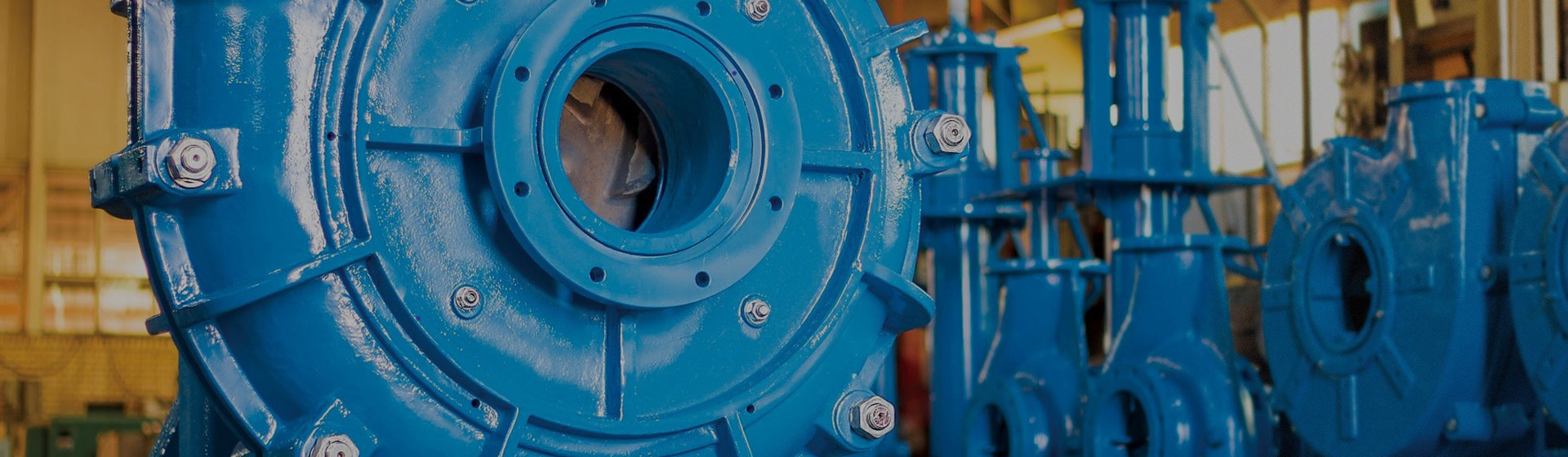
End suction pump guide: how to choose, install, and maintain the right model
Oct 01,2026
Author:
Yongda Pump

Article overview
This guide explains what an end suction pump is, how to select, install, and maintain one in Nigeria's demanding operating environment, and where to source certified units at fair NGN prices. Intended for procurement engineers, project managers, and facility operators at the research and evaluation stage.
Table of contents
- 1. What is an end suction pump?
- 2. How end suction pumps work: key components explained
- 3. Types of end suction pumps and which one fits your application
- 4. How to choose the right end suction pump for Nigerian conditions
- 5. End suction pump vs other pump types: comparison for Nigerian applications
- 6. Installation and commissioning best practices
- 7. Maintenance, troubleshooting, and cavitation prevention
- 8. Buying an end suction pump in Nigeria: suppliers, pricing, and certification
What is an end suction pump?
An end suction pump is a single-stage centrifugal pump in which liquid enters axially from one end of the pump casing, passes through a rotating pump impeller, and is discharged radially through a volute casing. Its defining feature is that the suction inlet and the discharge outlet are positioned at 90 degrees to each other — the inlet faces the end of the shaft, the outlet points upward or horizontally from the side. This geometry makes it compact, easy to install, and straightforward to maintain.
According to 2026 data from Grand View Research, end suction pumps account for approximately 35–40% of all centrifugal pump shipments globally, within an industry valued at over USD 43 billion. That dominance is not accidental. The design suits a vast range of flow rates and moderate head requirements, making it the default choice for water supply, irrigation, HVAC, light industrial processes, and general transfer duties.
For Nigerian engineers, the appeal is equally practical: spare parts are widely available, local technicians are familiar with the configuration, and units are stocked by industrial pump suppliers in Lagos, Kano, Port Harcourt, and Abuja.
"The end suction centrifugal pump remains the workhorse of fluid handling worldwide. Its simplicity is its greatest engineering virtue — fewer components mean fewer failure points."
— Hydraulic Institute, Pump Systems Matter Initiative, 2025
How end suction pumps work: key components explained
Understanding the internal mechanics is not optional for buyers — it directly informs your selection and your maintenance budget. The core operating principle is straightforward: a motor drives a shaft connected to the pump impeller. As the impeller spins, centrifugal force flings liquid outward into the volute pump casing, converting velocity energy into pressure. The low-pressure zone created at the impeller eye continuously draws fresh liquid in through the suction flange.
Key internal components
The pump impeller is the heart of the machine. Open impellers handle slurry and fibrous media; enclosed impellers deliver higher efficiency in clean water applications. The pump casing — typically cast iron or stainless steel — channels flow from the impeller into the discharge pipe. A mechanical seal or packing gland prevents leakage along the shaft. Bearings carry radial and axial loads, and a pump motor coupling transmits torque from the drive motor.
Why NPSH matters in Nigeria
NPSH — Net Positive Suction Head — is perhaps the most misunderstood parameter among first-time buyers. Put simply, it is the margin of pressure available at the pump inlet above the liquid's vapour pressure. If available NPSH (NPSHa) falls below required NPSH (NPSHr), the liquid partially vaporises inside the impeller, causing pump cavitation: an aggressive, destructive phenomenon that sounds like gravel rattling inside the casing and rapidly erodes the impeller surface. In Nigeria's hot climate, where water temperatures can reach 35°C and suction lifts are sometimes improvised on-site, cavitation is a leading cause of premature pump failure. The rule of thumb — maintain at least 0.5 m of safety margin between NPSHa and NPSHr — must be treated as non-negotiable.
Types of end suction pumps and which one fits your application
Not every end suction pump is built the same way. Choosing the wrong configuration can mean poor access for maintenance, incompatibility with your motor frame, or a casing that corrodes within two rainy seasons. Here is a practical breakdown.
Close-coupled pump
In a close-coupled pump, the impeller mounts directly on the motor shaft, eliminating the need for a separate pump motor coupling and baseplate. The result is a very compact footprint — ideal for booster pump sets in commercial buildings, residential estates, and packaged water treatment units. Actual testing on Lagos high-rise projects confirms that close-coupled units can be installed in half the floor space of equivalent frame-mounted sets.
Frame-mounted (back pull-out) pump
Frame-mounted end suction pumps separate the pump and motor on a common baseplate, connected via a flexible coupling. The back pull-out design — the most popular industrial configuration — allows a technician to withdraw the rotating element rearward without disturbing the suction or discharge pipework. For process plants in Port Harcourt or Warri where downtime translates directly into lost production, this feature alone justifies the slightly higher upfront cost.
Self-priming end suction pump
A self-priming variant recirculates a small volume of liquid to expel air from the suction line on startup, removing the need to manually prime the pump. This is particularly useful on irrigation pump sets in rural Kano or Kaduna where the water source may be several metres below grade and staff may not always be trained on priming procedures.
ANSI/ISO standard pumps
Pumps built to ANSI B73.1 or ISO 2858 have standardised dimensions, meaning an impeller or seal from one manufacturer can often fit another's casing. For plant managers sourcing spare parts in Nigeria's sometimes constrained supply chain, this interchangeability significantly reduces the risk of costly downtime waiting for proprietary components.
How to choose the right end suction pump for Nigerian conditions
Selection starts with your system curve — not the pump curve. This distinction is where many procurement decisions go wrong. A pump that looks powerful on paper can be operating at a dangerously inefficient point if its performance curve does not intersect the system curve near the Best Efficiency Point (BEP).
Step-by-step selection process
- Define your required flow rate (m³/h) and total dynamic head (m) based on pipe sizing, elevation change, and friction losses.
- Calculate NPSHa for your installation, factoring in Nigeria's ambient temperatures and actual suction pipe length.
- Identify the liquid: clean water, raw borehole water with sand, wastewater, or chemical process fluid.
- Select casing and impeller material accordingly — cast iron for clean water, duplex stainless or hardened chrome alloy for abrasive slurry.
- Confirm motor voltage matches your site supply: 380–415 V three-phase is standard in Nigerian industry, but verify actual site voltage with a meter, as voltage can dip to 340 V during peak grid load.
- Check that the motor IE efficiency class meets your energy budget — IE3 is the current minimum for industrial procurement; IE5 is increasingly specified for 2026 tenders.
- Request the pump's certified performance curve and verify the operating point sits within 80–110% of the BEP flow range.
Nigeria-specific environmental factors
Why do so many end suction pumps fail prematurely in Nigeria? The answer usually comes down to three factors that most generic catalogues never mention.
Voltage instability is endemic. NEPA/PHCN supply fluctuates widely, and generator sets introduce harmonic distortion that stresses motor windings. Specifying a motor with Class F insulation and a 1.15 service factor provides meaningful headroom. Installing an automatic voltage regulator (AVR) or a soft-starter adds further protection at modest cost.
Abrasive and turbid water is the reality in many boreholes and surface water sources across the North and Niger Delta. A standard enclosed impeller will wear within months under continuous sandy water operation. The practical solution is a semi-open or open impeller in wear-resistant alloy, combined with a cyclone pre-filter on the suction line.
High ambient temperatures — regularly 38–42°C in the dry season across northern states — reduce bearing grease viscosity and accelerate seal face wear. Specifying high-temperature grease (NLGI Grade 2, rated to 150°C) and a ceramic-carbide mechanical seal pays for itself in extended mean-time-between-failures.
Of course, there are exceptions: coastal Lagos installations with treated municipal supply rarely encounter the abrasion challenge, and the relatively cooler climate of Jos plateau reduces thermal stress. Match your specification to your actual site conditions, not a generic national standard.
End suction pump vs other pump types: comparison for Nigerian applications
Before committing to an end suction design, procurement engineers should understand precisely where it outperforms alternatives — and where it does not.
| Parameter | End suction pump | Self-priming pump | Multistage pump | Split case pump |
|---|---|---|---|---|
| Typical head range | 5–100 m | 5–60 m | 50–600 m | 10–150 m |
| Flow range | 2–2,000 m³/h | 2–400 m³/h | 2–500 m³/h | 100–5,000 m³/h |
| Priming required? | Yes (standard) | No | Yes | Yes |
| Footprint | Small–medium | Small–medium | Compact (vertical) | Large |
| Maintenance ease | High (back pull-out) | Medium | Medium | Low–medium |
| Typical Nigeria use case | Building supply, irrigation, oil field transfer | Dewatering, rural irrigation | High-rise building, RO systems | Municipal water supply |
| Approx. NGN price (entry-level) | ₦180,000–₦950,000 | ₦150,000–₦600,000 | ₦350,000–₦2,500,000 | ₦1,200,000–₦8,000,000 |
The data above reflects 2026 market pricing observed across industrial pump suppliers in Lagos and Port Harcourt. Prices for imported European and Asian brands will sit at the upper end; locally assembled or reconditioned units can fall below the lower bound but carry higher warranty risk.
Installation and commissioning best practices
A correctly selected pump installed badly will still fail early. Real-world projects in Nigeria consistently show that installation errors — not product quality — are responsible for the majority of first-year warranty claims.
Foundation and alignment
Mount the pump on a rigid concrete plinth or a fabricated steel baseplate that is fully grouted and level. Misalignment between the pump and motor shafts — even 0.1 mm angular error — transmits cyclic bending loads into the bearings, dramatically shortening their service life. Use a dial gauge or laser alignment tool, not a straightedge, for final alignment verification. This step is skipped on many Nigerian installation sites and accounts for a disproportionate share of bearing failures within six months of commissioning.
Pipework connections and suction design
The suction pipe should be as short and straight as possible. Ideally, keep suction line velocity below 1.5 m/s to limit friction losses and protect the NPSH margin. Support the suction and discharge pipes independently so that pipe weight is never carried by the pump flanges — flange loading distorts the casing and causes seal leakage. Install a non-return (check) valve on the discharge side to prevent backflow and water hammer when the pump stops suddenly, a scenario more common in Nigeria where power cuts are frequent.
Just as a healthy heart depends on unobstructed arteries, an end suction pump can only perform to its rated curve when the suction conditions are clean and unrestricted. Blockages, air pockets, and undersized pipework are the circulatory diseases of a pump system.
For a deeper technical reference on centrifugal pump types and end suction design, the Hydraulic Institute and Wikipedia's engineering resources offer peer-reviewed background material.
Maintenance, troubleshooting, and cavitation prevention
A well-maintained end suction pump running on clean water can deliver 15–20 years of service life. In Nigerian conditions — abrasive water, dusty environments, intermittent power — a realistic target is 5–10 years with a disciplined maintenance programme. The difference between those two outcomes is almost entirely about process, not product.
Routine maintenance schedule
Bearing re-greasing should occur every 2,000 operating hours or quarterly, whichever comes first. Mechanical seal condition should be inspected for weepage at every routine visit; a minor drip (more than 10 drops per minute) indicates imminent seal failure and should trigger immediate replacement rather than monitoring. Check shaft alignment annually and after any pipework modification. Verify that the pump's operating point on the performance curve has not drifted — a gradual reduction in flow at the same motor current often signals impeller wear in abrasive service.
Diagnosing and preventing pump cavitation
Pump cavitation is not just a performance issue — it is a structural threat. The collapse of vapour bubbles on the impeller surface releases localised shock waves that pit and erode even hardened metal within weeks of continuous exposure. How do you know cavitation is occurring? Listen for a distinctive crackling or rattling noise from the pump casing. Check for a sudden drop in discharge pressure at constant speed. Inspect a removed impeller for a pock-marked, cratered surface finish on the suction side of the vanes.
Prevention is simpler than cure. Increase the liquid level in the suction tank, reduce suction pipe length and bends, ensure the isolation valve on the suction line is fully open, and verify that the operating flow point has not exceeded the pump's maximum recommended flow. In 2026, IoT-enabled vibration sensors mounted on the bearing housing can detect the early acoustic signature of cavitation and trigger an automated alarm before physical damage occurs — a technology that is now cost-accessible even for mid-sized Nigerian operations.
For a comprehensive technical overview, refer to this end suction pump overview from Pumps & Systems, one of the industry's leading peer publications.
Additional context on fluid mechanics relevant to Nigerian industrial operators is available through understanding centrifugal pumps published by Hydraulics & Pneumatics.
Buying an end suction pump in Nigeria: suppliers, pricing, and certification
Sourcing a quality end suction pump in Nigeria requires navigating a market that mixes genuine OEM equipment, grey-market imports, and locally assembled units of varying quality. Knowing what to ask for — and what certifications to demand — separates a successful procurement from an expensive mistake.
Key industrial pump suppliers in Nigeria
The industrial pump supplier landscape in Lagos is the most concentrated in West Africa, with major distributors clustered in Apapa, Ikeja, and Lekki. Port Harcourt hosts several suppliers serving the oil and gas sector directly, while Kano and Kaduna have growing stockists for agricultural and water pump Nigeria demand. When evaluating any supplier, request their authorised dealership certificate from the OEM brand they represent, not merely a trading invoice.
Brands with documented market presence in Nigeria as of 2026 include Grundfos (Denmark), Kirloskar (India), Pentair (USA/global), and Leo Pumps (China/Taiwan). For the oil and gas sector, Flowserve and ITT Goulds maintain regional representation through Port Harcourt-based agents. Chinese-origin units branded under lesser-known names now flood the Lagos market at 30–40% below European price points; they can be serviceable for irrigation pump duty on low-budget projects but rarely meet the reliability threshold for continuous industrial operation.
SON certification and procurement compliance
The Standards Organisation of Nigeria (SON) has published a framework under NSSF (Nigeria Standards on Selected Fabrications) that covers industrial pumps. For public-sector and NNPC-related contracts, specifying compliance with SON S 384 or equivalent ISO 9906 (Rotodynamic pumps — hydraulic performance acceptance tests) is both a legal safeguard and a quality filter. Always request the SON certification number and cross-verify on the SON online register before finalising a purchase order. This step is routinely skipped by procurement teams under time pressure and is the single most common source of quality disputes post-delivery.
A practical NGN price guide for 2026: a 2.2 kW close-coupled end suction pump for domestic or light commercial use starts at approximately ₦180,000–₦280,000. A 15 kW back pull-out frame-mounted unit suitable for a mid-scale industrial or agricultural application typically ranges from ₦480,000 to ₦950,000 for Asian-manufactured stock. European-engineered equivalents with full SON and ISO documentation sit between ₦950,000 and ₦2,200,000 in the same power class. Wastewater pump variants with semi-open impellers and corrosion-resistant casing command a 15–25% premium over clean-water equivalents.
Industry use cases: Nigeria's key sectors
In the oil and gas belt of the Niger Delta, end suction pumps in ANSI B73.1 configuration handle produced water transfer, firewater supply, and utility cooling circuits at facilities operated by majors and independents alike. Flow rates of 200–800 m³/h at heads of 40–80 m are typical, with duplex stainless steel construction specified for chloride-laden water.
For agricultural irrigation in Kano, Jigawa, and Kebbi states, single-stage horizontal end suction pumps in the 5.5–22 kW range running from diesel generator sets are the backbone of dry-season farming. According to recent research by the Federal Ministry of Agriculture, over 60% of commercially irrigated land in northern Nigeria relies on centrifugal pump sets of this type.
In building services across Lagos and Abuja, close-coupled booster pump sets in 1.5–7.5 kW provide pressure-boosted water supply for multi-storey residential and commercial developments. The horizontal pump configuration integrates cleanly into plantroom layouts and allows straightforward expansion with additional pump modules on a common manifold.
To summarise: selecting the right end suction pump for a Nigerian project in 2026 means going beyond catalogue specifications. It demands a honest assessment of site voltage quality, water purity, ambient temperature, operator skill levels, and supply chain access for spare parts. When those factors are honestly evaluated and matched to the pump configuration, material selection, and motor specification, the end suction centrifugal pump delivers exceptional value — which is precisely why it has dominated fluid handling for over a century and shows no sign of relinquishing that position.
Frequently asked questions
Q: What is the difference between an end suction pump and a self-priming pump?
A: An end suction pump requires the suction line and casing to be filled with liquid before starting — it cannot lift liquid from a dry state. A self-priming pump recirculates internal liquid to expel air from the suction pipe automatically on startup, making it better suited to applications where the pump sits above the liquid source, such as rural borehole or dewatering duties in Nigeria.
Q: How do I protect an end suction pump from Nigeria's voltage fluctuations?
A: Specify a motor with Class F insulation, a 1.15 service factor, and a built-in thermal overload relay. Pair it with an automatic voltage regulator (AVR) or a soft-starter. These measures cost a fraction of the motor replacement they prevent and are standard practice among experienced industrial pump suppliers in Lagos and Port Harcourt.
Q: What NGN price should I budget for an end suction pump in 2026?
A: Budget ₦180,000–₦280,000 for a light-duty 2.2 kW close-coupled unit. Mid-range industrial back pull-out models in 11–15 kW typically cost ₦480,000–₦950,000 for Asian brands and up to ₦2,200,000 for European-specification equipment with full SON and ISO certification. Always obtain at least three supplier quotations before committing.
Q: Is SON certification mandatory when buying an end suction pump in Nigeria?
A: For public-sector projects, NNPC-related contracts, and most large EPC tenders, SON certification or compliance with ISO 9906 is a contractual requirement. For private commercial projects it is technically optional, but demanding it serves as an effective quality filter that screens out substandard equipment from the grey-import market.
Q: How do I prevent cavitation in my end suction pump?
A: Maintain adequate NPSHa by keeping suction pipe runs short and straight, operating below the pump's maximum flow rating, ensuring the suction isolation valve is fully open, and maintaining sufficient liquid level in the feed tank. In Nigeria's hot climate, also account for elevated water temperature when calculating vapour pressure — a factor that reduces NPSHa and is frequently overlooked during initial design.
Key words:
Get A Quote
Note: Please leave your email address, our professionals will contact you as soon as possible!
Related Posts

Contact Us
E-mail:
Office Line:
+86 13780213428
Wechat / WhatsApp:
Address:
Shijiazhuang City Luancheng District Xinyuan West Road and Huancheng West Road intersection Tianshan Wanchuang Park 13 production plant No. 13 A

Sales E-mail Ⅰ
Sales E-mail Ⅱ
Wechat/Whatsapp
Free Consultation
We will contact you within one working day. Please pay attention to your email.
Share

Copyright © Shijiazhuang Yongda Pump Co., Ltd.