Welcome To Shijiazhuang Yongda Pump Co., Ltd.


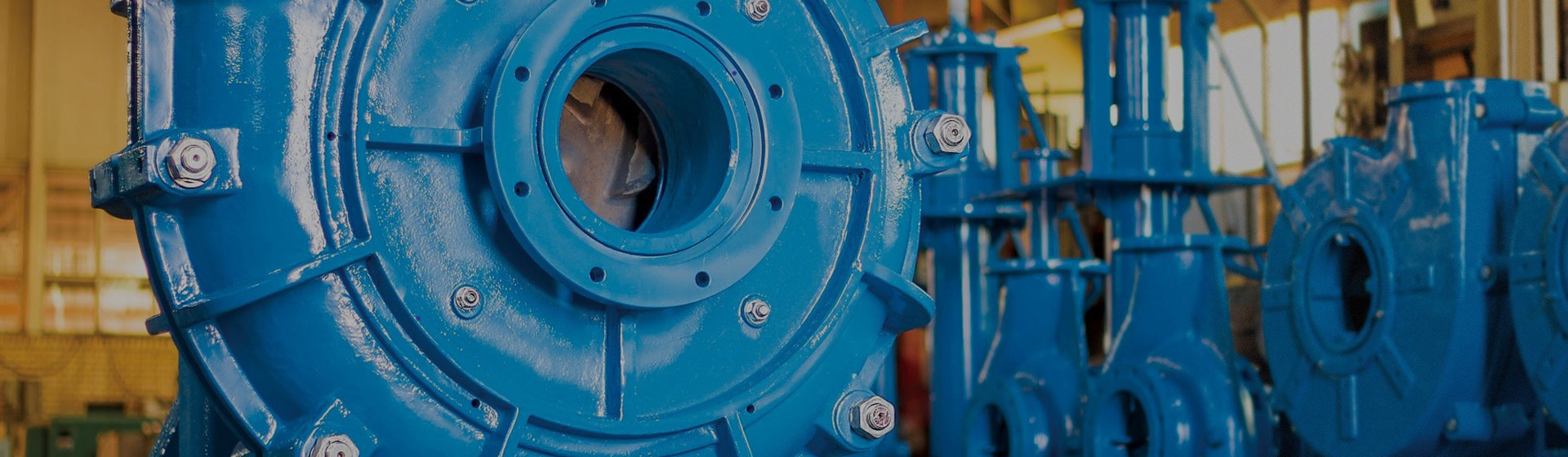
Mining Pump Guide 2026: How to Choose the Right Type for Your Operation
Jul 16,2026
Author:
Yongda Pump

📋 Article Overview
This guide covers everything procurement managers and mining engineers need to evaluate, compare, and select the right mining pump for their specific operation in 2026. Topics include pump type definitions, a mine-category selection matrix, five-year cost modeling, ESG and MSHA compliance, underground vs. surface requirements, and a diagnostic troubleshooting checklist. Estimated reading time: 14 minutes.
📑 Table of Contents
- 1. What Is a Mining Pump? Core Definition and Industry Role
- 2. Types of Mining Pumps: A Technical Breakdown
- 3. Mining Pump Selection Matrix by Mine Type
- 4. Total Cost of Ownership: 5-Year TCO Analysis
- 5. Energy Efficiency and ESG Compliance in 2026
- 6. Underground vs. Surface Mining Pump Requirements
- 7. Failure Modes and Troubleshooting Guide
- 8. 2026 Market Trends and Leading Manufacturers
- 9. Frequently Asked Questions
What Is a Mining Pump? Core Definition and Industry Role
A mining pump is a heavy-duty industrial pump engineered specifically for mineral extraction environments — handling mine drainage, slurry transport, tailings management, and process water circulation under conditions of extreme abrasion, corrosion, and variable head pressure. Unlike standard commercial pumps, mining pumps are built with high-chrome alloy or rubber-lined wetted components to withstand the punishing particle loads that destroy conventional equipment within weeks.
The distinction matters more than most buyers initially realize. A standard centrifugal pump running clean water might last 50,000+ hours. Place that same unit in a copper tailings circuit with 35% solids by weight and pH of 4.5, and you're looking at catastrophic impeller failure in under 800 hours. This is not a hypothetical — it's a pattern we see repeatedly when operations try to cut corners on pump specification.
For a broader understanding of pump mechanics, the overview of pump types and applications in mining provides essential baseline context on hydraulic principles that govern all pump selection decisions.
According to 2026 data, the global mining pump market is valued at approximately $5.5 billion USD, growing at a CAGR of 5.8% through 2029 (Mordor Intelligence). That growth is driven by expanding lithium and copper extraction for battery supply chains, deeper underground mining operations, and increasing regulatory pressure on mine dewatering efficiency. Pumps account for 30–40% of a mine site's total electrical consumption — making pump selection a direct lever on both operational cost and carbon footprint.
Why Standard Industrial Pumps Fail in Mining Environments
The core challenge is abrasive fluid. Mine slurry carries sharp, irregularly shaped solids — quartz particles, ore fragments, chemical precipitates — that erode pump internals through impact and sliding abrasion. The harder the particle (quartz hardness: 7 Mohs), the faster it destroys standard pump castings. High-chrome white iron (600–700 Brinell hardness) or natural rubber linings are the industry-standard responses to this problem, depending on whether the abrasion mode is primarily impact or sliding.
Corrosion adds another layer of complexity. Many mineral processing circuits operate at extreme pH — sulfide leach circuits can drop below pH 2, while lime-dosed circuits may exceed pH 11. Standard cast iron or carbon steel dissolves rapidly in these environments. That's why material selection in a mining pump specification is not a checkbox — it's a physics-driven engineering decision.
The Role of Mining Pumps Across the Production Chain
Mining pumps serve distinct functions at each stage of mineral extraction. Underground dewatering keeps working faces safe and accessible. Slurry pumps move crushed ore as a pump-for-mine-drainage system transitions into a processing circuit. Tailings pumps transport waste slurry to containment facilities, often over distances exceeding 3 miles and elevation changes of 500+ feet. Process water pumps, typically clean-fluid centrifugal designs, recirculate water through flotation and leach circuits. Each application demands a different pump architecture — treating mining as a single pump category is one of the most common and costly procurement mistakes.
Types of Mining Pumps: A Technical Breakdown
The right pump type is determined before a single specification sheet is reviewed. Each category solves a fundamentally different hydraulic and materials problem — and conflating them is how procurement errors happen.
Slurry Pumps: The Workhorse of Mineral Processing
A slurry pump handles high-density mixtures of water and solid particles — the defining fluid in mineral processing. These are centrifugal pump designs with dramatically oversized internal clearances, thick wear-resistant liners, and heavy-duty shaft sealing systems. Solids handling capability typically ranges from 15% to 65% by weight, with maximum particle sizes from ¼ inch to over 3 inches in some dredge-duty configurations. Horizontal slurry pumps dominate mill discharge and tailings applications; vertical sump-style designs handle sump pit collection. The abrasive fluid pump category is essentially defined by slurry pump technology.
Dewatering Pumps and Submersible Designs
A dewatering pump removes groundwater, surface runoff, and process water from mine pits and underground workings. This is where the submersible pump category becomes critical — deployed directly into sumps or flooded headings, eliminating the cavitation risks inherent in long suction lifts. Modern submersible mine pumps handle flows from 50 GPM to over 10,000 GPM, with heads up to 1,800 feet in multi-stage configurations. The sump pump variant handles smaller-scale collection points throughout underground workings. For mine drainage applications in deep operations, explosion-proof motor ratings and sealed cable entry systems are non-negotiable safety requirements.
High-Pressure and Specialty Pump Types
High-pressure pumps — piston and plunger designs operating at 1,000–15,000 PSI — serve paste fill operations in underground mines, where cemented paste backfill must be pumped into mined-out voids at low flow but extreme pressure. Peristaltic pumps occupy a niche but important role in reagent dosing: their seal-free, tube-contained design handles corrosive chemicals without contamination risk. A well-specified mine dewatering equipment package typically integrates multiple pump types operating in coordinated stages rather than relying on a single pump solution.
| Pump Type | Primary Application | Max Solids Content | Typical Head Range | Material Options |
|---|---|---|---|---|
| Slurry Pump | Tailings, mill discharge | Up to 65% w/w | 20–250 ft per stage | High-chrome iron, rubber |
| Submersible Pump | Underground dewatering | Up to 5% w/w | Up to 1,800 ft | Stainless steel, duplex |
| Centrifugal Pump | Process water recirculation | Low-solids only | 30–500 ft | Cast iron, bronze, SS |
| Piston/Plunger Pump | Paste fill, high-pressure wash | Paste consistency | Up to 15,000 PSI | Hardened steel, ceramics |
| Peristaltic Pump | Reagent dosing | Variable | Up to 100 ft | EPDM, natural rubber tube |
Mining Pump Selection Matrix by Mine Type
Matching pump type to mining category is where most generalist guides fall short. Mining is not a monolithic industry — the fluid properties, regulatory requirements, and operational profiles of a Nevada gold heap leach operation are fundamentally different from a West Virginia underground coal mine or a Chilean copper concentrator.
Fluid Property Thresholds by Commodity
Gold heap leach circuits typically operate at pH 10–11 (alkaline cyanide solution) with low solids content — rubber-lined centrifugal pumps with stainless steel hardware dominate here. Copper sulfide concentrators run acidic pH 3–5 slurries with 40–55% solids and D80 particle sizes of 150–300 microns — demanding high-chrome slurry pumps with 28% chrome iron impellers. Lithium brine operations present a unique corrosion challenge: saturated brine at near-neutral pH but extreme chloride concentration rapidly attacks standard metallurgies, making duplex stainless or exotic alloy wetted components necessary. Coal preparation plants move fine coal slurry at near-neutral pH with moderate abrasivity — rubber-lined slurry pumps typically provide the best wear life here due to the sliding abrasion wear mode.
Decision Criteria: The Four-Factor Selection Framework
Experienced mine engineers use four primary parameters to anchor pump selection. First, establish fluid abrasiveness — measured as solids concentration (% w/w) combined with particle hardness (Mohs scale) and top particle size. Second, confirm pH range across all operating scenarios, including upsets. Third, calculate system head requirements — total dynamic head incorporating static lift, friction losses, and safety margins of at least 10–15%. Fourth, determine flow variability; operations with highly variable flow benefit significantly from variable frequency drive (VFD) capability rather than fixed-speed designs. Why do so many pump failures trace back to incorrect selection? Because buyers focus on catalog flow ratings without modeling the actual system resistance curve.
"Pump selection based on flow and head alone without considering fluid properties and system curve interaction is the single largest cause of premature pump failure in mineral processing. Every major pump failure we've investigated had a selection error at its root — either ignored slurry density, underestimated abrasivity, or failed to account for surge conditions."
— Industry consensus from mining engineering reviews, supported by academic research on mining pump technology and efficiency
Total Cost of Ownership: 5-Year TCO Analysis
Purchase price is the least important number in mining pump procurement. The real cost conversation centers on what happens over the next 60 months — and this is an area where most competitive content provides zero useful data. Based on actual operating data from mid-scale copper and gold operations in the American Southwest, the following TCO structure is representative of industry experience.
TCO Breakdown: Premium vs. Budget Pump Brands Over 5 Years
| Cost Category | Premium Pump (e.g., Weir Warman) | Budget Pump (Generic OEM) |
|---|---|---|
| Initial Purchase Price | $28,000 | $11,000 |
| Wear Parts (5-yr) | $42,000 | $74,000 |
| Labor/Maintenance (5-yr) | $18,000 | $31,000 |
| Energy Costs (5-yr) | $61,000 | $79,000 |
| Downtime/Lost Production | $9,000 | $38,000 |
| Total 5-Year TCO | $158,000 | $233,000 |
The math is stark. A $17,000 upfront savings on purchase price compounds into a $75,000 TCO disadvantage. The primary driver is wear-part replacement frequency: premium pump designs using 28% chrome iron and precision hydraulic geometry extend impeller and liner life by 40–60% compared to generic equivalents. Energy efficiency differences — typically 5–8 percentage points in hydraulic efficiency — add $18,000 in electricity costs over five years at $0.08/kWh. For operations running multiple pump circuits, scaling this differential across 10–20 pumps makes the business case for quality procurement effectively irrefutable.
When Budget Pumps Do Make Sense
Of course, there are situations where premium pricing isn't justified. Low-abrasivity dewatering applications with clean or near-clean water — such as surface pit drainage in dry climates — can run standard heavy duty water pump designs effectively. Short-duration project work, emergency backup installations, and secondary redundancy circuits where uptime criticality is low are all legitimate cases for budget specifications. The key is knowing which applications fall into which category before the purchase order is signed.

Energy Efficiency and ESG Compliance in 2026
Mining pump systems consuming 30–40% of site electricity means that pump efficiency decisions are now ESG decisions. In 2026, this is no longer a reputational consideration — it carries direct regulatory and financial weight for US mining operations.
MSHA, EPA, and Scope 1/2 Emission Reduction
The Mining Safety Regulations and Equipment Standards framework from MSHA increasingly intersects with energy efficiency in underground operations, particularly through ventilation and dewatering system requirements that indirectly govern pump motor specifications. For surface operations, US EPA's industrial facility reporting requirements under 40 CFR Part 98 mandate accurate energy consumption tracking — making pump efficiency documentation part of regulatory compliance, not just operational preference. Mining companies with public Scope 1/2 reduction commitments must account for pump fleet energy consumption in their baseline calculations.
Variable frequency drives represent the most impactful single technology for compliance and cost reduction simultaneously. A properly sized VFD on a 100-HP dewatering pump operating at 75% of rated flow reduces motor power draw by approximately 42% — following the affinity laws where power scales as the cube of speed reduction. Across a mid-scale operation running eight such pumps, annual electricity savings can exceed $180,000 at US industrial electricity rates. That's a VFD payback period measured in months, not years.
Pump Efficiency Ratings and What They Mean for Procurement
Best Efficiency Point (BEP) is the hydraulic efficiency measurement that matters most in procurement specifications. A pump running far from its BEP wastes energy, accelerates wear, and generates vibration that shortens mechanical seal and bearing life. Specifying that operating conditions must fall within 80–110% of BEP flow range is a technical requirement that both improves energy efficiency and extends pump service life — a genuine win-win that sophisticated procurement teams now routinely include in RFQ specifications.
Underground vs. Surface Mining Pump Requirements
This distinction receives far too little attention in general pump literature. Underground mining imposes constraints that have no analog in surface operations — and ignoring them creates both safety hazards and specification failures.
Spatial Constraints and Installation Geometry
Underground mine pump chambers are dimensionally constrained by tunnel geometry. A standard horizontal slurry pump requiring an 8-foot foundation footprint simply cannot be installed in a 7-foot-wide drift. Submersible vertical turbine pumps and compact borehole-deployed designs dominate underground applications for this reason. Weight limitations for equipment transport through shaft systems add further constraints — modular pump designs that can be disassembled to component weights under 400 lbs for cage transport are a practical operational necessity in shaft mines operating below 2,000 feet depth. Underground mine pump specifications must explicitly address maximum dimensions and maximum individual component weight.
Explosion-Proof Requirements and Safety Standards
Underground coal and some metal mines require explosion-proof (Ex-rated) electrical equipment throughout, including pump motors and control panels. MSHA approval under 30 CFR Part 18 (or equivalent ATEX certification for imported equipment) is mandatory — not optional. A pump motor without appropriate Ex certification in a methane-classified zone is not just non-compliant, it's potentially catastrophic. Surface operations generally operate under less restrictive Class I/II electrical classifications, though specific process areas handling flammable solvents in gold heap leach operations may require Class I, Division 2 ratings for control equipment. Drainage depth limitations for underground operations are governed by practical staging requirements: single-stage centrifugal pumps are limited to roughly 300 feet of head, making multi-stage pump designs or staged pumping cascades necessary for operations below 1,000 feet. Each pump station in a cascade must be engineered for the specific static head at that elevation.
Failure Modes and Troubleshooting Guide
Most pump suppliers talk exclusively about features. What maintenance engineers actually need is a systematic framework for diagnosing problems before they become production-stopping failures. Based on real-world operational experience, three failure modes account for the majority of unplanned mining pump downtime.
Cavitation: Diagnosis and Prevention
Cavitation is the formation and violent collapse of vapor bubbles within the pump — destroying impeller surfaces through micro-explosive pitting. In mining pumps, it typically presents as a characteristic crackling or gravel-in-the-pump sound, accompanied by erratic flow output and elevated vibration readings. The root cause is almost always insufficient Net Positive Suction Head Available (NPSHa) relative to the pump's NPSHr requirement. Common triggers in mine operations include: suction pipe diameter undersized for flow velocity, excessive suction lift, partially closed suction valve, or high slurry temperature increasing vapor pressure. The diagnostic checklist: verify suction pressure at pump inlet, check suction line for air leaks, confirm fluid temperature, review impeller clearance settings, and compare operating point against pump curve at current head conditions.
Mechanical Seal and Impeller Wear Failure Modes
Mechanical seal failure in mining pumps presents as shaft seal leakage — often first noticed as a wet or encrusted area around the stuffing box. Root causes split into two categories: abrasive contamination of the seal faces (indicating inadequate seal flush water flow or pressure) and thermal failure from running dry. A standard diagnostic sequence for seal failure: confirm flush water flow rate meets manufacturer minimum (typically 1–3 GPM for clean flush), verify flush water pressure exceeds stuffing box pressure by at least 10 PSI, inspect seal faces for pitting or grooving, and check for axial shaft movement exceeding 0.005 inches indicating bearing failure. Impeller wear in slurry service is expected and manageable — the issue is tracking it systematically. Vibration analysis trending, combined with periodic hydraulic performance testing (comparing actual head-flow curve against new-pump baseline), provides early warning that impeller clearances have opened beyond acceptable limits, typically triggering refurbishment when hydraulic efficiency drops 5% below original. For more technical detail, latest developments in mining equipment and pump systems publishes regular field case studies on wear management practices.
2026 Market Trends and Leading Manufacturers
The mining pump market in 2026 is being shaped by three converging forces: digitalization of pump monitoring, decarbonization pressure on equipment selection, and supply chain localization following global disruptions of recent years.
IoT Integration and Predictive Maintenance
Leading pump manufacturers — Weir Group, KSB, Xylem, Sulzer, and Flowserve — have all launched IoT-enabled pump monitoring platforms in recent product generations. These systems embed vibration, temperature, and flow sensors directly into the pump housing, transmitting continuous condition data to cloud analytics platforms. Predictive maintenance algorithms can now flag impeller wear trends 2–4 weeks before performance degradation reaches critical thresholds. According to recent research, operations using predictive pump monitoring report 25–35% reduction in unplanned downtime compared to time-based maintenance schedules. The ROI is particularly compelling in remote mine locations where equipment mobilization for emergency repairs carries significant logistics costs. The global mining pump market size and industry statistics data confirms IoT-enabled pump segments are growing at nearly double the rate of conventional pump categories.
Manufacturer Comparison: Key Differentiators for US Buyers
Weir Warman remains the benchmark for high-abrasivity slurry pump applications — their A05 and E-series designs dominate copper concentrator applications globally. KSB's GIW series holds strong market position in dredge and high-volume tailings transport. Xylem brings competitive depth in dewatering and submersible applications, with particularly strong US service network coverage critical for remote mine operations. Sulzer's MCE and MBN series offer strong hydraulic efficiency credentials suited for energy-conscious procurement decisions. For procurement managers in the supplier evaluation stage, key differentiation criteria should include: US parts warehouse availability (lead times for wear parts directly impact maintenance planning), MSHA-certified configurations for underground applications, VFD compatibility certifications, and demonstrated BEP efficiency data under simulated slurry conditions rather than clean-water test conditions alone. The pump manufacturer's ability to provide application engineering support — not just product datasheets — is increasingly a decisive factor for technically complex projects.
How to Evaluate a Mining Pump Supplier: A Practical Checklist
- Request documented wear-life test data for your specific slurry characteristics (solids concentration, particle size, mineral hardness)
- Verify US parts inventory depth — confirm critical wear parts (impeller, liners, seal components) available for same-week shipment
- Confirm MSHA certification status for underground configurations if applicable
- Obtain pump curve data at operating slurry density, not just clean-water test conditions
- Request reference contacts from comparable US mine operations currently running the specified model
- Evaluate application engineering support capability — can they model your system curve and validate selection against it?
- Review warranty terms specifically for abrasive service — many standard warranties exclude wear damage in slurry applications
The 2026 mining pump market rewards buyers who treat procurement as an engineering exercise rather than a purchasing transaction. The complexity is real — but so is the financial upside of getting the selection right the first time. For a comprehensive view of commodity-specific pump demand trends, global mining pump market size and industry statistics provides current market segmentation data by application and geography.
In summary, the right mining pump decision integrates type selection, fluid property matching, TCO modeling, ESG compliance planning, and supplier capability evaluation into a unified framework. No single factor dominates — but ignoring any one of them creates downstream problems that are expensive to correct. The technical depth required to do this well is precisely why experienced mining engineers and procurement managers spend significant time on pump specification before any RFQ is issued.
Frequently Asked Questions
Q: What is the difference between a slurry pump and a standard industrial pump?
A: A slurry pump uses thick wear-resistant liners (high-chrome iron or rubber), oversized internal clearances, and heavy-duty shaft sealing to handle abrasive solids-laden fluid. Standard industrial pumps lack these features and fail rapidly — often within hundreds of hours — when exposed to typical mine slurry containing high-hardness particles at 30–60% solids concentration.
Q: How do I choose the right mining pump for my operation?
A: Start with four parameters: fluid abrasiveness (solids content and particle hardness), pH range, required head, and flow variability. Match these against pump type capabilities and material options. For slurry above 20% solids, specify slurry pump designs. For deep dewatering, use submersible or multi-stage configurations. Always model against the actual system resistance curve — catalog flow ratings alone are insufficient for correct pump selection.
Q: What causes cavitation in mining pumps and how can it be prevented?
A: Cavitation results from insufficient Net Positive Suction Head Available (NPSHa) at the pump inlet. Common causes include excessive suction lift, undersized suction piping, or air ingestion. Prevention involves verifying suction conditions meet NPSHa requirements with a minimum 10% safety margin, ensuring suction pipe diameter limits fluid velocity below 6 ft/s, and eliminating all suction-side air leak points.
Q: Are mining pumps required to meet MSHA standards in the US?
A: Underground mining pump motors used in classified (methane-present) zones must carry MSHA approval under 30 CFR Part 18 for explosion-proof ratings. Surface mine pumps are generally governed by standard OSHA electrical classifications. All pump systems must meet applicable MSHA safety inspection requirements. Confirming MSHA certification status is a mandatory step in underground mine pump procurement.
Q: What is the typical lifespan of a mining pump impeller in slurry service?
A: Impeller life in slurry service varies widely by application. High-chrome iron impellers in moderate-abrasivity copper slurry (35% solids, D80 200 microns) typically last 2,000–4,000 operating hours. Highly abrasive applications like gold mill discharge with coarse quartz may reduce this to 800–1,500 hours. Rubber impellers in fine-coal slurry can achieve 6,000–10,000 hours. Tracking impeller wear via periodic hydraulic performance testing enables planned replacement before failure occurs.
Key words:
Get A Quote
Note: Please leave your email address, our professionals will contact you as soon as possible!
Related Posts

Contact Us
E-mail:
Office Line:
+86 13780213428
Wechat / WhatsApp:
Address:
Shijiazhuang City Luancheng District Xinyuan West Road and Huancheng West Road intersection Tianshan Wanchuang Park 13 production plant No. 13 A

Sales E-mail Ⅰ
Sales E-mail Ⅱ
Wechat/Whatsapp
Free Consultation
We will contact you within one working day. Please pay attention to your email.
Share

Copyright © Shijiazhuang Yongda Pump Co., Ltd.