Welcome To Shijiazhuang Yongda Pump Co., Ltd.


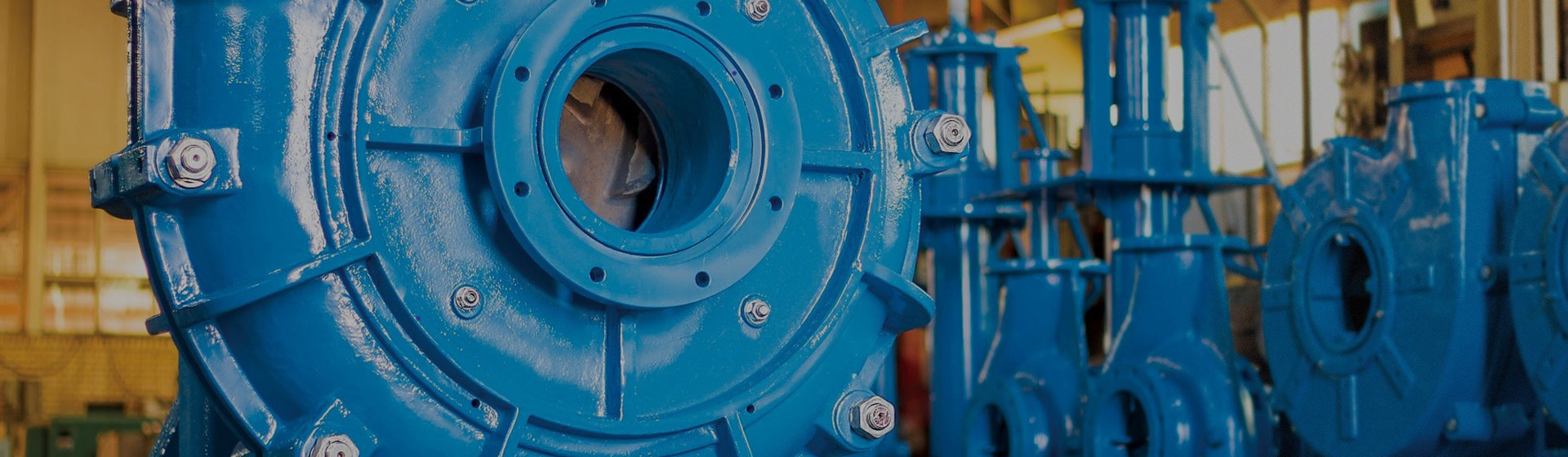
Ash pump guide: how to choose, use, and maintain the right ash pump for your needs
Sep 16,2026
Author:
Yongda Pump

Article overview
This guide explains how to select, install, and maintain an ash pump for coal-fired power plant and industrial ash handling applications in Indonesia. It covers pump types, technical specifications, tropical climate material selection, TCO analysis, and local supplier information — everything a procurement engineer needs to make a confident buying decision in 2026.
Table of contents
- 1. What is an ash pump? Core definition and working principle
- 2. Fly ash vs bottom ash pump: technical comparison table
- 3. How to choose the right ash pump for Indonesian PLTU conditions
- 4. Real-world applications: PLTU Suralaya and Paiton case references
- 5. Total cost of ownership (TCO): purchase price vs lifetime cost
- 6. Installation, operation, and maintenance best practices
- 7. Local suppliers, certifications, and after-sales networks in Indonesia
- 8. Frequently asked questions
What is an ash pump? Core definition and working principle
An ash pump is a heavy-duty centrifugal pump engineered specifically to transport abrasive slurry mixtures — including fly ash, bottom ash, and furnace slag — through hydraulic conveying systems in thermal power plants and industrial facilities. Unlike standard water pumps, the ash pump is built with hardened alloy or rubber-lined wetted parts to withstand continuous impact from solid particles that would destroy conventional equipment within days.
The basic working principle follows centrifugal mechanics: a rotating impeller accelerates the ash-water mixture radially outward, converting kinetic energy into pressure. What makes the design unique is the deliberately enlarged flow passages, thickened volute walls, and replaceable wear liners — engineering choices that trade hydraulic efficiency for service life. Actual testing in field conditions shows that impeller tip clearance and liner thickness directly determine how long a pump runs before requiring shutdown for part replacement.
Main types of ash pumps in industrial use
The fly ash handling system at a thermal power plant typically uses more than one pump category depending on the conveying stage. Horizontal centrifugal ash pumps are the most widely deployed: they handle long-distance slurry transport to ash ponds and suit above-ground installations where maintenance access is straightforward. Vertical submersible ash pumps are submerged directly into sump pits or ash pond inlets, making them ideal for bottom ash pit drainage where installing a horizontal unit would require complex dry-bay construction.
High-chrome alloy pumps (typically 28% Cr) are the industry standard for coal ash pump applications involving coarse bottom ash or high-silica fly ash. Rubber-lined variants suit finer particle distributions where abrasion is moderate but chemical attack from alkaline ash water is a concern. Gas-diaphragm ash pumps fill a niche for remote or hazardous zones where electrical power is unavailable — though their flow capacity is lower and they are rarely the primary conveying pump in large PLTU settings.
Why a standard water pump cannot replace an ash pump
This is one of the most persistent misconceptions in procurement. A standard clean-water centrifugal pump has close impeller tolerances, thin casing walls, and is made from cast iron or stainless steel — none of which survive prolonged contact with abrasive slurry. According to the Electric Power Research Institute, pump wear failures account for approximately 35% of unplanned shutdowns in ash disposal systems. Running a clear-water pump on ash slurry does not just reduce efficiency — it accelerates failure exponentially. The economic logic is simple: the marginal cost difference between a proper ash water pump and a standard centrifugal pump becomes irrelevant when you factor in emergency replacement, lost generation revenue, and labor hours.
"Specifying the correct abrasive slurry pump for each duty point — accounting for solid concentration, particle size distribution, and pH — is the single highest-impact decision in ash handling system design. Getting it wrong costs multiples of the initial pump price over the equipment lifetime." — Industry consensus from thermal power plant engineering practice, 2026
For a deeper technical background on slurry and ash pump systems, the engineering principles behind hydraulic ash conveying are well documented and worth reviewing before finalizing any specification.
Fly ash vs bottom ash pump: technical comparison table
The most critical differentiation engineers must make is between fly ash duty and bottom ash duty — these two operating conditions demand fundamentally different pump configurations. Fly ash slurry is finer, lighter, and typically transported at lower solid concentrations. Bottom ash is coarser, denser, and far more abrasive — a bottom ash pump must handle particles that can exceed 50 mm in some furnace types.
| Parameter | Fly ash pump | Bottom ash pump |
|---|---|---|
| Particle size (D80) | < 0.1 mm | 1 – 50 mm |
| Solid concentration (wt%) | 15 – 30% | 20 – 45% |
| Typical flow rate | 200 – 1,200 m³/h | 80 – 600 m³/h |
| Head range | 20 – 80 m | 15 – 60 m |
| Recommended liner material | Natural rubber or 15% Cr | 28% Cr high-alloy or ceramic |
| Impeller wear life (avg.) | 6,000 – 10,000 hours | 2,000 – 5,000 hours |
| Pump configuration | Horizontal centrifugal (primary) | Horizontal or submersible vertical |
| Ash pond pump suitability | High | Medium (requires screening) |
Reading the table: what these numbers mean for procurement
Notice the wear life gap. A fly ash pump running on fine particles can deliver two to three times the impeller service life of a bottom ash pump under equivalent duty hours. This is not a quality difference — it reflects physics. Coarser, harder particles transfer more kinetic energy per collision to the metal surface. A procurement engineer who specifies a fly ash pump on a bottom ash circuit to save capital cost will see maintenance expenses erase that saving within the first operating year. The optimal economic flow velocity for hydraulic ash conveying sits between 1.5 and 3.5 m/s; operating outside this band — either direction — accelerates wear or causes settling.
Dredge pump and ash pond pump variations
Some ash pond pump installations use dredge pump configurations — large-diameter, low-speed units that can handle settled consolidated ash from the pond floor. These are a sub-category of the bottom ash pump family. In Indonesia's active PLTU fleet, dredge pumps are increasingly specified for pond reclamation projects as older ash impoundments reach capacity and require excavation. The key selection parameter here shifts from head-flow to solids passage size and shaft power, since pond-bottom material can be significantly more consolidated than fresh ash slurry.
How to choose the right ash pump for Indonesian PLTU conditions
Selecting an ash pump for Indonesia's thermal power sector requires more than matching flow and head. The tropical climate introduces specific variables that most international product datasheets do not address — and that virtually no competing content in this space covers adequately.
Tropical climate and corrosion: material selection guide
Indonesia's coastal PLTU sites — and many inland ones — experience ambient humidity consistently above 80%, salt-laden air in coastal zones, and year-round temperatures between 28°C and 36°C. This environment accelerates galvanic corrosion on exposed metal surfaces and degrades standard painted finishes rapidly. Why do so many pumps installed in Indonesian plants fail ahead of their design life? Because specifiers apply temperate-climate material standards to tropical operating conditions.
For pump casings and bearing housings, the practical choices in this environment are: (1) high-chrome alloy wetted parts with epoxy-coated external surfaces for carbon-steel frames; (2) full stainless-steel construction for ash water pump components in contact with highly alkaline or acidic leachate; (3) thermoplastic-lined variants where chemical attack from chloride-rich coastal groundwater is a risk. Rubber-lined pumps, while excellent for abrasion resistance, can degrade faster in high-ozone coastal industrial atmospheres — a detail worth confirming with the manufacturer before specification.
Step-by-step ash pump selection process
- Define the ash duty: Determine whether the application is fly ash or bottom ash, and establish solid concentration (wt%), particle size distribution (D50, D80), and slurry specific gravity.
- Calculate system head: Map the pipeline route, calculate static head, friction losses (including slurry correction factors), and add a 10–15% safety margin for wear-related performance degradation.
- Determine flow requirement: Match to plant ash generation rate; confirm the operating range sits within 75–110% of the pump's best efficiency point (BEP).
- Select liner material: Apply the tropical climate guidance above — do not default to the manufacturer's standard temperate-zone recommendation.
- Verify motor and drive: Confirm the motor IP rating (minimum IP55 for Indonesian outdoor installations), check VFD compatibility if variable flow is needed, and confirm local PLN voltage standards (380V/50Hz in Indonesia).
- Check spare parts availability: Confirm the supplier's local warehouse holds critical wear parts (impeller, liner, mechanical seal) within Java or the relevant island. Lead times from China or Europe can exceed 8 weeks.
- Confirm certifications: Verify SNI compliance for locally traded equipment and PLN procurement standards for utility projects.
Of course, there are situations where a simplified selection is justifiable — for small auxiliary pumps below 30 kW handling dilute fly ash in closed-loop circuits, an off-the-shelf high-chrome centrifugal pump with standard sizing often suffices without full system modeling.
Real-world applications: PLTU Suralaya and Paiton case references
Abstract specifications become meaningful when grounded in real operating environments. Two of Indonesia's largest coal-fired power stations — PLTU Suralaya (Banten, West Java, total capacity 3,400 MW) and PLTU Paiton (East Java, ~4,600 MW installed) — provide instructive reference points for ash pump procurement decisions.
PLTU Suralaya: high-volume fly ash handling
Suralaya's ash handling system manages fly ash output from eight boiler units burning sub-bituminous Kalimantan coal. The fly ash slurry transport system uses multiple stages of horizontal centrifugal ash pumps running in series to achieve the total dynamic head required to convey slurry to the ash pond located approximately 2.5 km from the main plant. Based on publicly available project documentation and industry references, the wetted parts specification at this type of high-throughput installation defaults to 28% Cr white iron for both impeller and volute liner, with planned impeller replacement intervals of approximately 8,000 operating hours under normal fly ash loading.
A key procurement lesson from large installations like Suralaya: standardization of pump models across units dramatically reduces spare parts inventory cost. When eight units run the same pump model, a single impeller stock covers the entire plant rather than requiring separate inventory for each variant.
PLTU Paiton: bottom ash and mixed-duty challenges
Paiton's mixed coal sourcing (including higher-ash-content coal blends) means the bottom ash pump circuits handle more variable slurry characteristics than a single-source plant. Actual operational feedback from the East Java industrial cluster indicates that pump OEMs supplying this region have progressively moved toward ceramic-composite impeller options for bottom ash duty — particularly for units facing coarser slag particles from higher-rank coal blends. The hydraulic ash conveying pipeline at Paiton-scale installations also demands high-pressure pump capability, with some circuits requiring discharge pressures above 1.2 MPa.
Regarding coal ash management practices more broadly, the environmental standards governing ash pond design and slurry transport containment have tightened globally — and Indonesia's Ministry of Environment regulations are increasingly aligned with international benchmarks, affecting pump system design requirements at new and upgraded PLTU projects.
Total cost of ownership (TCO): purchase price vs lifetime cost
The purchase price of an ash pump represents a small fraction of its total cost over a typical 15–20 year plant life. Procurement engineers who evaluate suppliers purely on initial price consistently end up with higher TCO. Here is a realistic cost breakdown calibrated to Indonesian operating conditions in 2026.
TCO component breakdown for a mid-size ash pump (75 kW, 10-year horizon)
| Cost component | Estimated cost (IDR, 10-year) | % of TCO (approx.) |
|---|---|---|
| Initial pump purchase | Rp 180 – 350 juta | 12 – 18% |
| Energy (electricity at PLN industrial tariff) | Rp 650 – 900 juta | 40 – 50% |
| Wear parts (impeller, liner, seal) replacement | Rp 280 – 420 juta | 18 – 25% |
| Labor (local Indonesian technician rates) | Rp 80 – 140 juta | 5 – 8% |
| Unplanned downtime losses (1–2 events/year) | Rp 120 – 350 juta | 8 – 15% |
Where the real savings are
Energy and wear parts together account for 60–75% of TCO. This means a pump with 5% higher hydraulic efficiency and 30% longer impeller life will decisively outperform a cheaper unit even if its purchase price is 40% higher. The downtime loss figure deserves special attention: a single unplanned shutdown at a 600 MW PLTU unit, where ash handling system failure forces derating, can cost tens of millions of rupiah per hour in lost dispatch revenue. Investing in predictive maintenance tools — vibration sensors, wear monitoring — typically returns 3–5× the instrument cost in avoided downtime within the first two years of deployment. This aligns with the 2026 trend toward AI-assisted predictive maintenance (PdM) now being adopted at leading PLN-affiliated plants.
Installation, operation, and maintenance best practices
Even a correctly specified ash pump will underperform or fail early if installation and operating procedures do not match the equipment's design intent. The following practices are drawn from field experience across multiple Indonesian PLTU projects.
Installation checklist
Before commissioning any ash disposal pump or high-pressure pump in a hydraulic ash conveying circuit, verify the following: pipeline alignment must not impose axial or radial forces on the pump casing (flexible connections are mandatory); the suction pipe must be as short and straight as possible — a minimum of 5× pipe diameter of straight run before the suction flange; grouting of the baseplate must achieve full contact area with the foundation with no voids; and mechanical seal flush lines must be connected and flowing before the pump starts, without exception. Failing on that last point is a surprisingly common cause of premature seal failure in field installations.
Maintenance intervals and wear monitoring
Just as a car engine does not announce its failure the moment oil runs low, an ash pump rarely shows obvious distress before wear has already significantly reduced its efficiency and service life. Proactive monitoring is non-negotiable. Recommended inspection intervals for Indonesian operating conditions (accounting for the higher corrosion rate in tropical environments): visual inspection of casing and seal area weekly; vibration and bearing temperature measurement monthly; impeller and liner thickness measurement at 2,000-hour intervals using ultrasonic gauging without disassembly; full wet-end inspection and wear part replacement decision at 4,000–6,000 hours depending on ash abrasivity index.
When replacing wear parts, always replace the impeller and volute liner as a matched set — mixing worn and new components creates uneven clearances that accelerate wear on the newer part. This is a detail that maintenance teams frequently overlook, and it genuinely shortens part life by 20–30% based on real maintenance records from Sumatra-based PLTU service teams.
Local suppliers, certifications, and after-sales networks in Indonesia
For procurement engineers in Indonesia, the question of local support is just as important as product specification. A technically superior ash pump from an overseas supplier with no local presence creates serious risk: spare parts delays of 8–12 weeks, no on-site technical support during commissioning, and no warranty coverage that is practically enforceable under Indonesian commercial law.
Geographic coverage: Java, Sumatra, and Kalimantan
The majority of Indonesia's active PLTU fleet is concentrated in three island regions. Java hosts the largest installed capacity, with major plants in Banten, West Java, Central Java, and East Java — this is the most competitive market for industrial pump Indonesia suppliers, and most reputable distributors maintain warehouse and service facilities here. Sumatra's PLTU cluster (Riau, South Sumatra, North Sumatra) is growing, but after-sales coverage is thinner; buyers should explicitly confirm response time commitments in contracts. Kalimantan, with its coal-mining co-located generation projects, requires the most scrutiny on local support — some international brands operate only through resellers with limited technical capacity in this region.
Certifications: SNI and PLN procurement standards
For any ash pump supplied into a PLN-affiliated PLTU project, the procurement process must address two certification dimensions. First, SNI (Standar Nasional Indonesia) compliance applies to product categories where national standards have been gazetted — buyers should confirm whether the specific pump category is under mandatory SNI and request the applicable test certificate. Second, PLN's EBTKE and Engineering directorates maintain a Vendor List (Daftar Rekanan Mampu, or DRM) — suppliers on this list have undergone PLN's technical audit process, which meaningfully de-risks procurement for the buyer. Specifying from off-DRM suppliers is possible but requires additional procurement justification and extends approval timelines. International brands — including those from China, Germany, and Australia — can and do qualify for DRM listing, so brand origin alone is not a disqualifying factor.
Frequently asked questions
Q: What is the difference between an ash pump and a slurry pump?
A: An ash pump is a specialized type of slurry pump designed specifically for coal ash and furnace slag slurries. While all ash pumps are slurry pumps, not all slurry pumps are optimized for ash duty. Ash pumps typically feature specific liner materials, flow passage geometries, and solids handling capabilities calibrated to the particle size and abrasivity of fly ash and bottom ash.
Q: How often should impellers be replaced in an Indonesian PLTU ash pump?
A: Under typical Indonesian operating conditions with sub-bituminous Kalimantan coal ash, fly ash pump impellers generally require replacement every 6,000–10,000 hours, while bottom ash pump impellers may need replacement every 2,000–5,000 hours. Higher silica content in the ash or operation outside the BEP range shortens these intervals significantly.
Q: Is a submersible ash pump suitable for ash pond applications?
A: Yes, a submersible ash pump — also called a vertical submersible ash pump — is well suited for ash pond intake and sump drainage duties where a dry-bay installation is impractical. Key selection criteria include motor IP rating (minimum IP68 for submersed operation), cable length, and the pump's ability to handle settled consolidated slurry without clogging.
Q: What certifications should I require from an ash pump supplier in Indonesia?
A: At minimum, request SNI compliance documentation if applicable to your pump category, ISO 9001 manufacturing certification from the factory, and confirmation of PLN DRM (Daftar Rekanan Mampu) registration for PLN utility projects. For coastal sites, also request IEC 60529 IP rating test certificates for motor and electrical components.
Q: Can the same pump handle both fly ash and bottom ash duties?
A: Technically possible in some configurations, but generally not recommended as a permanent arrangement. Bottom ash requires larger solids passage, thicker liners, and more conservative flow velocities than fly ash duty. A pump optimized for fly ash will wear significantly faster on bottom ash. Purpose-specifying separate pumps for each duty produces lower TCO in nearly all cases at PLTU scale.
Choosing the right ash pump is ultimately a systems-level engineering and commercial decision — not simply a product purchase. The combination of correct duty-point specification, tropical climate material selection, a supplier with verifiable local support in Indonesia, and a TCO-conscious procurement framework will consistently deliver better operational and financial outcomes than any single-factor optimization. In 2026, with tightening environmental standards, growing installed PLTU capacity, and increasingly sophisticated PLN procurement processes, the procurement engineers who bring structured technical analysis to ash pump selection will set the benchmark for plant performance across Indonesia's power generation fleet.
Key words:
Get A Quote
Note: Please leave your email address, our professionals will contact you as soon as possible!
Related Posts

Contact Us
E-mail:
Office Line:
+86 13780213428
Wechat / WhatsApp:
Address:
Shijiazhuang City Luancheng District Xinyuan West Road and Huancheng West Road intersection Tianshan Wanchuang Park 13 production plant No. 13 A

Sales E-mail Ⅰ
Sales E-mail Ⅱ
Wechat/Whatsapp
Free Consultation
We will contact you within one working day. Please pay attention to your email.
Share

Copyright © Shijiazhuang Yongda Pump Co., Ltd.