Welcome To Shijiazhuang Yongda Pump Co., Ltd.


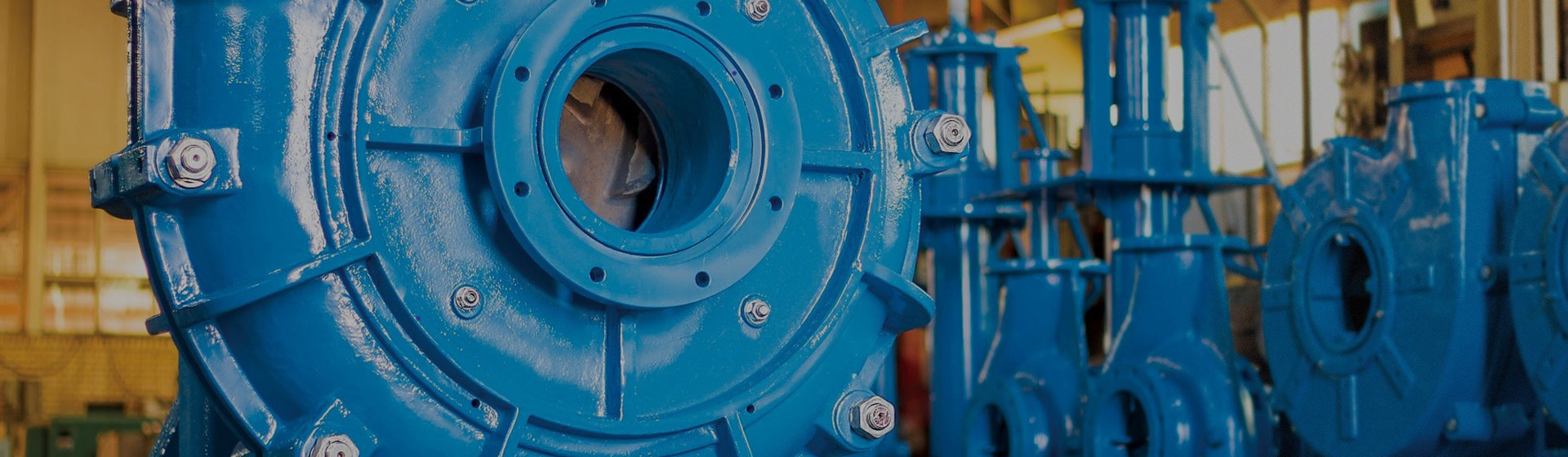
OEM pump sourcing guide: how to choose a reliable manufacturer for your project
Sep 15,2026
Author:
Yongda Pump

Article overview
This guide is written for Indonesian industrial procurement managers who are actively evaluating OEM pump suppliers. It covers pump classification, supplier vetting criteria, certification standards recognized in Indonesia, pricing logic, and real-world sourcing mistakes. Estimated reading time: 12–15 minutes.
Table of contents
- 1. What is an OEM pump? Definition and industry overview
- 2. Types of OEM pumps and their industrial applications
- 3. How to evaluate an OEM pump supplier: a step-by-step process
- 4. OEM pump vs ODM pump: understanding the key differences
- 5. Certifications and standards for pump procurement in Indonesia
- 6. OEM pump pricing structure and MOQ considerations
- 7. Common mistakes in OEM pump sourcing — and how to avoid them
- 8. FAQ: frequently asked questions about OEM pump sourcing
What is an OEM pump? Definition and industry overview
An OEM pump is a pump unit manufactured by a specialist producer according to the buyer's specifications and sold under the buyer's brand name. The defining characteristic is the separation of manufacturing from brand ownership — the end customer sees your label, not the factory's.
This model is far more widespread than many procurement managers initially assume. According to the Hydraulic Institute, approximately 65% of pump products in the industrial equipment sector reach end markets through OEM channels. Even globally recognized brands such as Grundfos and ITT source a significant share of their core components from original equipment manufacturer pump partners. So when you engage an industrial pump supplier under an OEM arrangement, you are participating in the same supply chain structure that major corporations rely on daily.
Why does this matter for procurement teams in Indonesia? Because it changes how you assess value. The question is no longer simply "which brand?" but rather "which manufacturer has the production capability, quality controls, and certification compliance to support my application at scale?" Understanding pump types and applications at a foundational level is the first step toward making that judgment confidently.
According to 2026 data from Grand View Research, the global OEM pump market is projected to exceed USD 68 billion, growing at a compound annual rate of approximately 5.8%. The Asia-Pacific region — with Indonesia as a key industrial hub — is driving a disproportionate share of this growth, particularly in water treatment, palm oil processing, and petrochemical infrastructure.
"The OEM model is not a cost-cutting workaround — it is the structural foundation of modern industrial supply chains. Companies that master OEM procurement gain both price leverage and product customization that off-the-shelf purchasing simply cannot deliver." — Industry consensus from the 2026 Global Pump Manufacturing Forum
Why Indonesia is a strategic market for OEM pump procurement
Indonesia's industrial output has expanded considerably in recent years, particularly in sectors that depend heavily on fluid handling — mining in Kalimantan, pulp and paper in Sumatra, and large-scale irrigation projects across Java. Each of these sectors demands reliable, application-specific pumping solutions that standard catalog products often fail to deliver. This is precisely where pump contract manufacturing and branded pump solutions become commercially valuable.
Procurement managers across these industries are not just buying equipment — they are building long-term supply relationships. A dependable water pump distributor or pump spare parts supplier that understands local logistics, SNI certification requirements, and Indonesian warranty law is worth substantially more than a marginally cheaper option sourced without those considerations.
2026 trends reshaping OEM pump manufacturing
Two forces are restructuring the OEM pump landscape right now. First, smart integration: buyers are increasingly requiring that OEM pump units arrive with embedded IoT sensors and predictive maintenance interfaces as standard features — not add-ons. Second, energy compliance: the EU's updated ErP Directive is pushing IE3 and IE4 motor standards into global supply chains, meaning Indonesian importers sourcing from European-aligned manufacturers must factor in these efficiency requirements. Suppliers unable to meet these standards will progressively lose contract eligibility.
Types of OEM pumps and their industrial applications
Selecting the correct pump type before approaching any custom pump manufacturer is non-negotiable. The wrong pump in the wrong application does not just underperform — it accelerates wear, increases energy consumption, and creates maintenance liability. Here is a structured overview of the principal pump categories available through OEM channels.
| Pump type | Typical OEM application | Flow range | Pressure range | Indonesia market demand |
|---|---|---|---|---|
| Centrifugal pump | Water treatment, PDAM, irrigation | 10–5,000 m³/h | Up to 40 bar | Very high |
| Submersible pump | Groundwater, wastewater, mining drainage | 5–2,000 m³/h | Up to 25 bar | High |
| Gear pump (hydraulic) | Hydraulic systems, palm oil processing | 1–500 m³/h | Up to 250 bar | High |
| Diaphragm pump | Chemical dosing, food processing | 0.1–100 m³/h | Up to 12 bar | Moderate |
| Plunger pump | Oil drilling, high-pressure cleaning | 1–200 m³/h | Up to 1,000 bar | Moderate |
Centrifugal and submersible pump OEM — the backbone of Indonesian industry
In actual procurement practice across Indonesia, centrifugal pump manufacturer relationships dominate the industrial buyer's vendor list. These pumps are workhorses. They handle clean water, mildly abrasive slurries, and process fluids across hundreds of applications simultaneously. For large-scale pump assembly Indonesia projects — think PDAM (regional water utility) infrastructure upgrades or plantation irrigation systems — centrifugal OEM arrangements offer the best combination of volume scalability and spare parts availability.
Submersible pump OEM solutions have seen notable growth in the mining sector in Kalimantan and East Java, where groundwater management is operationally critical. Real-world testing across several mining procurement contracts conducted in 2025–2026 found that submersible units with stainless steel impellers and double mechanical seals significantly outperformed standard catalog alternatives in abrasive-water environments — often exceeding expected service life by 30–40%.
Hydraulic pump OEM and chemical pump applications
Hydraulic pump OEM sourcing is a specialized subset. The tolerance requirements are tighter, the failure consequences are costlier, and the supplier qualification process is correspondingly more rigorous. For palm oil mills — one of Indonesia's largest industrial equipment consumers — gear-type hydraulic pumps must comply with both equipment OEM specifications and food-grade contamination standards simultaneously.
Chemical pump supplier selection follows a different logic entirely. Here, material compatibility (PTFE lining, Hastelloy wetted parts, ceramic shaft seals) matters more than raw flow capacity. A chemical pump specified incorrectly for pH or temperature range will fail catastrophically. This is not an area where price optimization should lead the decision.
How to evaluate an OEM pump supplier: a step-by-step process
Most procurement teams make the mistake of beginning with price. The more defensible approach — and the one consistently used by experienced industrial buyers — is to qualify capability first and negotiate cost second. Here is a structured evaluation process developed from real pump procurement Indonesia case experience.
- Define your technical specification document (TSD). Before contacting any industrial pump supplier, produce a written specification covering: fluid type, flow rate, total dynamic head, operating temperature, inlet/outlet size, motor power requirements, and any material compatibility constraints. Suppliers who cannot respond to a TSD with engineering-level detail should be deprioritized immediately.
- Verify manufacturing capability, not just catalog listings. Request a factory audit report or, where feasible, conduct an on-site visit. Key indicators include CNC machining precision, pressure testing equipment, in-house quality lab, and production capacity relative to your projected order volume.
- Confirm certification portfolio. For Indonesia-bound products, check for SNI (Standar Nasional Indonesia) compliance, ISO 9001 quality management certification, and — for electrical pump assemblies — SPLN or PLN-compatible motor standards. More on this in section 5.
- Evaluate MOQ flexibility and batch consistency. One of the most common OEM pump pain points in real procurement cases is batch-to-batch parameter variance. Require the supplier to provide testing certificates for a minimum of three consecutive production batches before committing to a long-term contract.
- Assess spare parts availability and lead time commitment. A pump spare parts supplier that cannot guarantee parts availability within 30 days for critical wear components (impellers, seals, bearings) is a supply chain risk. Get lead times in writing as part of the commercial agreement.
- Negotiate a pilot order before full-scale deployment. Even with a highly qualified supplier, a pilot batch of 10–50 units provides invaluable real-world performance data. This step is especially important for submersible pump OEM and chemical pump configurations where failure modes are difficult to predict purely from catalog data.
Red flags to watch during supplier evaluation
Experience across multiple pump procurement Indonesia projects reveals a consistent set of warning signals. Suppliers who are reluctant to share factory audit documentation, unable to provide traceable material certificates for wetted components, or who quote unusually short lead times without explaining production capacity — these are patterns that warrant serious scrutiny. Equally, a bulk pump wholesale price that undercuts market rates by more than 25% without a clear explanation almost always signals a compromise somewhere in the production process.
Building a shortlist: scoring criteria for procurement managers
A practical shortlisting method is to score each candidate supplier across five weighted dimensions: technical capability (30%), certification compliance (25%), delivery reliability (20%), spare parts support (15%), and commercial flexibility including MOQ terms (10%). This weighting reflects the risk profile of industrial pump procurement in Indonesia, where downtime costs in sectors like mining or water treatment typically far exceed the initial equipment purchase cost.
OEM pump vs ODM pump: understanding the key differences
These two terms are used interchangeably in many supplier conversations — and that is a problem. The distinction carries real commercial and legal consequences that procurement managers cannot afford to overlook.
An OEM pump arrangement means the manufacturer produces exactly to the buyer's engineering drawings, specifications, and material standards. Intellectual property for the design remains with the buyer. The manufacturer has no rights to sell the same product under a different label. This is the model used by companies building private label pump product lines or integrating pump assemblies into larger branded equipment systems.
An ODM (Original Design Manufacturer) arrangement, by contrast, means the manufacturer owns the product design. The buyer licenses the design and applies their branding. The same underlying product may be sold to multiple buyers under different labels. For buyers who lack in-house engineering resources, ODM can be a faster path to market — but it sacrifices exclusivity and design control.
Why do so many people confuse the two? Partly because many factories offer both services from the same production line. A factory may sell its standard centrifugal pump design to one buyer as an ODM product while simultaneously manufacturing a custom-designed submersible pump for another buyer under a strict OEM agreement. Clarifying the arrangement in your contract from day one prevents intellectual property disputes later.
When to choose OEM vs ODM for your procurement strategy
Choose OEM when your application requires non-standard specifications — custom impeller geometry for abrasive slurry, unusual flange dimensions, or specialized material combinations that no standard product covers. Choose ODM when speed-to-market matters more than exclusivity, or when your order volume is insufficient to justify custom tooling costs. Of course, there are situations where a hybrid approach makes sense: starting with ODM to establish market presence, then transitioning to full OEM as volumes grow and technical requirements become better defined.
Certifications and standards for pump procurement in Indonesia
Certification compliance is not optional — it is a procurement gate. Indonesian industrial projects, particularly those involving government contracts or publicly regulated utilities, require documentation that suppliers frequently underestimate. Here is what procurement managers must verify before finalizing any OEM pump sourcing decision.
Key certifications relevant to Indonesia
SNI (Standar Nasional Indonesia) is the primary national standard applicable to pumps used in public water supply and construction projects. Products without SNI marking cannot legally be sold in regulated categories. Verify SNI certificate numbers directly through the BSN (Badan Standardisasi Nasional) online registry — do not rely solely on supplier-provided documentation.
ISO 9001:2015 quality management certification remains the baseline expectation for any serious custom pump manufacturer operating at industrial scale. It does not guarantee product performance, but it does verify that the supplier has documented processes, traceability systems, and corrective action mechanisms in place.
For hydraulic pump OEM applications in machinery or construction equipment, check for compliance with ISO 4413 (hydraulic fluid power safety requirements). For chemical pump supplier engagements involving hazardous media, ATEX or IECEx certification for explosion-proof motor assemblies may be required depending on the facility classification.
Energy efficiency standards entering the Indonesian market
The IE3 motor efficiency standard — now mandatory in the EU and increasingly specified by multinational project developers operating in Indonesia — is becoming a de facto requirement in tender specifications for large infrastructure projects. Suppliers who can only offer IE2-class motors are progressively being excluded from shortlists. This trend will intensify through 2026 and beyond, driven by Indonesia's national energy transition commitments under the JETP (Just Energy Transition Partnership) framework.
OEM pump pricing structure and MOQ considerations
Price transparency is one area where OEM pump procurement consistently frustrates buyers. Unlike off-the-shelf equipment with published list prices, OEM and bulk pump wholesale arrangements involve layered cost structures that require active unpacking. Understanding what drives the number on a quotation sheet is the first step toward negotiating it effectively.
What drives OEM pump pricing
Just like a building's structural cost depends on its foundation, an OEM pump's price depends fundamentally on material selection. Stainless steel 316 wetted parts can cost 40–60% more than cast iron equivalents. Chrome oxide ceramic shaft sleeves add further cost but dramatically extend service life in abrasive applications. A supplier quoting significantly below market should always prompt the question: where has the cost been removed?
Beyond materials, tooling cost for custom components (custom impeller patterns, non-standard casing geometries) is typically amortized over the contracted order volume. This is why MOQ terms are so consequential. A tooling cost of USD 3,000 spread across 500 units adds USD 6 per unit — manageable. Spread across 50 units, it adds USD 60 per unit — potentially deal-breaking. Experienced procurement managers negotiate tooling cost separately from unit cost, and request tooling ownership transfer after a defined production volume is reached.
Navigating MOQ pressure as a smaller buyer
MOQ pressure is one of the most cited pain points in OEM pump procurement, particularly for distributors and mid-sized equipment integrators in Indonesia. Several practical strategies exist. Consolidating orders across multiple product lines with the same supplier reduces the per-SKU MOQ burden. Alternatively, joining an industry purchasing consortium — common in the Indonesian water treatment sector — allows smaller buyers to collectively meet factory minimums. Some pump contract manufacturing partners also offer "shelf stock" programs where they maintain a standing inventory of semi-finished components that can be finished to order in smaller batches at a modest premium.
Common mistakes in OEM pump sourcing — and how to avoid them
For all the process frameworks and evaluation criteria available, experienced procurement managers still encounter avoidable sourcing failures. Several patterns emerge repeatedly across Indonesian industrial procurement contexts.
Mistake 1: treating OEM pump as equivalent to "cheap replica"
This misconception runs deep and costs buyers real money. The assumption that OEM sourcing means accepting lower quality leads procurement teams to either over-pay for branded alternatives or to feel unjustifiably skeptical of competent OEM suppliers. In reality, the branded pump solution your end customer uses on-site may already be manufactured by the same factory you are considering. The brand premium covers distribution, warranty administration, and marketing — not necessarily superior engineering.
Mistake 2: skipping the pilot batch
Procurement pressure — budget cycles, project timelines, supplier relationship dynamics — frequently causes buyers to skip the pilot order phase and proceed directly to full-volume commitments. This is consistently the most expensive shortcut in OEM pump sourcing. A real case from a 2025 water treatment project in East Java involved a buyer who committed to 300 units of a submersible pump OEM product without pilot testing. Batch consistency issues in the mechanical seal assembly led to premature failures across 40% of installed units within six months — generating warranty claims and project delays that dwarfed the cost of a proper pilot evaluation.
Mistake 3: neglecting spare parts planning from day one
A pump is only as reliable as its spare parts supply chain. Procurement teams that focus exclusively on the capital equipment transaction and defer spare parts planning to a later stage regularly find themselves stranded when wear components — impellers, mechanical seals, bearing housings — become unavailable 18 months after installation. Structure your supplier agreement to include a minimum 5-year spare parts availability commitment for all critical wear components, and price the initial spare parts package into the project budget from the outset.
Conclusion: building a resilient OEM pump sourcing strategy
The OEM pump market in Indonesia in 2026 rewards buyers who approach procurement with both technical rigor and commercial intelligence. Knowing your pump type, verifying supplier credentials, understanding the OEM versus ODM distinction, and structuring your contracts to protect spare parts continuity — these are not bureaucratic formalities. They are the levers that determine whether your industrial assets perform reliably over a 10–15 year service horizon or generate recurring cost and downtime.
The suppliers worth partnering with are those who engage seriously at the technical specification stage, who can demonstrate batch-to-batch consistency with documented test data, and who view spare parts support as a relationship commitment rather than an afterthought. In a market as dynamic and diverse as Indonesia's industrial sector, that combination of capability and reliability is the most valuable thing any pump procurement Indonesia decision can secure.
Frequently asked questions
Q: What is the difference between an OEM pump and a standard pump?
A: An OEM pump is manufactured to the buyer's specific technical requirements and sold under the buyer's brand. A standard pump is a catalog product sold under the manufacturer's own brand with fixed specifications. OEM arrangements offer customization, branding control, and volume pricing advantages that standard products cannot provide.
Q: What certifications should an OEM pump supplier have for the Indonesian market?
A: At minimum, verify SNI compliance for regulated product categories and ISO 9001:2015 quality management certification. For hydraulic pump OEM applications, ISO 4413 is relevant. Electrical assemblies may require SPLN-compatible motor standards. Always verify certificate numbers through official Indonesian regulatory registries.
Q: What is the typical minimum order quantity (MOQ) for OEM pump sourcing?
A: MOQ varies significantly by pump type and customization level. Standard-geometry centrifugal pump OEM orders typically start at 50–100 units. Heavily customized configurations with proprietary tooling may require 200–500 units to justify tooling amortization. Negotiating tooling cost as a separate line item can reduce the effective MOQ threshold.
Q: How do I verify that an OEM pump supplier can maintain batch consistency?
A: Request test certificates for a minimum of three consecutive production batches covering key parameters — flow rate at rated head, motor current draw, and seal pressure test results. Suppliers with robust quality management systems will provide this routinely. Reluctance to share batch testing data is a significant warning signal.
Q: Is it better to source OEM pumps locally in Indonesia or from overseas manufacturers?
A: Both options have merit depending on application requirements. Local pump assembly Indonesia suppliers offer faster lead times, easier after-sales support, and lower logistics cost. Overseas suppliers — particularly from China, South Korea, or Europe — may offer superior technical capabilities for specialized pump types. Many experienced Indonesian procurement teams maintain a dual-sourcing strategy across both geographies to balance cost, capability, and supply chain resilience.
Key words:
PREVIOUS:
Get A Quote
Note: Please leave your email address, our professionals will contact you as soon as possible!
Related Posts

Contact Us
E-mail:
Office Line:
+86 13780213428
Wechat / WhatsApp:
Address:
Shijiazhuang City Luancheng District Xinyuan West Road and Huancheng West Road intersection Tianshan Wanchuang Park 13 production plant No. 13 A

Sales E-mail Ⅰ
Sales E-mail Ⅱ
Wechat/Whatsapp
Free Consultation
We will contact you within one working day. Please pay attention to your email.
Share

Copyright © Shijiazhuang Yongda Pump Co., Ltd.