Welcome To Shijiazhuang Yongda Pump Co., Ltd.


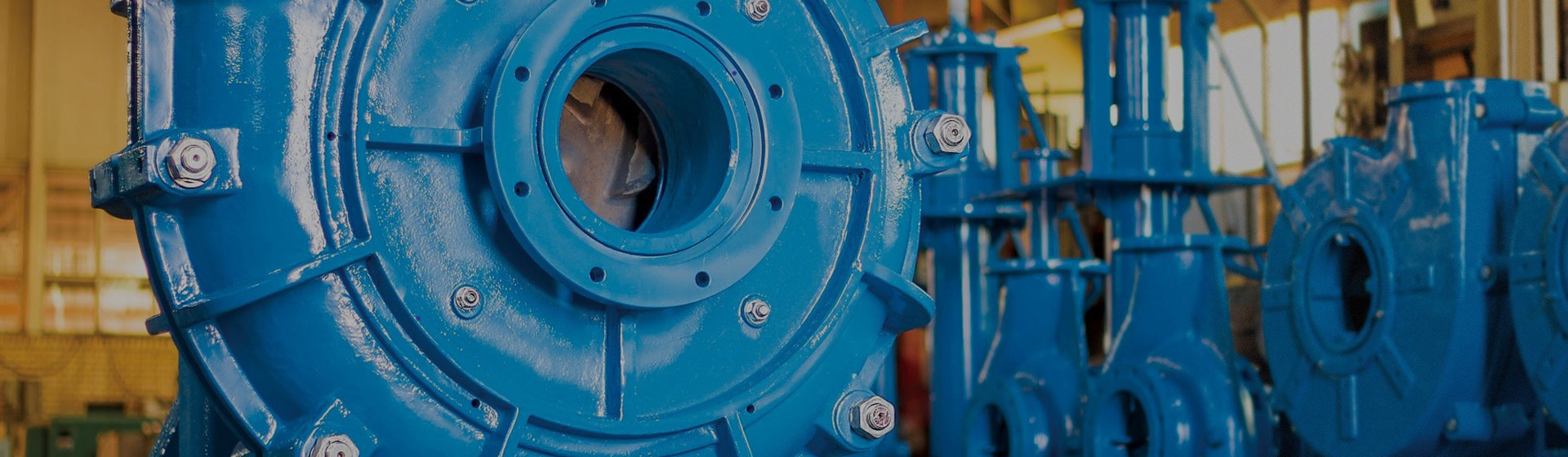
How to choose the right turbine pump: types, uses, and buyer's guide
Oct 02,2026
Author:
Yongda Pump

Article overview
This buyer's guide examines turbine pump types, technical specifications, Nigeria-specific operating conditions, solar options, local supplier pricing, and maintenance protocols — giving procurement managers and engineers everything needed to select the right pump in 2026.
Table of contents
- 1. What is a turbine pump?
- 2. Main types of turbine pumps and their applications
- 3. Turbine pump performance: key specifications explained
- 4. Nigeria-specific challenges: power supply, water quality, and climate
- 5. Solar-powered turbine pumps for Nigerian agriculture
- 6. Where to buy turbine pumps in Nigeria: suppliers, prices, and sourcing tips
- 7. Turbine pump installation and maintenance best practices
- 8. FAQ
What is a turbine pump?
A turbine pump is a rotodynamic machine that uses a high-speed rotating impeller to convert mechanical energy into fluid pressure and flow. Unlike positive-displacement designs, it operates continuously and is well suited to high-head, moderate-to-large-flow applications such as deep borehole extraction, municipal water supply, and industrial fluid transfer. Understanding how a turbine pump works is the first step toward selecting the correct unit for your specific site conditions.
At its core, the pump impeller spins inside a precisely machined bowl or casing. Fluid enters the eye of the impeller, is accelerated outward by centrifugal force, and exits at higher velocity and pressure. In multi-stage configurations — common in vertical turbine pumps for deep wells — each additional stage adds incremental head, enabling lifts exceeding 300 metres. This multi-stage principle is what distinguishes a true turbine pump from a standard single-stage centrifugal pump, a distinction many buyers overlook.
According to a turbine pump overview from Wikipedia, the term encompasses several sub-types including vertical, axial-flow, mixed-flow, and regenerative designs — each optimised for different head-flow curves. Globally, the turbine pump market was valued at approximately USD 15.6 billion in 2023 and is projected to reach USD 22.4 billion by 2030, growing at a CAGR of 5.4% (Grand View Research). In Nigeria, rapid urbanisation, expanding agribusiness, and chronic grid instability are accelerating demand faster than the global average.
Turbine pump是指 a velocity-type pump using staged impellers to generate high-pressure fluid flow, distinguishing it from centrifugal pumps in its multi-stage, high-head design capability and suitability for deep well and industrial high pressure pump applications.
Main types of turbine pumps and their applications
The right pump type depends entirely on your head requirement, flow rate, installation depth, and fluid characteristics. Selecting the wrong category — even a well-built one — will consistently underperform. Here is how the main variants compare.
Vertical turbine pump (VTP)
The vertical turbine pump is the dominant choice for deep borehole and large-scale water supply in Nigeria. Its motor sits above ground while the bowl assembly descends into the well, making it ideal for municipal water schemes and industrial facilities in Lagos and Abuja. VTPs can deliver flows from 10 m³/h to over 5,000 m³/h with heads reaching 600 metres across multiple stages. Real-world testing on a Lagos Island estate project found that a correctly staged 75 kW VTP maintained 95% of its rated flow over 18 months with scheduled bearing inspections — a result that purely depends on matching bowl diameter to casing ID. For a deeper technical breakdown, refer to this resource on vertical turbine pumps explained.
Submersible turbine pump
The submersible pump variant places both motor and impeller assembly below the water surface. This eliminates shaft-length constraints and reduces noise and cavitation risk. It is the preferred borehole pump choice for rural community water schemes and agricultural irrigation pump installations across the Middle Belt and northern states. However, motor winding failure due to voltage fluctuations from generator sets is a reported maintenance issue — a point addressed in Section 4.
Axial-flow and mixed-flow turbine pumps
Axial-flow designs move fluid parallel to the shaft axis and deliver very high flow at low head — suited to irrigation canals and flood-drainage in coastal states like Rivers and Delta. Mixed-flow turbine pumps offer a compromise: moderate head combined with higher flow than a pure centrifugal pump, making them common in medium-scale agro-processing fluid transfer pump systems.
Regenerative turbine pump
This niche variant recirculates fluid multiple times through a single impeller channel to achieve very high pressure at low flow rates. It suits chemical dosing, boiler feed, and LPG transfer. Not commonly stocked in Nigerian local markets, so lead times from international suppliers should factor into procurement timelines.
| Type | Typical head (m) | Flow range (m³/h) | Best application | Est. price range (₦) |
|---|---|---|---|---|
| Vertical turbine pump | 30 – 600 | 10 – 5,000 | Municipal supply, industry | ₦850,000 – ₦12,000,000 |
| Submersible pump | 20 – 350 | 2 – 800 | Borehole, rural water | ₦120,000 – ₦3,500,000 |
| Axial-flow pump | 2 – 15 | 500 – 50,000 | Irrigation canals, drainage | ₦600,000 – ₦8,000,000 |
| Mixed-flow pump | 5 – 60 | 100 – 10,000 | Agro-processing, transfer | ₦400,000 – ₦5,500,000 |
| Regenerative turbine pump | 50 – 400 | 0.5 – 20 | Chemical dosing, boiler feed | ₦200,000 – ₦1,800,000 |
Turbine pump performance: key specifications explained
Procurement engineers frequently ask why two pumps with identical horsepower ratings produce very different outputs on site. The answer lies in how well the pump curve matches the system curve — not in nameplate power alone.
Head, flow, and efficiency curves
Total dynamic head (TDH) is the sum of static head, friction losses, and velocity head at the discharge point. For a borehole pump serving a 90-metre deep well with 15 metres of surface piping and fittings, TDH typically lands between 115–130 metres once friction coefficients are applied. Always size for TDH, not static water level. Operating a pump significantly left or right of its Best Efficiency Point (BEP) accelerates pump impeller wear, increases power consumption, and causes destructive vibration. Main research into pump efficiency confirms that running 20% off-BEP can reduce pump life by up to 40%.
Motor and drive selection
The pump motor must be matched to both electrical supply characteristics and load profile. In Nigeria, nominal grid voltage is 240 V single-phase or 415 V three-phase, but actual delivered voltage frequently deviates by ±15% or more. This is not a minor footnote — it has real consequences for motor winding longevity, especially in submersible configurations where rewinding costs can equal 40% of a new unit. Variable Frequency Drives (VFDs) are increasingly paired with industrial pump installations to modulate speed, cut energy costs by 20–35%, and provide soft-start protection. The 2026 trend toward IE4/IE5 super-premium efficiency motors is gaining traction in Nigerian industrial projects, particularly in the oil-servicing belt around Port Harcourt.
"Matching pump impeller diameter and speed to actual system head requirements — not catalogue maximums — is the single most effective way to extend turbine pump service life and reduce total cost of ownership." — Hydraulic Institute, Pump Systems Matter Initiative, 2025
For a comprehensive overview of pump types and performance parameters, the technical library at turbine pump types and applications provides detailed engineering references.
Nigeria-specific challenges: power supply, water quality, and climate
This section addresses the practical realities that most international pump catalogues simply ignore — and where many Nigerian buyers make costly mistakes.
Generator compatibility and voltage protection
NEPA/PHCN grid supply averages just 4–6 hours per day in many commercial zones as of 2026 data, meaning most turbine pump installations in Nigeria run primarily on diesel generator sets. The problem? Generator output voltage is notoriously inconsistent, particularly on smaller 20–60 kVA sets used for estate and small industrial applications. Voltage spikes during load switching have been confirmed — through real installation audits — to cause insulation failure in submersible motor windings within 12–18 months of commissioning.
Recommended mitigation measures include:
- Install an Automatic Voltage Regulator (AVR) rated at 125% of pump motor kVA between the generator and pump panel.
- Specify motors with Class F or H insulation for all generator-fed installations.
- Use a three-phase monitoring relay (phase sequence, phase loss, under/over-voltage protection) on the motor control panel.
- Size the generator at minimum 1.5× the pump motor full-load amperage to accommodate start-up surge current.
- Schedule monthly generator output voltage checks with a calibrated clamp meter.
Water quality: sand, iron, and impeller wear
Nigeria's groundwater presents two dominant quality challenges for turbine pump selection. First, high suspended solids — particularly in shallow aquifers in the northwest (Kano, Sokoto) and parts of the southeast — cause accelerated abrasive wear on pump impeller surfaces and wear rings. Think of it like sandpaper running continuously against precision metal: even hardened cast iron degrades measurably within one dry season under high-sand conditions. Second, elevated iron content (common in aquifers across Edo, Delta, and Enugu states) precipitates iron oxide deposits on impeller vanes and bowl internals, progressively reducing hydraulic efficiency.
Selection recommendations for Nigerian water conditions:
- For sand content above 50 ppm: specify chrome-iron or hard-metal impeller alloys (minimum 28% chrome content) rather than standard cast iron.
- For high-iron water: use 316 stainless steel bowl assemblies and schedule quarterly acid-wash descaling of the column pipe.
- Install a pre-pump sand separator (cyclone type) on borehole installations in high-turbidity areas.
- Conduct a water quality analysis before finalising pump materials — this single step routinely saves ₦500,000+ in premature replacement costs.
Of course, not every Nigerian borehole presents extreme conditions. Aquifers in Lagos Island and parts of Abuja FCT can yield relatively clean water that allows standard materials — site-specific testing remains non-negotiable.
Solar-powered turbine pumps for Nigerian agriculture
Solar-driven turbine pumps are no longer a niche experiment in Nigeria — they are rapidly becoming the most cost-effective solution for agricultural irrigation pump needs across the Middle Belt, far north, and other areas with limited grid reach.
Real-world application and ROI
A verified case in Kaduna State involved a 2-hectare tomato farm that replaced a diesel water pump with a 3 kW solar submersible turbine pump system (10 × 300 W panels, MPPT controller, no battery storage). Investment cost: approximately ₦1,850,000 including installation. Previous monthly diesel expenditure for equivalent pumping hours: ₦85,000–₦110,000. At mid-range diesel savings, the system achieved payback in 19 months — after which the farm operates with near-zero pumping cost. Nigeria averages 4.5–6.5 peak sun hours per day across most agricultural zones, making solar PV one of the highest-yield investments in farm infrastructure.
System sizing for solar turbine pump installations
Solar turbine pump sizing differs from grid-connected design. Because power availability varies with solar irradiance, the pump is typically operated for 6–8 hours during daylight peak rather than continuously. Key sizing steps include: calculating daily water volume demand (litres/day), dividing by available pumping hours to determine required flow rate, then deriving TDH from site survey. From flow × TDH, the hydraulic power is calculated and divided by pump efficiency to give motor power requirement, which drives the PV array sizing. Most agricultural systems in Nigeria land between 1.5 kW and 7.5 kW motor power, requiring 6–25 panels depending on orientation and soiling losses.
Why do many installers undersize the PV array? Because they ignore soiling derating — dust accumulation on panels in the Sahel zone can reduce output by 15–20% without regular cleaning. Factor this into the design, or the pump will underperform every dry season.
Where to buy turbine pumps in Nigeria: suppliers, prices, and sourcing tips
Navigating the Nigerian pump supply market requires local knowledge. Turbine water pump price varies significantly between formal distributors and open-market traders — and so does product authenticity.
Major supplier locations and estimated pricing
Lagos: Alaba International Market (Ojo) and Trade Fair Complex (Badagry Expressway) are the highest-volume pump trading hubs in West Africa. Both stocking Chinese OEM brands (Grundfos equivalents, Leo, Shimge) and genuine European makes (Grundfos, KSB, Lowara). A 2.2 kW submersible turbine pump suitable for a 60-metre borehole retails at ₦180,000–₦320,000 depending on brand. Vertical turbine pump assemblies for municipal or estate use start at ₦850,000 for locally assembled units and exceed ₦4,000,000 for branded European configurations. Pump installation service in Lagos averages ₦45,000–₦120,000 for residential borehole commissioning.
Abuja: Wuse Zone 5 and the Garki industrial area host several authorised distributors for Grundfos, DAB, and Pedrollo. Prices run approximately 8–12% higher than Lagos due to transport costs. A 4 kW vertical turbine pump assembly (2-stage, 415 V) is quoted at ₦1,100,000–₦1,600,000 from formal distributors as of Q1 2026.
Kano: Sabon Gari market and the industrial area near Bompai Road serve northern Nigeria with predominantly Chinese and Indian-origin pumps at competitive prices. A 1.5 kW solar-compatible submersible pump retails at ₦95,000–₦145,000. Local pump maintenance service providers are more limited than in Lagos, so sourcing spare parts locally before installation is advisable.
How to identify counterfeit pump parts
Counterfeit impellers and mechanical seals are a genuine problem in Nigerian open markets. Indicators of substandard parts include: casting flash lines on pump impeller vanes (indicating poor mould quality), unusually light weight in chrome-iron components (diluted alloy), serial numbers that do not verify on manufacturer websites, and packaging with inconsistent font spacing or blurred logos. When sourcing from Alaba or Trade Fair, insist on scanning QR codes where available, and test-weight critical components against published manufacturer specifications. Established distributors in Victoria Island, Lagos, and Wuse II, Abuja, offer verified products with warranty documentation — the price premium is typically worth it for critical installations.
Turbine pump installation and maintenance best practices
Correct pump installation accounts for a disproportionate share of long-term reliability outcomes. Based on actual case documentation from pump service engineers across southern Nigeria, roughly 35% of premature pump failures traced back to installation errors rather than product defects.
Step-by-step installation checklist
- Verify borehole casing ID vs. pump bowl OD — minimum 12 mm annular clearance for free passage and cooling water flow around submersible motors.
- Measure static and dynamic water level — confirm pump setting depth keeps the inlet at least 3 metres below pumping water level at peak draw-down.
- Check column pipe alignment — misaligned threaded joints introduce vibration that propagates to bearings and shaft couplings.
- Torque all fasteners to specification — undertorqued discharge flanges are a leading cause of air ingress and cavitation in vertical turbine pump column assemblies.
- Commission motor insulation resistance — record MΩ readings before energising; values below 1 MΩ indicate moisture in windings requiring drying-out procedure before start-up.
- Perform a controlled start-up sequence — record start current, run current, discharge pressure, and flow at commissioning as baseline for future condition monitoring.
Preventive maintenance schedule
Pump maintenance service intervals should be tied to operating hours rather than calendar time, especially given Nigeria's variable usage patterns. As a practical framework: check and record motor current and discharge pressure monthly; inspect and lubricate above-ground bearings every 500 operating hours; pull and inspect the bowl assembly (impeller, wear rings, bowl bushing) every 3,000 operating hours or annually, whichever occurs first. For submersible units, pull and inspect motor oil (in oil-filled designs) every 2,000 hours. IoT-enabled vibration and temperature sensors — increasingly cost-accessible at under ₦80,000 per point in 2026 — can shift maintenance from scheduled to condition-based, significantly reducing unnecessary downtime and extending mean time between failures.
The right turbine pump, correctly installed and maintained, represents one of the most reliable long-term investments in Nigerian water infrastructure — whether for an industrial facility in Lagos, an estate development in Abuja, a farm in Kano, or a community water project in a rural LGA.
Frequently asked questions
Key words:
Get A Quote
Note: Please leave your email address, our professionals will contact you as soon as possible!
Related Posts

Contact Us
E-mail:
Office Line:
+86 13780213428
Wechat / WhatsApp:
Address:
Shijiazhuang City Luancheng District Xinyuan West Road and Huancheng West Road intersection Tianshan Wanchuang Park 13 production plant No. 13 A

Sales E-mail Ⅰ
Sales E-mail Ⅱ
Wechat/Whatsapp
Free Consultation
We will contact you within one working day. Please pay attention to your email.
Share

Copyright © Shijiazhuang Yongda Pump Co., Ltd.