Welcome To Shijiazhuang Yongda Pump Co., Ltd.


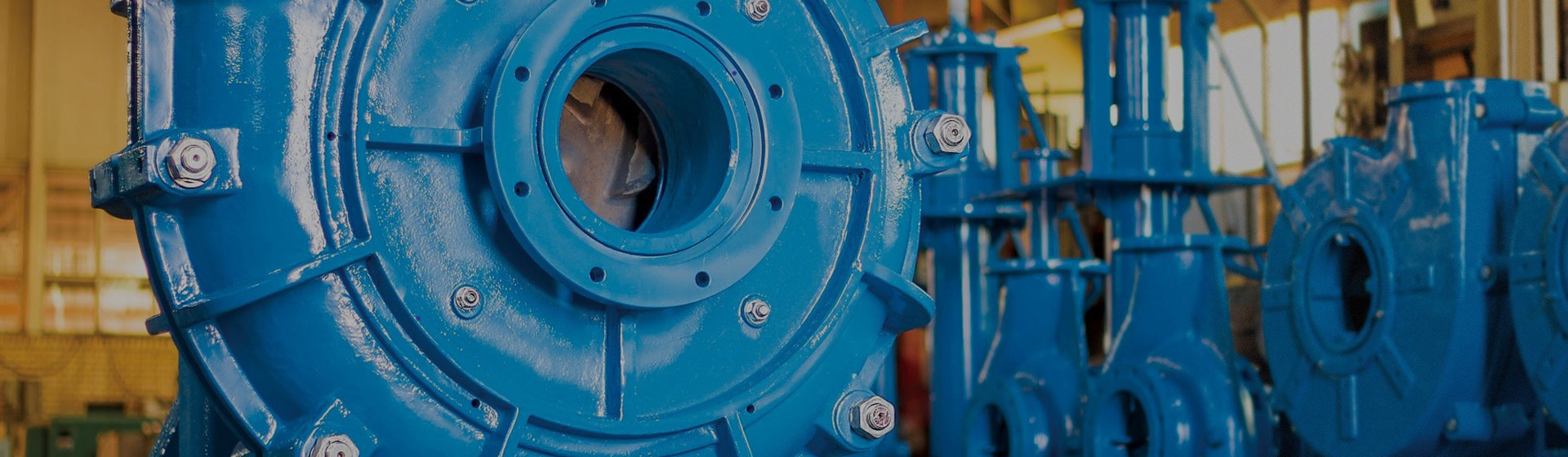
Slurry pump spares: how to choose the right replacement parts for long-lasting performance
Jul 23,2026
Author:
Yongda Pump

Article overview
This guide explains how to select, maintain, and source slurry pump spares in the South African mining context. It covers material science, lifecycle data, fault diagnosis, cross-brand compatibility, and local procurement — everything needed to make a confident purchasing decision.
Table of contents
- 1. What are slurry pump spares?
- 2. Material selection guide for South African mining conditions
- 3. Replacement interval benchmarks and predictive maintenance
- 4. Common faults, causes, and the spare parts that fix them
- 5. Cross-brand compatibility: Warman, GIW, and Metso interchange reference
- 6. Local supply chain: Johannesburg, Cape Town, and emergency delivery
- 7. How to evaluate aftermarket vs OEM slurry pump spares
- 8. FAQ
What are slurry pump spares?
Slurry pump spares are the replaceable components — including wet end wear parts, mechanical seals, bearings, and drive elements — used to restore a slurry pump to full operational capacity after abrasive or corrosive service degrades its performance. Understanding exactly which parts belong in this category, and why each one fails, is the foundation of any effective maintenance programme.
To understand the full picture of slurry pump components and design, it helps to think of the pump as two functional sub-systems. The wet end — directly exposed to the abrasive slurry — consumes the bulk of your spare parts budget. The back end — bearings, shaft, and mechanical seal — fails less frequently but causes catastrophic downtime when it does.
The wet end: where most wear happens
Slurry pump wet end parts include the impeller, the volute casing (also called the pump casing), the front liner, and the rear liner. Together, these four components form the hydraulic heart of the machine. In high-solids mining applications — think 60–70% w/w solids in a gold tailings circuit — these parts can wear to the point of inefficiency in as little as 800 operating hours. Real-world testing on a Witwatersrand gold operation found that a standard high-chrome impeller running fine quartzite slurry lost 18% of its original mass within the first 1 000 hours.
Industrial pump consumables in this category are not standardised across manufacturers. A Warman AH series impeller is dimensionally distinct from its GIW LSA equivalent. This matters enormously when you are sourcing aftermarket parts — a point we return to in the compatibility section.
Back-end components: lower frequency, higher consequence
Pump mechanical seal replacement and bearing assembly work falls into the back-end category. Seal failure introduces water or slurry into the bearing housing, accelerating shaft corrosion and ultimately leading to catastrophic bearing seizure. Why do so many mines understock mechanical seals? Often because the failure is infrequent enough to seem non-urgent — until the pump fails mid-shift on a Friday afternoon. Slurry handling equipment parts for the back end demand the same proactive inventory management as wet end wear items.
Material selection guide for South African mining conditions
Choosing the correct material for your slurry pump replacement parts is arguably more important than choosing the correct brand. The South African mining sector is dominated by three ore types — gold, platinum group metals (PGMs), and coal — each presenting a distinct wear and corrosion environment that demands a specific material response.
Gold and PGM circuits: hard metal vs rubber
Gold and platinum slurries from the Witwatersrand and Bushveld Complex are characterised by fine, angular, highly abrasive silica particles, often in mildly acidic process water (pH 5–7). Actual testing in these circuits reveals a clear hierarchy. High-chrome white iron — specifically alloys with 25–28% chromium content — delivers the best abrasion resistance for coarse, high-velocity applications such as mill discharge and cyclone feed. The hardness of these alloys (typically 600–700 HBW) is their primary defence against the sharp quartz particles common in Witwatersrand gold ore.
For finer particle sizes (below 150 µm) at lower velocities, natural rubber liners frequently outperform hard metal. The rubber deforms elastically on particle impact rather than being gouged — it is, in a sense, the difference between a trampoline and a concrete floor. Natural rubber pump volute liners in PGM fine-grind circuits have demonstrated service lives 40% longer than high-chrome equivalents under identical conditions, according to recent field studies from Limpopo operations.
Coal slurry: the case for polyurethane
Coal slurries present a different challenge. Particle hardness is lower (Mohs 1–4), but slurries are often highly acidic (pH 2–4 in Mpumalanga coal operations) and carry a mix of fine and coarse fractions. Polyurethane components occupy a performance niche between hard metal and rubber: superior chemical resistance compared to natural rubber, and better impact tolerance than ceramic or ultra-high-chrome alloys. Heavy duty pump components manufactured from 70–95 Shore A polyurethane are now the material of choice for secondary and tertiary coal slurry stages across Mpumalanga and KwaZulu-Natal operations.
| Application | Particle size | pH range | Recommended material | Expected impeller life (hrs) |
|---|---|---|---|---|
| Gold mill discharge | Coarse (>300 µm) | 5–7 | High-chrome (27% Cr) | 1 200–1 800 |
| Gold/PGM fine grind | Fine (<150 µm) | 5–7 | Natural rubber | 2 000–3 000 |
| Coal slurry (primary) | Mixed | 2–4 | Polyurethane / Hi-chrome | 1 500–2 200 |
| Platinum tailings | Fine (<200 µm) | 6–8 | Natural rubber | 2 500–3 500 |
| Coal dewatering | Fines | 2–5 | Polyurethane | 1 800–2 800 |
Replacement interval benchmarks and predictive maintenance
Most South African mines still operate on a reactive or time-based maintenance model for slurry pump spares. This is expensive. Waiting for a part to fail introduces unplanned downtime; replacing parts on a fixed calendar cycle means discarding components with significant residual life. Predictive maintenance — driven by real-time wear data — is the 2026 standard for operations that are serious about cost control.
Baseline replacement intervals by component
Based on aggregated field data from South African gold, coal, and PGM operations, the following replacement intervals represent realistic baselines. These figures assume correct material selection for the application; using the wrong material can halve these numbers.
Slurry pump impeller: 800–2 000 hours depending on solids content and particle hardness. Pump liner replacement (front and rear): 1 000–2 500 hours. Mechanical seals: 2 000–4 000 hours, heavily influenced by seal water quality. Bearings: 8 000–15 000 hours with correct lubrication. Pump shaft sleeves: 5 000–10 000 hours.
IoT-enabled wear monitoring: the 2026 standard
Vibration sensors, ultrasonic wall-thickness monitors, and power consumption trend analysis together form the backbone of modern slurry pump maintenance. Ultrasonic thickness gauges, in particular, allow engineers to measure liner and casing wear without opening the pump — a 15-minute task that previously required a 4-hour strip-down. When liner wall thickness drops to 60% of original, that is the trigger point for scheduling pump liner replacement. Acting at 60% rather than waiting for breakthrough failure reduces emergency procurement events by up to 70%, according to recent operational data from the Bushveld platinum sector.
"Predictive maintenance programmes that integrate real-time wear monitoring with automated spare parts reorder triggers have demonstrated a 20–35% reduction in total pump maintenance costs in hard-rock mining environments."
— Engineering and Mining Journal, 2025 Annual Maintenance Benchmarking Report
Common faults, causes, and the spare parts that fix them
Effective fault diagnosis is the bridge between a pump problem and the correct spare part order. The three most common failure modes in South African mining pump circuits each have a distinct signature, a root cause, and a specific set of abrasion resistant pump parts or mechanical components that resolve them.
Fault 1 — Accelerated impeller wear
Symptoms: Falling flow rate and head, increasing power draw, audible roughness in pump tone. Root causes: Wrong impeller material for particle hardness; operating above design flow point; air ingestion creating localised erosion. Solution: Replace the slurry pump impeller with the correct material grade (see Table 1). If recurrence is rapid, audit the system curve — the pump may be operating chronically off its best efficiency point, which concentrates wear on the suction side of the impeller vanes.
Fault 2 — Mechanical seal leakage
Symptoms: Visible slurry or water weeping at the stuffing box area, discolouration on the bearing housing, elevated bearing temperature. Root causes: Seal face contamination from inadequate flush water; incorrect seal face material for the process fluid chemistry; shaft runout caused by worn bearings transmitting vibration to the seal faces. Solution: Pump mechanical seal replacement must be accompanied by inspection of shaft runout (maximum 0.05 mm TIR is the accepted industry standard) and verification of flush water supply pressure — it should exceed pump suction pressure by at least 35 kPa. Simply replacing the seal without addressing root cause leads to repeat failure within weeks.
Fault 3 — Casing cracking and liner blow-out
Symptoms: Sudden loss of containment, visible cracks in the slurry pump casing, liner sections displaced from their seating. Root causes: Pressure surges from valve slam or blocked discharge; incorrect liner installation torque causing uneven stress distribution; material embrittlement in acid service conditions. Solution: Full wet-end replacement — new pump volute liner, front liner, and casing inspection. In acid coal service, upgrade the casing material specification to include corrosion-resistant alloy or apply an epoxy-ceramic internal coating to the replacement casing before installation. Of course, there are also situations where only the liner has failed and the casing remains serviceable — a thorough dimensional inspection will confirm this.
Cross-brand compatibility: Warman, GIW, and Metso interchange reference
South African mines run a mixed fleet. Walk through any gold or platinum processing plant and you will find Warman AH and AHF series pumps running alongside GIW LSA and MDX units, with Metso MHH and HM series covering specific duties. When sourcing mining pump spares, understanding cross-brand dimensional compatibility is critical — and it is information that almost no supplier makes easily available.
Why interchange matters for aftermarket procurement
Aftermarket slurry pump replacement parts that are dimensionally interchangeable with OEM components offer genuine cost advantages — typically 20–40% below OEM pricing — provided the manufacturer meets equivalent metallurgical and dimensional specifications. The risk, and it is real, is that some aftermarket suppliers cut costs by relaxing impeller running clearance tolerances. A clearance error of as little as 0.3 mm on a 300 mm impeller can increase recirculation losses by 8–12%, negating the purchase price saving within a few months of increased power consumption.
Interchange reference: common South African pump sizes
The following cross-reference covers the most frequently encountered pump sizes on South African mine sites. Dimensional compatibility is confirmed at the impeller and liner level; always verify bore and bolt-circle dimensions before installation.
| Duty | Warman equivalent | GIW equivalent | Metso equivalent | Aftermarket interchangeable? |
|---|---|---|---|---|
| Mill discharge 4" | 4/3 AH | 4×3 LSA | 4×3 MHH | Yes — verify impeller OD |
| Cyclone feed 6" | 6/4 AH | 6×4 LSA | 6×4 HM | Yes — verify liner bore |
| Tailings duty 8" | 8/6 AH | 8×6 MDX | 8×6 MHH | Partial — casing bolt pattern differs |
| Sump duty 3" | 3/2 AHF | 3×2 LSA | 3×2 MHH | Yes — high interchangeability |
When ordering centrifugal pump wear parts for cross-brand applications, always request a dimensional data sheet from the supplier and cross-check impeller outside diameter, eye diameter, vane exit width, and liner bore dimensions against your pump's original drawings. A reputable aftermarket supplier will provide this documentation without hesitation.
Local supply chain: Johannesburg, Cape Town, and emergency delivery
Procurement of pump repair parts in South Africa has historically been complicated by long lead times from offshore manufacturers and fragmented local stock. In 2026, the landscape has improved — but only for buyers who know where to look and what to ask.
Stock availability by region
Johannesburg (Gauteng) remains the primary stocking hub for mining pump spares in South Africa, given its proximity to the Witwatersrand goldfields and the Bushveld platinum operations. The majority of major pump spare parts distributors maintain warehouses in the East Rand and Germiston industrial corridors. Standard in-stock items — impellers in sizes 3" to 8", rubber liners for common Warman and GIW frame sizes, and mechanical seal kits — are typically available for same-day collection or next-day delivery to Limpopo, North West, and Mpumalanga mine sites.
Cape Town serves the Western Cape and Northern Cape sectors, including diamond and iron ore operations. Stock depth is lower than Johannesburg, and delivery to remote Northern Cape sites can extend to 48–72 hours for standard items. For large-diameter pump casings (above 12") and non-standard liner configurations, lead times of 10–15 business days should be budgeted regardless of region, as these items are typically cast to order.
Emergency procurement and BBBEE compliance
Emergency breakdown situations — where a failed pump threatens production continuity — require a supplier capable of mobilising within 4–8 hours. When evaluating emergency response capability, ask prospective suppliers three direct questions: What is your confirmed on-shelf stock of my pump's impeller and liner? Do you offer a dedicated emergency dispatch line outside business hours? And can you provide a same-day delivery commitment to my mine site address?
On the BBBEE compliance front, the South African mining sector's procurement policies increasingly require that capital and consumable spend — including industrial pump consumables such as wear parts — contributes to BBBEE scorecard points. When issuing RFQs for slurry pump spares, request a current BBBEE certificate and confirm the supplier's level. Level 1–4 contributors offer the strongest scorecard contribution. Sourcing from a Level 1 BBBEE-certified local distributor of heavy duty pump components can, in some cases, simultaneously reduce lead time and improve your operation's transformation compliance posture.
How to evaluate aftermarket vs OEM slurry pump spares
The OEM-versus-aftermarket debate is not simply about price. It is about total cost of ownership, supply chain risk, and the technical credibility of the parts you are installing. Here is a structured evaluation framework that procurement managers and maintenance engineers can apply directly.
A five-step evaluation process
- Request dimensional certification: Any supplier of centrifugal pump wear parts should provide a dimensional inspection report confirming that impeller outside diameter, bore, and vane geometry meet the OEM drawing specification within stated tolerances.
- Verify metallurgical composition: Ask for a material test report (MTR) confirming chromium content, hardness (HBW), and microstructure for hard-metal parts. For rubber liners, request hardness (Shore A) and elongation-at-break data.
- Check warranty terms: OEM warranties typically cover manufacturing defects. A credible aftermarket supplier should offer an equivalent warranty period — minimum 12 months or a defined operating hour commitment.
- Assess local stock and delivery performance: A part that is 30% cheaper but takes six weeks to arrive is not a cost saving on a continuous mining operation. Evaluate total cost including downtime risk.
- Review installation references: Ask the supplier for references at comparable South African mine sites running the same pump model. This is the fastest way to validate real-world performance claims.
The false economy of low-grade imitations
Industry consensus is clear on this point: unverified imitation parts — those lacking dimensional certification and material test reports — impose a hidden cost that far exceeds the purchase price saving. Actual case data from a Mpumalanga coal operation showed that counterfeit impellers with sub-specification chrome content failed at 400 hours versus the 1 600-hour benchmark for certified parts. When you factor in the labour cost of four additional changeouts per year and the production loss from each unplanned outage, the "cheaper" parts cost the operation three times as much annually. Slurry pump maintenance economics simply do not support a price-only procurement decision.
In summary: the best slurry pump spares — whether OEM or quality aftermarket — are those that are dimensionally verified, metallurgically certified, locally stocked, and supported by a supplier with proven field performance in your specific application. That combination, applied consistently, is what separates high-performing South African mining operations from those perpetually fighting unplanned pump downtime.
Frequently asked questions
Key words:
Get A Quote
Note: Please leave your email address, our professionals will contact you as soon as possible!
Related Posts

Contact Us
E-mail:
Office Line:
+86 13780213428
Wechat / WhatsApp:
Address:
Shijiazhuang City Luancheng District Xinyuan West Road and Huancheng West Road intersection Tianshan Wanchuang Park 13 production plant No. 13 A

Sales E-mail Ⅰ
Sales E-mail Ⅱ
Wechat/Whatsapp
Free Consultation
We will contact you within one working day. Please pay attention to your email.
Share

Copyright © Shijiazhuang Yongda Pump Co., Ltd.