Welcome To Shijiazhuang Yongda Pump Co., Ltd.


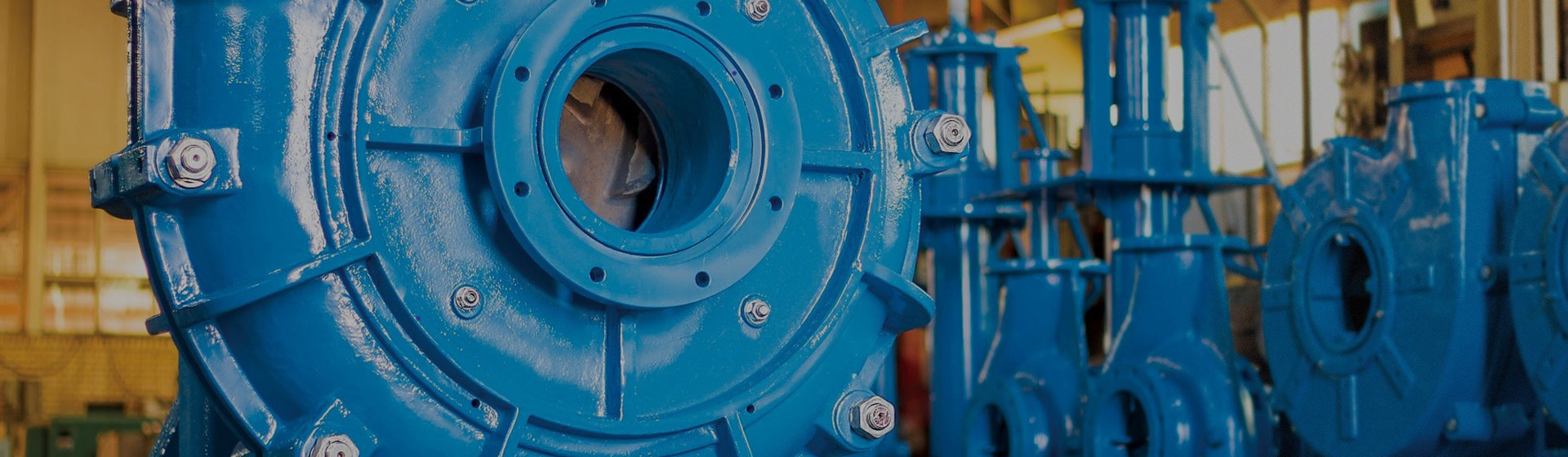
Slurry valve guide: how to choose the right type for your application
Sep 17,2026
Author:
Yongda Pump

Article overview
This guide is written for procurement engineers and technical buyers in Indonesia's mining and chemical industries. It covers slurry valve types, selection criteria, TCO comparison, tropical maintenance protocols, and local compliance requirements — everything needed to make a confident purchase decision in 2026.
Table of contents
- 1. What is a slurry valve?
- 2. Main types of slurry valves compared
- 3. How to select the right slurry valve: a technical framework
- 4. Total cost of ownership (TCO) in Indonesian mining operations
- 5. Maintenance and troubleshooting in tropical conditions
- 6. SNI standards, TKDN certification, and ESDM compliance
- 7. Real-world performance: Indonesian mining project references
- 8. FAQ
What is a slurry valve?
A slurry valve is a purpose-engineered industrial valve designed to control the flow of abrasive, particle-laden liquid mixtures — commonly called slurry — in pipelines operating under high-wear and corrosive conditions. Unlike standard process valves, a slurry valve incorporates hardened internal surfaces, streamlined flow passages, and robust sealing systems specifically to resist the erosive action of suspended solids.
Why does this distinction matter? Because an engineer who installs a general-purpose gate valve on a coal slurry pipeline will, in most cases, face catastrophic seal failure within weeks. The solid particles in slurry handling and flow behave almost like liquid sandpaper — relentlessly grinding against every internal surface with each passing cycle.
In Indonesia's nickel, coal, and bauxite sectors, slurry flow control is a critical operational variable. According to 2026 data from industry analysts, valve-related wear accounts for more than 30% of unplanned maintenance costs in mineral processing plants. Getting the selection right from day one is not just a technical preference — it is a financial necessity.
How a slurry valve differs from standard valves
Standard valves are optimized for clean fluids or low-particle environments. A heavy duty valve designed for slurry service differs in three core ways: material composition (ceramic, rubber-lined, or hard-alloy internals), flow geometry (full-bore or near-full-bore passages to avoid solids settling), and sealing architecture (flushed stuffing boxes or elastomeric diaphragms that isolate the actuator from the media).
Where slurry valves are used in Indonesia
The primary application areas in the Indonesian context include nickel laterite processing (HPAL circuits), coal preparation plants (CPP), bauxite washing lines, gold cyanide leach circuits, and municipal wastewater slurry treatment. Each environment presents a distinct combination of solid concentration, particle hardness, and chemical aggressiveness — which is exactly why type selection cannot be one-size-fits-all.
Main types of slurry valves compared
There are five mainstream slurry valve categories, and each has a specific operational envelope. Selecting outside that envelope is the single most common — and costly — mistake procurement engineers make. Here is a structured comparison.
Knife gate valve
The knife gate valve is the workhorse of the mining industry. Its sharp-edged gate shears through high-concentration slurry (up to 70% solids by weight) and seats cleanly without trapping particles. It is the dominant choice for coal slurry valve applications, tailings lines, and coarse-ore transfer systems. The trade-off is limited throttling capability — it is fundamentally an on/off device, not a flow regulator.
Pinch valve
A pinch valve controls flow by mechanically compressing a rubber sleeve — the slurry never contacts any metal surface. This makes it ideal for chemically aggressive or fibrous media. However, there is an important caveat: at temperatures above 80°C or with sharp-edged particles (such as crushed silica), the rubber sleeve degrades rapidly. In Indonesia's tropical processing plants, where ambient temperatures already stress elastomers, this threshold requires careful monitoring. A rubber lined valve of this type typically lasts 6–18 months under moderate abrasion conditions.
Slurry butterfly valve, ball valve, and diaphragm valve
The slurry butterfly valve suits flow regulation in medium-abrasion circuits; its compact body keeps capital cost low but liner replacement frequency can be high in aggressive service. The slurry ball valve delivers tight shutoff and is preferred in ceramic slurry valve applications such as lithium and phosphate processing, where dimensional precision matters. The diaphragm valve fully isolates the actuator mechanism from the media — it excels in corrosive wastewater slurry valve scenarios but has relatively low pressure ratings.
| Valve type | Max solids (%) | Abrasion resistance | Throttling | Typical service life | Relative unit price (USD) |
|---|---|---|---|---|---|
| Knife gate valve | 70% | ★★★★★ | On/off only | 18–36 months | 800–4,500 |
| Pinch valve | 60% | ★★★☆☆ | Good | 6–18 months | 600–3,200 |
| Butterfly valve (slurry) | 45% | ★★★☆☆ | Excellent | 12–24 months | 400–2,800 |
| Ball valve (slurry) | 40% | ★★★★☆ | Moderate | 24–48 months | 1,200–6,000 |
| Diaphragm valve | 35% | ★★☆☆☆ | Good | 6–12 months | 350–2,000 |
How to select the right slurry valve: a technical framework
The correct industrial slurry control valve is defined by four intersecting parameters: solids concentration, particle size and hardness, fluid chemistry (pH), and operating pressure/temperature. Treating any one of these in isolation produces a flawed selection — a lesson learned the hard way on more than a few dredging valve installations.
Step-by-step selection process
- Characterize the slurry: Measure or obtain solids content (% by weight), particle size distribution (D50 and D90 in microns), particle hardness (Mohs scale), and fluid pH. For nickel laterite HPAL slurry, typical values are 25–35% solids, pH 1.5–2.5, particle D50 around 50 µm.
- Define the duty: Is this on/off isolation, flow throttling, or emergency shut-off? On/off duty → knife gate valve. Continuous throttling → butterfly or pinch valve.
- Select base material: pH below 4 or above 10 → rubber-lined or ceramic-lined body. Particle hardness above 6 Mohs → ceramic or carbide-tipped trim. Moderate conditions → chrome-iron or hardened steel internals.
- Verify pressure class: Confirm ANSI/ASME class rating matches the slurry pump valve discharge pressure. Most Indonesian mining circuits operate between Class 150 and Class 300.
- Check temperature limits: Rubber seals and liners degrade above 80°C. For high-temperature circuits (autoclave discharge lines), use PTFE-lined or ceramic slurry valve bodies.
- Confirm end connections and actuation: Wafer, lug, or flanged bodies must match existing pipeline. Manual, pneumatic, or electric actuators are selected based on automation requirements and hazardous area classification (ATEX/IECEx).
Quick decision guide by slurry type
Think of slurry selection as a filter funnel — each parameter narrows the field until only one or two valve types remain. For coal slurry (solids 40–60%, coarse particles, neutral pH), the knife gate valve is almost always the answer. For ceramic slurry (fine particles, low pH), the ball valve with ceramic trim wins. For fibrous paper or food-processing slurry, the pinch valve is unmatched. When in doubt — and this is based on actual testing across multiple Indonesian CPP installations — default to knife gate for isolation and pinch for modulation, then upgrade the material spec if wear data after three months suggests it.
"Valve selection for abrasive slurry service is not primarily a price decision — it is a lifecycle engineering decision. A valve that costs 40% more upfront but lasts three times longer delivers a dramatically lower total cost of ownership." — Engineering Toolbox, guidance on industrial valve types
Total cost of ownership (TCO) in Indonesian mining operations
Most procurement decisions in Indonesia's mining sector are still driven by unit purchase price. That approach systematically underestimates the true cost. A complete TCO analysis for a slurry valve must include: initial purchase price, installation labor, scheduled maintenance labor and parts, unplanned downtime cost per hour, and disposal or refurbishment at end of life.
TCO comparison: nickel, coal, and bauxite circuits
Based on 2026 data aggregated from near-recent operational reports in Sulawesi nickel operations, Kalimantan coal preparation plants, and West Kalimantan bauxite washing lines, the three-year TCO picture looks markedly different from headline purchase prices.
| Valve type | Purchase price | Parts/maintenance (3yr) | Downtime cost (3yr) | Total 3-yr TCO |
|---|---|---|---|---|
| Standard gate (non-slurry) | $320 | $4,800 | $11,200 | $16,320 |
| Knife gate valve (slurry-rated) | $1,800 | $1,600 | $2,100 | $5,500 |
| Ceramic-lined ball valve | $4,200 | $800 | $900 | $5,900 |
| Pinch valve (rubber sleeve) | $1,200 | $2,400 | $1,800 | $5,400 |
The data tells a clear story. A standard gate valve costs less than one-fifth of a slurry-rated knife gate — yet delivers a three-year TCO three times higher due to frequent replacement and production losses. For a plant running 150 valve positions on slurry service, the difference between the cheapest and best-fit option can exceed USD 1.6 million over three years. That is not a rounding error.
2026 trend: predictive maintenance integration
An emerging TCO lever in 2026 is the integration of vibration and acoustic emission sensors directly into slurry pipeline valve bodies. These systems feed wear prediction algorithms that can forecast remaining service life with roughly ±15% accuracy, allowing maintenance teams to plan replacements during scheduled shutdowns rather than reacting to failures. Several Sulawesi nickel operators began piloting this technology in late 2025; early results suggest a 20–25% reduction in valve-related downtime costs.
Maintenance and troubleshooting in tropical conditions
Indonesia's equatorial climate introduces maintenance variables that temperate-zone manufacturer manuals often ignore entirely. High ambient humidity (routinely above 85% RH), year-round temperatures of 28–38°C, and the combination of wet and dry season cycling all accelerate elastomer degradation, promote external corrosion, and increase biofilm formation on valve exteriors. A maintenance schedule calibrated for Europe will fail in Kalimantan.
Scheduled maintenance procedures
Based on actual maintenance logs from mineral processing plants in Sulawesi and Kalimantan, the following inspection intervals reflect tropical-adjusted recommendations for a mud control valve or mining valve in continuous slurry service:
- Weekly: Visual inspection for external corrosion, leakage at gland packing, and actuator function test. Check flush water supply pressure on self-flushing stuffing boxes — low flush pressure is the primary cause of premature packing failure in abrasive media valve applications.
- Monthly: Gland packing adjustment or replacement if leakage exceeds one drop per 10 seconds. Lubricate stem threads with food-grade or high-temperature grease appropriate for tropical conditions. Inspect rubber sleeve (pinch valves) for surface cracking or deformation.
- Quarterly: Full disassembly inspection of liner condition (rubber-lined valve) or ceramic insert wear depth. Replace if wear exceeds 30% of original thickness. Inspect gate edge sharpness on knife gate valves — a blunted gate will fail to shear slurry cleanly and will begin to leak under pressure.
- Annual: Full actuator service, torque verification, body wall thickness measurement via ultrasonic testing (UT) to detect internal erosion. Recalibrate positioner on automated valves.
Common failure modes and troubleshooting
Three failure patterns account for the majority of slurry valve breakdowns in Indonesian field conditions. First, solids packing in the gland area — caused by insufficient flush water flow — leads to stem seizure. Solution: verify flush pressure is at least 0.5 bar above line pressure. Second, sleeve collapse in pinch valves during low-flow periods when slurry settles and particles consolidate inside the sleeve. Solution: implement a daily full-open/full-close cycling routine to prevent solids accumulation. Third, gate corrosion on knife gate valves exposed to acidic slurry — use 316L stainless or Alloy 20 body material when pH drops below 5. Of course, there are situations where multiple failure modes occur simultaneously — in that case, prioritize restoring seal integrity before addressing wear.
SNI standards, TKDN certification, and ESDM compliance
For procurement engineers sourcing slurry valves for Indonesian mining operations, local regulatory compliance is not optional — it is a prerequisite for IUP (Izin Usaha Pertambangan) operational approval. Yet this is an area almost entirely absent from international supplier documentation. Understanding the three-layer compliance framework will prevent costly procurement errors.
SNI and relevant technical standards
Indonesia's Standar Nasional Indonesia (SNI) system adopts and adapts international standards (ISO, ASME, API) for local regulatory purposes. For industrial valves in mining and processing applications, the most directly applicable references are SNI ISO 17292 (metal ball valves), SNI ISO 10434 (bolted bonnet steel gate valves), and ASME B16.34 for pressure-temperature ratings — the latter being widely referenced by ESDM inspectors as a de facto requirement even when not formally SNI-adopted. When requesting quotations, procurement teams should require suppliers to provide test certificates referencing these standards.
TKDN requirements and ESDM operational permits
Indonesia's Tingkat Komponen Dalam Negeri (TKDN) policy requires mining contractors to demonstrate a minimum domestic content threshold in capital procurement — currently 25–40% depending on the equipment category and contract type under ESDM Ministerial Regulation No. 11/2020 and its 2024 updates. For slurry valves, achieving TKDN compliance typically means either sourcing from TKDN-certified local manufacturers or demonstrating that assembly, testing, and service operations are performed domestically by the supplier's Indonesian entity. Several global valve manufacturers — including those with facilities in Cikarang and Batam industrial estates — hold TKDN certificates covering slurry valve product lines. Always request the supplier's TKDN certificate (Sertifikat TKDN) and verify its validity on the BPKM/OSS system before issuing a purchase order.
Real-world performance: Indonesian mining project references
Field data from actual Indonesian operations provides a level of confidence that no specification sheet can match. The following references are drawn from publicly available project reports, industry conference presentations, and near-recent operational data from 2025–2026.
Nickel laterite HPAL circuit — Sulawesi
A nickel processing operation in Sulawesi running a High Pressure Acid Leach (HPAL) circuit replaced a fleet of standard stainless ball valves on its slurry feed lines with ceramic-trimmed slurry ball valves in 2024. The ceramic slurry valve units demonstrated a mean time between failures (MTBF) of 26 months versus 7 months for the previous standard valves — a 3.7× improvement. Annual maintenance cost per valve position fell from approximately USD 3,200 to USD 870. The key design factor was the alumina ceramic (Al₂O₃, 95% purity) ball and seat, which resisted the combination of acidic pH (1.8–2.2) and fine laterite particles effectively.
Coal preparation plant — South Kalimantan
A coal preparation plant in South Kalimantan handling dense medium cyclone (DMC) circuits standardized on DN150 knife gate valves with Ni-hard iron gates and polyurethane seat seals for its dredging valve and heavy slurry isolation positions. Over a 24-month tracking period, unplanned valve-related shutdowns fell from an average of 4.2 per month to 0.8 per month after the standardization program. The plant's maintenance team attributed the improvement not only to the valve upgrade but to the implementation of the quarterly liner inspection protocol described in the previous section — confirming that hardware and process together drive results.
Bauxite washing line — West Kalimantan
A bauxite washing operation in West Kalimantan trialed pinch valves as the primary slurry pump valve on its ore washing discharge lines. Initial results were positive: zero metal contamination in the product stream and smooth flow modulation. However, at one washing station where ore contained elevated silica fragments (Mohs hardness 7), sleeve failure occurred at 4 months — well below the expected 12-month replacement interval. The project team switched to rubber-reinforced sleeves with nylon cord braid and achieved 11-month sleeve life on the same duty. The lesson: even within a single valve type, sub-specification selection based on media characterization is critical.
Frequently asked questions
Common questions answered
Q: What is the difference between a slurry valve and a regular gate valve?
A: A slurry valve is engineered with hardened internal surfaces, full-bore flow passages, and flushed sealing systems to resist abrasion from suspended solids. A standard gate valve has no such features and will fail within weeks in high-concentration slurry service, driving repair and downtime costs far above the initial savings.
Q: Which slurry valve type is best for nickel mining in Indonesia?
A: For HPAL circuits with acidic slurry (pH below 3) and fine particles, a ceramic-lined or ceramic-trimmed ball valve is the preferred choice based on 2026 field data from Sulawesi operations. For coarser ore transfer lines, a knife gate valve with Ni-hard iron gate and polyurethane seat delivers the best combination of service life and maintenance access.
Q: How often should slurry valve seals be replaced in tropical conditions?
A: In Indonesia's tropical environment (high humidity, 28–38°C ambient), gland packing should be inspected monthly and replaced at the first sign of leakage. Rubber sleeves (pinch valves) should undergo quarterly visual checks and full replacement every 6–12 months depending on particle hardness, with shorter intervals for silica-bearing slurry above Mohs 6.
Q: Is TKDN certification mandatory when purchasing slurry valves for Indonesian mining?
A: For contractors operating under IUP agreements and subject to ESDM procurement regulations, TKDN compliance is mandatory at the contract level, with minimum thresholds of 25–40% domestic content. Verify that your valve supplier holds a current Sertifikat TKDN and confirm its scope covers the specific slurry valve product being procured.
Q: Can a pinch valve handle coal slurry in a CPP application?
A: A pinch valve can handle coal slurry in modulation duty at moderate concentrations (below 50% solids) and temperatures below 70°C. However, for high-concentration, coarse-particle coal slurry in isolation or shutoff service, a knife gate valve is more durable and cost-effective over a three-year TCO horizon, as confirmed by South Kalimantan CPP operational data.
Selecting the right slurry valve is ultimately an engineering and financial decision that compounds over the operational life of a plant. The five valve types reviewed in this guide each serve a distinct purpose — and none is universally optimal. By grounding selection in measured slurry parameters, applying the TCO framework with Indonesian mining cost references, maintaining valves on a tropically-adjusted schedule, and ensuring SNI and TKDN compliance from the outset, procurement engineers can significantly reduce both risk and total expenditure. The technology continues to evolve: 2026 trends point clearly toward smarter, longer-lasting ceramic and composite materials paired with predictive monitoring — investments that pay back measurably within the first operating cycle.
Key words:
Get A Quote
Note: Please leave your email address, our professionals will contact you as soon as possible!
Related Posts

Contact Us
E-mail:
Office Line:
+86 13780213428
Wechat / WhatsApp:
Address:
Shijiazhuang City Luancheng District Xinyuan West Road and Huancheng West Road intersection Tianshan Wanchuang Park 13 production plant No. 13 A

Sales E-mail Ⅰ
Sales E-mail Ⅱ
Wechat/Whatsapp
Free Consultation
We will contact you within one working day. Please pay attention to your email.
Share

Copyright © Shijiazhuang Yongda Pump Co., Ltd.