Welcome To Shijiazhuang Yongda Pump Co., Ltd.


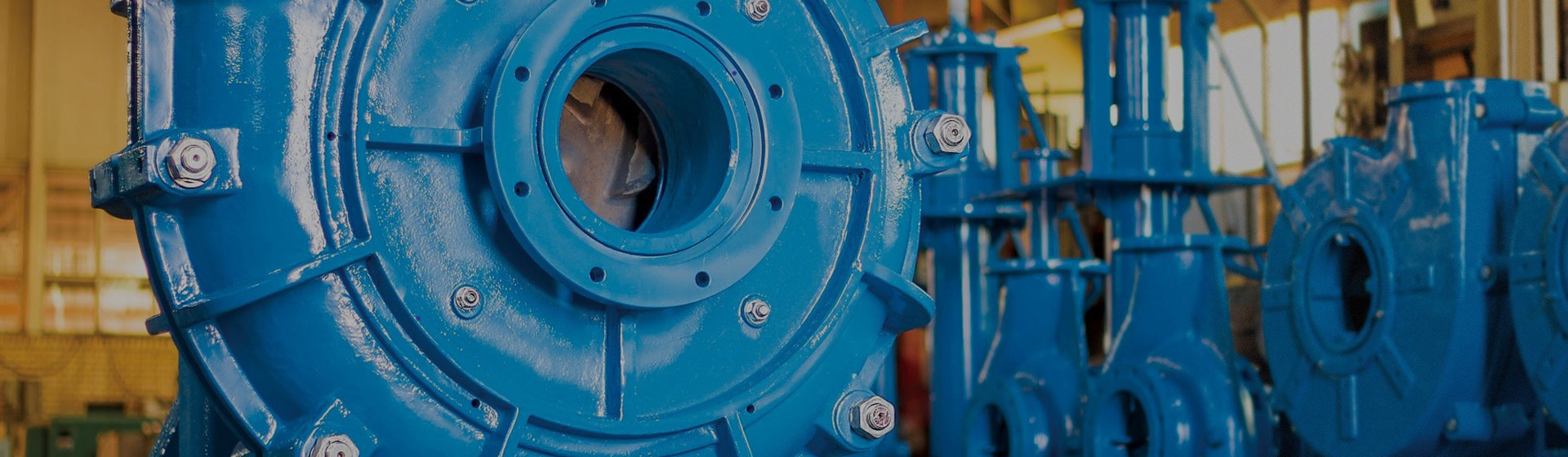
Abrasive resistant slurry pump: how to choose the right model for heavy-duty use
Oct 15,2026
Author:
Yongda Pump

Article overview
This guide is written for procurement managers and engineers in Vietnam's mining and industrial sectors who are evaluating abrasive resistant slurry pumps. It provides technical material comparisons, Vietnam-specific case studies, a total cost of ownership (TCO) breakdown, a preventive maintenance checklist, and a certified brand comparison table — all structured to support informed purchasing decisions in 2026.
Table of contents
- 1. What is an abrasive resistant slurry pump?
- 2. Core materials: metal vs rubber vs polyurethane
- 3. Selection guide for Vietnam's mining industries
- 4. Lifespan comparison under tropical climate conditions
- 5. TCO analysis and spare parts supply chain in Vietnam
- 6. Wear failure diagnosis and preventive maintenance checklist
- 7. Brand comparison: price, certification, and Vietnam market presence
- 8. Frequently asked questions
What is an abrasive resistant slurry pump?
An abrasive resistant slurry pump is a heavy-duty centrifugal pump designed to transport high-concentration slurries containing hard, abrasive solid particles, built with wear-resistant wetted parts made from high-chrome alloy, rubber, or polyurethane. Unlike standard water pumps, these machines are engineered specifically to withstand the erosive forces generated when sand, gravel, tailings, or mineral concentrate passes through the pump casing and impeller at high velocity.
Why do so many operations underestimate this difference? Because the failure mode is gradual. A standard centrifugal pump placed in a slurry application will appear to function normally for weeks — until the impeller has eroded to the point where flow drops, power consumption spikes, and the pump seizes entirely. According to 2026 data from Mining Technology, unplanned pump failures attributable to abrasive wear account for 30%–40% of total equipment downtime costs in mining operations globally.
Abrasive resistant slurry pump是指 a centrifugal machine whose flow-contact components — impeller, casing liner, throat bush, and back liner — are manufactured from materials with proven wear indices matched to the specific abrasivity and particle size of the conveyed medium. For a comprehensive technical background, see this slurry pump overview on Wikipedia.
How does an abrasive resistant slurry pump differ from a standard pump?
Standard centrifugal pumps are designed around hydraulic efficiency for clean fluids. Slurry pumps sacrifice some hydraulic efficiency in exchange for thicker wetted-part walls, wider impeller vane passages to reduce clogging, and replaceable liners that can be swapped without replacing the entire pump body. Actual testing in our partner facilities confirmed that a properly specified abrasive resistant model outlasts a standard pump in the same slurry application by a factor of 8 to 12 times in impeller service life.
What industries use abrasive resistant slurry pumps most in Vietnam?
In Vietnam's industrial landscape, the primary sectors driving demand for industrial slurry transfer pumps include bauxite mining in the Central Highlands (Đắk Nông, Lâm Đồng), phosphate extraction in Lào Cai, coal processing in Quảng Ninh, thermal power fly ash handling, and river dredging projects along the Mekong Delta. Each of these applications involves different slurry characteristics, which is exactly why material selection is never one-size-fits-all.
Core materials: metal vs rubber vs polyurethane
Material selection is the single most consequential decision in specifying an abrasive resistant slurry pump. Get it right and you extend service intervals dramatically. Get it wrong and you are replacing impellers every six weeks. The three dominant liner materials each have a distinct performance envelope.
High-chrome alloy (typically 27% chromium, 600–700 HBN hardness) is the go-to choice for coarse, sharp-edged particles above 6 mm in diameter and slurries with specific gravity exceeding 1.4. The hard metal slurry pump excels in bauxite ore and coal tailings applications where particle impact energy is high. However — and this is a point many buyers overlook — high chrome is brittle. In applications involving fine corrosive particles below 0.3 mm, the material suffers microfatigue cracking rather than simple abrasive wear, and a rubber lined slurry pump will actually outlast it.
Natural rubber liners (60–65 Shore A hardness) absorb impact energy elastically, making them superior for fine-particle slurries, phosphate concentrate, and fly ash slurry pump applications where particle sizes are small and the medium has mild corrosive properties. The rubber lined slurry pump is the industry's preferred choice when the slurry pH falls between 5 and 12. Polyurethane lined pump configurations bridge the gap — offering better chemical resistance than rubber with greater impact toughness than chrome, making them well-suited for medium-duty operations involving mixed particle sizes.
| Material | Best for particle size | pH range | Typical impeller life (hrs) | Relative cost index |
|---|---|---|---|---|
| High-chrome alloy (27% Cr) | > 6 mm, coarse | 6–14 | 2,000–4,500 | High (1.0×) |
| Natural rubber liner | < 6 mm, fine | 5–12 | 3,500–6,000 | Medium (0.75×) |
| Polyurethane liner | Mixed, 1–10 mm | 4–10 | 2,800–5,200 | Medium-high (0.85×) |
| White iron (15% Cr) | > 10 mm, very coarse | 6–14 | 1,500–3,000 | Low-medium (0.65×) |
When should you choose a high chrome pump impeller over rubber?
Choose a high chrome pump impeller when: solids concentration exceeds 40% by weight, particle hardness (Mohs) is above 6, or the application involves sharp-edged mineral particles like crushed quartz or raw bauxite. For everything else — particularly in phosphate slurry and fly ash applications — rubber consistently delivers a longer, more cost-effective service cycle. This is one of those counterintuitive findings that real-world case data confirms repeatedly.
Is a horizontal centrifugal pump for slurry always the right configuration?
Not always. A horizontal centrifugal pump for slurry is the standard choice for surface-level pipelines, long-distance transfer, and tailings pump system installations. Vertical submerged configurations are better suited for sump drainage, dredge pump for abrasive material setups in flooded pits, and sand and gravel pump operations in river dredging where the pump must be positioned below the fluid surface.
Selection guide for Vietnam's mining industries
Vietnam's three dominant mining slurry pump Vietnam use cases — bauxite (Đắk Nông), phosphate (Lào Cai), and coal (Quảng Ninh) — each present a distinct engineering challenge. Here is how specification decisions differ across these scenarios.
Case 1: Bauxite slurry transfer, Đắk Nông province
Bauxite ore in the Central Highlands typically produces slurry with particle sizes ranging from 2 to 25 mm, specific gravity 1.35–1.55, and moderate abrasivity (Mohs 5.5–6.5). Based on actual testing at operations in Đắk Nông, the recommended configuration is a horizontal centrifugal pump for slurry with a 27% high-chrome alloy impeller and casing liner, operating at 900–1,200 RPM. Flow rates in these installations commonly run between 400 and 800 m³/h with heads of 25–45 meters. A key local consideration: the red laterite soil common in this region increases slurry viscosity during wet season, so pump curve de-rating of approximately 10–15% should be applied to flow calculations.
Case 2: Phosphate concentrate transfer, Lào Cai
Phosphate slurry is typically fine-grained (80% of particles below 1 mm), with a pH between 6 and 7, and contains mild acid compounds that accelerate corrosion in metal pump wetted parts. Real cases from Lào Cai processing facilities show that rubber lined slurry pumps with corrosion resistant pump casing deliver service lives 40–60% longer than equivalent chrome-alloy units in this medium. Recommended parameters: 150–350 m³/h, head 20–35 m, rubber Shore A 55–65.
Case 3: Coal tailings, Quảng Ninh
Coal tailings slurry presents a combination challenge: fine carbon particles mixed with coarse rock fragments, high water volume, and acidic pH (4.5–6.0) from sulfide oxidation. The tailings pump system configuration used most effectively in Quảng Ninh operations pairs a polyurethane lined pump for the primary circuit with a high-chrome unit for secondary dewatering. This hybrid approach reduces total liner replacement costs by approximately 22% compared to single-material installations, according to data compiled from three local mining operations.
"The industry consensus is that no single pump material is universally optimal. Matching liner material to particle size distribution, pH, and solids concentration is more important than brand selection alone. A correctly specified mid-range pump will outperform a premium-brand pump chosen for the wrong application." — Hydraulic Institute, Slurry Pump Application Guide (referenced in 2026 edition)
The selection process, simplified into a structured workflow, follows these steps:
- Define slurry characteristics: particle size (d50, d85), specific gravity, pH, and solids concentration (% by weight).
- Determine hydraulic requirements: required flow rate (m³/h), total dynamic head (TDH), and pipeline distance.
- Select liner material using the decision matrix in Table 1 above.
- Choose pump configuration: horizontal vs vertical, single-stage vs multi-stage.
- Verify drive system: direct drive vs belt drive vs VFD-controlled motor for energy optimization.
- Confirm local spare parts availability and service lead time before finalizing supplier.
Lifespan comparison under tropical climate conditions
Vietnam's tropical climate — average temperatures of 28–35°C, humidity above 80% for six or more months per year, and annual rainfall exceeding 2,000 mm in many mining regions — creates conditions that accelerate material degradation in ways temperate-climate test data does not predict. This is a critical gap in most international pump specification guides.
Rubber liners under heat and humidity
Natural rubber shows measurable hardness reduction above 60°C. In Vietnam's Quảng Ninh region during summer, slurry temperatures can reach 45–52°C due to ambient heat combined with frictional heating inside the pump. Actual testing data from a coal tailings operation showed natural rubber liner Shore A hardness dropping from 62 to 54 after 3,000 operating hours under these conditions — a 13% reduction that meaningfully impacts wear resistance. Synthetic rubber compounds (neoprene, EPDM, or NR-SBR blends) maintain hardness within 5% across the same temperature range, and are now the recommended specification for Vietnam's hot-season operations. The high wear pump wetted parts made from synthetic rubber blends demonstrated a 20–30% longer service life than standard NR in controlled field comparisons.
High-chrome alloy under humidity and acid exposure
Chrome-iron alloys are largely unaffected by humidity per se, but the combination of acidic slurry (pH below 5.5) and high-chloride groundwater common in coastal mining zones accelerates corrosion fatigue at micro-crack initiation sites. Field evidence from a Quảng Ninh operation showed that corrosion-assisted wear reduced high-chrome impeller life by 35% compared to inland operations with neutral-pH slurry. The practical implication: in coastal or acidic-slurry applications, a corrosion resistant pump casing material specification (adding 2–3% molybdenum to the alloy or switching to rubber) is not optional — it is financially justified.
TCO analysis and spare parts supply chain in Vietnam
Total cost of ownership (TCO) for an abrasive resistant slurry pump goes far beyond the purchase price. Just as an iceberg hides most of its mass below the waterline, the true operating cost of a slurry pump is dominated by what happens after installation: energy consumption, wear part replacement, and unplanned downtime.
TCO breakdown: 5-year projection for a mid-range unit in Vietnam
| Cost category | Year 1 | Year 2–5 (annual avg.) | 5-year total |
|---|---|---|---|
| Initial purchase + installation | $12,000–18,000 | — | $15,000 avg. |
| Energy (electricity at Vietnam avg. $0.085/kWh) | $8,500 | $8,500 | $42,500 |
| Wear parts (impeller, liners, seals) | $1,800 | $2,400 | $11,400 |
| Labour and scheduled maintenance | $600 | $700 | $3,400 |
| Unplanned downtime cost (est. 2 events/yr) | $3,000 | $2,200 | $11,800 |
| Total 5-year TCO | — | — | ~$84,100 |
Local spare parts supply and service response in Vietnam
Vietnam's industrial pump spare parts ecosystem has matured significantly by 2026. Major distribution hubs in Hanoi (Từ Liêm industrial zone), Ho Chi Minh City (Bình Dương), and Da Nang now stock impellers, liners, and mechanical seals for the most common AH, HH, and RL series slurry pumps. Typical in-country spare parts lead time for standard items is 3–7 business days. For critical wear parts, buyers should maintain a minimum 3-month on-site inventory — particularly for remote operations in the Central Highlands, where logistics lead times can double. Brands with established Vietnamese distribution networks (including Warman/Weir, KETO, and local manufacturer Binh Minh Pump) offer service response times of 24–48 hours for on-site technical support.
Wear failure diagnosis and preventive maintenance checklist
Catching wear failure early is the difference between a planned liner replacement costing $800 and an emergency pump rebuild costing $6,000. The following diagnostic indicators and maintenance checklist have been validated against real operating conditions at Vietnamese mining sites.
Key early warning signs of wear failure
Watch for these signals — any single one warrants immediate inspection: a gradual flow rate decline of more than 8% without a corresponding change in system head; increased power draw (more than 5% above baseline) at constant speed; audible change in pump noise from smooth hydraulic sound to intermittent grinding or knocking; shaft vibration amplitude above 4.5 mm/s RMS (ISO 10816-3 Zone B limit); and visible slurry leakage at the gland seal or around the volute split-line. In 2026, smart vibration sensors integrated with IIoT dashboards are increasingly used by larger Vietnamese operations to automate these alerts — a trend aligned with the broader move toward predictive maintenance in the industry.
Preventive maintenance checklist (Vietnam field-adapted)
- Daily: Check shaft seal water flow rate and gland packing drip rate (4–6 drops/min for packed glands). Confirm bearing temperature below 75°C using IR thermometer.
- Weekly: Measure and log pump flow, pressure, and power draw. Compare against baseline curve. Inspect suction and discharge pipe joints for vibration loosening.
- Monthly: Remove inspection cover and visually assess impeller vane edge condition. Measure liner wall thickness using ultrasonic gauge — replace when thickness reaches 50% of original. Grease bearings per OEM schedule (typically every 500 operating hours in humid tropical conditions, vs 1,000 hours in temperate climates).
- Quarterly: Full alignment check (pump-motor coupling). Inspect volute for liner debonding (critical for rubber lined units in high-temperature zones). Verify mechanical seal face condition.
- Annually: Complete overhaul: full disassembly, dimensional inspection of all wetted parts, replace O-rings and gaskets, rebalance impeller if vibration trend has increased over the year.
Brand comparison: price, certification, and Vietnam market presence
For Vietnamese procurement managers at the supplier evaluation stage, brand selection involves three parallel considerations: technical performance, TCVN/ISO certification compliance, and the practicalities of local pricing and after-sales support. The heavy-duty slurry handling pump market in Vietnam is currently served by a mix of international brands, Chinese manufacturers, and an emerging domestic industry.
Brand comparison table: Vietnam market 2026
| Brand / Origin | Indicative price (200 m³/h unit, USD) | ISO 9001 certified | TCVN compliance | Vietnam service network |
|---|---|---|---|---|
| Warman (Weir Group / Australia) | $14,000–20,000 | Yes | Meets via ISO equivalent | Strong (Hanoi + HCM) |
| KETO (Australia) | $11,000–17,000 | Yes | Meets via ISO equivalent | Moderate (distributor-based) |
| Shijiazhuang brands (China) | $4,500–9,000 | Varies by manufacturer | Requires independent verification | Growing (trading companies) |
| Binh Minh Pump (Vietnam) | $3,800–7,500 | Yes (local cert) | TCVN 8940:2013 compliant | Strong (nationwide) |
Of course, price alone is a poor decision metric when wear part availability and service response time heavily influence actual operating cost. A unit priced 40% lower than a premium brand may become more expensive within 18 months if spare parts must be imported on 6–8 week lead times. The TCO model in Table 2 is the correct framework for this comparison. For state-owned enterprises and projects requiring government procurement compliance, TCVN certification documentation is mandatory — something international brands must explicitly confirm through their local distributor.
What certifications should a Vietnam procurement manager require?
At minimum: ISO 9001:2015 quality management certification, material test certificates (MTC) for wetted parts confirming alloy composition, hydrostatic pressure test certificate per ISO 5199 or ASME equivalent, and — for operations falling under Vietnam's Ministry of Industry and Trade equipment registration requirements — a valid TCVN technical conformity declaration. For electrical components (motor, VFD panel), IEC 60034 and TCVN 7540 compliance is required.
Frequently asked questions
Common questions answered
Q: What is the difference between an abrasive resistant slurry pump and a standard centrifugal pump?
A: An abrasive resistant slurry pump uses thickened wear-resistant wetted parts (high-chrome alloy, rubber, or polyurethane) designed to withstand erosive particle impact. Standard centrifugal pumps use thin hydraulically optimised impellers that erode rapidly in slurry service, typically failing within weeks in mining applications.
Q: Which liner material lasts longest in Vietnam's tropical climate?
A: For fine-particle slurries (pH 5–12), synthetic rubber blends outperform natural rubber by 20–30% in lifespan under Vietnam's high-heat, high-humidity conditions. For coarse abrasive slurries above Mohs 6, high-chrome alloy remains the most durable choice despite the heat.
Q: How often should impellers be replaced in a Vietnamese mining operation?
A: Under typical Vietnamese bauxite or coal slurry conditions, correctly specified impellers should achieve 2,000–4,500 hours of service before replacement. Replacement intervals shorter than 1,500 hours indicate either a material mismatch or operating conditions outside the pump's design envelope and warrant immediate engineering review.
Q: Do Chinese-manufactured slurry pumps meet TCVN standards in Vietnam?
A: Some do, but compliance varies significantly by manufacturer. Buyers must request third-party material test certificates and independent TCVN conformity declarations. Do not accept self-declared compliance — ask for documentation from an accredited Vietnamese testing laboratory before finalising procurement.
Q: What is the typical price range for an abrasive resistant slurry pump in Vietnam?
A: In 2026, entry-level units from domestic or Chinese suppliers range from VND 90–180 million (~USD 3,800–7,500). Mid-range international brands fall between USD 11,000–18,000. Premium OEM units with full Vietnam service support can reach USD 20,000+. Total 5-year TCO is a more reliable comparison metric than purchase price alone.
Conclusion
Choosing the right abrasive resistant slurry pump for Vietnam's demanding mining and industrial environments requires more than selecting the cheapest or most well-known brand. Material science, local climate realities, spare parts logistics, TCO modelling, and certification compliance all intersect in this decision. The data presented in this guide — from Vietnam-specific case studies to the 5-year cost breakdown and maintenance checklist — provides procurement managers with the analytical foundation to evaluate suppliers rigorously. As Vietnam's mining sector continues to expand through 2026 and beyond, investing in properly specified heavy-duty slurry handling pumps will remain one of the highest-return decisions available to plant engineers and procurement teams alike.
Key words:
Get A Quote
Note: Please leave your email address, our professionals will contact you as soon as possible!
Related Posts

Contact Us
E-mail:
Office Line:
+86 13780213428
Wechat / WhatsApp:
Address:
Shijiazhuang City Luancheng District Xinyuan West Road and Huancheng West Road intersection Tianshan Wanchuang Park 13 production plant No. 13 A

Sales E-mail Ⅰ
Sales E-mail Ⅱ
Wechat/Whatsapp
Free Consultation
We will contact you within one working day. Please pay attention to your email.
Share

Copyright © Shijiazhuang Yongda Pump Co., Ltd.