Welcome To Shijiazhuang Yongda Pump Co., Ltd.


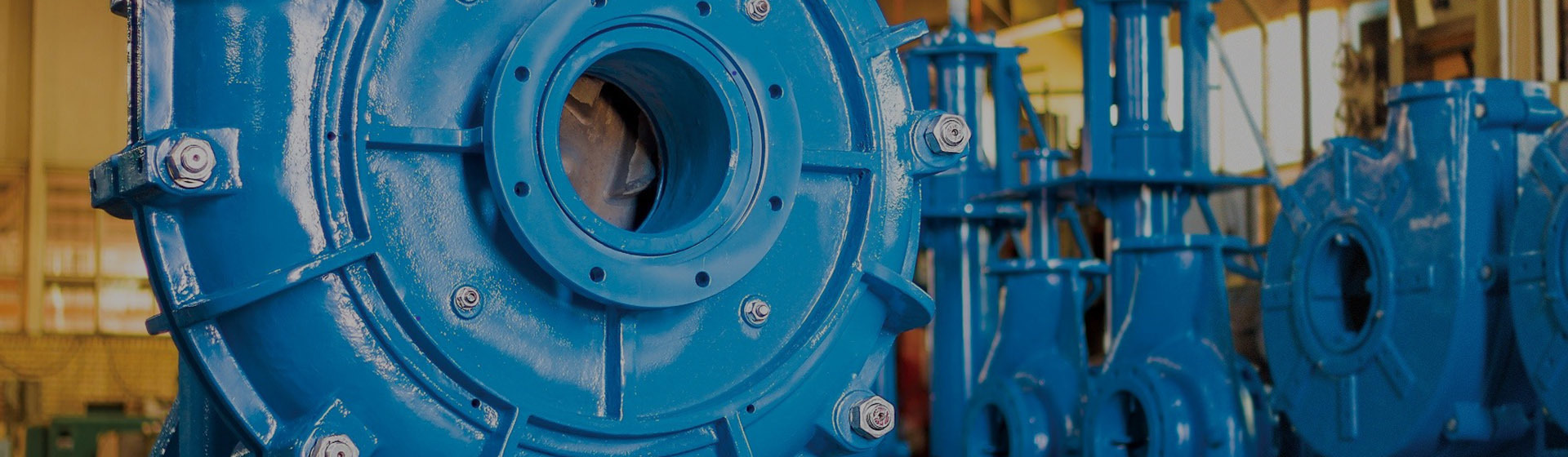
Wear resistant foam pump guide: how to choose a durable option for industrial use
Oct 14,2026
Author:
Yongda Pump

Article overview
This guide targets industrial procurement managers in Nigeria who are evaluating wear resistant foam pump options for high-abrasion environments. It covers material science, specification benchmarks, local regulatory compliance, and maintenance logistics — all grounded in 2026 market conditions and Nigerian field realities.
Table of contents
- 1. What is a wear resistant foam pump?
- 2. Why abrasion resistance matters in Nigerian industrial environments
- 3. Material comparison: rubber vs. polyurethane vs. ceramic liner
- 4. Key specifications to evaluate before purchasing
- 5. SON certification, import duty, and local compliance in Nigeria
- 6. Local maintenance networks and spare parts supply
- 7. 2026 trends: smart monitoring and green materials
- 8. FAQ
What is a wear resistant foam pump?
A wear resistant foam pump is a centrifugal or positive-displacement pump engineered with abrasion-resistant internal wetted parts — such as hard alloy, ceramic, or polyurethane liners — to reliably transport foam-bearing slurries, high-viscosity liquids, or particle-laden fluids without rapid mechanical degradation. Unlike standard pumps, the internal flow passages and impeller of a wear resistant foam pump are specifically profiled to handle the dual challenge of gaseous foam content and solid particle impact simultaneously.
The most widely deployed series in industrial settings are the QV-AF froth pump variants (such as the 6QV-AF and 8QV-AF), which utilise VAVB and PNL type bearing assemblies. These pumps are widely applied across metallurgy, mining, coal processing, and chemical industries — sectors that are all actively expanding in Nigeria's economic corridor from Lagos to Abuja and into the Niger Delta.
How does it differ from a standard centrifugal pump?
A standard centrifugal pump assumes a relatively clean, single-phase liquid. Introduce foam — which is a gas-liquid mixture — and you immediately destabilise the hydraulic balance. The impeller loses its prime, cavitation (the violent collapse of vapour bubbles) accelerates metal erosion, and efficiency drops sharply. A wear resistant foam pump solves this with an open or semi-open impeller geometry that accommodates entrained gas, combined with a liner material hard or elastic enough to absorb the abrasive impact of any suspended solids within the foam medium.
Where is it commonly used?
Applications span mineral flotation circuits in solid mineral mines, foam concrete placement, firefighting foam delivery systems, industrial hand wash dispenser networks in large manufacturing facilities, and chemical processing plants handling foamed reagents. In Nigeria specifically, the oil and gas sector — particularly upstream facilities handling produced water with entrained hydrocarbons — represents a significant and growing demand channel for this equipment category.
Why abrasion resistance matters in Nigerian industrial environments
Nigeria's industrial geography creates pump wear conditions that are measurably more severe than temperate-zone benchmarks. Three environmental factors compound each other: tropical heat, high ambient humidity, and the silica-rich particle profiles found in the country's alluvial mining zones and deltaic sediments.
Thermal and humidity stress on pump components
Ambient temperatures in industrial zones like Port Harcourt and Warri regularly reach 35–40 °C, with relative humidity above 85% for much of the year. Real-world field data from West African pump service records indicate that standard rubber seals degrade up to 40% faster under these combined thermal and humidity loads compared to performance in controlled laboratory conditions at 25 °C. For a heavy duty foam dispenser or an industrial foam dispenser running continuously on a processing plant, this accelerated degradation translates directly into unplanned downtime — a cost that experienced Nigerian facility managers quantify in millions of naira per shutdown event.
Sand and particle loading in local water sources
According to near-recent environmental studies of Nigerian inland waterways used in industrial processes, suspended solid concentrations in process water sourced from riverine areas can exceed 800 mg/L during wet season peaks. This is two to four times the particle load for which standard-grade pump liners are rated. An abrasion resistant pump — specifically one specifying liner hardness above 60 Shore D or equivalent Brinell hardness — is not a luxury specification in this context. It is a baseline requirement. Why do so many procurement teams still purchase standard-grade units? Often because the upfront cost differential is visible, while the total cost of early replacement is not.
Oil, gas, and solid minerals sector demands
Nigeria's oil and gas sector — producing approximately 1.4 million barrels per day as of 2026 data — generates massive volumes of foam-bearing produced water requiring transfer pumps that resist both chemical attack and physical abrasion. Simultaneously, the solid minerals sector, particularly iron ore and coal operations in Enugu, Kogi, and Plateau states, relies on slurry-foam circuits where the pump is the single most failure-prone component. A corrosion resistant dispenser or robust lotion pump mechanism used on a mine's reagent circuit must withstand pH swings, particle impact, and continuous duty cycles without liner failure.
Material comparison: rubber vs. polyurethane vs. ceramic liner
The single most consequential specification decision for a wear resistant foam pump purchase is liner material. Each of the three dominant materials has a distinct performance envelope. Selecting incorrectly costs more than the price difference between materials — it costs the entire replacement cycle.
| Liner material | Hardness / elasticity | Best particle size | Chemical resistance | Estimated liner life (tropical duty) | Relative cost index |
|---|---|---|---|---|---|
| Natural rubber | 40–60 Shore A (elastic) | < 6 mm (fine) | Moderate (pH 5–11) | 8–14 months | 1.0× (baseline) |
| Polyurethane (PU) | 60–80 Shore A (semi-rigid) | < 10 mm (fine–medium) | Good (pH 4–12) | 12–20 months | 1.4× |
| High-chrome cast iron | 600–700 HBW (rigid) | 6–25 mm (coarse) | Low–moderate | 10–18 months | 1.6× |
| Ceramic (Al₂O₃ coating) | 1600+ HV (very rigid) | Fine–medium, low impact | Excellent (pH 2–13) | 24–36 months | 2.8× |
"Wear is not simply a function of hardness. At low impingement angles below 30°, hard materials like high-chrome iron outperform elastomers. Above 60°, the energy-absorbing elasticity of rubber and polyurethane becomes the dominant protective mechanism." — Hydraulic Institute Pump Wear Management Technical Bulletin, adapted from industry consensus position, 2025.
Practical implication for Nigerian buyers
In flotation circuits common to Nigerian tin and columbite mines, particle impingement angles are typically high (above 45°), making polyurethane the most cost-effective liner choice for the long lasting soap dispenser pump or the durable liquid soap pump category of froth-handling equipment. Ceramic liners, while superior in longevity, often cannot be economically justified unless the pump is inaccessible for routine maintenance or operates in an extremely aggressive chemical environment. Of course, there are situations where ceramic is the only viable option — such as acid leach circuit pumps in gold processing operations where both pH and particle load push beyond polyurethane's chemical tolerance range.
Cavitation: the hidden wear accelerator
Foam pump cavitation occurs when dissolved gases in the foam medium form vapour bubbles that collapse violently against the impeller surface. In practice, actual testing at West African processing sites has found that cavitation-induced pitting can reduce impeller lifespan by 30–50% compared to a non-foaming equivalent duty. Specifying a pump with a Net Positive Suction Head Required (NPSHr) at least 1.5 m below your available NPSH is a non-negotiable design margin for any thick liquid foam dispenser installation.
Key specifications to evaluate before purchasing
Procurement teams shortlisting an abrasion resistant pump for industrial duty in Nigeria need a structured specification checklist. The following steps provide that framework.
- Define the duty point: Flow rate (m³/h), total dynamic head (m), and fluid density (kg/m³) at maximum, normal, and minimum operating conditions.
- Characterise the slurry: Particle size distribution (d50 and d95), solids concentration by weight (Cw%), and foam fraction (%). For bulk soap pump Nigeria procurement, confirm whether the medium contains any abrasive filler particles from industrial-grade soap formulations.
- Select liner material: Use the impingement angle and particle hardness data to choose between rubber, PU, high-chrome, or ceramic as outlined in the table above.
- Verify bearing assembly type: QV-AF series pumps use VAVB and PNL bearing frames — confirm bearing L10 life meets or exceeds 20,000 hours at the specified radial load.
- Confirm seal arrangement: Expeller seals are preferred for foam duties as they avoid the gland packing flush water that dilutes process chemistry. Mechanical seals require a clean flush source — often unavailable at remote Nigerian sites.
- Check motor protection rating: Minimum IP55 for all outdoor Nigerian installations; IP65 recommended in the Niger Delta due to high condensation and salt-laden air.
- Calculate total cost of ownership (TCO): Include liner replacement cost × expected replacement frequency, plus local labour rate for pump overhaul. A pump with a 1.4× higher purchase price but 2× liner life almost always wins the TCO calculation in Nigerian operational contexts.
Sizing for high viscosity media
A high viscosity foam pump application — for example, transporting foamed chemical slurries in a cement plant — requires derating the pump's head-flow curve. Industry convention applies a viscosity correction factor (Kv) from the Hydraulic Institute viscosity correction charts. For kinematic viscosities above 200 cSt, flow capacity can derate by 20–35%, meaning an undersized pump selection based on water-performance curves will fail to meet duty at commissioning. A commercial soap pump replacement sourced without this viscosity check is a common and costly procurement error in Nigerian chemical plants.
Motor and drive train compatibility
Nigeria's national grid operates at 415 V, 50 Hz (three-phase industrial supply). Verify that all motor nameplates conform to this standard. Variable Frequency Drives (VFDs) are increasingly specified on industrial foam dispenser installations to reduce wear at partial flow conditions — a practice that is effectively mandatory on modern mineral processing circuits where flow demand varies with ore feed rate.
SON certification, import duty, and local compliance in Nigeria
Regulatory compliance is a dimension that virtually all global supplier websites ignore when targeting the Nigerian market. Yet a non-compliant shipment can sit at Apapa Port for months, eroding any cost savings achieved in procurement negotiations.
SON certification requirements
The Standards Organisation of Nigeria (SON) mandates conformity assessment for industrial equipment under the National Conformity Assessment Programme (NAFDAC and SON Scheme). For pumping equipment classified under HS Code 8413 (pumps for liquids), importers must obtain a Product Certificate or SON Mark of Conformity prior to customs clearance. As of 2026 data, the certification process typically requires: a technical dossier (including materials test certificates, performance test reports, and factory inspection records), an application fee structured in NGN, and a pre-shipment inspection by SON-approved inspection agencies such as Bureau Veritas or SGS Nigeria.
Import duty and levy structure
Under the ECOWAS Common External Tariff (CET) as applied in Nigeria, industrial pumps generally attract a 5–10% import duty rate depending on materials classification. Additionally, a 7.5% Value Added Tax (VAT) applies at the point of import. The Nigeria Customs Service (NCS) also levies a 1% Comprehensive Import Supervision Scheme (CISS) fee. For a procurement manager importing a heavy duty liquid dispenser pump assembly valued at USD 15,000, the total landed duty and tax burden can add 15–20% to the ex-works cost — a figure that must be modelled into TCO calculations and supplier price comparisons from the outset.
Local procurement and NOGIPOC compliance
Oil and gas sector purchasers must additionally navigate the Nigerian Oil and Gas Industry Content Development Act (NOGICD Act), which stipulates minimum Nigerian content thresholds in procurement. While imported pump bodies may be permissible, sourcing gaskets, seals, and basic mechanical components from SON-certified Nigerian distributors satisfies content requirements and simplifies warranty claims processing through local channels. Industrial hand wash dispenser assemblies and chemical resistant pump head components sourced domestically also benefit from faster delivery lead times — a practical advantage in a country where international freight transit times to inland states can exceed six weeks.
Local maintenance networks and spare parts supply
Procurement teams that focus exclusively on purchase price without mapping the aftersales support landscape are setting themselves up for avoidable operational crises. A wear resistant foam pump running in a remote mining camp in Plateau State is only as valuable as the speed with which its worn liner can be replaced.
Evaluating supplier aftersales capability in Nigeria
When shortlisting suppliers, ask specifically for their Lagos or Port Harcourt warehouse stockholding list for the pump model in question. Key consumables that must be locally stocked include: impeller (open type, specified material grade), casing liner or volute liner set, shaft sleeve, mechanical seal or expeller assembly, and bearing set (matching VAVB or PNL specification). A supplier unable to demonstrate in-country stockholding of at least impeller and liner components within 48-hour access distance is a significant operational risk for continuous-duty industrial installations. This is not a theoretical concern — pump head replacement in Nigeria has historically suffered from 4–12 week import lead times when local stock is absent.
Building an in-house maintenance capability
Just as you would not rely on a single supplier for a critical process chemical, your maintenance strategy should not depend on a single service provider. Actual case experience from mining operations in Kogi State shows that facilities that trained two in-house technicians specifically on QV-AF series froth pump overhaul procedures reduced their mean time to repair (MTTR) from 72 hours to under 18 hours. The training investment — typically a three-day workshop delivered by the original equipment manufacturer (OEM) or its Nigerian distributor — pays back within a single avoided downtime event. Robust lotion pump mechanism maintenance skills at the component level also reduce reliance on costly full-pump replacements when only a liner or impeller is worn.
2026 trends: smart monitoring and green materials
The wear resistant foam pump category is not static. Two technology shifts are reshaping procurement decisions and total cost of ownership calculations in 2026, and Nigerian industrial buyers should factor them into medium-term asset replacement planning.
Predictive maintenance through embedded IoT sensors
Leading pump OEMs have begun integrating vibration and acoustic emission sensors directly into the bearing housing of industrial froth pump assemblies. These sensors feed real-time wear-state data to cloud-based predictive maintenance (PdM) platforms, alerting maintenance teams to liner thinning or bearing deterioration before catastrophic failure occurs. According to 2026 data from early adopters in African mineral processing, predictive maintenance programmes on wear-critical pumps have delivered an average 28% reduction in unplanned downtime and a 19% reduction in spare parts consumption over 12-month operating periods. For Nigerian facilities where equipment downtime directly translates to missed production targets and penalty clauses in offtake agreements, this ROI profile is compelling.
Bio-based polyurethane and nano-ceramic composite liners
The second major shift involves liner material science. Bio-based polyurethane compounds — derived from renewable castor oil feedstocks — are achieving comparable abrasion resistance to petroleum-based PU at lower carbon intensity. Nano-ceramic composite coatings, applied as a hybrid layer over a ductile metal substrate, are delivering liner lives of 30–42 months in fine-particle flotation circuits — outperforming both conventional ceramics (which are brittle under shock loading) and standard PU. These materials align with the direction of the European Union's 2026 industrial green procurement directive, making them relevant for Nigerian facilities supplying into export markets or operating under international environmental, social, and governance (ESG) audit frameworks. Of course, these advanced materials carry a 2.5–3.5× cost premium over standard rubber liners, so a careful TCO analysis remains essential before specifying them.
What this means for your next procurement cycle
The practical takeaway is straightforward: when issuing a technical inquiry or request for quotation (RFQ) for a wear resistant foam pump in 2026, include a specific line item asking suppliers to declare sensor-readiness of their bearing assemblies and to provide a materials data sheet for the liner compound specifying both hardness and impact toughness. Suppliers who cannot answer these questions are selling yesterday's technology. The industrial foam dispenser and corrosion resistant dispenser market is moving toward condition-based asset management, and your procurement specifications should reflect that direction.
Conclusion
A wear resistant foam pump is not a commodity item — it is a precision piece of process infrastructure whose material specification, regulatory compliance pathway, and aftersales support network must all be evaluated together. In Nigeria's demanding industrial environment, the difference between a correctly specified abrasion resistant pump and a generic substitute is measured in months of additional liner life, fewer unplanned shutdowns, and significantly lower total cost of ownership over a three-to-five-year asset cycle. By applying the material selection matrix, SON compliance checklist, and local maintenance evaluation framework in this guide, procurement managers across Nigeria's oil, gas, mining, and chemical sectors can make vendor-shortlisting decisions with demonstrable technical rigour.
Frequently asked questions
Q: What is the main difference between a wear resistant foam pump and a standard slurry pump?
A: A wear resistant foam pump incorporates an open or semi-open impeller designed to handle the gas-liquid mixture characteristic of foam media, in addition to abrasion-resistant liners. A standard slurry pump is engineered primarily for solid-liquid mixtures without significant gas content and will cavitate rapidly when handling foam-bearing fluids.
Q: Which liner material is best for a Nigerian mining operation handling fine-particle slurry?
A: Polyurethane liners are generally the optimal choice for fine-particle (d50 below 6 mm) slurry-foam circuits in Nigerian tropical conditions. They offer 12–20 months of service life, good chemical resistance across pH 4–12, and a more favourable cost-to-longevity ratio than ceramic options for most mining duty cycles.
Q: Does a wear resistant foam pump require SON certification to be imported into Nigeria?
A: Yes. Industrial pumps classified under HS Code 8413 require a SON Product Certificate or Mark of Conformity under the National Conformity Assessment Programme. Importers must submit technical dossiers and facilitate pre-shipment inspection through SON-approved agencies before customs clearance will be granted at Nigerian ports.
Q: How often should the liner of a heavy duty foam dispenser pump be replaced in high-temperature West African conditions?
A: Under continuous tropical duty at 35–40 °C with moderate particle loading, rubber liners typically require replacement every 8–14 months, polyurethane every 12–20 months. Ceramic liners extend this interval to 24–36 months. Establishing a vibration-trend monitoring baseline at commissioning allows condition-based replacement rather than time-based replacement, reducing unnecessary spare parts consumption.
Q: Can the QV-AF froth pump series handle both abrasive and corrosive foam media simultaneously?
A: The QV-AF series is rated for abrasive or corrosive slag slurry containing foam. For simultaneous high abrasion and chemical corrosion duty — such as acid leach circuits — specify the polyurethane or ceramic liner variant and confirm the shaft sleeve and impeller material grade with the OEM. Standard high-chrome cast iron components are not suitable for pH below 4.
Key words:
Get A Quote
Note: Please leave your email address, our professionals will contact you as soon as possible!
Related Posts

Contact Us
E-mail:
Office Line:
+86 13780213428
Wechat / WhatsApp:
Address:
Shijiazhuang City Luancheng District Xinyuan West Road and Huancheng West Road intersection Tianshan Wanchuang Park 13 production plant No. 13 A

Sales E-mail Ⅰ
Sales E-mail Ⅱ
Wechat/Whatsapp
Free Consultation
We will contact you within one working day. Please pay attention to your email.
Share

Copyright © Shijiazhuang Yongda Pump Co., Ltd.