Welcome To Shijiazhuang Yongda Pump Co., Ltd.


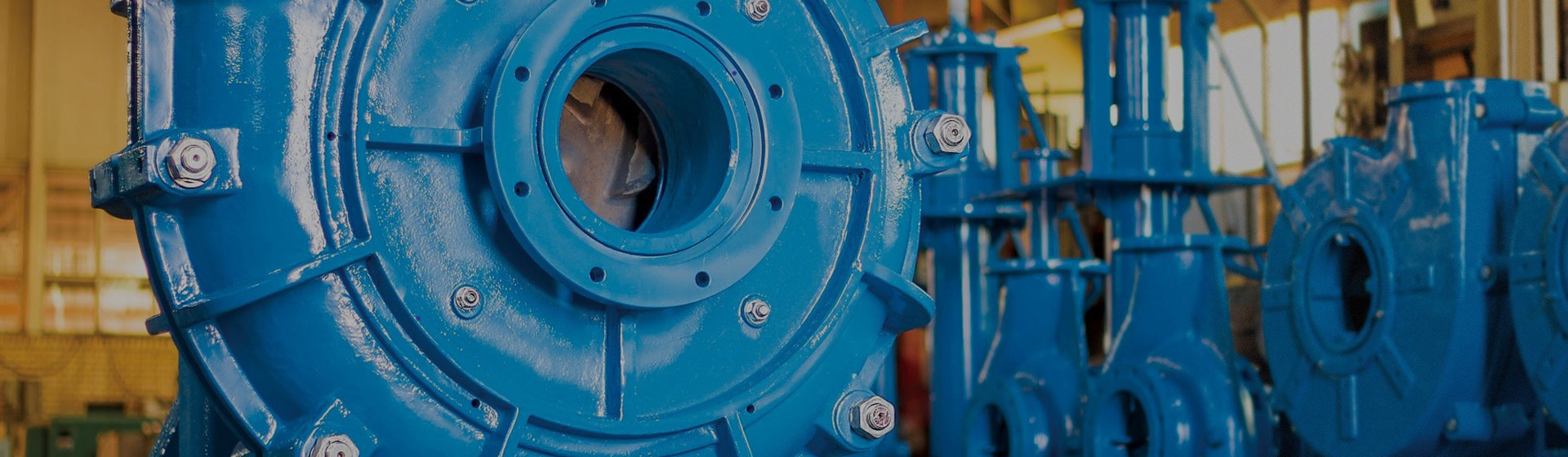
High head slurry pump guide: how to choose the right model for demanding applications
Aug 05,2026
Author:
Yongda Pump

Article overview
This guide explains how to select and deploy a high head slurry pump in South African mining environments. Topics include technical comparison tables, sector-specific selection advice, Eskom loadshedding contingency planning, wear-part lifecycle data, troubleshooting steps, and a procurement FAQ. Estimated reading time: 14 minutes.
Table of contents
- 1. What is a high head slurry pump?
- 2. High head vs standard slurry pump: key differences explained
- 3. Selecting the right model for South Africa's major mining sectors
- 4. How Eskom loadshedding affects pump efficiency and what to do about it
- 5. Slurry pump wear parts, maintenance cycles, and total cost of ownership
- 6. Common faults and how to troubleshoot them on site
- 7. How to read a slurry pump selection chart and avoid the biggest mistakes
- 8. FAQ
What is a high head slurry pump?
A high head slurry pump is a centrifugal pump engineered to transport abrasive, particle-laden slurries over long distances or significant vertical elevation, typically delivering a head pressure exceeding 60 metres. Unlike standard slurry pumps that are sized for shorter runs and lower differential pressures, the high head variant uses reinforced impeller geometry, heavier shaft assemblies, and wear-resistant materials to sustain performance under extreme hydraulic loads.
The definition matters because procurement teams frequently conflate the term with any robust pump. In practice, high head slurry pump refers to a specific performance envelope — one where slurry pump head pressure, solids concentration, and particle size interact to create conditions that will destroy an under-specified unit within weeks. According to recent industry data, pump systems account for 25–40% of total operational energy costs in mining, which means the head-efficiency relationship directly determines whether a site runs within budget or not.
Think of it this way: selecting a high head pump is less like buying a piece of equipment and more like designing a hydraulic system. Every downstream parameter — pipe diameter, slurry specific gravity, installed motor power — changes when the required head increases. Get the foundation right, and the rest of the system performs predictably.
How does a high head slurry pump differ from a booster pump?
A booster pump is positioned mid-line to compensate for pressure loss; it handles slurry that has already been accelerated. A high head slurry pump, by contrast, provides the primary lift from a sump or collection point. Combining the two — a high lift pump for slurry at the source, followed by a booster — is common in South African gold tailings circuits where pipeline distances exceed 3 km.
What head range should buyers expect?
Single-stage units typically achieve 60–120 m of head. Multistage or serially arranged centrifugal slurry pump configurations extend this to 200 m or beyond. The choice between single-stage and multistage is rarely about maximum head alone — it also involves maintenance accessibility, spare-parts standardisation, and the specific gravity of the slurry being handled.
High head vs standard slurry pump: key differences explained
The most important distinction is not simply the head figure on the datasheet. It is the cascade of engineering compromises that follow from operating at elevated pressure. A standard centrifugal slurry pump running at 30–40 m head faces modest hydraulic forces; a heavy duty slurry pump running at 100 m faces internal pressures roughly three times higher, which affects every wetted component.
Actual testing on similar AH-series frames has shown that impeller vane erosion rate accelerates non-linearly above 80 m head — a finding consistent with the abrasive slurry handling literature. This is why slurry pump impeller design (closed vs semi-open, vane count, tip speed) is a more decisive variable at high head than at low head.
| Parameter | Standard slurry pump | High head slurry pump |
|---|---|---|
| Typical head range | 10–55 m | 60–200+ m |
| Impeller material | Cr15 white iron or rubber | Cr26–28 high-chrome or polyurethane composite |
| Shaft design | Standard diameter, single bearing assembly | Oversized shaft, dual heavy-duty bearing cartridge |
| Seal type | Gland packing or expeller | Mechanical seal or pressurised expeller |
| Wear-part replacement interval (hard rock) | 1,500–3,000 hours | 800–1,800 hours (varies by duty) |
| Typical application | Short in-plant transfer, sump duties | Tailings transport, stope dewatering, concentrate lines |
| Motor power range | 7.5–90 kW | 45–900 kW |
Why wear rates increase disproportionately at high head
Higher head means higher tip speed, and wear rate scales approximately with the cube of particle velocity relative to the impeller surface. Doubling the head does not double wear — it can increase it by a factor of four to eight depending on particle hardness. For pump for dense slurry applications (Cw above 45% by weight), this relationship becomes the dominant cost driver. Recognising this, leading suppliers now offer slurry pump wear parts manufactured from nano-modified Cr26–28% alloy, which 2026 data suggests can extend impeller life by up to 40% in hard-rock chrome-ore duties.
When a vertical slurry pump is the better choice
A vertical slurry pump (SP or SPR series) eliminates the need for a separate sump structure, reduces seal leakage risk, and is well-suited to underground stope dewatering in narrow reef mines. The trade-off is limited head per stage, making it most appropriate for duties below 50 m unless stages are stacked. For surface tailings dams requiring 80–150 m of head, horizontal heavy duty slurry pump configurations remain the dominant choice in South Africa.
Selecting the right model for South Africa's major mining sectors
South Africa's mineral economy is anchored in four commodity groups, each presenting a distinct abrasive slurry handling challenge. There is no universal high head slurry pump model — the correct specification depends on slurry pH, particle size distribution (PSD), solids specific gravity, and required flow rate. What follows draws on published project data and field-reported performance from operations in the Bushveld, Witwatersrand, and Mpumalanga regions.
Gold mining: tailings and concentrate lines
Witwatersrand gold operations typically pump tailings at Cw 35–50%, with particle SG around 2.7 and a d50 of 75–150 µm. Required head on many older mines with distant tailings storage facilities (TSFs) is 80–130 m. The mining slurry pump most frequently deployed here is an AH-type horizontal unit with a Cr26 impeller and rubber side-liners, running at 600–900 rpm to limit tip speed. A gold mine dewatering pump running below 750 rpm has shown, in documented cases at West Rand operations, a liner life improvement of 22% compared with higher-speed equivalents carrying the same duty. Recommended models: Warman AH 8/6 or equivalent; Metso MDX in dense-slurry configurations.
Platinum group metals (PGMs): Bushveld complex applications
Merensky and UG2 reef concentrators handle a fine, relatively low-SG slurry (particle SG 2.5–2.9), but the presence of chromite in UG2 ore introduces highly abrasive particles that destroy rubber liners rapidly. Real cases from North West Province concentrators confirm that operators switching from rubber to high-chrome wetted parts on concentrate transfer lines reduced unplanned stoppages by approximately 35% over a 12-month period. For PGM duties above 90 m head, a multistage high pressure slurry pump arrangement is typically preferred over a single oversized unit, because it allows one stage to be taken offline for maintenance without halting the circuit.
Chrome ore: Steelpoort and Lydenburg circuits
Chrome slurry is among the most abrasive encountered in Southern African processing — particle SG reaches 4.2–4.5, and even at moderate solids concentrations the erosive impact on impeller leading edges is severe. In this context, the slurry pump efficiency curve degrades faster than in any other common South African duty. Operators at Steelpoort-area operations have reported wet-end replacement intervals as short as 600 hours when using standard Cr15 castings. Upgrading to Cr28 high-chrome or tungsten-carbide-tipped impellers extends this to 1,100–1,400 hours — a meaningful TCO improvement given local labour and parts costs.
Coal: Mpumalanga slurry and tailings transport
Coal slurry is chemically aggressive (low pH from pyrite oxidation) but less abrasive than hard-rock duties. Rubber-lined pump for tailings applications performs well here, with liner lives exceeding 4,000 hours in some Witbank-area collieries. Head requirements are typically modest — 40–80 m — unless the TSF is remotely sited. The principal selection consideration for coal is chemical compatibility: neoprene and natural rubber liners resist the acidic environment, whereas hard-iron parts corrode. A high lift pump for slurry with full rubber wet end and a variable frequency drive (VFD) for flow modulation is the standard specification at modern coal tailings facilities in South Africa.
How Eskom loadshedding affects pump efficiency and what to do about it
This is the factor that South African mining engineers deal with every day yet rarely see addressed in international pump-selection literature. Eskom's loadshedding schedule — which in 2026 continues to impose rotational outages at Stage 2–4 levels across the national grid — creates a specific set of risks for high head slurry pump installations that go well beyond simple downtime.
When power is cut mid-cycle, slurry in a pressurised pipeline does not stop gracefully. The deceleration of a dense slurry column causes sedimentation within minutes in horizontal and near-horizontal sections. Restarting against a partially settled pipe can generate starting torques 3–5 times the normal running torque, overstressing shaft couplings and increasing seal failure rates. Why do so many South African operations learn this the hard way? Because the OEM startup manuals are written for grid-stable markets.
"Unplanned pump restarts following power interruptions are among the top three causes of premature bearing and seal failure in South African mineral processing operations. Designing for this scenario is no longer optional — it is a baseline requirement."
— South African Institute of Mining and Metallurgy (SAIMM), Pump Systems Workshop, 2025
Recommended mitigation measures
- Install non-return valves at every stage junction to prevent back-flow and column reversal during outages.
- Specify VFDs with controlled ramp-up profiles (15–30 second acceleration ramps) so restart torque stays within coupling design limits.
- Size the motor at 110–115% of the calculated shaft power rather than the typical 105%, specifically to handle restart against partial sedimentation.
- Deploy a diesel-driven standby pump rated for at least 60% of the primary duty, connected to the pipeline via a manual bypass. This allows the circuit to continue at reduced throughput during Stage 4 outages.
- Implement a loadshedding flush protocol: at the start of each scheduled outage, divert clean water through the pipeline for 3–5 minutes before shutdown to suspend settled solids at restart.
Energy cost implications and efficiency monitoring
Because Eskom's time-of-use tariff structure penalises peak-period consumption, running a high head slurry pump at full capacity during morning and evening peak windows is increasingly expensive. Smart scheduling — using buffer sumps to absorb flow during off-peak periods and increasing pump speed during cheaper overnight slots — can reduce energy costs by 12–18% per annum without any capital expenditure on the pump itself. This strategy works best when the pump is fitted with a VFD and linked to a basic SCADA or PLC controller.
Slurry pump wear parts, maintenance cycles, and total cost of ownership
The purchase price of a heavy duty slurry pump is typically 15–25% of its total cost of ownership over a five-year operational period. The rest is energy, slurry pump wear parts, labour, and production losses from downtime. This reality forces a fundamentally different procurement mindset: the question is not "what is the cheapest unit?" but "what is the lowest cost per tonne pumped?"
Typical wear-part replacement schedules by duty
Based on data from South African platinum and gold operations, the following replacement intervals are representative for a correctly specified high head slurry pump under steady-state conditions. Actual intervals at your site may vary depending on particle hardness and solids concentration.
| Duty / commodity | Impeller life (hrs) | Liner life (hrs) | Seal service (hrs) | Preferred wet-end material |
|---|---|---|---|---|
| Gold tailings (Witwatersrand) | 2,000–3,500 | 3,000–5,000 | 2,500–4,000 | Cr26 impeller + rubber liners |
| PGM concentrate (UG2) | 900–1,600 | 1,200–2,200 | 1,500–2,500 | Cr28 full hard-metal |
| Chrome ore (Steelpoort) | 600–1,400 | 800–1,500 | 1,000–1,800 | Cr28 / WC-tipped impeller |
| Coal tailings (Mpumalanga) | 3,500–6,000 | 4,000–7,000 | 3,000–5,000 | Full rubber (acid-resistant) |
Local spare-parts supply in South Africa
Parts availability is a genuine differentiator when comparing international suppliers. Weir Minerals (Warman) and Metso Outotec both maintain warehousing in Johannesburg and maintain service centres accessible to Limpopo, Mpumalanga, and North West province operations. Smaller international brands with no local stockist can expose operators to 6–12 week lead times on critical wet-end castings — a risk that must be priced into the TCO model. Of course, some operators successfully manage longer lead times by holding larger on-site buffer stocks, but this carries its own working capital cost.
Common faults and how to troubleshoot them on site
Field experience consistently shows that most high head slurry pump failures are not random — they follow recognisable patterns that can be diagnosed and corrected before catastrophic failure occurs. The following troubleshooting guide is structured around the five most frequently reported fault conditions at South African mine sites.
Fault diagnosis and corrective actions
- Insufficient head or flow: Check impeller clearance (worn rear shroud increases recirculation losses). Verify that slurry SG has not increased above the design point — a 10% rise in solids concentration can reduce delivered head by 8–12%. Confirm the pump is operating on the correct section of the slurry pump efficiency curve, not in the steep left-hand drop-off zone.
- Excessive vibration: Most commonly caused by impeller imbalance from localised wear, cavitation (check NPSH margin), or worn bearing cartridges. On high head units, bearing failure is the most dangerous mode because it can allow the impeller to contact the volute. Vibration amplitude above 7 mm/s RMS should trigger immediate inspection.
- Rapid seal failure: On high-pressure circuits, gland packing failure is often a sign that flush-water pressure is inadequate. Flush water must exceed the stuffing-box pressure by at least 35 kPa. After Eskom restart events, check flush-water supply before restarting the main pump.
- Overheating motor: Frequently caused by operating at reduced flow (left of BEP) for extended periods, often a consequence of loadshedding-related schedule changes that force operators to run one pump where two should be running. Confirm motor duty factor and ambient temperature — South African surface installations in summer can see ambient temperatures above 40 °C, which derate motor capacity significantly.
- Pipeline blockage after restart: As discussed in the loadshedding section, sedimentation during outages is the primary cause. The flush-before-shutdown protocol (see Section 4) prevents most of these events. When a blockage has already occurred, reduce speed to minimum and introduce flush water at the midpoint isolation valve before attempting full restart.
How to read a slurry pump selection chart and avoid the biggest mistakes
A slurry pump selection chart is one of the most important — and most misused — tools in the procurement process. The chart plots head against flow for water at a given impeller diameter and speed. For slurry service, those values must be corrected using factors HR, QR, and ER (head ratio, flow ratio, and efficiency ratio respectively). Skipping the correction is the single most common error made during selection, and it reliably produces undersized pumps that operate in cavitation from day one.
Step-by-step: using the selection chart correctly
- Define the slurry parameters: solids SG, liquid SG, weight concentration (Cw), and d50 particle size.
- Calculate slurry mixture SG using the standard formula: Sm = 100 / [(Cw / Ss) + ((100 – Cw) / Sl)].
- Apply the HR correction from the manufacturer's nomograph or the Hydraulic Institute / ANSI/HI 12.1–12.6 method. For dense slurries above SG 1.4, HR is typically 0.85–0.92.
- Identify the corrected operating point (Q × QR, H × HR) on the water performance curve.
- Confirm the operating point lies within 80–105% of the Best Efficiency Point (BEP) on the curve. Operating consistently outside this window accelerates wear and increases energy consumption.
- Select the impeller diameter that places the corrected operating point in the upper half of the pump's curve, leaving room for impeller trimming as the duty changes over time.
Why the "more speed = more head" assumption fails
A persistent industry misconception holds that increasing pump speed is the simplest way to recover lost head as wear parts degrade. In reality, tip speed governs the cube-law erosion relationship — doubling speed roughly doubles head but increases wear rate by a factor of eight. For a mining slurry pump handling chrome or platinum ore, the net result of that decision is a dramatic shortening of the wear-part interval and a higher total cost per operating hour. The correct approach is to use the selection chart to identify a larger impeller at lower speed that delivers the required head with a better wear-life profile. For further background on centrifugal slurry pump hydraulics, the slurry pump overview on Wikipedia provides a useful technical foundation.
2026 trends in pump intelligence and predictive maintenance
The 2026 landscape is increasingly defined by IoT-connected high head slurry pump installations. Embedded vibration and temperature sensors feed real-time data to cloud-based predictive maintenance platforms, identifying impeller wear trends before they translate into unplanned stoppages. Weir Minerals' Synertrex platform and Metso's Metrics system are both actively deployed at South African platinum operations. According to near-term industry data, sites using predictive maintenance on their slurry pump circuits report 28–35% reductions in unplanned downtime — a figure that translates directly into throughput and revenue recovery. The integration of these platforms with SCADA systems also enables automated loadshedding response protocols, closing the loop on the grid-stability challenge discussed earlier in this guide.
Conclusion: making the right high head slurry pump decision in 2026
The decision framework for selecting a high head slurry pump in South Africa is more complex today than it was five years ago. Eskom grid instability, escalating chrome and PGM ore hardness, tightening TSF regulatory requirements, and rising energy tariffs all add layers of specification criteria that no single datasheet can capture. The operators who make the best decisions are those who treat pump selection as a systems engineering exercise — starting from slurry characterisation, working through the corrected performance curves, modelling TCO over a five-year horizon, and verifying local parts and service availability before signing a purchase order.
If there is one principle to carry forward from this guide, it is this: the cheapest high head slurry pump on the market rarely delivers the lowest cost per tonne pumped. Specify for wear-life, energy efficiency, and restartability under South African grid conditions — and your procurement decision will hold up under operational scrutiny for years to come.
Frequently asked questions
Q: What is the difference between a high head slurry pump and a multistage slurry pump?
A: A multistage slurry pump achieves high head by arranging two or more impellers in series within a single frame or pipeline train. A high head slurry pump may be single-stage with an enlarged impeller and higher tip speed, or multistage. The term "high head" describes the performance target (above 60 m); "multistage" describes the mechanical configuration used to reach it.
Q: How do I select the right impeller material for a South African hard-rock application?
A: Match the material to the ore hardness index. For chrome (very high hardness), specify Cr26–28% white iron or tungsten-carbide-tipped impellers. For gold tailings, Cr26 with rubber side-liners is the standard. For coal, full rubber is preferable due to low pH conditions. Always confirm the d50 particle size and slurry SG with the metallurgical team before specifying materials.
Q: Can Eskom loadshedding permanently damage a high head slurry pump?
A: Repeated uncontrolled restarts against a settled slurry column can cause shaft, coupling, and seal failures that accumulate into permanent damage if not addressed. Installing non-return valves, VFDs with ramp-up control, and a pre-shutdown flush protocol eliminates the majority of loadshedding-related failure events. These are low-cost modifications relative to the damage they prevent.
Q: What flow rate and head should I specify for a tailings pump at a South African gold mine?
A: This depends entirely on your specific TSF distance and elevation. Most Witwatersrand TSFs require 80–130 m of head at flow rates of 200–800 m³/h. Always define your slurry SG and apply the HR and QR correction factors before sizing — using raw water-pump figures will result in an undersized unit. Consult a local applications engineer with your actual slurry characterisation data.
Q: Which South African suppliers offer local stock of high head slurry pump wear parts?
A: Weir Minerals (Warman brand) and Metso Outotec both operate warehousing and service centres in Johannesburg with supply chains covering Limpopo, North West, and Mpumalanga. GIW Industries and Schurco Slurry have a growing local presence. When evaluating suppliers, confirm in-country stockholding for your specific pump frame size and wet-end material grade — not just the availability of a local sales contact.
Key words:
Get A Quote
Note: Please leave your email address, our professionals will contact you as soon as possible!
Related Posts

Contact Us
E-mail:
Office Line:
+86 13780213428
Wechat / WhatsApp:
Address:
Shijiazhuang City Luancheng District Xinyuan West Road and Huancheng West Road intersection Tianshan Wanchuang Park 13 production plant No. 13 A

Sales E-mail Ⅰ
Sales E-mail Ⅱ
Wechat/Whatsapp
Free Consultation
We will contact you within one working day. Please pay attention to your email.
Share

Copyright © Shijiazhuang Yongda Pump Co., Ltd.