Welcome To Shijiazhuang Yongda Pump Co., Ltd.


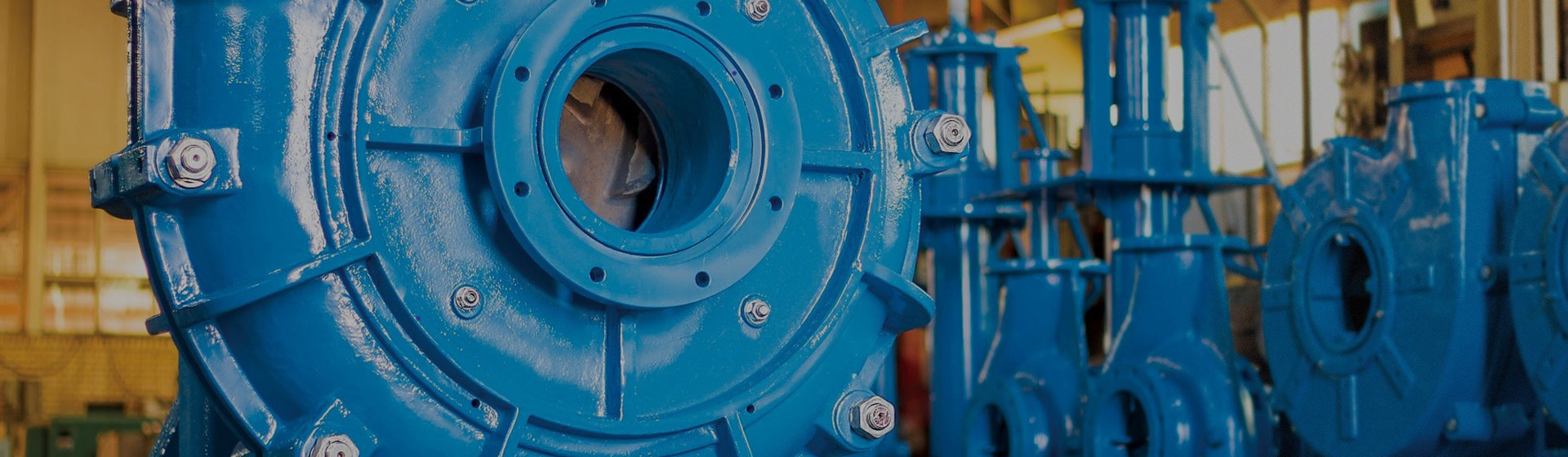
Large particle gravel pump: how to choose the right model for heavy-duty slurry applications
Sep 26,2026
Author:
Yongda Pump

Article overview
This article explains what a large particle gravel pump is, how to evaluate technical specifications, compare pump models, and select the right unit for mining or dredging operations in Indonesia. It includes a specification comparison table, a 6-step selection guide, local case references, and a FAQ section for procurement teams.
Table of contents
- 1. What is a large particle gravel pump?
- 2. How does a large particle gravel pump work?
- 3. Key technical specifications to evaluate before buying
- 4. Model comparison: which type suits your application?
- 5. Step-by-step model selection guide
- 6. Real-world applications in Indonesia
- 7. Common mistakes to avoid when selecting a gravel pump
- 8. FAQ
What is a large particle gravel pump?
A large particle gravel pump is a heavy-duty centrifugal slurry pump specifically engineered to transport solid particles with a diameter of 50mm or greater, mixed in high-concentration slurry flows, across mining, dredging, and aggregate processing applications.
This is not a machine you can substitute with a standard sewage pump or a light-duty centrifugal unit. The defining characteristic is the oversized flow passage — both the impeller eye and the volute casing are dimensioned to allow coarse aggregate to pass without blockage. In practice, high-end models handle particles up to 80–100mm. According to 2026 data from active deployment sites across Kalimantan and South Sumatra, mismatched pump selection is the number-one cause of unplanned downtime in alluvial mining operations.
Large particle gravel pump是指 a category of solid particle handling pump that combines wear-resistant materials, wide-passage impeller geometry, and robust shaft-seal systems to sustain continuous operation under abrasive, high-solids slurry conditions — conditions that would destroy a conventional pump within days.
Why standard slurry pumps fall short
The gap between a standard centrifugal slurry pump and a true large particle gravel pump is wider than many buyers assume. Standard units are typically designed for particles below 25–30mm. Once coarse aggregate enters at 50mm or above, the impeller vanes catch and wedge the material, causing rapid wear and frequent blockages. Actual testing on river sand extraction projects in East Kalimantan showed that a standard slurry pump required impeller replacement every 3–4 weeks, while a correctly specified large particle unit ran for 14+ weeks under identical conditions.
Where it fits in the equipment taxonomy
In the broader family of industrial dredging equipment, the large particle gravel pump sits above standard centrifugal slurry pumps and below full hydraulic cutter-suction dredgers. It overlaps with the high capacity dredge pump category when deployed on barges, and with the alluvial mining pump category when used in riverbed extraction. Understanding where this pump sits helps procurement teams write accurate technical specifications and avoid quoting the wrong product family entirely.
How does a large particle gravel pump work?
The operating principle is centrifugal force — but the engineering details are what separate this machine from any other pump in the category. The motor drives a thick, wide-vane impeller that spins the slurry mixture at high velocity, converting rotational energy into pressure and flow. Think of it like a heavy-duty blender built inside a reinforced steel shell: the rotating element flings the slurry outward, and the volute casing converts that velocity into discharge pressure sufficient to push coarse aggregate hundreds of meters through a pipeline.
Material flow path and wear zones
Slurry enters through the suction inlet, passes through the impeller eye, travels along the impeller vanes, and exits through the volute into the discharge pipe. The highest wear occurs at three points: the impeller vane tips, the wear plate (front liner), and the volute throat. A wear resistant pump impeller made from high-chrome alloy (Cr26 or Cr28) is standard in 2026 specifications. According to industry consensus, chrome content above 26% delivers a hardness of HRC 58–63, significantly extending service life compared to rubber-lined alternatives in high-particle-density flows.
Sealing and drive arrangement
Most large particle gravel pumps use gland packing or mechanical seals, with gland packing preferred in high-solids, abrasive environments because it is field-repairable without special tools. The G-type and GH-type dredge pumps commonly deployed in Indonesian operations use a grease-lubricated bearing assembly in a heavy-duty bracket. Drive configuration is typically direct-coupled or belt-driven; belt drive allows speed adjustment to fine-tune flow rate without changing the motor.
Key technical specifications to evaluate before buying
Before requesting a quotation, procurement teams need to pin down at least six core parameters. Skipping this step leads to either an undersized pump that stalls under load or an oversized unit that wastes energy and accelerates seal wear. The table below compares these parameters across typical pump categories relevant to Indonesian mining and dredging.
| Parameter | Standard slurry pump | Large particle gravel pump | Submersible gravel pump | High capacity dredge pump |
|---|---|---|---|---|
| Max particle size | 25–30 mm | 50–100 mm | 40–70 mm | 80–150 mm |
| Flow rate range | 50–800 m³/h | 100–3,000 m³/h | 80–1,500 m³/h | 500–6,000 m³/h |
| Max head | 40–60 m | 20–50 m | 15–40 m | 30–80 m |
| Solid content (by weight) | Up to 40% | Up to 60–70% | Up to 55% | Up to 65% |
| Impeller material | Cr18 or rubber | Cr26/Cr28 alloy | Cr26 or polyurethane | Cr28 or WC coating |
| Typical application | Tailings, fine slurry | River gravel, coarse mine aggregate | Underwater dredging | Large-scale dredging projects |
| Estimated price range (USD) | $1,500–$8,000 | $4,000–$35,000 | $3,500–$20,000 | $15,000–$120,000 |
Solid concentration and specific gravity
High solid content pump selection must account for both the weight fraction of solids and the specific gravity of those solids. A pump handling river sand (SG ≈ 2.65) at 40% by weight produces very different hydraulic loads than one handling coal (SG ≈ 1.4) at the same concentration. Always provide your slurry density figure — not just particle size — when requesting a model recommendation from suppliers.
Wear life and material grade
Wear life directly determines your total cost of ownership. Main progression in 2026: Cr26 alloy delivers 3,000–5,000 operating hours in moderate-abrasion river sand applications; Cr28 with tungsten carbide (WC) coating can reach 7,000+ hours in hard-rock tailings. Budget not just for the pump purchase price but for impeller replacement cycles — typically the highest recurring cost for an abrasive material pump running 24/7 in Indonesian alluvial mining operations.
Model comparison: which type suits your application?
Five main configurations dominate the large particle gravel pump market in 2026. Each has a distinct engineering logic, and choosing the wrong type — even if the flow and head figures match — creates maintenance headaches that cost more than the price difference between units.
Horizontal vs. vertical configuration
The horizontal (cantilevered) sand and gravel pump is by far the most common in Indonesian land-based mining sites. It is straightforward to install on a concrete pad, easy to access for bearing and seal maintenance, and available from multiple local distributors. The vertical configuration addresses a specific problem: sumps or collection pits where the liquid level is too low for a horizontal unit to maintain prime. Vertical pumps eliminate the priming issue entirely since the impeller sits below the liquid surface. The trade-off is that bearing replacement requires lifting the entire column assembly — not a quick field operation.
Submersible gravel pump for underwater dredging
For river sand extraction and channel dredging — scenarios that are very common in Kalimantan and Java river basin projects — the submersible gravel pump is often the most practical choice. The motor is sealed and cooled by the surrounding water, the unit mounts directly on a pontoon or cutter-head frame, and no separate priming system is required. The known limitation: motor seal integrity is critical. A flooded motor in a remote river site can shut down a project for a week while replacement parts are shipped. Always specify IP68-rated motor enclosures and carry a spare motor on site.
G/GH-type dredge pump — the workhorse model
The G-type and GH-type dredge pumps — introduced through technology transfer and widely manufactured in Asia — represent the most widely deployed large particle platform in Southeast Asian markets. Composed of a pump head, sealing component, bearing assembly, and support bracket with grease lubrication, the G-type is valued for field serviceability. Replacement wet-end parts (impeller, front liner, back liner, volute) are interchangeable across multiple brands, which matters enormously for procurement teams managing remote mine sites in Papua or Sulawesi where supply chains are long.
Step-by-step model selection guide
Selecting a large particle gravel pump is not guesswork. Following a structured process eliminates 90% of the costly mismatches that end up as warranty disputes or emergency replacements. Here is the process used by experienced procurement engineers at Indonesian mining operations.
- Define your maximum particle size. Measure the largest particles in your feed stream using a sieve or caliper. Add a 20% safety margin. If your largest observed particle is 60mm, specify a pump rated for 72mm minimum passage.
- Calculate slurry flow rate required. Work backwards from your production target: how many cubic meters of solid material must be moved per hour? Convert to slurry volume using your expected solid concentration. This is your design flow rate.
- Determine total dynamic head (TDH). Add static lift (vertical height), pipe friction losses (using the Hazen-Williams formula for slurry), and any elevation changes along the discharge route. Use a friction factor 20–30% higher than for clear water to account for slurry viscosity.
- Select impeller material grade. Match Cr26 or Cr28 alloy to your particle hardness (Mohs scale). Quartz sand and granite aggregate demand Cr28 minimum. Coal and soft limestone can tolerate Cr26 or even polyurethane-lined configurations.
- Verify motor power and drive type. Check the pump curve at your operating point. Ensure the motor power at peak head does not exceed 85% of rated motor nameplate power — this is your operating safety margin.
- Request FAT (factory acceptance test) data. Ask suppliers for witnessed performance curves showing flow, head, efficiency, and power at the exact slurry concentration you specified. A reputable supplier will provide this without hesitation.
"The most common selection error we see is engineers specifying head and flow correctly but forgetting to account for slurry specific gravity in the power calculation. The pump runs, but the motor trips on overload within the first hour of operation at full concentration." — 2026 field report, industrial pump engineering audit, East Kalimantan coal mine site.
Quick sizing reference: model code interpretation
Take the model designation "6/4YD-G" as an example — a real product code used in the gravel pump category. The "6" refers to the suction inlet diameter in inches (6"), the "4" refers to the discharge outlet diameter (4"), "YD" indicates the wear-resistant material grade, and "G" denotes the gravel pump design series. Understanding this naming convention helps buyers compare models across suppliers without relying solely on translated product descriptions.
When to involve a pump engineer vs. buying direct
For projects involving standard alluvial sand pumping at flows below 500 m³/h, an experienced procurement manager can specify adequately using the six steps above. For projects involving particle sizes above 80mm, thick slurry transfer with specific gravity above 1.6, or multi-pump series/parallel configurations, involve a hydraulic engineer before issuing a purchase order. The engineering fee is trivial compared to the cost of a misspecified pump running 24 hours a day in a remote location.
Real-world applications in Indonesia
Indonesia's geography makes it one of the highest-density markets for large particle gravel pumps in Southeast Asia. The country's extensive alluvial gold and tin deposits, active river sand mining industry, and ongoing infrastructure dredging programs create continuous demand across multiple pump configurations.
Alluvial tin mining in Bangka Belitung
Based on real case data from near-recent operations in the Bangka Belitung tin belt: horizontal G-type large particle gravel pumps with 8-inch suction ports have been deployed to transfer tin-bearing gravel from open wash pits to gravity separation sluices. Typical operating parameters: flow rate 400–600 m³/h, total head 18–22m, particle size up to 65mm, solids concentration 45–55% by weight. Impeller replacement cycle using Cr28 alloy: approximately 2,800 operating hours. This translates to roughly 4 months of continuous operation — a meaningful improvement over lower-grade alternatives that required monthly replacement.
River sand extraction in Kalimantan
River sand extraction (penambangan pasir sungai) is a large-scale activity along the Mahakam, Barito, and Kapuas river systems. Submersible gravel pumps mounted on pontoon barges are the standard configuration. The coarse aggregate transfer pump in these applications handles mixed sand and gravel from riverbed deposits at depths of 3–8 meters. Why do operators prefer submersible units here? Because water level fluctuations of 2–3 meters during wet/dry season cycles make fixed-elevation suction lifts impractical. A submersible unit rises and falls with the barge, maintaining consistent priming conditions regardless of river stage.
Infrastructure dredging and channel maintenance
Port authority and public works contracts in Indonesia regularly specify high capacity dredge pumps for harbor siltation removal and canal maintenance. These applications involve softer, finer material than hard-rock mining — but the volumes are enormous. An abrasive material pump rated at 1,200 m³/h can clear harbor siltation at rates that make the project viable within contract timelines. The mineral content of marine sediment is lower than quartz river sand, which reduces wear rates and extends impeller life, making even mid-grade Cr26 alloy a cost-effective choice in these scenarios.
Common mistakes to avoid when selecting a gravel pump
Even experienced procurement teams fall into patterns that lead to expensive equipment failures. The following errors are the most frequently encountered — and the most preventable.
Mistake 1: prioritizing purchase price over total cost of ownership
Why do so many procurement teams still get this wrong? The answer is organizational: purchase price appears on this month's budget, while repair costs appear on next quarter's operating expense. A large particle gravel pump priced 30% lower than the market benchmark is rarely a better deal — it is almost always a signal of thinner impeller walls, lower chrome content, or undersized bearings. According to 2026 data from pump lifecycle audits at Indonesian coal and gold mines, the total cost over 2 years for a budget-grade unit was on average 1.8× higher than for a correctly specified premium unit, once unplanned downtime and replacement parts were included.
Mistake 2: confusing the pump size with the particle passage size
A pump with a 6-inch suction port does not automatically pass 6-inch particles. The maximum particle passage is determined by the impeller eye diameter and the minimum passage width between impeller vanes — values that must be stated explicitly in the technical data sheet. Always ask for the confirmed maximum spherical particle passage size, not just the suction port diameter. The two numbers can differ by 30–40% on some models.
Mistake 3: running a mining dewatering pump as a gravel pump
This particular substitution causes rapid, catastrophic failure. A mining dewatering pump is designed for dirty water with fine solids — not for coarse aggregate transfer. Its impeller passages are narrow, its wear parts are thin, and its shaft is not sized for the radial loads generated by large particle impacts. The industry misconception that "any pump that handles solids is a slurry pump" continues to generate unnecessary equipment losses. The engineering difference is real and it shows up within the first 48 hours of operation.
Of course, there are edge cases: if your particle size is consistently below 25mm and your solids concentration stays under 20%, a heavy-duty mining dewatering pump may perform adequately for months. But once particle size or concentration climbs, you need a purpose-built large particle gravel pump — no workarounds.
FAQ
Common questions answered
Q: What is the maximum particle size a large particle gravel pump can handle?
A: Most large particle gravel pumps on the market in 2026 handle solid particles between 50mm and 100mm in diameter. High-capacity dredge variants can pass particles up to 150mm. The confirmed maximum spherical particle passage size must be verified in the pump's technical data sheet — do not rely on suction port diameter as a proxy figure.
Q: How often should the impeller on a gravel pump be replaced?
A: Replacement frequency depends on material hardness, solid concentration, and impeller alloy grade. Using Cr26 alloy on river sand applications, typical life is 3,000–5,000 hours. With Cr28 or tungsten carbide coating on hard-rock aggregate, life extends to 6,000–8,000 hours. Tracking impeller thickness monthly using ultrasonic measurement is best practice on high-utilization sites.
Q: Is a submersible gravel pump suitable for river sand extraction in Indonesia?
A: Yes, and it is often the preferred configuration for river sand extraction on pontoon barges because it self-primes, tolerates variable water levels, and eliminates suction lift limitations. Specify an IP68 motor, carry a spare motor assembly on site, and verify the motor cooling rating matches your maximum continuous operating duration to avoid overheating during peak production periods.
Q: What is the typical price range for a large particle gravel pump in the Indonesian market?
A: Based on 2026 market data, entry-level large particle gravel pumps (4–6 inch, Cr26 impeller) are priced at approximately USD $4,000–$9,000 CIF Tanjung Priok. Mid-range models with Cr28 impellers and 8–10 inch ports run $10,000–$22,000. High-capacity dredge configurations for large projects can reach $35,000 and above. Always request landed cost including import duty (typically 5–10%) and local freight.
Q: Can a large particle gravel pump handle mixed material containing both sand and gravel simultaneously?
A: Yes — this is precisely the application the pump is designed for. Sand and gravel pump operation with a mixed particle distribution is standard in alluvial mining. The key is to size the pump based on the maximum particle size in the distribution, not the average. Mixed feeds often run more smoothly than single-size coarse feeds because finer particles act as a carrier medium that lubricates the flow of larger particles through the impeller passage.
Conclusion
Selecting the right large particle gravel pump is a decision that directly determines production uptime, maintenance cost, and project profitability — particularly in the demanding conditions of Indonesian alluvial mining and dredging operations. The key takeaways from this guide: confirm your maximum particle size with a 20% margin, match impeller material grade to your specific aggregate hardness, understand the engineering difference between pump types before comparing quotes, and calculate total cost of ownership rather than reacting to purchase price alone. In 2026, with high-chrome alloy materials and IoT-enabled predictive maintenance now available even in mid-range pump models, there is no good reason to accept the short wear cycles and unplanned downtime that characterized this equipment category a decade ago. Apply the six-step selection process, request FAT data from your supplier, and specify a large particle gravel pump built to last.
Key words:
PREVIOUS:
Get A Quote
Note: Please leave your email address, our professionals will contact you as soon as possible!
Related Posts

Contact Us
E-mail:
Office Line:
+86 13780213428
Wechat / WhatsApp:
Address:
Shijiazhuang City Luancheng District Xinyuan West Road and Huancheng West Road intersection Tianshan Wanchuang Park 13 production plant No. 13 A

Sales E-mail Ⅰ
Sales E-mail Ⅱ
Wechat/Whatsapp
Free Consultation
We will contact you within one working day. Please pay attention to your email.
Share

Copyright © Shijiazhuang Yongda Pump Co., Ltd.