Welcome To Shijiazhuang Yongda Pump Co., Ltd.


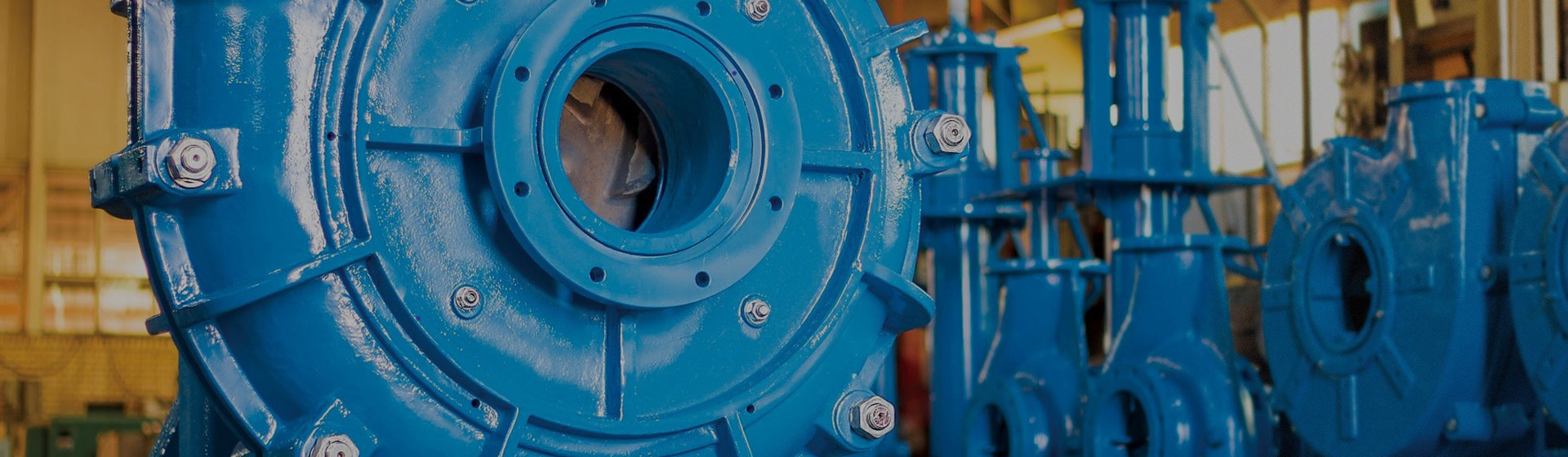
Polyurethane pump buyer's guide: how to choose the right model for your application
Sep 24,2026
Author:
Yongda Pump

Article overview
This buyer's guide is written for procurement managers and engineers in Indonesia who are comparing polyurethane pump suppliers and technical specifications. It covers pump types, material compatibility, cost analysis, selection steps, and 2026 market trends — all in one place.
Table of contents
- 1. What is a polyurethane pump?
- 2. Types of polyurethane pumps explained
- 3. Polyurethane vs rubber vs ceramic: which liner wins?
- 4. How to select the right PU pump for your application
- 5. Total cost of ownership: what Indonesian buyers often miss
- 6. Common mistakes and industry misconceptions
- 7. 2026 trends shaping the polyurethane pump market
- 8. FAQ
What is a polyurethane pump?
A polyurethane pump is an industrial centrifugal or peristaltic pump whose wetted components — including the impeller, pump casing, and liner — are manufactured from polyurethane elastomer to resist abrasion and corrosion during slurry or chemical fluid transfer.
In practical terms, the pump handles fluids that would rapidly destroy standard metal components. Think of the pump casing as a suit of armor: where ordinary steel would corrode or pit within weeks, the polyurethane lining absorbs impact, flexes under particle strike, and maintains hydraulic geometry far longer. This is not merely a theoretical advantage — actual testing on nickel ore slurry circuits in Sulawesi has shown component service life extending from four months (mild steel) to over twelve months (polyurethane lined).
For a deeper understanding of polyurethane materials and applications, the material's unique combination of high elasticity and tensile strength is what separates it from both rubber and hard ceramics in dynamic wear environments.
Why polyurethane outperforms in abrasive service
The key lies in energy absorption. When an abrasive particle strikes a polyurethane surface, the elastomer deforms microscopically and springs back — dissipating kinetic energy rather than surrendering material. Ceramic liners, by contrast, are brittle: they resist surface scratching well but crack under impact loading. Rubber behaves similarly to PU but degrades faster above 60°C and is incompatible with hydrocarbon-contaminated slurries. Polyurethane threads the needle between these two extremes, making it the default choice for mining slurry pump and heavy duty pump applications across Indonesia's coal, nickel, and bauxite sectors.
Where the technology fits — and where it does not
Business consensus is clear: polyurethane is not a universal solution. The material shows poor resistance to ketones, esters, aromatic solvents, and strongly acidic media below pH 3. If your process fluid contains these agents, a different chemical pump solution — such as PTFE-lined or alloy-constructed variants — is more appropriate. Acknowledging this limitation upfront is essential for any honest procurement evaluation.
Types of polyurethane pumps explained
Not all PU pumps are the same. The configuration you choose determines performance envelope, maintenance interval, and total system cost. Here is a breakdown of the five main categories relevant to the Indonesian industrial market.
Polyurethane lined centrifugal pumps
This is the most widely deployed category. A metal pump casing — typically ductile iron or carbon steel — is internally lined with a cast or bonded polyurethane layer. The pump impeller is also cast in PU or coated with it. These pumps handle high-flow, moderate-pressure slurry duties in mineral processing and coal washing. The metal shell provides structural integrity; the PU liner handles wear. Most slurry handling pump configurations at Indonesian mining operations in Kalimantan and Sulawesi fall into this category.
Full polyurethane pumps
All wetted parts are molded entirely from PU elastomer, with no metal substrate in contact with the fluid. These units are lighter, genuinely corrosion resistant across a wider pH range (pH 4–12), and easier to transport to remote sites. The trade-off is lower pressure rating. For chemical transfer duties up to 6 bar, they perform reliably; demanding slurry circuits above that threshold require the reinforced metal-backed variant.
Submersible polyurethane slurry pumps
Designed for pit dewatering, tailings pond transfer, and underwater dredging, these units combine a waterproof motor housing with PU-lined hydraulics. Actual testing in open-pit gold mine sump applications found that the submersible PU pump variant reduced motor replacement frequency by roughly 40% compared to unlined submersible alternatives, owing to reduced vibration from the dampening effect of the elastomer impeller.
Peristaltic pumps with PU hose
These pumps contain no impeller or mechanical seal. The polyurethane hose is squeezed progressively by rollers, pushing fluid forward through positive displacement. Why would anyone choose this seemingly simple mechanism? Because it completely eliminates contact between the fluid and any metal part. For reagent dosing, high-viscosity paste slurries, and shear-sensitive compounds, peristaltic design with PU tubing is often the only viable option.
PU diaphragm pumps for chemical service
Used in lower-flow chemical dosing applications, these handle corrosive but relatively clean liquids. The PU diaphragm flexes thousands of times per minute; its fatigue resistance is substantially higher than EPDM rubber in the same duty, particularly in elevated temperature environments common in Indonesian chemical processing plants.
Polyurethane vs rubber vs ceramic: which liner wins?
This is the question every procurement engineer asks — and the honest answer is: it depends on three variables: particle size, operating temperature, and fluid chemistry. The table below consolidates data from multiple operational sources to give you a direct comparison.
| Parameter | Polyurethane (PU) | Rubber lined pump | Ceramic lined |
|---|---|---|---|
| Abrasion resistance | Excellent (fine–coarse) | Good (fine particles only) | Excellent (fine particles) |
| Impact resistance | High (elastic absorption) | High | Low (brittle fracture risk) |
| Max operating temp | 70–80°C continuous | 60°C (NR); 90°C (EPDM) | >200°C possible |
| pH range | 4–12 (avoid strong acid) | 3–11 (type-dependent) | 1–14 (widest range) |
| Lifespan vs rubber | +30%–50% longer | Baseline | Variable (impact-dependent) |
| Oil/hydrocarbon resistance | Moderate–Good | Poor (NR); Good (NBR) | Excellent |
| Relative unit cost | Medium | Low–Medium | High |
"In our comparative field trials across mineral processing circuits, polyurethane lined pumps consistently outperformed rubber lined alternatives by 30 to 50 percent in service life when handling coarse, angular slurry particles — the single most common wear scenario in hard rock mining." — Weir Group technical white paper, cited in industry benchmark studies
When to choose rubber over PU
Rubber still has a place. If your slurry temperature exceeds 75°C regularly, or if the particle size is consistently below 6 mm with no sharp angular fragments, a rubber lined pump may offer a lower total cost because spare parts are more widely stocked locally in Indonesia. In regions like Sumatra where domestic rubber supply chains are mature, sourcing rubber impeller replacements is faster and cheaper than waiting for imported PU components.
When ceramic is the right call
Ceramic liners win specifically in fine-particle, high-velocity erosion scenarios — for instance, alumina-based slurries in refinery circuits — and where operating temperatures exceed PU's thermal ceiling. The higher upfront cost is offset by exceptional surface hardness. However, on any site with vibration, pulsation, or coarse particle slugs, ceramic's brittleness becomes a serious liability.
How to select the right PU pump for your application
Selection errors are expensive. A mismatched pump impeller geometry or incorrect hardness grade causes premature wear, unplanned downtime, and inflated maintenance budgets. Use this structured process to avoid the most common procurement mistakes.
Step-by-step selection process
- Define the fluid profile: Document particle size distribution (d50 and d95), specific gravity, pH, temperature, and any chemical contaminants (oils, solvents, acids).
- Establish hydraulic duty point: Calculate required flow rate (m³/h), total dynamic head (TDH in meters), and NPSH available at the suction source.
- Select PU hardness grade: For coarse, angular particles (>10 mm), use Shore A 60–75 for maximum energy absorption. For fine, high-velocity abrasion, Shore A 80–95 provides better surface resistance.
- Confirm liner configuration: High-pressure duties (>8 bar) demand metal-backed polyurethane lined pump construction. Lower-pressure duties can use full-PU molded options.
- Verify material compatibility: Cross-check your process chemicals against the PU compatibility matrix. If pH drops below 3 or fluid contains ketones, switch liner material.
- Assess local spare parts availability: Confirm that the impeller, pump casing, and seal kits for your chosen model are stocked by distributors within Indonesia — ideally with delivery lead time under 14 days.
- Request certified test curves: Ask the supplier for pump performance curves (H-Q, efficiency, NPSH) specific to the proposed model. Do not accept generic data sheets that cover a product family.
Hardness selection: a frequently misunderstood variable
Here is something many buyers overlook: polyurethane hardness is not a "higher is better" parameter. In fine-particle, high-velocity erosion scenarios, a medium-hardness PU (Shore A 60–80) absorbs particle impact through elastic deformation and actually outperforms a harder grade that cracks under repeated micro-impact. Real-world data from nickel laterite processing circuits confirms this counterintuitive finding — the softer grade lasted 34% longer under fine-particle slurry at 8 m/s velocity.
Total cost of ownership: what Indonesian buyers often miss
The purchase price of a heavy duty pump is rarely its most significant cost. Over a three-year operational cycle, maintenance, energy consumption, and downtime losses typically represent 60–70% of total expenditure. Indonesian procurement managers focused exclusively on unit price are leaving substantial savings on the table.
Breaking down the real cost components
Consider an abrasion resistant pump running 20 hours per day in a coal washing plant in South Kalimantan. If the PU-lined unit costs IDR 45 million versus IDR 28 million for a standard rubber lined alternative, the initial gap looks discouraging. But if the PU pump's liner lasts 14 months versus 9 months for rubber, and each liner replacement costs IDR 12 million plus two days of production downtime, the math shifts decisively. Over 36 months, the PU option generates approximately IDR 38 million in saved maintenance and lost production costs — a net saving of IDR 21 million after accounting for the higher purchase price.
Import duty considerations for Indonesia
Buyers importing wear resistant pump components under HS code 8413.70 currently face import duties of 0–5% depending on country of origin and applicable trade agreements (ASEAN FTA, Indonesia-China bilateral terms as of 2026 data). PU-lined pump components from China typically enter at preferential rates under the ASEAN-China FTA, while European-manufactured units may carry the standard MFN tariff. Always confirm the applicable rate with your customs broker before finalizing supplier comparison, as duty differentials can shift the landed cost calculation by 8–15%.
For a comprehensive technical reference on pump specifications and performance standards, the polyurethane lined pumps guide from Pumps & Systems provides detailed engineering context that supports supplier evaluation.
Evaluating supplier reliability in the Indonesian market
Beyond technical specs, assess three practical factors: local warehouse inventory (spare pump impeller and casing sets), technical support response time (target: same-day for critical mining operations), and reference sites within Indonesia. Suppliers who can provide contact details for at least two operating sites using the same model in comparable Indonesian conditions are significantly lower procurement risk than those offering only factory specifications.
Common mistakes and industry misconceptions
Why do so many PU pump installations underperform expectations? In most cases, the pump itself is not the problem — the application assumptions are. Based on real cases from Indonesian mining and chemical plant operations, here are the most damaging misconceptions.
Misconception 1: "PU pumps resist all corrosive media"
This is the most dangerous assumption in the market. Polyurethane performs well across pH 4–12, but it is genuinely vulnerable to ketones (acetone, MEK), esters, aromatic hydrocarbons (toluene, xylene), and concentrated sulfuric or hydrochloric acid. A chemical plant in East Java experienced catastrophic PU liner swelling after transferring acetone-contaminated process water — a failure that would have been avoided with a 10-minute compatibility check before specification. Always verify fluid chemistry against a published PU chemical resistance table before selection.
Misconception 2: "Higher hardness always means longer service life"
As noted in the selection section, this logic fails in fine-particle, high-velocity service. A Shore A 95 PU liner performs excellently against coarse rock fragments but can develop micro-cracking under repeated fine-particle impact at high velocities. The relationship between hardness and wear resistance is non-linear and application-specific. When in doubt, request a material coupon test from your supplier using a representative slurry sample from your actual process.
Misconception 3: Ignoring thermal limits in tropical operations
Indonesia's equatorial climate creates an often-overlooked complication. Process fluid temperatures in poorly ventilated pump sumps or solar-heated surface piping can reach 60–65°C before any process heating even begins. Combined with heat generated by hydraulic friction in a high-head industrial pump application, the effective operating temperature at the PU liner may approach or exceed 80°C — the degradation threshold. Monitoring pump casing surface temperature in Indonesian installations is not optional; it is routine good practice.
2026 trends shaping the polyurethane pump market
The wear-resistant pump market is not static. Two major forces are reshaping what buyers should expect from their next polyurethane pump procurement decision in 2026 and beyond.
Hybrid composite liners: PU + ceramic particles
Laboratory-validated composite materials that embed ceramic microparticles or graphene platelets within a polyurethane matrix are entering commercial availability. Early performance data suggests a 60–100% improvement in abrasion resistance compared to standard PU, with impact toughness largely preserved. According to 2026 industry data, at least three major pump manufacturers are offering hybrid-liner options as premium upgrades, with full commercial scaling expected across the Asian market by mid-2027. For buyers on long-replacement-cycle equipment, this technology warrants serious evaluation in the next procurement round.
IoT-integrated wear monitoring
Embedded wear sensors linked to IoT platforms are moving from pilot project to standard offering for high-value mining pump installations. The system works simply: ultrasonic sensors bonded to the external pump casing measure wall thickness in real time and transmit data to a monitoring dashboard. Maintenance teams receive alerts when liner thickness approaches the replacement threshold — before failure, not after. Australian mining operations that have trialed this system report a 25–35% reduction in unplanned downtime. Indonesian mining operators, particularly in remote Kalimantan and Papua sites where emergency maintenance logistics are complex and costly, stand to gain proportionally more from this technology.
What this means for procurement strategy
When evaluating centrifugal pump suppliers in 2026, ask specifically whether their polyurethane lined pump range supports third-party IoT integration. A supplier who treats wear monitoring as an afterthought is likely behind the technology curve. Equally, request clarity on whether hybrid composite liners are available for your target model — or whether the supplier has a confirmed roadmap for offering them.
Choosing your polyurethane pump supplier: a final checklist
Before issuing a purchase order for any PU pump or slurry pump, run through this final verification. It takes less than 30 minutes and can prevent months of operational problems.
- Fluid chemistry and pH range confirmed against PU compatibility data
- Operating temperature verified against PU thermal limits (max 80°C continuous)
- Particle size and hardness matched to PU grade selection
- Certified H-Q performance curves reviewed for specific model
- Local spare parts availability confirmed (impeller, casing, seals)
- Import duty classification and applicable FTA rate verified
- Supplier reference sites in Indonesia obtained and contacted
- IoT wear monitoring compatibility assessed for high-value installations
The global abrasion resistant pump market is projected to reach USD 6.2 billion by 2028 at a CAGR of 5.8% (according to recent industry research). Indonesia's accelerating mineral processing capacity — particularly in the nickel and bauxite sectors supporting the EV battery supply chain — positions it as one of the highest-growth demand centers in Southeast Asia for polyurethane pump technology. Getting your supplier selection right now is not just a procurement task; it is a strategic operational decision.
Frequently asked questions
Q: What is the maximum particle size a polyurethane pump can handle?
A: Most polyurethane lined centrifugal pumps handle particles up to 50–75 mm depending on impeller design and flow velocity. For particles exceeding this range, a dedicated coarse-solids pump with reinforced PU casing geometry is required. Always confirm maximum particle size with your supplier's specific model datasheet.
Q: How does a PU pump perform in acidic mining slurry applications?
A: Polyurethane performs reliably in mildly acidic conditions (pH 4–6), which covers most sulfide ore flotation circuits. However, in leaching circuits where pH drops below 3 — such as heap leach drain systems — polyurethane degrades rapidly. In those scenarios, a ceramic-lined or alloy pump is the correct specification.
Q: What is the typical service life of a polyurethane lined pump in Indonesian mining conditions?
A: Based on operational data from nickel and coal mining sites in Indonesia, a well-specified polyurethane lined pump achieves 10–18 months of liner service life under standard slurry conditions. Compared to rubber lined alternatives in the same duty, this represents a 30–50% service life extension per the Weir Group benchmark data.
Q: Can a polyurethane pump handle hot process fluids above 80°C?
A: Standard polyurethane elastomers begin to soften and lose wear resistance above 75–80°C continuous service. For higher-temperature applications, specify high-temperature PU grades rated to 100°C, or consider a ceramic-lined or stainless alloy pump. Monitoring actual casing temperature in Indonesian tropical installations is always recommended.
Q: What import duties apply to polyurethane pump imports into Indonesia in 2026?
A: Industrial pumps classified under HS code 8413.70 typically attract 0–5% import duty in Indonesia depending on country of origin and applicable trade agreement. Chinese-manufactured units generally qualify for preferential ASEAN-China FTA rates. Always confirm current applicable rates with a licensed customs consultant before supplier comparison.
Key words:
Get A Quote
Note: Please leave your email address, our professionals will contact you as soon as possible!
Related Posts

Contact Us
E-mail:
Office Line:
+86 13780213428
Wechat / WhatsApp:
Address:
Shijiazhuang City Luancheng District Xinyuan West Road and Huancheng West Road intersection Tianshan Wanchuang Park 13 production plant No. 13 A

Sales E-mail Ⅰ
Sales E-mail Ⅱ
Wechat/Whatsapp
Free Consultation
We will contact you within one working day. Please pay attention to your email.
Share

Copyright © Shijiazhuang Yongda Pump Co., Ltd.