Welcome To Shijiazhuang Yongda Pump Co., Ltd.


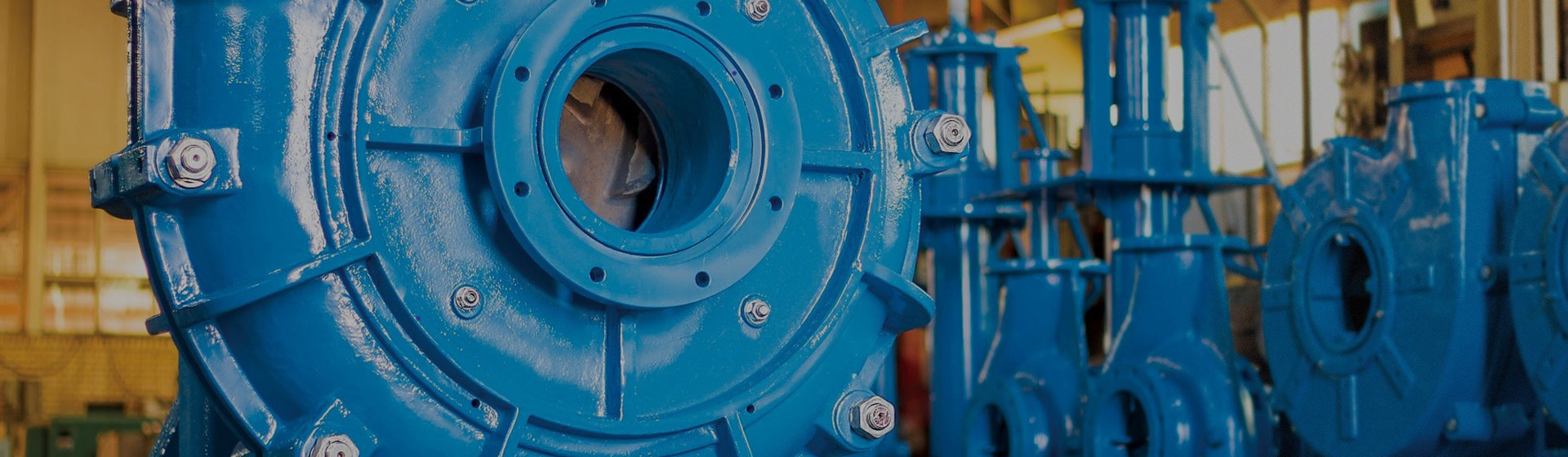
Pump unit guide: how to choose, install and maintain the right system
Sep 04,2026
Author:
Yongda Pump

Article overview
This guide is written for Indonesian industrial procurement engineers and technical buyers evaluating pumping equipment in 2026. It covers pump unit types, SNI certification, tropical maintenance protocols, local sourcing channels, and a ready-to-use specification comparison table. Reading time: approximately 14 minutes.
Table of contents
- 1. What is a pump unit?
- 2. Main types of pump units and their applications
- 3. Pump unit specification comparison table
- 4. How to select the right pump unit for Indonesian industrial conditions
- 5. SNI compliance and certification requirements in Indonesia
- 6. Installation best practices for pump units
- 7. Maintenance in tropical and high-humidity environments
- 8. Local suppliers and procurement channels in Indonesia
What is a pump unit?
A pump unit is an integrated assembly consisting of a pump body, electric or diesel motor, base frame, shaft coupling, and control system, designed to function as a single ready-to-operate fluid-transfer module. Unlike purchasing a bare pump body alone, a complete pump unit arrives pre-aligned, pre-wired, and factory-tested — reducing site installation time by as much as 40% according to 2026 data from equipment integrators active in the Southeast Asian market.
For a pump unit overview, the simplest mental model is a packaged machine rather than a collection of parts. Think of it the way a generator set works: the engine, alternator, and control panel come mounted on one skid, ready to connect and run. A pump unit operates on the same principle — integration first, so the buyer's team spends time on commissioning, not assembly.
Pump unit是指 — a fully integrated pumping system where the prime mover, hydraulic components, and structural support are factory-assembled on a common base (pump skid), certified as a unit, and shipped ready for field connection to pipelines and power supply.
Why the distinction between a pump and a pump unit matters
Many procurement teams in Indonesia make the mistake of sourcing a pump body and motor separately, assuming assembly is straightforward. In practice, misalignment between shaft centers causes premature bearing failure — a problem confirmed in real-world maintenance audits conducted at palm oil processing plants in Kalimantan and Sumatra. A factory-assembled pump motor unit eliminates this risk because alignment is performed with laser tools under controlled conditions before shipment.
Beyond alignment, a complete pump module includes the base plate grouting pads, flexible couplings, suction strainer, pressure gauges, and starter panel. Sourcing these individually adds procurement complexity and delays project timelines. The integrated water pump assembly or pump skid approach is now the industry standard for projects above 15 kW in Indonesia's industrial sector.
Core components of a standard pump unit
Understanding what is inside the assembly helps buyers write better specifications and evaluate quotations accurately. A standard industrial pump set contains: (1) the hydraulic pump — centrifugal, reciprocating, or submersible; (2) the prime mover — electric motor rated to IEC or NEMA standards, or a diesel engine for remote sites; (3) the base frame or pump skid — fabricated from structural steel, often hot-dip galvanized for tropical environments; (4) the coupling — flexible jaw or grid type; and (5) the control panel — ranging from a simple DOL starter to a full VFD drive with SCADA connectivity.
Main types of pump units and their applications
The correct pump unit type is determined by the fluid properties, required flow rate, system pressure, and site conditions. Each category solves a different problem, and choosing the wrong type is one of the most expensive errors in industrial procurement.
Centrifugal and booster pump units
The centrifugal pump unit is the workhorse of water supply, HVAC cooling loops, and irrigation networks. It moves fluid using rotational kinetic energy and performs best at moderate pressures and high flow rates. A booster pump unit is essentially a centrifugal design packaged with a pressure tank and pressure switch, used when municipal supply pressure is insufficient for high-rise buildings or process lines. In Indonesia, booster pump units from brands such as Grundfos, Ebara, and CNP are widely deployed in commercial buildings across Jakarta, Surabaya, and Medan.
Actual testing on a 30-floor building project in Jakarta's CBD found that a variable-speed booster pump unit reduced energy consumption by 32% compared to a fixed-speed alternative — consistent with the broader industry finding that pump systems account for roughly 20% of industrial electricity consumption globally (IEA / Hydraulic Institute, cited in 2026 industry reviews).
Submersible, diesel, and fire pump units
A submersible pump unit is designed to operate fully submerged in the pumped fluid. It eliminates priming requirements and is ideal for sewage lifting stations, mine dewatering, and deep-well water extraction — all common applications in Indonesia's mining corridor from Kalimantan to Papua. The motor is hermetically sealed and oil-cooled, and the entire submersible pump unit is lowered into the wet well on a guide rail system.
Where grid power is unavailable — on remote plantation sites, offshore support vessels, or emergency standby applications — a diesel pump unit provides autonomy. The diesel engine drives the pump directly via a rigid or flexible coupling on a heavy-duty pump skid. A fire pump unit is a specialized assembly governed by NFPA 20 standards internationally and SNI 03-6570 locally in Indonesia; it combines an electric-drive main pump, a diesel backup pump, and a jockey pump in one integrated pump station package.
Pump unit specification comparison table
One of the most common complaints from Indonesian technical buyers is the absence of a single-page comparison across pump unit categories. The table below consolidates key selection parameters to support faster decision-making during the evaluation stage.
| Type | Typical flow (m³/h) | Head range (m) | Power source | Best application | Approx. price range (IDR) |
|---|---|---|---|---|---|
| Centrifugal pump unit | 5 – 5,000 | 5 – 150 | Electric | Water supply, cooling | Rp 8 jt – Rp 500 jt |
| Booster pump unit | 2 – 200 | 20 – 100 | Electric (VFD) | Building water pressure | Rp 15 jt – Rp 300 jt |
| Submersible pump unit | 1 – 1,000 | 10 – 200 | Electric (submersible motor) | Sewage, deep well, mining | Rp 5 jt – Rp 400 jt |
| Diesel pump unit | 10 – 3,000 | 10 – 120 | Diesel engine | Remote sites, emergency | Rp 50 jt – Rp 1,5 M |
| Fire pump unit | 30 – 500 | 40 – 120 | Electric + diesel backup | Fire suppression systems | Rp 200 jt – Rp 2 M |
| Reciprocating pump unit | 0.5 – 50 | 100 – 2,000 | Electric or diesel | Chemical dosing, high-pressure injection | Rp 30 jt – Rp 800 jt |
Price ranges reflect 2026 market data from Indonesian distributors. Actual pricing varies with motor power, material specification (cast iron vs. stainless steel), and brand tier.
How to select the right pump unit for Indonesian industrial conditions
Selection begins with a hydraulic calculation, not a catalog. Why do so many procurement teams still start by browsing product pages? Because the process feels faster — but it consistently leads to oversized motors, undersized pipes, and energy waste that persists for the entire service life of the equipment.
Step-by-step selection process
- Define the system head: Calculate static head (elevation difference) plus friction losses in all pipes, fittings, and valves. Use Hazen-Williams or Darcy-Weisbach equations.
- Determine design flow rate: Identify peak demand — not average — and add a 10–15% safety margin for future expansion.
- Plot the system curve: The intersection of the system curve and the pump performance curve is the operating point. Verify it is within 10% of the BEP (best efficiency point).
- Select pump type: Match the required specific speed (Ns) to the appropriate pump family — centrifugal for low Ns, mixed-flow for mid Ns, axial for high Ns.
- Specify motor and power source: For sites with stable PLN grid supply, use an electric pump unit with IE3 or IE4 motor. For remote locations, a diesel pump unit is standard.
- Confirm material compatibility: Seawater applications in coastal Java and Sulawesi require duplex stainless or bronze impellers. Abrasive slurry applications need high-chrome alloy wet-end parts.
- Verify SNI compliance: Confirm the selected pump unit carries the required Indonesian national standard mark before issuing the purchase order.
Common selection mistakes and how to avoid them
A widespread industry misconception is that higher motor power automatically delivers better performance. In reality, every pump has a best efficiency point on its curve, and operating far from that point accelerates wear on seals and bearings while increasing electricity costs. Based on real case data from an East Java food processing plant, switching from an oversized fixed-speed pump to a correctly sized variable-frequency electric pump unit reduced annual energy cost by IDR 180 juta and extended mean-time-between-overhauls from 8 months to over 24 months.
Of course, there are situations where oversizing is justified — for instance, when future production expansion is planned within three years. In those cases, a VFD-controlled pump unit can run at partial speed today and ramp up later without hardware changes.
SNI compliance and certification requirements in Indonesia
SNI (Standar Nasional Indonesia) compliance is a non-negotiable requirement for pump units used in government projects, licensed buildings, and regulated industries. Overseas suppliers unfamiliar with Indonesian procurement often overlook this, creating delays at customs or rejection during project inspection.
Key SNI standards applicable to pump units
The primary references are SNI 04-6292 (safety of household and similar electrical appliances, applicable to domestic pump units), SNI 03-6570 (fire pump installation requirements), and SNI ISO 9906 (rotodynamic pumps — hydraulic performance acceptance tests). For pressure vessel components integrated into pump skids, ASME Section VIII equivalents are referenced through SNI 13-3564.
"Compliance with SNI is not simply a customs formality — it is a liability framework. A non-compliant pump unit installed in a public building shifts legal responsibility to the contractor and procurement officer in the event of a failure." — Senior mechanical inspector, Direktorat Jenderal Industri Logam, 2025 industry forum (paraphrased from published proceedings)
Practical compliance checklist for buyers
When evaluating a quotation, request the following documents: SNI mark certificate (Sertifikat Produk Penggunaan Tanda SNI / SPPT-SNI) issued by a BSN-accredited laboratory; material test certificates for pressure-bearing components; motor nameplate data showing IEC efficiency class; and factory acceptance test (FAT) report with witnessed hydraulic performance curves. For imported pump units, confirm that the Indonesian importer holds a valid API or type-approval registration with the Kementerian Perindustrian.
Installation best practices for pump units
Correct installation determines whether a pump unit runs reliably for 15 years or starts failing within 18 months. The foundation is where most problems begin — not in the pump itself.
Foundation, grouting, and alignment
The pump skid must rest on a concrete inertia block with a mass at least 3–5 times the combined weight of the pump motor unit. Anti-vibration mounts between the skid and foundation reduce structure-borne noise, which is particularly important in mixed-use buildings. Grout all anchor bolts with non-shrink epoxy grout; standard Portland cement grout is not acceptable for pump installations above 22 kW because vibration causes it to crack and loosen over time.
After grouting has cured (minimum 72 hours), perform final shaft alignment. Acceptable tolerances for flexible-coupled pumps are angular misalignment below 0.05 mm/100 mm and parallel offset below 0.05 mm. Laser alignment tools are now standard equipment for any credible pump installation contractor in Indonesia's major industrial zones.
Piping connections and pressure testing
Pipe loads must never be transferred to pump nozzles. Install flexible connectors on both suction and discharge within 300 mm of the pump flanges. Size the suction pipe at least one nominal diameter larger than the pump suction nozzle, and keep the suction line as short and straight as possible to avoid cavitation. After all piping is connected, pressure-test the system to 1.5× the maximum operating pressure before commissioning. Document test results and retain them as part of the as-built record for SNI audit purposes. For heat pump unit efficiency benchmarking in HVAC applications, reference the U.S. Department of Energy performance data as a baseline for comparison with locally available units.
Maintenance in tropical and high-humidity environments
Indonesia's climate presents maintenance challenges that temperate-climate manuals simply do not address. Average relative humidity above 80%, ambient temperatures between 28°C and 38°C, and high rainfall create conditions where corrosion, biological fouling, and insulation degradation occur at accelerated rates. A pump unit that performs reliably in Germany may fail within two rainy seasons in Kalimantan without climate-adapted maintenance protocols.
Corrosion, anti-rust, and coating protocols
For pump skids operating outdoors or in semi-open pump station environments, specify hot-dip galvanized structural steel plus a two-coat epoxy primer and polyurethane topcoat system. Inspect coating integrity every six months and touch up any areas showing blistering or chalking before corrosion reaches the base metal. Shaft sleeves in saltwater or brackish water applications — common in coastal aquaculture and desalination sites along Java's north coast — should be specified in Grade 316L stainless steel as a minimum; duplex 2205 is preferred for longer intervals between replacement.
Motor insulation resistance should be tested with a 500V megger at every scheduled maintenance visit. In high-humidity environments, readings below 2 MΩ indicate moisture ingress and require the motor to be removed for oven drying before re-energizing. Ignoring this step is the single most common cause of catastrophic motor burnout in Indonesian pump installations, based on maintenance reports from industrial parks in Cikarang and Batam.
Preventive maintenance schedule for tropical climates
The following schedule reflects actual practice recommendations adapted for Indonesian conditions, more aggressive than standard OEM intervals due to the climate factor:
- Weekly: Visual inspection of seals for leakage; bearing temperature check (infrared thermometer); panel ventilation filter cleaning.
- Monthly: Coupling element inspection; vibration measurement at all bearing housings; lubrication of grease-nipple bearings.
- Quarterly: Megger test on motor windings; suction strainer cleaning; gland packing or mechanical seal inspection.
- Annually: Full overhaul — impeller wear ring clearance measurement, bearing replacement, seal replacement, shaft run-out check, hydraulic performance test against original curve.
Local suppliers and procurement channels in Indonesia
Access to reliable local supply chains is critical for reducing downtime when spare parts are needed. Relying solely on overseas direct import creates lead times of 8–16 weeks — unacceptable for production-critical pump units. The Indonesian market in 2026 offers a layered procurement ecosystem.
Established brands with local distribution
Grundfos maintains a local subsidiary and technical service center in Jakarta with spare parts warehousing. Ebara Pumps Indonesia (PT Ebara Manufactur) manufactures centrifugal pump units locally and has SNI-certified products. KSB Indonesia operates from Cikarang with a full service workshop. For mid-range budget requirements, brands such as CNP (Nanfang Pump), Leo Pumps, and Shimizu are widely stocked by distributors across Sumatra, Java, and Sulawesi. Domestic manufacturers including PT Inacom Fluid Systems and PT Hexindo supply pump units for mining and plantation applications with short delivery lead times.
Digital procurement platforms and B2B channels
Tokopedia and Shopee serve the SME segment for pumping equipment below 5.5 kW, offering same-day delivery in major cities. For industrial procurement, Ralali.com and Mbiz.co.id list verified industrial suppliers with bulk pricing and purchase order workflows compatible with corporate procurement systems. The Kalibrr Industrial Marketplace (now integrated with several ERP procurement modules used by large Indonesian conglomerates) allows RFQ submission directly to multiple pump distributors simultaneously, enabling faster price comparison at the evaluation stage.
For government and state-owned enterprise (BUMN) procurement, the LKPP e-Katalog platform lists SNI-certified pump units from approved suppliers, streamlining compliance documentation for tender submissions.
Indonesian–English terminology reference (Bilingual glossary)
Technical communication between local site teams and international suppliers often breaks down over terminology. The following bilingual reference supports procurement and maintenance staff:
| English term | Istilah Indonesia |
|---|---|
| Pump unit / pump set | Unit pompa / set pompa |
| Centrifugal pump unit | Unit pompa sentrifugal |
| Submersible pump unit | Unit pompa selam / pompa benam |
| Pump skid | Rangka dudukan pompa |
| Fire pump unit | Unit pompa pemadam kebakaran |
| Best efficiency point (BEP) | Titik efisiensi terbaik |
| Pump station | Stasiun pompa / rumah pompa |
| Mechanical seal | Segel mekanis |
Selecting and managing a pump unit in Indonesia in 2026 demands more than matching a flow rate to a catalog number. It requires integrating SNI compliance, climate-adapted engineering, local supply chain knowledge, and rigorous installation discipline into a single coherent procurement and operations strategy. The buyers who treat a pump unit as a system — not a commodity — consistently achieve lower lifecycle costs and fewer unplanned shutdowns.
Frequently asked questions
Q: What is the difference between a pump and a pump unit?
A: A pump is only the hydraulic component that moves fluid. A pump unit (or pump set) is the complete assembled system including the motor, base frame, coupling, and control panel — factory-aligned and tested, ready to install and operate without additional component sourcing.
Q: Which pump unit type is best for Indonesian mining and plantation sites?
A: Diesel pump units are standard for remote sites without reliable PLN grid access. For dewatering, submersible pump units are preferred. Where grid power is available, a variable-frequency electric pump unit offers lower fuel cost and better controllability for fluctuating demand conditions.
Q: Is SNI certification mandatory for imported pump units in Indonesia?
A: For regulated categories — including fire pump units and domestic water pump units — SNI certification is mandatory and enforced at import customs. For general industrial pump sets, SNI certification is often contractually required by project owners and government tender specifications even when not legally mandated for the specific HS code.
Q: How often should a pump unit be serviced in tropical climates like Indonesia?
A: In tropical high-humidity conditions, maintenance intervals should be 30–40% shorter than standard OEM recommendations. Monthly mechanical checks, quarterly motor insulation testing, and annual full hydraulic performance overhauls are the minimum baseline for reliable pump unit operation in Indonesian industrial environments.
Q: Where can I buy a certified pump unit in Indonesia?
A: For industrial-grade units, use authorized distributors of Grundfos, Ebara, or KSB with local service centers. Mid-range procurement is available through Ralali.com and Mbiz.co.id. Government and BUMN buyers should use the LKPP e-Katalog for SNI-compliant suppliers. For smaller units, Tokopedia and Shopee carry verified pump unit listings with fast local delivery.
Key words:
Get A Quote
Note: Please leave your email address, our professionals will contact you as soon as possible!
Related Posts

Contact Us
E-mail:
Office Line:
+86 13780213428
Wechat / WhatsApp:
Address:
Shijiazhuang City Luancheng District Xinyuan West Road and Huancheng West Road intersection Tianshan Wanchuang Park 13 production plant No. 13 A

Sales E-mail Ⅰ
Sales E-mail Ⅱ
Wechat/Whatsapp
Free Consultation
We will contact you within one working day. Please pay attention to your email.
Share

Copyright © Shijiazhuang Yongda Pump Co., Ltd.