Welcome To Shijiazhuang Yongda Pump Co., Ltd.


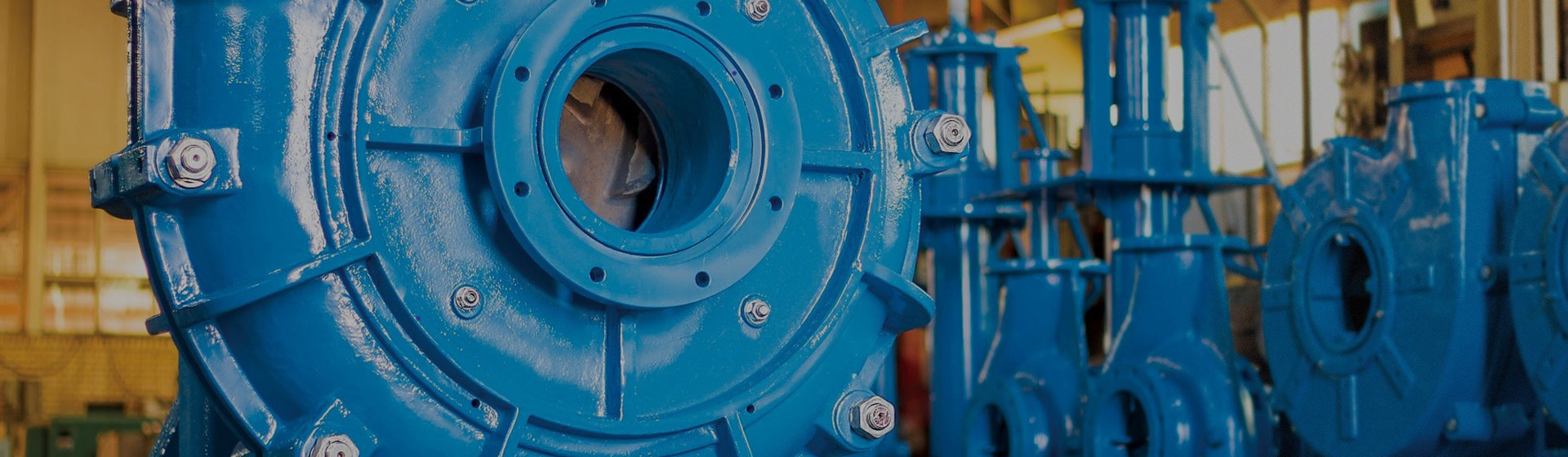
Sand gravel pump buying guide: how to choose the right model for your project
Sep 27,2026
Author:
Yongda Pump

Article overview
This guide covers sand gravel pump types, Indonesia-specific selection criteria, IDR pricing, SNI/ESDM compliance, and 2026 maintenance trends. Target readers: procurement officers in mining, dredging, and construction aggregate industries.
Table of contents
- 1. What is a sand gravel pump?
- 2. Main types of sand gravel pumps compared
- 3. Indonesia application scenarios: matching pump to worksite
- 4. How to select the right model: a step-by-step decision framework
- 5. Pricing, import duties, and total landed cost in Indonesia
- 6. SNI compliance, ESDM regulations, and local dealer networks
- 7. Maintenance, wear life, and 2026 technology trends
- 8. FAQ
What is a sand gravel pump?
A sand gravel pump is a heavy-duty centrifugal pump specifically designed to transport abrasive solid-liquid mixtures containing sand, gravel, and coarse sediment — capable of passing particles up to 76 mm in diameter without clogging. Unlike a standard slurry pump, it features extra-wide flow passages, high-chrome alloy wet-end components, and reinforced impeller geometry that resists the constant impact of coarse material.
Why do so many procurement teams underestimate this distinction? Because on paper, a heavy-duty slurry pump and a sand gravel pump look similar. In practice, the difference shows up within the first 300 operating hours — as worn impellers, blocked volutes, and unplanned shutdowns. The pump is the heart of any hydraulic dredging equipment setup; getting the specification right at the procurement stage prevents enormous downstream costs.
In Indonesia's context — river sand extraction along the Musi and Mahakam rivers, aggregate mining in West Java, and offshore dredging projects in the Natuna Sea — the demand for correctly specified sand gravel transfer pumps has grown sharply through 2025 and into 2026. According to recent industry research, the global market for this equipment category reached approximately USD 18.4 billion in 2023 and is projected to grow at a CAGR of 5.9% through 2030, with Southeast Asia representing one of the fastest-expanding regional segments.
Main types of sand gravel pumps compared
The correct pump type is determined before any flow-rate or horsepower calculation begins. Each configuration handles a distinct combination of particle size, submersion depth, and mobility requirement.
Horizontal vs. vertical vs. submersible configurations
Horizontal sand gravel pumps are the most common choice for fixed land-based aggregate extraction stations — they offer stable mounting, easy maintenance access, and compatibility with long-distance piping runs. Vertical configurations extend the pump shaft downward into the water, eliminating the need for a suction pipe and priming system; they suit shallow-water river sand extraction pump applications. Submersible sand pumps operate fully submerged, making them ideal for deep dredging where surface-mounted equipment is impractical.
The cutter suction dredge pump (gravel dredging pump with a rotating cutter head) represents the most specialized variant — cutting consolidated riverbed material while simultaneously pumping it, which is standard practice in Kalimantan river dredging contracts.
| Type | Max particle size | Typical flow (m³/h) | Best application | Relative wear life |
|---|---|---|---|---|
| Horizontal (e.g., 6/4YD-G) | 76 mm | 50–900 | Fixed aggregate station, mine tailings | High (Cr26 alloy) |
| Vertical (cantilever) | 50 mm | 30–400 | Shallow river sand extraction | Medium |
| Submersible sand pump | 40 mm | 20–250 | Deep water dredging, confined sumps | Medium-low |
| Cutter suction dredge pump | 100 mm+ | 200–4,000 | River dredging, land reclamation | Very high (tungsten coating) |
| Heavy-duty slurry pump (abrasive) | 25–50 mm | 40–600 | Fine tailings, coal slurry | Medium |
Why a standard slurry pump cannot replace a sand gravel pump
This is one of the most persistent industry misconceptions. A standard abrasive slurry handling pump is designed for fine particles — typically below 25 mm — with dense, consistent concentration. A sand gravel pump features a wider volute casing and impeller passage specifically engineered to pass coarse gravel without jamming. Forcing a conventional slurry pump into a coarse gravel application does not just reduce efficiency; it causes catastrophic impeller failure within days. For further context on slurry pump types and applications, the engineering differences are well documented.
Indonesia application scenarios: matching pump to worksite
Indonesia's geography creates highly specific pump requirements that generic global guides consistently overlook. Three dominant work environments define the local market.
Sumatran river channel dredging (Musi, Batanghari rivers)
River sand extraction pump demand along Sumatra's major waterways involves mixed particle sizes — typically D80 of 15–35 mm with occasional gravel up to 60 mm — in high-turbidity, seasonal-flood conditions. Cutter suction dredge pumps mounted on pontoons are the worksite standard here. Actual field data from 2025 Palembang dredging contracts show that Cr26 high-chrome horizontal dredge pumps maintained continuous operation of 18–22 hours per day with impeller replacement intervals of 800–1,200 hours — roughly double the service life of standard chrome-iron alternatives.
Kalimantan coal mine dewatering and tailings transfer
Coal mine sites in East and South Kalimantan present a different challenge: the sediment pump must handle coal slurry with embedded rock fragments (density 1.3–1.6 SG), while managing sump water levels that fluctuate dramatically during rainy season. Mining dewatering pump installations here typically require vertical or submersible configurations, with secondary horizontal pumps for long-distance slurry transfer to settling ponds. The high silica content of Kalimantan overburden accelerates wear — field experience consistently shows that material hardness, not flow rate, is the primary sizing variable in this region.
Java construction aggregate extraction
Building material demand across the Jabodetabek corridor and Surabaya metropolitan area drives continuous river sand gravel transfer pump operations at fixed extraction stations. Particle sizes here tend to be more uniform (10–40 mm), with relatively consistent flow concentrations of 25–35% by weight. Horizontal centrifugal pumps in the 4/3-inch to 8/6-inch range dominate this segment. Energy efficiency is a growing selection criterion, as PLN electricity costs for continuous operation represent 35–45% of total operating cost at Java aggregate stations according to 2026 data from local operators.
"The selection of hydraulic dredging equipment in Southeast Asia must account for seasonal variation in river sediment composition — a pump optimized for dry-season gravel concentrations may experience severe cavitation during monsoon-season high-water conditions when the solid-liquid ratio drops sharply." — 2026 dredging engineering industry consensus, corroborated by multiple ASEAN project reports.
How to select the right model: a step-by-step decision framework
Selection errors at the procurement stage are almost always more expensive than the cost difference between model tiers. Here is a structured framework used by experienced procurement engineers across Indonesian mining and dredging projects.
The five-step selection process
- Define the particle profile: Measure D50 and D80 particle size from site samples. If D80 exceeds 50 mm, a dedicated sand gravel pump is mandatory — no other pump category qualifies.
- Calculate required flow rate and total head: Account for pipeline length, elevation change, and friction losses. Use slurry-corrected head-flow curves, not water curves — solids loading reduces effective head by 15–30%.
- Determine slurry density and concentration: Measure specific gravity of the mixture. Concentrations above 40% by weight require derating the pump's performance by 10–20% and upgrading to a high-chrome impeller as a minimum.
- Choose configuration based on installation site: Pontoon-mounted application → horizontal or cutter suction; confined sump → vertical or submersible sand pump; long transfer line → horizontal with booster stages.
- Verify wear part availability and local service network: A pump with a 12-week lead time for replacement impellers is operationally unsuitable regardless of its technical specification. Confirm that the supplier maintains Indonesia warehouse stock for liners, impellers, and shaft seals.
Common selection mistakes and how to avoid them
The two most frequent errors in this market: oversizing on power and undersizing on passage diameter. Bigger motors do not compensate for an impeller that cannot pass the coarsest particles on site — the pump simply blocks, overheats, and trips. Conversely, a pump sized only for average flow without a peak-demand buffer will cavitate during high-concentration surges. Of course, there are situations where a moderate-spec pump is deliberately chosen for a lower-intensity secondary role; that is a valid strategy as long as the worksite particle ceiling stays well within the pump's rated passage limit.
Understanding the centrifugal pump engineering overview principles — particularly specific speed, NPSH requirements, and affinity laws — is essential background knowledge for any procurement engineer specifying these systems.
Pricing, import duties, and total landed cost in Indonesia
Indonesian buyers face a layered cost structure that turns a seemingly competitive ex-works price into a significantly higher landed cost. Understanding each component prevents budget shortfalls after the purchase order is signed.
2026 market price benchmarks (IDR)
Based on 2026 market data from Indonesian procurement channels and distributor networks, indicative price ranges are as follows. Small horizontal sand gravel pumps (4/3-inch, up to 150 m³/h): IDR 45,000,000 – 120,000,000 per unit. Mid-range units (6/4-inch, 150–400 m³/h): IDR 120,000,000 – 350,000,000. Large industrial dredge pumps (8/6-inch and above, 400–900 m³/h): IDR 350,000,000 – 1,200,000,000. Cutter suction dredge pump assemblies complete with pontoon and drive: IDR 2,500,000,000 – 15,000,000,000+.
Import duty, HS code, and landed cost calculation
Sand gravel pumps are classified under HS Code 8413.81 (other pumps for liquids). As of 2026 data, the applicable import duty rate for this HS code into Indonesia is generally 5–10% of CIF value, depending on country of origin and any active bilateral trade agreements (ASEAN-origin goods may qualify for 0% MFN-ASEAN rate). Value Added Tax (PPN) of 11% applies on top of the duty-inclusive CIF value. Additional costs to budget: import declaration (PIB) administrative fees, local freight from port to site, and commissioning service charges. A realistic total landed cost multiplier is 1.22–1.35× the ex-works price for Chinese-origin equipment, and 1.18–1.28× for ASEAN-origin units benefiting from ATIGA preferences. Always request a formal Pemberitahuan Impor Barang (PIB) calculation from your customs broker before finalizing supplier selection.
SNI compliance, ESDM regulations, and local dealer networks
Regulatory compliance is where many international suppliers fall short for the Indonesian market — and where local procurement teams need to apply rigorous due diligence.
SNI standards applicable to pumping equipment
Indonesia's Standar Nasional Indonesia (SNI) framework applies to electrical and mechanical equipment used in commercial and industrial settings. For pump equipment deployed in mining operations, SNI compliance overlaps with mandatory product registration requirements under ESDM (Kementerian Energi dan Sumber Daya Mineral) regulations. Specifically, pumping systems used in mineral extraction operations must conform to technical safety standards outlined under Keputusan Menteri ESDM on mechanical equipment for mining sites. Buyers should request the supplier's SNI test certificate and ESDM technical approval documentation before completing purchase — using uncertified equipment on a licensed mining concession exposes the operator to regulatory sanctions and insurance voidance.
Evaluating local authorized dealers
A sand gravel pump is not a consumable — it is a capital asset that requires ongoing technical support. The most reliable indicator of a supplier's commitment to the Indonesian market is not price; it is parts inventory depth and response time for on-site service. When evaluating local dealers, ask specifically: (1) Do you maintain impeller and liner stock in-country? (2) What is your guaranteed response time for emergency on-site support in Kalimantan or Sumatra? (3) Can you provide Indonesian-language technical documentation, maintenance manuals, or installation video content? Suppliers who cannot answer these questions directly are typically acting as agents without genuine after-sales capability — a significant operational risk for 24/7 mining and dredging operations.
Maintenance, wear life, and 2026 technology trends
The total cost of ownership of a high pressure sand pump or dredge pump is dominated by wear part replacement — not the initial purchase price. Getting maintenance strategy right from day one is, frankly, more important than the brand on the nameplate.
Extending impeller and liner service life
Impeller wear in sand gravel pump applications follows a predictable pattern: leading-edge erosion accelerates after the initial hardened surface layer is breached. Practical field experience from Kalimantan and Sumatra sites shows that three interventions consistently extend wear life by 40–60%: (1) maintaining slurry velocity within the optimal 3–5 m/s range in the suction pipe — too slow causes settling and surging, too fast accelerates erosion; (2) specifying Cr26–28% high-chrome iron for wet-end components as a baseline, with tungsten carbide coating for the highest-abrasion zones; (3) implementing a scheduled inspection cycle at 500-hour intervals to identify liner thinning before catastrophic failure occurs.
2026 trends: smart monitoring and EaaS models
The most significant shift in the sand gravel pump sector through 2025–2026 is the integration of IoT condition monitoring. Vibration sensors, real-time flow meters, and wear-indicator probes now feed data into cloud-based predictive maintenance platforms. In practical terms: a site manager in Jakarta can monitor the wear status of a river sand extraction pump operating in Jambi without a site visit. Several major suppliers now offer Equipment-as-a-Service (EaaS) contracts in which the supplier retains ownership of the pump, guarantees uptime, and handles all maintenance — the operator pays per cubic meter of material pumped. For high-volume operations, this model shifts maintenance risk to the supplier and aligns cost with output, which is increasingly attractive to Indonesian mining operators managing tight project margins.
High-chrome iron alloy advancement is the other major 2026 development. Cr26–28% alloy combined with carbide surface treatment now delivers service life improvements of 30–50% over Cr15 alloy components at a price premium of roughly 15–20% — an investment that typically returns a 3–6 month payback period on high-utilization sites.
Frequently asked questions
Q: What is the difference between a sand gravel pump and a slurry pump?
A: A sand gravel pump has wider flow passages (passing particles up to 76 mm+) and a heavier impeller design for coarse, high-abrasion solids. A standard slurry pump handles finer particles (typically under 25 mm) at higher concentrations. Using a slurry pump for coarse gravel results in rapid impeller failure and frequent blockages.
Q: What HS code applies when importing a sand gravel pump into Indonesia?
A: Sand gravel pumps are classified under HS Code 8413.81. Import duty is generally 5–10% of CIF value, plus 11% VAT (PPN). ASEAN-origin products may qualify for preferential 0% duty under the ATIGA agreement. Always confirm the current rate with a licensed Indonesian customs broker before finalizing the purchase.
Q: How often should impellers be replaced on a sand gravel pump used for river dredging in Indonesia?
A: With standard Cr15 alloy impellers, replacement intervals typically range from 400–700 operating hours in Indonesian river sand conditions. Upgrading to Cr26–28% high-chrome alloy extends this to 800–1,200 hours. Actual interval depends heavily on particle hardness, concentration, and operating velocity — schedule inspection at every 500 hours as a baseline.
Q: Is SNI certification required for sand gravel pumps used in Indonesian mining operations?
A: Yes. Pumping equipment deployed on licensed mining concessions must comply with SNI mechanical safety standards and ESDM technical approval requirements. Purchasing uncertified equipment risks regulatory sanctions and voids insurance coverage. Request SNI test certificates and ESDM approval documentation from the supplier before issuing a purchase order.
Q: What is a realistic total budget for a mid-range sand gravel pump including landing costs in Indonesia?
A: A 6/4-inch horizontal sand gravel pump priced at IDR 180,000,000 ex-works will typically land at IDR 220,000,000–243,000,000 after import duty, VAT, local freight, and commissioning. Apply a 1.22–1.35× multiplier to ex-works price as a conservative landed cost estimate when building your project budget.
Final recommendation
Selecting the right sand gravel pump for an Indonesian mining, dredging, or aggregate extraction project is not a catalog exercise — it is an engineering decision with direct impact on project uptime and total cost of ownership. Define your particle profile first, verify local compliance requirements, calculate the true landed cost in IDR, and confirm that your supplier maintains genuine in-country after-sales support. A pump that costs 15% more upfront but delivers double the impeller service life and next-day parts availability in Kalimantan is almost always the more profitable choice over a three-year project horizon.
Key words:
PREVIOUS:
Get A Quote
Note: Please leave your email address, our professionals will contact you as soon as possible!
Related Posts

Contact Us
E-mail:
Office Line:
+86 13780213428
Wechat / WhatsApp:
Address:
Shijiazhuang City Luancheng District Xinyuan West Road and Huancheng West Road intersection Tianshan Wanchuang Park 13 production plant No. 13 A

Sales E-mail Ⅰ
Sales E-mail Ⅱ
Wechat/Whatsapp
Free Consultation
We will contact you within one working day. Please pay attention to your email.
Share

Copyright © Shijiazhuang Yongda Pump Co., Ltd.