Welcome To Shijiazhuang Yongda Pump Co., Ltd.


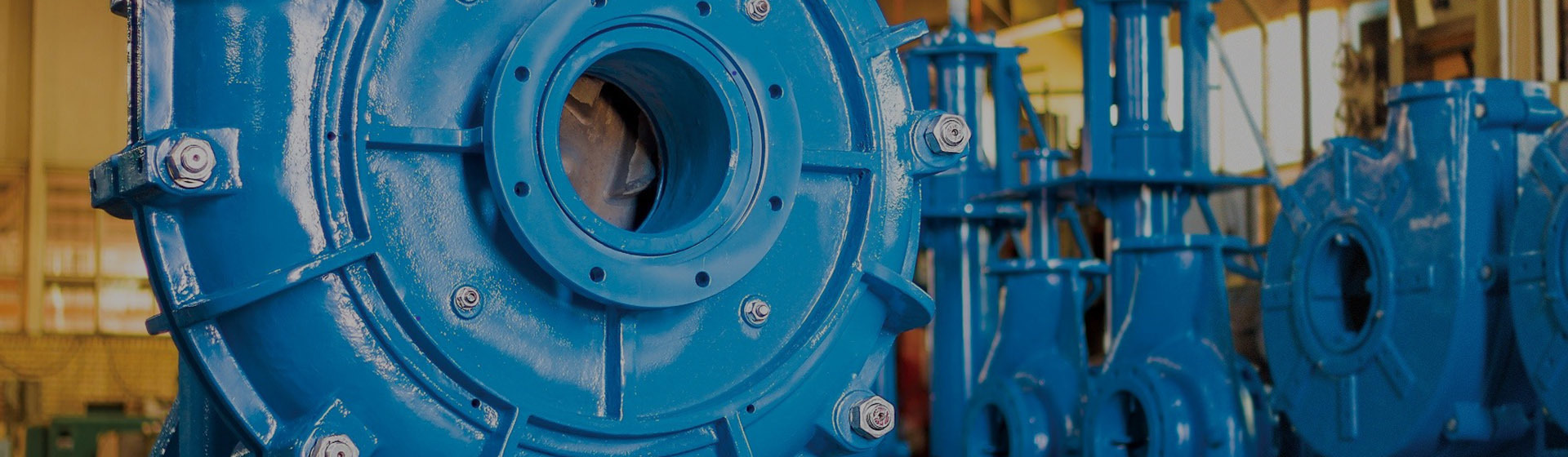
Self priming foam pump guide: how to choose, install, and maintain the right model
Oct 13,2026
Author:
Yongda Pump

Article overview
This guide covers the full procurement and operational lifecycle of a self priming foam pump: definitions, working principles, type comparisons, technical specs, installation steps, maintenance schedules, and 2026 pricing data for the Nigerian market. Target readers: industrial procurement officers, fire safety engineers, and plant managers.
Table of contents
- 1. What is a self priming foam pump?
- 2. How a self priming foam pump works: the mechanism explained
- 3. Types of self priming foam pumps and which to choose
- 4. Key technical specifications to compare before buying
- 5. How to install a self priming foam pump correctly
- 6. Maintenance best practices and common failure modes
- 7. Self priming foam pump prices in Nigeria (2026)
- 8. Frequently asked questions
What is a self priming foam pump?
A self priming foam pump is a pumping device that automatically evacuates air from its suction line and initiates liquid flow without external priming, then delivers a consistent foam-and-liquid mixture to the discharge point. Unlike a standard centrifugal pump, it does not require manual water filling before each start — a critical advantage in emergency response and remote industrial sites across Nigeria where downtime is not an option.
The significance of that capability is easy to underestimate. Picture a fire outbreak at a petroleum depot in Port Harcourt at 2 a.m. Every second that operators spend manually priming a conventional pump translates directly into property loss and safety risk. A self-priming liquid pump eliminates that delay entirely.
According to 2026 data from industry trackers, the global fire-fighting pump market is valued at approximately USD 1.7 billion, with self-priming configurations accounting for over 60% of deployments in mobile and emergency foam systems — precisely because they remove the dependency on pre-filled suction lines. That dominance is not accidental; it reflects a genuine operational advantage that procurement engineers recognise quickly once they have seen both types side by side.
A self priming foam pump is defined as: a closed-casing pump equipped with an internal liquid reservoir or recirculation passage that allows the impeller to mix residual liquid with incoming air, progressively evacuating the suction line until steady flow is established, after which foam concentrate is proportioned into the stream.
How a self priming foam pump works: the mechanism explained
The core principle is straightforward: residual liquid retained inside the pump casing acts as a working fluid during startup, enabling the impeller to generate enough vacuum to lift liquid from below. Understanding the foam pump mechanism in detail helps engineers diagnose faults faster and specify the right model from the start.
The four-stage priming cycle
- Air-liquid mixing phase: On startup, the impeller rotates and agitates the residual liquid inside the casing. This creates a low-pressure zone at the eye of the impeller, drawing air upward from the suction pipe.
- Air evacuation phase: The air-liquid mixture is thrown outward by centrifugal force. Air separates at the discharge chamber and vents out; liquid falls back to the bottom of the casing for re-circulation.
- Vacuum build-up phase: Repeated recirculation progressively lowers absolute pressure in the suction line. Once vacuum exceeds the equivalent static lift — typically within 30–90 seconds depending on suction height — liquid rises into the pump.
- Normal pumping phase: Full liquid flow is established. For a fire fighting foam pump or chemical foam sprayer, a proportioning inducer or bladder tank then introduces foam concentrate at the specified ratio (typically 1%, 3%, or 6% by volume).
Why suction lift matters
Real-world testing on Nigerian construction sites consistently shows that most centrifugal self-priming pumps perform reliably up to a suction lift of 6 metres. Beyond that, priming time increases sharply and reliability drops. Specifying a pump rated for 8 m suction lift when your tank is 7 m below grade provides meaningful headroom — and avoids the single most common installation failure we see in the field. Of course, altitude above sea level in locations like Jos Plateau will slightly reduce this figure, a factor that suppliers rarely mention upfront.
Types of self priming foam pumps and which to choose
Not all self priming foam pumps serve the same purpose. Choosing the wrong configuration is expensive — both in upfront cost and in long-term seal replacement. Here is a clear breakdown of the main categories available in the Nigerian market in 2026.
Centrifugal vs. positive displacement types
The centrifugal self-priming pump dominates high-flow applications such as refinery foam systems and municipal fire mains. It is robust, relatively low-cost, and easy to service with locally available spare parts. A gear-type positive displacement pump, by contrast, handles high-viscosity foam concentrates and delivers pressure-stable output regardless of flow variation — ideal for proportioning systems where concentration accuracy is paramount.
| Pump type | Best application | Max suction lift | Typical flow range | Relative cost (NGN) |
|---|---|---|---|---|
| Centrifugal self-priming | Industrial foam transfer, fire mains | 6–8 m | 200–3,000 L/min | ₦180,000–₦950,000 |
| Gear (positive displacement) | Foam concentrate proportioning | 4–6 m | 10–500 L/min | ₦250,000–₦1,200,000 |
| Diaphragm self-priming | Corrosive foam liquids, chemical plants | Up to 9 m | 5–300 L/min | ₦320,000–₦1,500,000 |
| Portable foam pump | Emergency response, agricultural use | 5–7 m | 60–600 L/min | ₦95,000–₦400,000 |
| Electric self-priming pump (integrated foam) | Fixed installations, warehouses | 6 m | 100–800 L/min | ₦210,000–₦780,000 |
QV-AF series foam pumps: an industrial case example
The QV-AF series — a heavy-duty industrial foam transfer pump widely referenced in metallurgy, mining, and coal processing sectors — illustrates what a purpose-built froth pump looks like in practice. The 6QV-AF and 8QV-AF models use VAVB and PNL bearing assemblies specifically designed to handle abrasive foam slurries containing suspended solids, a configuration that generic self-priming liquid pumps cannot sustain. For Nigerian mining operations in Enugu or Zamfara, this type of specialised foam concentrate pump is often the correct specification rather than a standard centrifugal model.
Key technical specifications to compare before buying
Why do so many procurement decisions go wrong? Often because buyers compare price per unit rather than total cost of ownership across five years. Focusing on the right specifications from the outset changes that calculation entirely.
Critical parameters for a self priming foam pump
For any automatic priming pump intended for foam service, verify the following before issuing a purchase order:
- Priming time: How many seconds to prime at maximum rated suction lift? Anything over 120 seconds at 6 m indicates inadequate casing volume or worn seals.
- Material compatibility: Pump wetted parts (impeller, casing, seals) must be rated for your foam concentrate type. AFFF (aqueous film-forming foam) is less aggressive; protein-based foams are highly corrosive to bronze and standard rubber seals.
- Foam induction ratio accuracy: A high pressure foam pump for fire suppression must maintain its rated induction ratio (e.g., 3% ± 0.3%) across varying flow conditions. Demand test certificates.
- Motor protection class: For outdoor Nigerian installations subject to harmattan dust and rainy season humidity, IP55 minimum; IP65 preferred for electric self-priming pump models.
- Connection standards: Confirm suction and discharge port sizes match your existing pipework. Mismatched fittings on a high pressure foam pump are a common and entirely avoidable procurement error.
"The single most overlooked specification in foam pump procurement is seal material compatibility with the intended foam liquid. An operator who runs protein foam through a pump designed for AFFF will replace seals every three months instead of every three years." — Industry consensus from Nigerian fire safety engineers, 2026
Foam liquid compatibility: a non-negotiable factor
A widespread misconception is that any foam dispensing pump can handle any foam concentrate. This is incorrect. Protein foam and fluoroprotein foam are viscous and oxidative; they degrade standard elastomeric seals within weeks. AFFF is thinner but contains fluorinated compounds that attack certain plastics. The 2026 shift toward PFAS-free foam liquids — driven by regulatory pressure and increasingly relevant even in Nigerian industrial zones supplying for export — means material compatibility will become even more critical. Specify EPDM or PTFE seals for future-proofing.
How to install a self priming foam pump correctly
Correct installation determines whether a self-priming pump delivers its rated performance or becomes a recurring maintenance headache. Based on real cases from industrial installations in Lagos and Warri, the following sequence is the industry-validated standard.
Step-by-step installation procedure
- Site preparation: Mount the pump on a level concrete base. Vibration isolation pads reduce noise and extend bearing life — a detail that is often skipped on Nigerian sites and invariably regretted within 18 months.
- Suction line configuration: Keep the suction pipe as short and straight as possible. Each 90-degree elbow adds approximately 1.5 m of equivalent pipe length to your suction lift calculation. Use the largest practical pipe diameter to minimise friction loss.
- Foot valve and strainer: Install a foot valve at the suction inlet to retain priming liquid between pump cycles. A strainer protects the impeller from debris — essential for agricultural foam pump installations drawing from open water sources.
- Priming liquid fill: Fill the pump casing with clean water (or compatible foam solution for sensitive materials) before first startup. Despite the name, most self priming foam pumps require this initial charge; completely dry startup causes impeller and seal damage.
- Electrical connection: For electric self-priming pump models, verify supply voltage and phase against motor nameplate. In Nigeria's variable grid environment, a voltage stabiliser is strongly recommended for motors above 5.5 kW.
- Direction of rotation check: Momentarily energise the motor and confirm rotation matches the arrow on the pump casing. Reverse rotation is among the top five causes of immediate pump failure at commissioning.
- Commissioning test: Run the pump for 5 minutes at no load, then progressively open the discharge valve. Monitor priming time against the specification sheet. Record baseline values — flow rate, discharge pressure, current draw — for future maintenance benchmarking.
Common installation mistakes to avoid
Suction lines installed with air pockets — caused by upward loops in the pipe before it reaches the pump — are a consistent source of priming failures. The suction pipe must slope continuously upward from the source to the pump inlet. Similarly, over-tightening pipe thread fittings on plastic suction ports is a reliable way to create micro-cracks that defeat vacuum build-up. Finger-tight plus one-quarter turn with PTFE tape is the correct technique for most 2-inch and 3-inch connections.
Refer to the self-priming pump engineering principles for additional guidance on suction system design, including Net Positive Suction Head (NPSH) calculations relevant to hot-climate installations.
Maintenance best practices and common failure modes
A well-maintained self priming foam pump routinely operates for 8–12 years in demanding industrial environments. Neglected, the same pump fails within 18 months. The difference is almost entirely about scheduled inspection discipline.
Recommended maintenance schedule
- Weekly: Inspect mechanical seal for weeping; check bearing temperature (should not exceed 70°C ambient + 30°C). Verify foam concentrate level in proportioning tank.
- Monthly: Flush pump casing with clean water if handling protein foam to remove residue. Check and re-torque all flange bolts. Test automatic priming cycle timing against commissioning baseline.
- Quarterly: Inspect impeller wear; replace if clearance exceeds manufacturer tolerance (typically 0.5 mm for centrifugal types). Lubricate bearings per schedule. Test foam induction ratio with calibrated flow meters.
- Annually: Full strip-down inspection. Replace mechanical seal regardless of visible condition — foam liquids degrade elastomers invisibly. Re-baseline all performance parameters.
Top three failure modes in Nigerian field conditions
Actual maintenance data from industrial foam pump operators in the Niger Delta and Lagos industrial corridors consistently identifies the same three failure patterns. Seal degradation due to incompatible foam concentrate accounts for roughly 40% of unplanned shutdowns. Air ingress through loose suction fittings — accelerated by Nigeria's temperature cycling between harmattan dry cold and wet season heat — causes a further 30%. Bearing failure from inadequate lubrication or water contamination from corroded shaft seals makes up most of the remainder. Address these three failure modes with targeted PM actions and you eliminate the vast majority of unplanned downtime risk.
Self priming foam pump prices in Nigeria (2026)
Foam pump price in Nigeria varies considerably based on pump type, power source, flow capacity, and supplier channel. The table above (Section 3) gives directional ranges. Here is what those numbers mean in a procurement context for 2026.
Price drivers and what you are actually paying for
Entry-level portable foam pump Nigeria options — suitable for agricultural foam pump use or small workshop fire protection — start from approximately ₦95,000 for petrol-engine-driven units. These typically deliver 60–200 litres per minute at suction lifts of 5–6 m and carry 6-month warranties from reputable Lagos traders.
Industrial foam transfer pump configurations for refinery or chemical plant duty begin around ₦400,000 and rise sharply with flow rate, materials specification, and explosion-proof motor requirements. A fully specified electric self-priming pump with stainless impeller, PTFE seals, and ATEX-rated motor — the correct choice for petroleum industry foam systems — can reach ₦1,500,000 – ₦2,200,000 ex-Lagos for imported units.
Sourcing considerations for Nigerian buyers
The main sourcing channels are: (1) authorised distributors of Chinese and European brands with Lagos or Abuja offices; (2) direct importation via Apapa or Tin Can Island ports; (3) regional traders in Port Harcourt and Warri who stock fire-fighting foam pump models for the oil sector. Direct importation offers 20–35% cost savings on high-value units but requires lead times of 6–12 weeks and demands that your technical team can verify specifications independently. When evaluating suppliers, always request a certified factory test report. A pump sold without test documentation is an unquantified risk regardless of stated price.
Frequently asked questions
Q: What is the difference between a self priming foam pump and a standard centrifugal pump?
A: A standard centrifugal pump requires its casing and suction line to be fully primed with liquid before startup, or it loses prime immediately. A self priming foam pump retains residual liquid internally and uses it to evacuate air from the suction line automatically, enabling startup without manual pre-filling — essential for emergency response and remote site applications.
Q: Can I use any foam liquid in my self priming foam pump?
A: No. Pump wetted-parts materials must match your foam concentrate type. Protein and fluoroprotein foams are highly corrosive to standard rubber seals and bronze impellers. AFFF requires different material compatibility. Always confirm seal and impeller material against your foam liquid data sheet before purchase. Using the wrong combination causes rapid seal failure.
Q: What is the maximum suction lift for a self priming foam pump?
A: Most centrifugal self-priming foam pumps are rated for 6–8 metres suction lift under standard conditions. Exceeding this limit causes extended priming times and potential vapour lock. At higher altitudes — such as the Nigerian Plateau region — effective suction lift is reduced by approximately 0.1 m per 100 m of elevation above sea level.
Q: How much does a self priming foam pump cost in Nigeria in 2026?
A: Prices range from approximately ₦95,000 for a basic portable foam pump to over ₦2,200,000 for a heavy-duty industrial unit with explosion-proof motor and corrosion-resistant materials. Mid-range electric self-priming pump models for warehouse fire protection typically cost ₦210,000–₦780,000 from reputable Lagos distributors in 2026.
Q: How often should a fire fighting foam pump be serviced in Nigeria?
A: At minimum, monthly visual checks and quarterly performance tests are recommended for standby fire fighting foam pump systems. Annual full inspection with seal replacement is the industry standard. Nigeria's hot and humid operating environment — combined with variable power quality — justifies a more frequent schedule than European benchmarks suggest for similar equipment.
Choosing the right self priming foam pump for your Nigerian operation comes down to three things: matching the pump type to your specific foam liquid and application, specifying suction lift and material compatibility correctly from the outset, and committing to a structured maintenance schedule. Get those three elements right and a quality unit will deliver reliable service for a decade or more. Miss any one of them and even an expensive pump becomes a liability within the first year. Use this guide as your procurement checklist, request factory test documentation from every supplier, and do not accept a unit without a clear warranty backed by a local service agent who can supply parts from within Nigeria.
Key words:
Get A Quote
Note: Please leave your email address, our professionals will contact you as soon as possible!
Related Posts

Contact Us
E-mail:
Office Line:
+86 13780213428
Wechat / WhatsApp:
Address:
Shijiazhuang City Luancheng District Xinyuan West Road and Huancheng West Road intersection Tianshan Wanchuang Park 13 production plant No. 13 A

Sales E-mail Ⅰ
Sales E-mail Ⅱ
Wechat/Whatsapp
Free Consultation
We will contact you within one working day. Please pay attention to your email.
Share

Copyright © Shijiazhuang Yongda Pump Co., Ltd.