Welcome To Shijiazhuang Yongda Pump Co., Ltd.


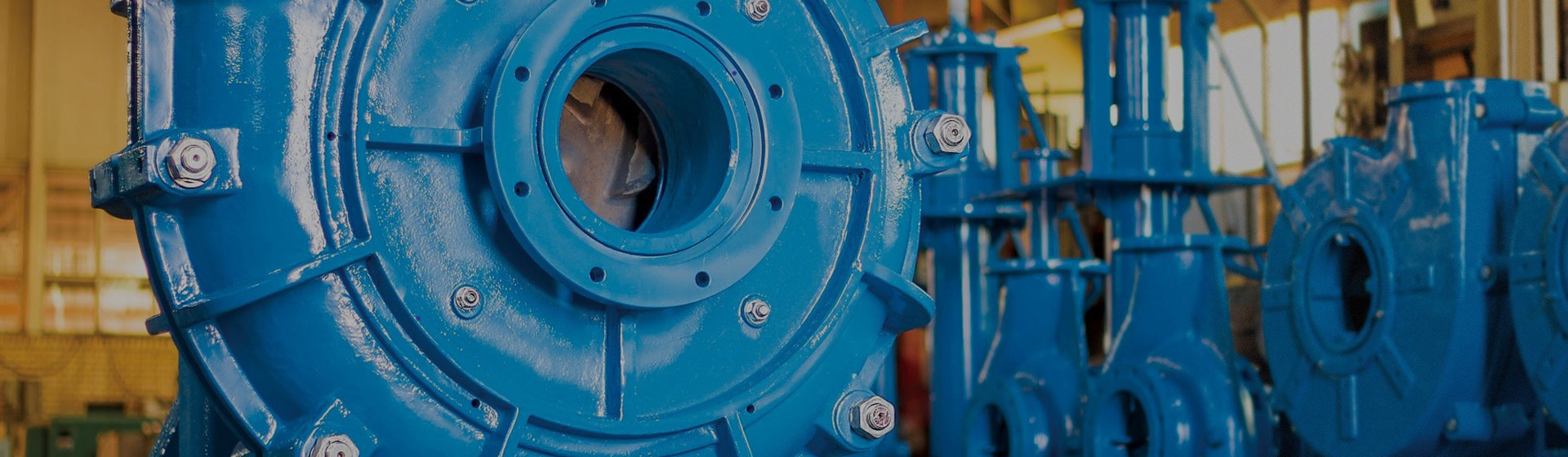
Slurry pump for metallurgy: how to choose the right model for your operation
Sep 28,2026
Author:
Yongda Pump

Article overview
This guide helps procurement engineers and plant managers in Indonesia select the optimal slurry pump for metallurgy operations. It covers pump classification, structured parameter comparison, Indonesia-specific nickel and bauxite case references, TCO analysis, and tropical maintenance best practices — all updated for 2026.
Table of contents
- 1. What is a slurry pump for metallurgy?
- 2. Why metallurgy demands more than a standard pump
- 3. Main types of slurry pumps used in metallurgical processes
- 4. Key selection parameters: a structured comparison
- 5. Indonesia-specific applications and local considerations
- 6. Total cost of ownership and energy efficiency in 2026
- 7. Maintenance in tropical environments
- 8. FAQ
What is a slurry pump for metallurgy?
A slurry pump for metallurgy is a heavy-duty centrifugal pump engineered to transport high-concentration liquid-solid mixtures — including ore pulp, tailings, and furnace slag — through the demanding process stages of mineral processing and smelting. Unlike standard water pumps, these machines are built from abrasion-resistant alloys or elastomers to withstand continuous exposure to sharp particles and corrosive chemicals. Understanding this distinction is the starting point for any rational selection decision.
The global slurry pump market reached approximately USD 6.7 billion in 2023, with metallurgy and mining accounting for over 45% of total demand, according to Grand View Research (2024). That share is growing, driven by expanded mineral processing capacity in Southeast Asia — Indonesia in particular. Yet despite this scale, procurement decisions in the field are still frequently made on price alone, without regard for wear life or hydraulic fit. Why do so many experienced engineers still fall into this trap?
A slurry pump for metallurgy是指 a purpose-designed pump capable of handling solid weight concentrations up to 60% (pulp) or 45% (mortar), integrating corrosion-resistant wetted parts, reinforced shaft and bearing assemblies, and adaptable drive configurations including direct coupling, belt drive, and hydraulic variable-frequency speed regulation. These characteristics collectively define the product category and distinguish it from general industrial slurry pump lines.
How does it differ from a general industrial slurry pump?
A general industrial slurry pump handles moderate concentrations in relatively benign media — think paper pulp or municipal sludge. A metallurgical pump, by contrast, must cope with quartz particles at Mohs hardness 7, slurry temperatures up to 90 °C in smelting applications, and pH levels ranging from strongly acidic (leaching circuits) to highly alkaline (lime addition in tailings). The wetted parts wear up to 60–80% faster than in standard service, according to Hydraulic Institute benchmarks. That single data point changes the entire economics of pump selection.
Where is it used in the metallurgical process chain?
From the primary crusher discharge through grinding circuits, flotation feed, thickener underflow, and final tailings disposal, an ore slurry transfer pump is present at virtually every wet stage of metal production. In steel plants, the same equipment handles blast furnace slag slurry and rolling mill scale. The application breadth means no single pump model fits all duties — a point this guide will return to repeatedly.
Why metallurgy demands more than a standard pump
Metallurgical processes impose a unique combination of stressors that expose the limits of conventional pump design almost immediately. Real-world testing at nickel ore processing sites in Sulawesi confirms that standard centrifugal pumps handling laterite slurry show measurable impeller degradation within 200 operating hours — a timeframe that would barely register in clean-water service.
The three dominant failure mechanisms
Abrasive wear, corrosion, and erosion-corrosion synergy are the three mechanisms that shorten pump life in metallurgical service. Abrasive wear is driven by particle hardness, size, and concentration. Corrosion is governed by slurry chemistry — sulfide ores generate acidic leachate, while alumina processing involves caustic soda. When both act simultaneously, as in copper concentrate pipelines, degradation rates are not additive but multiplicative. Backup parts availability therefore becomes as critical as the pump's initial specification.
Seal integrity and environmental compliance
Seal failure is the single most common cause of unplanned downtime in high-pressure mineral processing pump duty. Beyond production loss, a leak in a tailings circuit can trigger environmental violations under Indonesia's Government Regulation PP No. 22/2021 on environmental protection. Mechanical seals rated for slurry duty, or expeller-type dynamic seals, are preferred over standard packing in most metallurgical applications. The engineering choice here has regulatory, financial, and reputational consequences — something a pure price-based procurement approach will never capture.
Main types of slurry pumps used in metallurgical processes
Selecting the right pump type is the first and most consequential filter in the selection process. The 2026 market offers five primary configurations, each optimized for distinct metallurgical duties.
Horizontal centrifugal slurry pump
The horizontal centrifugal slurry pump is the industry workhorse — the most widely deployed configuration in ore slurry transfer, tailings pump metallurgy applications, and concentrate pipelines. Its accessible bearing and seal arrangement simplifies field maintenance. ZGB(P) and ZJ series horizontal pumps, for example, handle solid-liquid mixtures with weight concentrations up to 45% (mortar) and 60% (pulp), making them suitable for coal, metallurgy, and power plant ash slurry duty simultaneously. Drive flexibility — direct coupling, belt, or hydraulic variable frequency — allows adaptation to variable flow demands common in batch processing circuits.
Vertical (sump) slurry pump
Where sumps, underground pits, or thickener underflows require submerged pumping, a vertical sump pump eliminates the need for shaft sealing entirely — the wetted column carries the drive shaft above the liquid surface. This design is standard in Indonesian nickel ore smelter slag pits and alumina refinery underflow stations, where dry-run protection is difficult to guarantee with horizontal configurations.
Rubber lined slurry pump vs. metal lined slurry pump
Liner material selection is often more consequential than pump type. A rubber lined slurry pump excels with fine, rounded particles below 6 mm and slurry temperatures under 60 °C — conditions typical in fine tailings disposal and some flotation duties. Metal lined variants, using high-chrome alloy (Cr26 or Cr28), are mandatory for coarse, angular particles above 6 mm, temperatures exceeding 60 °C, or slurries containing oils or solvents incompatible with elastomers. Choosing rubber in a coarse-crush circuit is a common and costly mistake. Think of it this way: asking rubber to handle sharp quartz gravel is like using a bicycle tire on a gravel truck — the physics simply do not allow it.
Double-casing (double-shell) pump
High-pressure slurry duty — pressure exceeding 25 bar, common in long-distance tailings pipelines — requires a double-casing design where a sacrificial inner casing absorbs abrasive wear while the outer casing maintains structural integrity. This design also allows in-situ replacement of worn inner components without full pump removal, cutting maintenance downtime by up to 40% in actual plant comparisons.
Key selection parameters: a structured comparison
A rigorous pump for mineral slurry application selection requires quantifying at least six parameters before any model shortlist is drawn up. The table below provides a direct cross-comparison of the main slurry pump configurations against these parameters — a resource that most supplier datasheets deliberately omit.
| Parameter | Horizontal centrifugal | Vertical sump | Rubber lined | Metal lined (Cr26) | Double-casing |
|---|---|---|---|---|---|
| Max flow (m³/h) | up to 5,400 | up to 1,200 | up to 3,600 | up to 5,400 | up to 800 |
| Max head (m) | 120 | 30 | 60 | 120 | 250+ |
| Max solid concentration (wt%) | 60 | 45 | 55 | 60 | 55 |
| Max particle size (mm) | up to 50 | up to 30 | ≤ 6 (fine) | up to 50 | up to 25 |
| Temp. tolerance (°C) | up to 90 | up to 80 | ≤ 60 | up to 90 | up to 90 |
| Typical impeller wear life (hrs) | 1,500–3,000 | 1,200–2,500 | 2,000–4,000* | 1,500–3,000 | 2,000–3,500 |
| Seal type preferred | Expeller / mechanical | Sealless | Expeller / packing | Mechanical / expeller | Mechanical |
*Rubber liner wear life applies only to fine, non-angular particles at temperatures below 60 °C.
"Pump selection in mineral processing is not a catalog exercise — it is a systems engineering problem. Every operating variable from particle size distribution to pipeline elevation profile must be quantified before a model is specified."
— Hydraulic Institute, Slurry Pump Application Guidelines (2025 edition)
Step-by-step selection process
- Define the slurry: measure solid concentration (wt%), particle size distribution (d50, d85), specific gravity, pH, and temperature.
- Establish hydraulic duty: required flow rate (m³/h), total dynamic head (m), pipeline diameter, and elevation change.
- Apply derating factors: convert water-performance curves to slurry-performance curves using the HR, HQ, and Hη correction factors per ISO 5199.
- Select liner material: apply the particle size / temperature / chemistry matrix to choose rubber or metal-lined configuration.
- Specify drive and sealing: match motor power with appropriate safety margin (typically 1.15–1.25×), select seal type per operating pressure and maintenance capability.
- Evaluate wear-part availability: confirm that local distributors in Indonesia stock the impeller and liner for your chosen model before placing an order.
Indonesia-specific applications and local considerations
Indonesia is the world's largest nickel producer and a major exporter of bauxite, tin, and coal. The country's mineral processing sector has expanded aggressively since the government enacted downstream processing mandates in 2020, creating a surge in demand for abrasive slurry handling pumps across Sulawesi, Kalimantan, and Bangka-Belitung. Selecting a slurry pump metallurgy Indonesia context requires attention to factors that global datasheets rarely address.
Nickel ore and RKEF smelter applications
Rotary Kiln Electric Furnace (RKEF) nickel smelters in Morowali and Konawe generate high-temperature slag slurry at temperatures reaching 80–90 °C. This rules out rubber-lined configurations entirely. High-chrome metal-lined pumps with mechanical seals rated for elevated temperature are the standard specification. Actual site experience at smelter complexes in Central Sulawesi shows impeller replacement intervals of approximately 1,800–2,200 hours when using Cr26 alloy internals against laterite slurry with d85 particle size around 8–12 mm.
Bauxite processing and alumina refinery duty
West Kalimantan bauxite processing involves caustic slurry (Bayer process liquor, pH 12–14) at moderate temperatures. Here, corrosion resistance takes priority over abrasion resistance. A rubber lined slurry pump is technically viable in the fine-grinding circuit, but the caustic environment requires verification that the elastomer compound is NaOH-rated — standard natural rubber is not. For thickener underflow and red mud disposal, heavy duty slurry pumps with Cr26 internals and expeller seals are the proven choice given the high density and abrasive nature of red mud solids.
Tin smelting and coal slurry in Bangka-Belitung
Tin ore in Bangka-Belitung is typically processed via wet gravity separation, producing a fine, low-temperature slurry well-suited to rubber-lined centrifugal configurations. The primary concern here is not abrasion but the presence of fine tin oxide particles that accelerate erosive wear at the impeller vane tips. Variable-frequency drive (VFD) speed control reduces wear significantly by optimizing flow velocity to the system curve rather than running the pump at fixed speed against partial load.
Local service network and spare parts supply
Indonesian industrial buyers consistently rate local parts availability and after-sales technical support as equal in importance to initial price. A pump that requires six weeks of import clearance for a replacement impeller is not a viable choice for a continuous-operation smelter. When evaluating suppliers, confirm that authorized distributors maintain in-country inventory of at minimum: impellers, liners/casings, shaft sleeves, and mechanical seal assemblies for the specified model range. Major industrial hubs — Surabaya, Medan, Balikpapan, and Makassar — should each have at least one certified service point for your chosen pump brand.
Total cost of ownership and energy efficiency in 2026
Indonesian industrial buyers are increasingly shifting purchase decisions from unit price to TCO — and rightly so. For a high wear resistant pump in continuous metallurgical service, the purchase price typically represents only 15–25% of total 5-year cost. The rest is energy, wear parts, labor, and downtime losses.
Where the real costs accumulate
Wear parts — impellers, liners, shaft sleeves — account for approximately 30% of lifetime operating cost, per Hydraulic Institute industry data. Energy consumption accounts for 40–50% in large pump installations, making pump hydraulic efficiency the single largest lever for cost reduction. A 1% improvement in pump efficiency at 500 kW installed power, operating 8,000 hours per year, saves roughly 40,000 kWh annually — equivalent to about IDR 48 million at 2026 industrial tariff rates. That figure repeats every year for the pump's service life.
Smart monitoring and predictive maintenance
The 2026 trend in industrial slurry pump management is IoT-enabled predictive maintenance. Vibration sensors, bearing temperature monitors, and flow/pressure transmitters feed real-time data to cloud-based analytics platforms. AI algorithms correlate these signals to known wear patterns, alerting maintenance teams 72–120 hours before a failure event. Leading pump manufacturers have embedded this capability into their flagship product lines. According to recent studies, plants adopting predictive maintenance for slurry pump fleets reduce unplanned downtime by 25–35% — a transformative improvement in a sector where a single 24-hour shutdown on a concentrate pipeline can cost USD 200,000 in lost production. Of course, these systems carry integration costs and require stable internet connectivity — a limitation in some remote Indonesian mining sites that must be factored into the deployment decision.
For a deeper technical reference on pump hydraulics and slurry pump applications, the engineering literature provides extensive guidance on performance curve correction and wear modelling methodologies.
Maintenance in tropical environments
Indonesia's equatorial climate — ambient temperatures of 28–38 °C, relative humidity regularly above 85%, and intense monsoon-season rainfall — creates a distinct maintenance environment that standard pump manuals do not address. Ignoring these factors is one reason why pump service life in Indonesian plants frequently falls 20–30% short of manufacturer rated figures.
Corrosion protection in high-humidity conditions
Bearing housings exposed to tropical humidity require grease specifications rated for high-temperature and water-resistance — NLGI Grade 2 lithium complex or calcium sulfonate greases perform significantly better than standard lithium-based alternatives in these conditions. External pump surfaces should receive epoxy-based coating systems rated for tropical marine environments, particularly in coastal smelter sites. Motor terminal boxes must be sealed to IP55 minimum, and motor windings should be tropicalized (varnish impregnated). Based on real cases in Sulawesi plants, motors without tropicalization fail electrical insulation tests within 18–24 months in permanently humid pump houses.
Scheduled maintenance intervals adapted for tropical service
Maintenance schedules should be compressed by approximately 20% relative to temperate-climate recommendations. A bearing re-greasing interval listed as 500 hours in the manual should be treated as 400 hours in tropical conditions. Mechanical seal water flush systems must use filtered water — direct connection to unfiltered process water accelerates seal face wear and is a common shortcut that creates expensive consequences. The addition of a simple inline cartridge filter on the flush line, costing less than IDR 500,000, can triple seal service life in field observations at Kalimantan coal processing facilities.
Common mistakes to avoid
Allowing pumps to operate significantly off their Best Efficiency Point (BEP) is the most pervasive maintenance mistake in Indonesian processing plants. Off-BEP operation increases radial bearing loads, accelerates mechanical seal wear, and elevates energy consumption — simultaneously damaging three cost centers at once. Installing a VFD and trimming the impeller to match actual system demand is a corrective measure that pays for itself within 12–18 months in most metallurgical applications. The broader field of metallurgical processes underscores why fluid handling reliability is foundational to the entire production chain.
Closing perspective: making a confident selection
Selecting the right slurry pump for metallurgy operations in Indonesia is not a single decision — it is a sequence of engineering and commercial judgments that must be made with discipline and full information. The ore type, processing circuit, local climate, service network, and 5-year TCO all belong in the equation alongside the pump's technical datasheet. Procurement engineers who systematically work through the six-step selection process outlined above, cross-reference it against the parameter comparison table, and validate local parts availability before signing a purchase order will consistently outperform those who rely on brand familiarity or lowest unit price. In 2026, with Indonesia's metallurgical sector operating at unprecedented scale, that discipline is no longer optional — it is a competitive necessity.
Frequently asked questions
Q: What is the difference between a rubber lined and a metal lined slurry pump for metallurgy?
A: Rubber lined pumps suit fine particles (under 6 mm) at temperatures below 60 °C — typically fine tailings or flotation circuits. Metal lined (high-chrome alloy) pumps handle coarse, angular particles above 6 mm and temperatures up to 90 °C, making them the standard choice for primary grinding and smelter slag duty in Indonesian metallurgical plants.
Q: How often should impellers be replaced in a metallurgical slurry pump?
A: Replacement intervals depend heavily on slurry abrasivity and operating point. In nickel laterite service with Cr26 impellers, field data from Sulawesi indicates 1,800–2,200 operating hours. Rubber impellers in fine tin ore slurry may reach 3,000–4,000 hours. Operating consistently at BEP can extend intervals by 15–25%.
Q: What slurry pump is best for a tailings management facility in Indonesia?
A: For most Indonesian tailings applications, a horizontal centrifugal slurry pump with high-chrome metal lining and expeller seal is the standard choice. Long-distance tailings pipelines exceeding 25 bar operating pressure require a double-casing configuration. Always confirm local distributor parts availability before specification is finalized.
Q: How does tropical humidity affect slurry pump maintenance schedules?
A: Tropical conditions (RH above 85%, ambient temperature 28–38 °C) accelerate bearing corrosion and motor insulation degradation. Compress manufacturer maintenance intervals by approximately 20%, use NLGI Grade 2 lithium complex or calcium sulfonate grease, ensure motors meet IP55 minimum, and apply tropicalized winding varnish.
Q: What is the typical total cost of ownership for a heavy duty slurry pump over 5 years?
A: The purchase price represents only 15–25% of 5-year TCO. Energy consumption accounts for 40–50%, wear parts for approximately 30%, and labor plus downtime losses make up the remainder. A 1% hydraulic efficiency improvement at 500 kW installed power saves roughly IDR 48 million per year at 2026 Indonesian industrial electricity tariff rates.
Key words:
Get A Quote
Note: Please leave your email address, our professionals will contact you as soon as possible!
Related Posts

Contact Us
E-mail:
Office Line:
+86 13780213428
Wechat / WhatsApp:
Address:
Shijiazhuang City Luancheng District Xinyuan West Road and Huancheng West Road intersection Tianshan Wanchuang Park 13 production plant No. 13 A

Sales E-mail Ⅰ
Sales E-mail Ⅱ
Wechat/Whatsapp
Free Consultation
We will contact you within one working day. Please pay attention to your email.
Share

Copyright © Shijiazhuang Yongda Pump Co., Ltd.