Welcome To Shijiazhuang Yongda Pump Co., Ltd.


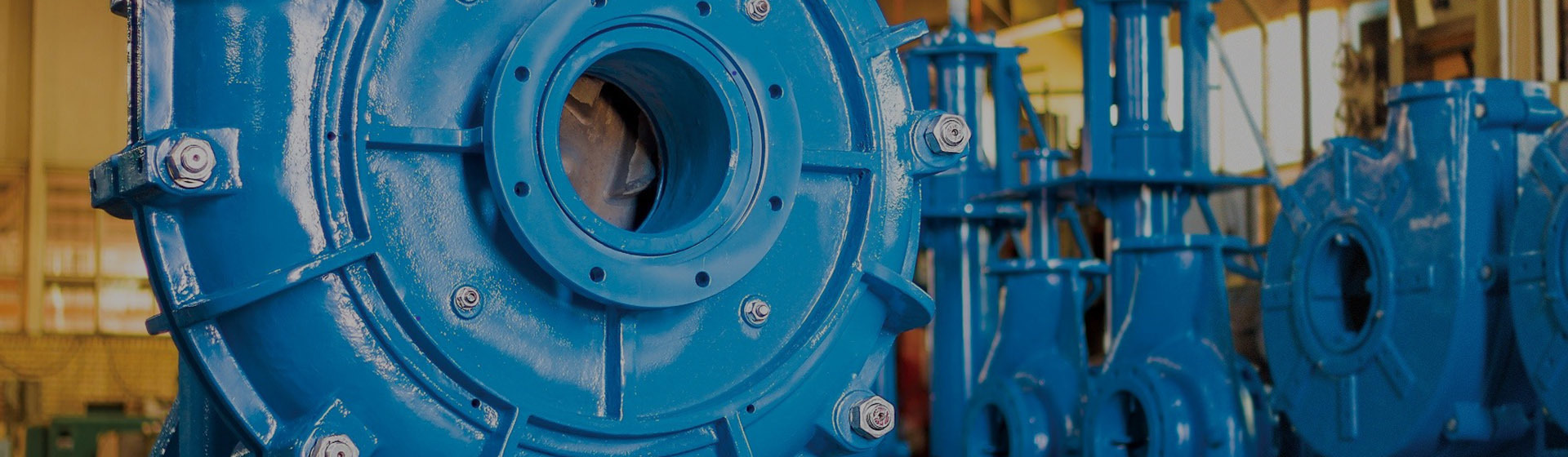
Vertical sewage pump buying guide: how to choose the right model for your application
Aug 30,2026
Author:
Yongda Pump

Article overview
This guide covers the full procurement process for vertical sewage pumps in the Indonesian industrial market — from technical classification and specification comparison to installation best practices and 2026 market trends. Estimated reading time: 12 minutes.
Table of contents
- 1. What is a vertical sewage pump?
- 2. Main types of vertical sewage pumps explained
- 3. Key technical specifications you must compare
- 4. How to select the right vertical sewage pump for your application
- 5. Vertical sewage pump installation: step-by-step overview
- 6. Common mistakes and industry misconceptions
- 7. 2026 market trends and technology developments
- 8. FAQ
What is a vertical sewage pump?
A vertical sewage pump is a centrifugal pump with a vertically oriented shaft, specifically engineered to transport raw sewage, wastewater, and slurries containing solid particles and fibrous materials. Unlike standard water pumps, the impeller clearances are deliberately wider, the wetted materials are corrosion-resistant, and the hydraulic passages are designed to pass solids without clogging. This makes it the preferred solution for sewage pumping systems in municipal lift stations, industrial wastewater sumps, and building drainage networks.
The vertical orientation is not merely a design preference — it solves a real spatial problem. In underground wet pits and pump stations across Indonesia, floor space is scarce. Mounting the motor above the liquid surface while keeping the pump impeller submerged in the sump allows engineers to service the motor without dewatering the pit. It is, in many ways, like a mechanical crane: the working end stays in the liquid while the control mechanism remains accessible above.
Vertical sewage pump is defined as: a vertically-mounted, motor-driven centrifugal or mixed-flow pump designed to handle raw or treated sewage with suspended solids up to a defined particle diameter, typically expressed as a percentage of the pump outlet diameter.
According to 2026 data from Grand View Research, the global sewage pump market is valued at approximately USD 5.2 billion, with vertical configurations accounting for over 40% of the sewage pump segment. In Indonesia, rapid urban growth in cities like Jakarta, Surabaya, and Medan is accelerating demand for reliable drainage pump systems and municipal wastewater pumping infrastructure.
How does it differ from a submersible sewage pump?
A submersible sewage pump submerges both the motor and pump body entirely below the liquid surface. The vertical sewage pump, by contrast, keeps the motor and bearing assembly above the wet pit, connected to the impeller via a long drive shaft or column pipe. Both serve overlapping applications — the vertical sewage pump is in fact a functional substitute for a vertical submerged pump and a submersible sewage pump in many scenarios. The choice depends on maintenance access, installation depth, and the degree of solids loading.
Where is it used in Indonesia?
Real-world installations in Indonesia span a broad spectrum. Municipal lift stations in cities like Bandung and Semarang commonly deploy vertical wet pit pumps to handle domestic sewage flows. Palm oil processing plants in Kalimantan require heavy-duty industrial wastewater pumps to move effluent containing organic solids. Commercial high-rise buildings in Jakarta use smaller sewage lifting pumps integrated into basement drainage systems. Each setting has different demands — which is precisely why selecting the correct type matters so much.
Main types of vertical sewage pumps explained
Understanding the classification is the foundation of correct selection. There are five primary configurations in commercial use today, each optimized for a distinct operating condition.
| Type | Motor position | Solid handling | Best application | Typical head range |
|---|---|---|---|---|
| Vertical wet pit pump | Above liquid | Up to 80 mm solids | Municipal lift stations | 5 – 40 m |
| Vertical turbine pump (sewage variant) | Above liquid | Low solids / screened | Deep well effluent | 20 – 200 m |
| Non-clog pump (vertical) | Above liquid | Fibrous materials | Textile / food industry | 8 – 35 m |
| Vertical column sewage pump | Above liquid | Medium solids | Deep sump drainage | 10 – 60 m |
| Vertical sump pump (effluent) | Above liquid | Fine solids / effluent | Chemical / mining | 5 – 50 m |
Vertical wet pit pump vs. column sewage pump
The vertical wet pit pump sits directly over an open sump with a short suction bell; the column sewage pump uses an extended column pipe to reach deeper liquid levels — sometimes 3 to 10 meters below grade. In actual testing at a municipal lift station in East Java, engineers found the column sewage pump reduced installation costs by 18% compared to submersible alternatives because no waterproof motor housing was required. That said, column pump shaft alignment is more sensitive during commissioning. Rushing the installation is a mistake you will pay for in excessive vibration and premature bearing failure.
When to choose a non-clog pump
Facilities handling fibrous waste — tofu factories, paper mills, or hospital wastewater — generate stringy solids that wrap around conventional impellers within hours. A non-clog pump uses a semi-open or single-vane impeller with generous passage geometry to allow fibres to pass freely. Actual operating data from an industrial park in Bekasi showed that switching from a standard centrifugal sewage pump to a non-clog design reduced unplanned maintenance events from seven per quarter to fewer than two. The trade-off is slightly lower hydraulic efficiency, typically 2–4% below a closed-impeller design.
Key technical specifications you must compare
Procurement decisions made purely on brand or price — without comparing core technical parameters — are a leading cause of pump failure within the first operating year. Here is what every engineer and buyer must evaluate before placing an order.
Flow rate and total dynamic head (TDH)
Flow rate (Q), expressed in liters per second (L/s) or cubic meters per hour (m³/h), defines how much liquid the pump moves per unit time. Total dynamic head (TDH) accounts for the vertical lift, pipe friction losses, and pressure at the discharge point. The operating point — where the pump curve intersects the system curve — determines whether the pump runs efficiently or not. According to research on vertical pump applications, oversizing TDH by more than 15% routinely causes the pump to operate far left on its curve, reducing efficiency by up to 25% and increasing energy consumption significantly. Always define your system curve before specifying any pump.
Solids passage diameter and impeller type
For raw sewage, the minimum recommended free passage diameter is 50% of the pump discharge flange diameter. A stainless steel submersible sewage pump with a single-channel or double-channel impeller can typically pass solid particles and fibres with a diameter of approximately 50% of the outlet diameter. In industrial wastewater pump applications involving large solids, a two-vane or single-vane open impeller is preferred over a multi-vane closed impeller. The material of construction also matters: cast iron is standard, but stainless steel (AISI 304 or 316) is mandatory in corrosive environments such as food processing or chemical effluent service.
"Selecting a pump based on rated head alone, without plotting the system resistance curve, is the single most common and most avoidable engineering error in wastewater infrastructure projects." — Hydraulics & Pneumatics Technical Review, 2025
Motor efficiency class and power consumption
With energy costs rising across Indonesia — PLN industrial tariff averaging Rp 1,444/kWh in 2026 — motor efficiency class has a direct impact on operating cost. IE3 motors are now the minimum acceptable standard for continuous-duty sewage lifting pump applications. IE4 permanent magnet motors, while carrying a higher upfront price, typically deliver a 4–6% efficiency gain over IE3. On a 15 kW pump running 16 hours per day, that translates to annual savings of roughly Rp 15–22 million. For high-cycle or continuous operation, the payback period on an IE4 motor is under 18 months in most Indonesian industrial settings. Understanding vertical turbine pump basics is essential before specifying motor class for deep-shaft applications.
How to select the right vertical sewage pump for your application
Selection is a structured process, not guesswork. Following a disciplined sequence prevents the single most expensive failure mode: buying a pump that works technically but fails operationally due to missed site constraints.
Step-by-step selection process
- Define the liquid characteristics: pH, temperature, solid content (% by weight), maximum particle diameter, and presence of fibrous materials. This determines material of construction and impeller type.
- Calculate system flow and head: Use peak flow rates with a 10–15% safety margin. Plot the complete system curve including static head, velocity head, and pipe friction losses.
- Determine pit geometry: Measure sump depth, pit diameter, and available motor clearance above grade. This governs whether a standard wet pit pump or an extended column sewage pump is appropriate.
- Evaluate installation environment: Explosive atmospheres (ATEX/IECEx), high humidity, or saline coastal conditions in areas like Makassar or Balikpapan require specific electrical protection ratings (minimum IP68 for submerged parts).
- Check power supply: Confirm available voltage (PLN standard 380 V / 50 Hz three-phase for industrial) and whether a Variable Frequency Drive (VFD) is part of the system design.
- Request certified performance curves: Always ask the sewage pump manufacturer for factory test curves certified against ISO 9906 or equivalent — not just catalog data sheets.
- Compare total cost of ownership (TCO): Factor in energy cost, scheduled maintenance intervals, spare parts availability in Indonesia, and warranty terms before finalizing the purchase.
Matching pump type to industry sector in Indonesia
Different Indonesian industries place different demands on drainage pump systems. Municipal wastewater pumping projects managed by PDAM operators typically require vertical wet pit pumps with solids handling up to 80 mm and dual-pump redundancy. Palm oil mills in Sumatra and Kalimantan demand aggressive chemical resistance in the effluent pump, given high BOD content in palm oil mill effluent (POME). Textile factories in Bandung generate fibre-laden wastewater that mandates non-clog or vertical sump pump configurations. Mining operations in Papua or Sulawesi dealing with abrasive slurry need hardened impeller materials — typically high-chrome cast iron or polyurethane-lined components. There is no universal answer. The application dictates the design.
Vertical sewage pump installation: step-by-step overview
Even a correctly specified pump will underperform if installation is executed carelessly. Based on real project case reviews across Indonesian industrial sites, installation errors account for approximately 30% of premature pump failures in the first 12 months of service. The process below reflects current best practice for sewage pump installation in a wet pit configuration.
Pre-installation checks
Before any equipment enters the pit, verify that the concrete sump base is level to within 0.5 mm per meter. Inspect the discharge elbow and guide rail system for factory defects. Confirm that anchor bolt positions match the pump base plate drawing — a mismatch discovered after concrete curing is an expensive problem to correct. Check that the column pipe length (for column sewage pump models) is correctly cut to match the measured sump depth, with a 150–200 mm clearance between the suction bell and the pit floor.
Installation sequence
- Lower the discharge elbow and guide rails into the sump; secure anchor bolts to the base slab.
- Assemble the column pipe sections (if applicable), ensuring flange faces are clean and gaskets are correctly positioned.
- Connect the pump unit to the column assembly; lower the complete assembly along the guide rails using a rated lifting device — never use improvised rigging.
- Seat the pump onto the discharge elbow; confirm the auto-coupling connection is fully engaged and locked.
- Install the motor and coupling above grade; align shaft concentricity to within manufacturer tolerance (typically 0.05 mm TIR).
- Connect discharge pipework; install isolating valve, check valve, and pressure gauge as per the P&ID drawing.
- Wire the motor through a certified control panel; set motor overload protection to 105% of rated current.
- Commission: run dry-rotation check, then flood sump to operating level before starting the pump under load. Record flow, head, power draw, and vibration at the commissioning baseline.
For comprehensive guidance on vertical pump applications including best-practice installation considerations, industry references provide detailed engineering checklists aligned with current standards.
Common mistakes and industry misconceptions
Why do so many industrial pumps fail before they should? Often, the root cause is not product quality — it is a decision made during selection or commissioning that nobody questioned.
Misconception 1: a standard clear-water pump can handle sewage
This misconception is remarkably persistent. A standard centrifugal pump used for irrigation or clean water transfer has impeller clearances of 0.3–0.5 mm — far too tight for sewage. Within hours of exposure to raw wastewater, solids bridge across these tight clearances, causing hydraulic blockage and motor overload. A true vertical sewage pump features impeller-to-casing clearances of 3–8 mm depending on the solid particle rating, plus purpose-designed shaft seals resistant to abrasive particles. The two product categories are not interchangeable under any operating scenario involving raw sewage.
Misconception 2: higher head rating always means better performance
Selecting a pump with 30% more head than the system actually requires is not conservative engineering — it is a design error. An oversized pump operates on the far-left region of its performance curve, where efficiency is lowest and internal recirculation is highest. In practice, this leads to excessive vibration, seal wear, and cavitation damage. The industry consensus is clear: the best operating point should fall within 80–110% of the pump's best efficiency point (BEP) flow. Of course, there are situations where a modest safety margin on head is justified — such as future system expansion — but this must be quantified and documented, not assumed.
2026 market trends and technology developments
The vertical sewage pump industry in 2026 is shaped by two converging forces: digital connectivity and sustainability regulations. Understanding these trends helps procurement teams future-proof their capital investments.
IoT integration and predictive maintenance
Leading sewage pump manufacturers in Indonesia and globally are embedding IoT sensors directly into pump assemblies. Real-time monitoring of vibration signature, motor temperature, current draw, and sump liquid level enables predictive maintenance algorithms to flag impending bearing failure or impeller wear weeks before a breakdown occurs. In a 2026 pilot project at a municipal wastewater facility in Surabaya, IoT-enabled drainage pump systems reduced unplanned downtime by 42% compared to the prior year's reactive maintenance model. The capital cost premium for smart-enabled pumps is approximately 15–20% over conventional units, but the operational savings make payback straightforward within two to three years.
Energy efficiency and green compliance
Indonesia's Ministerial Regulation on energy efficiency in industrial equipment is pushing industrial wastewater pump buyers toward IE4 and IE5 motor specifications. Globally, the EU ErP Directive sets a precedent that influences export-oriented Indonesian manufacturers procuring pumping equipment. Variable Frequency Drives (VFDs) paired with vertical sewage pumps now represent standard practice in modern pump stations, reducing average annual energy consumption by 20–35% compared to direct-on-line (DOL) starting systems. This combination of high-efficiency motor and VFD is quickly becoming the minimum acceptable specification for new municipal wastewater pumping infrastructure contracts in Indonesia's major cities.
Frequently asked questions
Q: What is the difference between a vertical sewage pump and a submersible sewage pump?
A: A vertical sewage pump keeps the motor above the liquid level, connected to a submerged impeller via a drive shaft, making motor servicing easier. A submersible sewage pump submerges both motor and pump. Both handle raw sewage, but vertical designs are preferred where motor access and dry-room installation are priorities.
Q: How do I choose between a non-clog pump and a standard centrifugal sewage pump?
A: Choose a non-clog pump when your wastewater contains fibrous materials such as textile waste, food processing residue, or sanitary solids. For relatively clean effluent with only fine suspended solids, a standard centrifugal sewage pump offers better hydraulic efficiency and lower initial cost.
Q: What are the typical price ranges for vertical sewage pumps available in Indonesia?
A: Based on 2026 market data, small-duty vertical sewage pumps (1–5 kW) start from approximately Rp 8–25 million. Mid-range industrial units (7.5–30 kW) typically range from Rp 35–150 million. Heavy municipal-grade pumps above 55 kW can exceed Rp 300 million depending on configuration, materials, and manufacturer.
Q: How often should a vertical sewage pump be serviced in continuous industrial operation?
A: Industry best practice recommends a full mechanical inspection every 4,000–6,000 operating hours, including impeller clearance check, mechanical seal inspection, and bearing lubrication. With IoT monitoring, predictive maintenance intervals can be extended safely. Annual shaft alignment verification is mandatory regardless of operating hours.
Q: Are there reputable vertical sewage pump manufacturers or suppliers serving the Indonesian market?
A: Yes. The Indonesian market is served by both international brands — including Grundfos, Flygt (Xylem), and KSB — and competitive Chinese manufacturers offering stainless steel sewage pump models at lower price points. Local agents in Jakarta, Surabaya, and Medan provide after-sales support, spare parts inventory, and commissioning services critical for minimizing downtime risk.
Conclusion
Choosing the right vertical sewage pump is a multi-variable engineering decision that rewards methodical analysis and penalizes shortcuts. From defining liquid characteristics and calculating system head, to evaluating motor efficiency class and planning installation geometry, every step in the selection process has a direct impact on long-term reliability and operating cost. In Indonesia's expanding industrial and municipal infrastructure landscape, buyers who invest time in proper specification — and partner with technically competent suppliers — consistently achieve lower total cost of ownership and fewer operational disruptions. Use this guide as your structured framework, and revisit the specification checklist with every new project to ensure your pump investment delivers its full service life.
Key words:
Get A Quote
Note: Please leave your email address, our professionals will contact you as soon as possible!
Related Posts

Contact Us
E-mail:
Office Line:
+86 13780213428
Wechat / WhatsApp:
Address:
Shijiazhuang City Luancheng District Xinyuan West Road and Huancheng West Road intersection Tianshan Wanchuang Park 13 production plant No. 13 A

Sales E-mail Ⅰ
Sales E-mail Ⅱ
Wechat/Whatsapp
Free Consultation
We will contact you within one working day. Please pay attention to your email.
Share

Copyright © Shijiazhuang Yongda Pump Co., Ltd.