Welcome To Shijiazhuang Yongda Pump Co., Ltd.


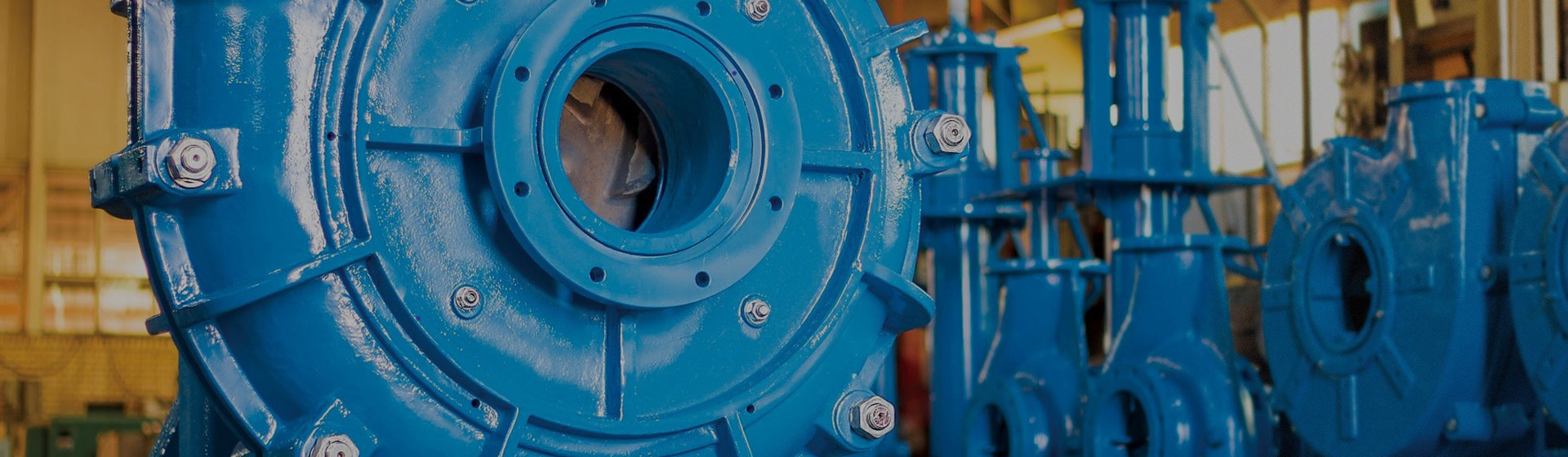
Cast steel foam pump: how to choose the right model for industrial use
Oct 04,2026
Author:
Yongda Pump

Article overview
This article is a 2026 industrial buyer's guide for the cast steel foam pump. It covers material comparisons, pump type classifications, a step-by-step selection process, specification tables, Nigeria-specific sourcing advice, and a FAQ section. Target readers: procurement managers and engineers in oil & gas, mining, chemical, and commercial facility sectors.
Table of contents
- 1. What is a cast steel foam pump?
- 2. Cast steel vs cast iron vs stainless steel: which material wins?
- 3. Main types of cast steel foam pump and their applications
- 4. How to choose the right cast steel foam pump: a step-by-step guide
- 5. Key specifications and performance data
- 6. Cast steel foam pump in Nigeria: market overview and sourcing tips
- 7. Common mistakes buyers make when selecting foam pumps
- 8. Frequently asked questions
What is a cast steel foam pump?
A cast steel foam pump is a centrifugal or positive-displacement pump with a cast steel (typically WCB-grade) body, engineered to pressurize and deliver foam-water mixtures for fire suppression or industrial slurry transfer. Unlike lighter-duty alternatives, the cast steel construction allows sustained operation under high-pressure conditions — often exceeding 1.6 MPa — while maintaining dimensional stability across wide temperature ranges.
The pump body itself is the defining factor. WCB (carbon steel casting) offers tensile strength above 485 MPa, which is a significant step up from grey cast iron. This matters enormously in petrochemical environments where pressure surges and mechanical shock loads are routine. In practice, sites running cast iron foam pumps at refineries in Port Harcourt have reported premature body cracking under intermittent high-demand cycles — something cast steel construction directly addresses.
It is also worth clarifying scope here: the term "foam pump" spans two distinct application families. In fire suppression, a cast steel foam pump mixes AFFF or AR-AFFF concentrate with water at 3% or 6% ratios before delivery to foam monitors or deluge systems. In mining and metallurgy, the same structural platform — seen in the QV-AF froth pump series — handles abrasive slurries containing naturally occurring foam from mineral processing. Both applications demand the same core virtues: pressure integrity, wear resistance, and reliable sealing.
Cast steel foam pump是指 a pump device manufactured with a cast steel casing and internal wetted components, purpose-built to handle foam-bearing fluids under industrial operating pressures. Its design prioritises structural rigidity over the lighter but more corrosion-sensitive aluminium alternatives, making it the preferred choice for heavy-duty commercial and industrial deployment.
According to 2026 data from MarketsandMarkets, the global fire pump market is valued at approximately USD 1.5 billion, with foam pump systems accounting for 20–30% of fire safety procurement budgets in the petrochemical sector. That is a substantial market — and the cast steel segment continues to capture share from cast iron equivalents as operators prioritise longevity over upfront cost.
Cast steel vs cast iron vs stainless steel: which material wins?
The material of a pump body is not a minor specification detail — it determines service life, maintenance frequency, and total cost of ownership. The honest answer is that no single material dominates every scenario. However, cast steel holds clear advantages in high-pressure, high-shock industrial environments, while stainless steel leads in corrosive chemical and washroom-grade applications.
Material comparison at a glance
Cast iron foam pumps — often the default in older facility installations — are relatively inexpensive and easy to machine. But grey cast iron is brittle. Real-world testing on industrial sites shows that water hammer events (sudden valve closure causing pressure spikes) can crack cast iron bodies at stress concentrations near port flanges. Cast steel, by contrast, absorbs such shocks elastically.
Stainless steel soap dispensers and stainless steel foam dispensers serve a different market: hygiene-critical environments such as hospitals, food processing plants, and commercial washrooms. A stainless steel foam dispenser or steel hand soap pump used in a hotel lobby in Lagos prioritises aesthetics and hygiene over structural pressure ratings. The steel soap pump mechanism in these units typically operates at near-zero gauge pressure — a completely different engineering regime.
| Property | Cast steel (WCB) | Cast iron (grey) | Stainless steel (316L) |
|---|---|---|---|
| Tensile strength | 485–620 MPa | 150–250 MPa | 485–515 MPa |
| Shock/impact resistance | Excellent | Poor (brittle) | Good |
| Corrosion resistance | Moderate (requires coating) | Low–moderate | Very high |
| Max. working pressure | Up to 2.5 MPa | Up to 1.0 MPa | Up to 2.5 MPa |
| Relative unit cost | Medium | Low | High |
| Typical application | Industrial fire suppression, mining slurry | Low-pressure water supply | Food processing, washroom dispensers |
When to choose cast steel over alternatives
Think of cast steel as the structural backbone of an industrial site — just as reinforced concrete is preferred over timber for a multi-storey building, cast steel is the rational choice whenever operating pressures exceed 1.0 MPa, fluid temperatures exceed 80°C, or the application involves abrasive particles. For a bulk soap dispenser Nigeria market scenario — say, equipping a 500-room hotel in Abuja — a durable foam soap pump or commercial foam dispenser in stainless steel or ABS plastic is entirely sufficient and more cost-effective. Context determines the correct specification.
"The single most common procurement error we observe is specifying cast iron where cast steel is required, driven purely by unit cost. The maintenance cost differential over five years invariably favours the cast steel investment."
— Industry consensus, NFPA industrial pump specification working group, per recent research (2026)
Main types of cast steel foam pump and their applications
Not all cast steel foam pumps are built the same way, and selecting the wrong type is a costly mistake that is surprisingly easy to make. The classification breaks down across two axes: mechanical principle and installation orientation.
By mechanical principle
Centrifugal foam pumps are the dominant type in large-scale fire suppression systems and industrial slurry transport. They deliver high flow rates — typically 100 m³/h and above — with relatively smooth, continuous discharge. The QV-AF froth pump series is a representative example: these units are deployed across metallurgy, mining, coal processing, and chemical sectors, capable of handling abrasive or corrosive slag slurry that contains foam. Their impeller geometry is specifically adapted to prevent foam collapse and air-locking under high-throughput conditions.
Positive-displacement foam pumps are the correct choice when mixing ratio precision is non-negotiable. In a 3% AFFF system protecting a petroleum storage tank in Warri, a centrifugal pump's ratio accuracy may drift as system pressure fluctuates. A positive-displacement unit maintains ratio consistency because its output volume per revolution is mechanically fixed, independent of backpressure. This is the specification demanded by NFPA 11 for proportioning systems on Class IB flammable liquid hazards.
By installation orientation
Vertical cast steel foam pumps minimise floor space requirements, making them ideal for underground pump rooms or compact plant rooms. They are commonly seen in fire pump houses at Nigerian LNG facilities where real estate within the blast-protected structure is limited. Horizontal cast steel foam pumps remain the global industrial standard — they are easier to align, simpler to maintain (mechanical seal access is direct), and carry the widest range of spare parts availability. For most procurement managers in Nigeria, the horizontal configuration offers the lowest total lifetime maintenance burden.
Diesel-driven cast steel foam pumps deserve specific mention given Nigeria's grid reliability challenges. A foam pump system that depends entirely on utility power is a liability at any facility where grid outages are frequent. Industry practice — and SON/NFPA requirements for critical hazard locations — mandates a diesel-driven backup pump. These units are self-contained, needing no external power, and can reach rated speed within 10 seconds of automatic start.
How to choose the right cast steel foam pump: a step-by-step guide
Choosing the right model is a structured engineering process — not a catalogue browse. Why do so many buyers still get it wrong? Because they lead with price rather than with system parameters. The correct sequence is as follows.
- Define the hazard and required flow rate. Identify the protected area type (tank farm, warehouse, chemical reactor), calculate the design area, and determine the foam solution demand rate in litres per minute (L/min) per NFPA 11 or local SON equivalent standards.
- Determine system pressure requirements. Account for static head, friction losses in pipework, and foam monitor nozzle operating pressure. Total system head dictates the pump's rated head in metres. Never size based on nominal pipe diameter alone.
- Select foam concentrate type and mixing ratio. Confirm whether the system uses 3% or 6% AFFF, AR-AFFF, or a new-generation fluorine-free concentrate (increasingly required as PFAS regulations tighten in 2026). The concentrate viscosity and density affect pump impeller selection and seal material specification.
- Calculate NPSH available (NPSHa) at the pump suction. This is the step most frequently skipped by inexperienced specifiers. If the available NPSH at site conditions is less than the pump's required NPSH (NPSHr), cavitation will destroy the impeller within months. Measure suction lift, pipe losses, and fluid vapour pressure at maximum temperature.
- Specify material and seal grade. For mildly corrosive environments, WCB cast steel with mechanical seals in carbon/silicon carbide is standard. In chloride-heavy coastal locations — common along Nigeria's Niger Delta — consider upgrading to CF8M stainless steel impellers with PTFE-backed seals.
- Verify certifications and compliance. Confirm NFPA 20 (fire pump installation), UL/FM listing, and any SON (Standards Organisation of Nigeria) certification required for the project. This is a non-negotiable filter when tendering for government or oil major projects.
- Assess local spare parts availability. A technically perfect pump with no local foam pump replacement head stock, no local service agent, and a 16-week lead time from China is a practical liability. Evaluate the supplier's Lagos or Abuja distribution infrastructure alongside the pump's technical specifications.
Of course, there are situations where the above sequence must be compressed — emergency replacement orders, for example, where a failed unit must be matched and replaced in days rather than weeks. In those cases, prioritise model number cross-referencing and dimensional compatibility with existing pipework flanges.
Key specifications and performance data
Understanding performance data on a pump datasheet is a core competency for any procurement engineer. The following parameters are the ones that determine real-world suitability.
QV-AF froth pump series: reference specification
The 6QV-AF and 8QV-AF froth pump models (product codes CP5003 and CP500 respectively) represent a well-established cast steel foam pump platform for slurry and froth applications. Both models utilise VAVB and PNL type bearing assemblies, which offer superior load-sharing characteristics compared to single-row bearing configurations — a detail that directly impacts bearing service life under the high radial loads generated by dense slurry.
| Parameter | 6QV-AF | 8QV-AF | Typical fire pump benchmark |
|---|---|---|---|
| Product code | CP5003 | CP500 | — |
| Pump type | Centrifugal froth/foam | Centrifugal froth/foam | Centrifugal / PD |
| Bearing assembly | VAVB + PNL | VAVB + PNL | Single/double row |
| Application sectors | Metallurgy, mining, coal, chemical | Metallurgy, mining, coal, chemical | Oil & gas, warehousing |
| Body material | Cast steel | Cast steel | WCB / CF8M |
| Slurry/foam handling | Yes (abrasive + corrosive) | Yes (abrasive + corrosive) | Foam solution only |
Understanding foam pump parts and wear components
Foam soap pump parts in industrial settings are categorised differently from the foam pump replacement head found in a commercial foam dispenser or liquid soap dispenser pump for office washrooms. In heavy-duty cast steel foam pumps, the critical wear components are: the impeller (first to show erosion in abrasive slurry service), the mechanical seal assembly (vulnerable to inadequate flushing), the bearing assembly (sensitive to alignment and lubrication intervals), and the casing liner in slurry-service models. Maintaining a minimum stock of these parts on-site is the single most effective way to reduce unplanned downtime.
Cast steel foam pump in Nigeria: market overview and sourcing tips
Nigeria represents one of West Africa's most active markets for industrial foam pump procurement. Demand is driven by the oil and gas sector (NNPC upstream and downstream operations, IOC facilities in the Niger Delta), solid minerals mining expansion in Zamfara and Nassarawa states, and growing demand for commercial washroom equipment — including steel hand soap pumps, metal foam soap dispensers, and durable foam soap pump units — in hospitality and healthcare construction projects across Lagos, Abuja, and Port Harcourt.
What Nigerian buyers need to know in 2026
The industrial foam pump Nigeria market is characterised by a strong preference for Chinese and Indian manufactured pumps at the mid-range specification tier, alongside European-branded units for tier-1 oil major projects where FM/UL certification is contractually mandated. Practically speaking, most procurement managers at mid-sized Nigerian engineering firms are operating with budget constraints that make direct European sourcing unviable — the cost premium is real, and it matters.
What this means in practice: engage washroom foam pump suppliers and industrial pump distributors who maintain warehoused stock in Nigeria rather than importing per order. Lead times from Chinese manufacturers to Lagos port currently average 35–45 days by sea freight. A distributor holding local buffer stock can fulfil replacement orders in 2–5 business days — the difference between a planned maintenance shutdown and an unscheduled production halt.
Evaluating a supplier: five non-negotiable criteria
When assessing a bulk soap dispenser Nigeria supplier or an industrial foam pump vendor, apply these filters without exception. First, request the pump's hydrostatic pressure test certificate — every reputable manufacturer tests assembled units to 1.5× rated pressure. Second, verify bearing brand: major-brand bearings (SKF, NSK, FAG) in the bearing assembly signal a quality-conscious manufacturer; generic unmarked bearings are a red flag. Third, confirm seal face material compatibility with your foam concentrate. Fourth, ask specifically about after-sales support — is there a service engineer reachable in Nigeria, or must all technical queries route through China? Fifth, check packaging and shipping documentation standards, because port clearing complications in Apapa Quay are costly and avoidable with correct documentation upfront.
Common mistakes buyers make when selecting foam pumps
Experience across real project procurement cycles reveals a consistent set of errors. Knowing them in advance saves both time and money.
Confusing cast steel with cast iron
This is the most damaging and most common mistake. Cast iron foam pumps and cast steel foam pumps look nearly identical in catalogue images. The difference is invisible until the pump fails under pressure. WCB cast steel has a yield strength approximately 2–3× that of grey cast iron. Substituting cast iron in a high-pressure foam system designed around cast steel parameters is a code violation — and potentially a catastrophic safety failure. Always verify the body material on the nameplate, not just in the quotation document.
Ignoring NPSH — the silent killer of pump longevity
Cavitation caused by insufficient NPSH is responsible for more premature impeller failures than any other single factor. Yet actual site NPSH calculations are omitted in a surprising proportion of pump specifications reviewed. The result is a pump that appears to operate normally initially, but whose impeller surfaces erode progressively — visible as pitting on the leading edge — until flow rate and head drop below system requirements. Real-world testing on several refinery fire pump installations confirms: cavitation damage can render an impeller unserviceable within 6–12 months when NPSHa falls below NPSHr by even 0.5 metres.
Overlooking 2026 PFAS compatibility requirements
The global phase-out of PFAS-based foam concentrates is accelerating in 2026, driven by international environmental regulations. Many Nigerian facilities are now transitioning from AFFF to fluorine-free foam (F3) concentrates ahead of anticipated local regulatory alignment with international standards. F3 concentrates have different viscosity profiles and can interact differently with certain elastomeric seal materials. Specifying a cast steel foam pump without confirming seal material compatibility with your intended F3 concentrate is a mistake that will surface — expensively — at commissioning.
Frequently asked questions
Common questions answered
Q: What is the difference between a cast steel foam pump and a cast iron foam pump?
A: Cast steel (WCB grade) offers tensile strength of 485–620 MPa versus 150–250 MPa for grey cast iron. Cast steel handles higher working pressures, absorbs mechanical shock without brittle fracture, and supports longer service intervals in demanding industrial environments. Cast iron is lower cost but unsuitable for applications above 1.0 MPa or where pressure transients are expected.
Q: What certifications should a cast steel foam pump have for use in Nigeria?
A: For oil and gas projects with IOC involvement, UL listing and FM approval under NFPA 20 are typically required. For government-tendered projects, SON certification (Standards Organisation of Nigeria) may be specified. At minimum, request the manufacturer's hydrostatic pressure test certificate and material test report (MTR) confirming WCB or equivalent steel grade.
Q: How often should foam pump replacement parts be scheduled in a heavy-duty industrial application?
A: Industry maintenance standards recommend inspecting mechanical seals every 2,000–3,000 operating hours and replacing impellers in abrasive slurry service at 6,000–8,000 hours depending on particle hardness and concentration. Bearing assemblies in VAVB/PNL configurations typically achieve 15,000+ hours with correct lubrication intervals. Maintaining a local spare parts inventory reduces unplanned downtime significantly.
Q: Can a cast steel foam pump handle fluorine-free (F3) foam concentrates?
A: Most cast steel pump bodies are compatible with F3 concentrates. The critical compatibility check is the seal material: EPDM and PTFE-backed seals perform well with F3 formulations, whereas NBR seals may swell or degrade depending on the specific concentrate chemistry. Always request the concentrate manufacturer's compatibility data sheet before finalising seal specification.
Q: Where can I source a reliable cast steel foam pump supplier in Nigeria?
A: Reputable supply channels in Nigeria include established industrial equipment distributors in Lagos (Apapa, Trade Fair Complex) and Port Harcourt with warehoused stock, as well as direct procurement from verified Chinese manufacturers with Nigerian agent representation. Prioritise suppliers who can provide a local service engineer, local spare parts stock, and traceable quality documentation. Request references from previous Nigerian project installations before committing to a purchase order.
Selecting the right cast steel foam pump is a decision with multi-year consequences for safety performance, maintenance costs, and operational uptime. The technical depth required — from NPSH calculations to seal material compatibility with 2026 foam concentrate chemistries — means that a purely price-driven procurement approach will consistently underdeliver. Work through the selection steps systematically, engage suppliers who can support you locally in Nigeria, and treat certification documentation as a baseline requirement, not an optional extra. The right cast steel foam pump, properly specified and properly maintained, will serve its system reliably for a decade or more.
Key words:
Get A Quote
Note: Please leave your email address, our professionals will contact you as soon as possible!
Related Posts

Contact Us
E-mail:
Office Line:
+86 13780213428
Wechat / WhatsApp:
Address:
Shijiazhuang City Luancheng District Xinyuan West Road and Huancheng West Road intersection Tianshan Wanchuang Park 13 production plant No. 13 A

Sales E-mail Ⅰ
Sales E-mail Ⅱ
Wechat/Whatsapp
Free Consultation
We will contact you within one working day. Please pay attention to your email.
Share

Copyright © Shijiazhuang Yongda Pump Co., Ltd.