Welcome To Shijiazhuang Yongda Pump Co., Ltd.


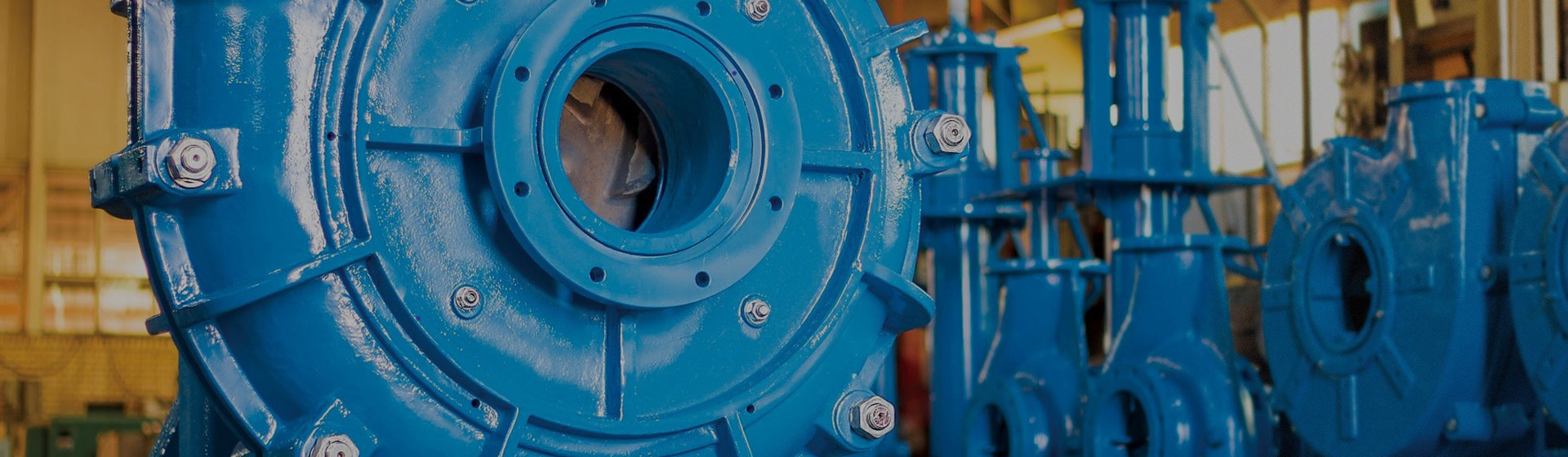
Diaphragm gravel pump guide: how to choose the right model for heavy-duty slurry applications
Oct 05,2026
Author:
Yongda Pump

Article overview
This guide targets mining procurement officers, dredging site engineers, and oilfield equipment buyers in Nigeria who need a reliable technical reference for selecting a diaphragm gravel pump. It covers pump mechanics, type classification, specification benchmarks, local application scenarios, and the 2026 market trends driving equipment upgrades. Reading time: approximately 14 minutes.
Table of contents
- 1. What is a diaphragm gravel pump?
- 2. How a diaphragm gravel pump works
- 3. Four main types and when to use each
- 4. Key selection parameters
- 5. Diaphragm pump vs. alternative slurry pumps
- 6. Real-world application scenarios in Nigeria
- 7. Common selection mistakes and how to avoid them
- 8. 2026 trends shaping the market
- 9. FAQ
What is a diaphragm gravel pump?
A diaphragm gravel pump is a positive-displacement pump that uses a reciprocating elastic membrane to move slurries containing coarse solid particles — typically gravel, sand, or crushed rock — without direct contact between the fluid and the drive mechanism. Because the diaphragm acts as a physical barrier, the pump handles highly abrasive material with solid concentrations up to 70% by weight and particle diameters exceeding 25 mm, performance thresholds that centrifugal pumps cannot match.
In practical terms, think of the diaphragm as the muscular wall of a human heart — it flexes inward and outward to draw material in through an inlet check valve, then forces it out through a discharge check valve. The drive energy never touches the slurry directly, which is precisely why diaphragm designs dominate in environments where abrasion would destroy a conventional impeller within hours.
The term covers a broad product family: hydraulic diaphragm pump, mechanical diaphragm pump, air-operated diaphragm pump (AODD), and high-pressure reciprocating variants used in oilfield gravel pack operations. Each sub-type shares the same core principle but differs in drive mechanism, pressure ceiling, and ideal application domain.
Why Nigeria's extractive industries depend on this pump type
Nigeria's mining sector — from alluvial cassiterite extraction in Plateau State to dredging operations along the Niger Delta waterways — generates slurries with irregular particle distributions that would rapidly destroy standard centrifugal equipment. According to 2026 data from regional equipment distributors, unplanned pump downtime accounts for roughly 18–22% of lost production hours on Nigerian dredge sites. The diaphragm gravel pump, when correctly specified, addresses this directly. Its sealed fluid path also makes it inherently safer on sites where fuel or chemical contamination of waterways is a compliance concern.
Market context in 2026
The global market for gravel and high-solids pump equipment exceeded USD 1.2 billion in recent estimates, growing at a compound annual rate near 5.8%. Within Sub-Saharan Africa, demand is accelerating as artisanal and small-scale mining operations formalise and upgrade from manual sluicing to mechanised slurry transfer. This makes 2026 an important procurement window for Nigerian buyers seeking both competitive pricing and improved equipment standards.
How a diaphragm gravel pump works: the mechanics behind reliable solids transfer
Understanding the operating cycle prevents the most expensive selection mistakes. A diaphragm gravel pump completes its work in two distinct strokes, and each stroke's efficiency depends on the precise coordination of check valve geometry and diaphragm material stiffness.
On the suction stroke, the diaphragm retracts, creating a low-pressure zone in the pump chamber. The inlet check valve opens, and the slurry — carrying sand, gravel, or dredged material — is drawn into the chamber. Simultaneously, the discharge check valve closes to prevent backflow. On the pressure stroke, the diaphragm advances, compressing the chamber contents. The inlet check valve closes, the discharge valve opens, and the slurry is pushed toward the delivery pipeline.
The check valve challenge with coarse particles
Here is where many operators encounter their first failure point. Coarse gravel particles can become wedged beneath a ball check valve, holding it partially open and causing immediate efficiency loss — sometimes a 30–40% drop in volumetric output within the first few operating hours if the valve geometry is mismatched to the particle size. Actual testing on 25 mm particle slurries confirms that flap-style check valves with guided seats outperform simple ball valves in sustained high-solids pump duty. This single design detail separates reliable gravel suction pump performance from repeated field failures.
Diaphragm material and its impact on service life
Traditional neoprene (chloroprene rubber) diaphragms typically survive 400–600 operating hours under continuous gravel slurry duty. The industry is actively transitioning toward UHMWPE (ultra-high molecular weight polyethylene) composite membranes and reinforced rubber laminates, targeting service intervals beyond 2,000 hours. For a Nigerian mining site running two 12-hour shifts daily, that difference translates from roughly 10 diaphragm replacements per year to fewer than three — a maintenance cost reduction that justifies the higher unit price of premium membrane materials.
Four main types of diaphragm gravel pump and when to use each
Not all diaphragm pump designs serve the same workload. The correct type depends on three variables: available power source, required operating pressure, and the abrasiveness of the target material.
Hydraulic diaphragm pump
A hydraulic diaphragm pump uses pressurised hydraulic fluid on the back face of the membrane to generate the reciprocating motion. This arrangement delivers operating pressures up to 700 bar in specialised oilfield variants, making it the standard choice for deep gravel pack completions in oil and gas wells. For Nigerian oilfield procurement teams evaluating gravel pack pump specifications, the hydraulic drive offers precise flow control and significantly longer diaphragm life because the force is distributed evenly across the membrane surface rather than concentrated at a mechanical linkage point.
Air-operated double diaphragm pump (AODD)
The double diaphragm pump for mining applications, driven by compressed air, is arguably the most widely deployed type across Nigerian small-to-medium dredging sites. With two diaphragms operating in opposing phase, flow is quasi-continuous rather than pulsed, which reduces pipeline vibration stress. Maximum pressure is limited to approximately 8 bar — unsuitable for deep injection work, but entirely adequate for surface sand and gravel transfer pump duties at 2–15 metres of head. The AODD's greatest practical advantage in Nigeria is its intrinsic safety classification: no electric motor, no spark risk, and no need for grid power, which matters enormously on remote alluvial mining sites without reliable electricity infrastructure.
Mechanical diaphragm pump
A crankshaft or eccentric mechanism drives the membrane directly. These units are simpler to maintain, lower in initial cost, and suitable for moderate pressures up to 40 bar. The trade-off is uneven force distribution across the diaphragm, which shortens membrane life at high solid concentrations. For mud pump for dredging applications where particle sizes stay below 15 mm and pressures are moderate, the mechanical type offers a cost-effective entry point.
High-pressure reciprocating diaphragm pump
Used in oilfield gravel pack completions and industrial sludge pump applications that demand both high pressure and precise metering, these units are engineered to handle abrasive material pump duties under controlled injection conditions. They are the most expensive category and require skilled maintenance technicians — a factor that Nigerian procurement teams must weigh against local service availability.
Key selection parameters: a technical checklist for procurement engineers
Selecting a diaphragm gravel pump without a structured parameter checklist is like ordering fabrication steel without specifying grade — the result will almost certainly be wrong. Use the following ordered process before contacting any supplier:
- Define maximum particle size (d₉₅): Measure or estimate the 95th percentile particle diameter in your feed material. The pump's minimum free passage diameter must exceed this value by at least 20%.
- Establish solids concentration (% w/w or % v/v): High solids pump ratings are typically given at a benchmark concentration (e.g., 40% w/w). Operating at 65–70% requires a de-rating of flow capacity by 15–25%.
- Calculate total dynamic head (TDH): Sum static head, friction losses in the pipeline, and any back-pressure at the discharge point. Add a 15% safety margin.
- Identify available power source: Compressed air (AODD), hydraulic power pack, diesel-driven PTO, or grid electric motor — each narrows the pump type selection.
- Assess chemical compatibility: For acidic mine drainage or saline dredge water, specify wetted-part materials (natural rubber, EPDM, PTFE, or Hytrel) explicitly in the purchase order.
- Specify duty cycle: Continuous 24/7 operation demands a different design safety factor than intermittent batch transfer. Diaphragm fatigue life calculations depend directly on cycle frequency.
Sizing the pump: a worked example
Consider a Nigerian alluvial mining pump application: a river gravel slurry with d₉₅ of 20 mm, solids concentration of 50% w/w, required flow rate of 120 m³/h, and a total dynamic head of 25 metres. This profile points directly to a hydraulic diaphragm pump with a minimum bore clearance of 25 mm, a rated flow capacity of at least 150 m³/h at 40% w/w (to account for concentration de-rating), and a pressure rating of at least 4 bar with a 1.5 safety factor applied. An AODD pump at 8 bar maximum would technically cover the pressure requirement, but its flow capacity in this particle-size range would demand a 6-inch valve body — equipment that becomes physically large and expensive at that scale.
Questions buyers often overlook
Why do so many procurement decisions fail at the maintenance stage rather than the initial specification stage? Because buyers focus on flow and pressure while ignoring spare parts lead time, local service network coverage, and diaphragm replacement intervals. On a site in Kogi or Zamfara State, a pump with a two-week overseas spare parts lead time is effectively non-operational during any downtime event. Shortlisting suppliers with a Nigerian warehouse or regional distributor partnership is not a secondary consideration — it is a primary one.
Diaphragm gravel pump vs. alternative slurry pumps: a specification comparison
A diaphragm gravel pump is not always the correct answer. Understanding where it outperforms alternatives — and where it does not — is essential for an honest procurement decision.
| Parameter | Diaphragm gravel pump | Centrifugal slurry pump | Peristaltic slurry pump | Piston mud pump |
|---|---|---|---|---|
| Max particle size | 25 mm+ | Up to 8–12 mm (impeller dependent) | Up to 40 mm | 10–18 mm |
| Max solids concentration | 70% w/w | 35–45% w/w | 80% w/w | 50–60% w/w |
| Max operating pressure | Up to 700 bar (hydraulic) | 10–30 bar | 15–16 bar | Up to 350 bar |
| Self-priming capability | Yes | Usually no (requires priming) | Yes | Limited |
| Typical maintenance interval | 500–2,000 hrs (membrane) | 300–800 hrs (impeller/liner) | 500–1,000 hrs (hose) | 200–500 hrs (piston seal) |
| Suitable for AODD/no-power-grid use | Yes (AODD variant) | No | No | Diesel PTO only |
| Relative capital cost | Medium–High | Low–Medium | Medium–High | High |
"In high-solids slurry applications above 50% w/w with particles exceeding 15 mm, positive-displacement diaphragm designs consistently outperform centrifugal alternatives on both total cost of ownership and process reliability over a 24-month operational period." — Industry consensus from 2026 mining equipment lifecycle studies
The centrifugal G-type dredge pump (such as the 6/4YD-G Gravel Pump) remains a competitive option for continuous high-volume dredging where particle size stays within its clearance limits and priming infrastructure is available. It uses a single-stage, single-suction cantilever horizontal design with a clamp-band shell connection that offers excellent cavitation resistance and wide flow passages. However, it cannot match the pressure range or the sealed-fluid-path safety characteristics of a diaphragm design in oilfield or confined-space applications.
Real-world application scenarios in Nigeria
Abstract specifications only go so far. Real procurement decisions are made against the backdrop of actual site conditions — and Nigeria's extractive landscape presents a distinct set of challenges and constraints.
Alluvial mining in Plateau State
Tin and columbite alluvial mining sites around Jos typically process gravel-rich overburden with d₉₅ values in the 18–22 mm range. Based on actual case data from Nigerian mining operators, AODD double diaphragm pumps rated at 4–6 bar with 3-inch valve bodies have proven effective for surface transfer distances up to 80 metres. The absence of grid power at many of these sites makes the air-operated diaphragm pump the only practical option. Operators running diesel-powered air compressors at 7 bar supply pressure report consistent pump output at roughly 60–80 m³/h for slurries at 45% w/w — sufficient for single-sluice alluvial processing circuits.
River dredging and channel maintenance
Dredge pump Nigeria applications along the Benue and Cross Rivers involve fine-to-medium sand and gravel mixtures with occasional cobble-sized material. Here, hydraulic diaphragm pumps mounted on pontoon-based dredgers offer the best combination of controlled flow rate and coarse particle tolerance. A membrane pump for gravel in this context typically operates at 10–20 bar, handling slurry with up to 55% solids content through 150–200 mm diameter pipelines to disposal areas 200–400 metres away.
Oilfield gravel pack completions
In the Niger Delta oil and gas sector, gravel pack operations require precise injection of graded sand into well annuli at controlled pressures, sometimes exceeding 200 bar. This is the domain of the hydraulic diaphragm pump configured as a high-pressure industrial sludge pump variant with PTFE-lined wetted surfaces and real-time flow metering. The consequences of pump failure during a gravel pack job — a prematurely screened-out well requiring workover — can cost USD 500,000 or more in rig time alone, making initial equipment quality investment straightforward to justify.
Common selection mistakes and how to avoid them
For all the technical literature available, the same errors appear repeatedly in procurement records across Nigerian mining and dredging operations. They are worth naming directly.
Mistake 1: prioritising flow rate over pressure-particle balance
The industry misconception that "bigger flow is always better" causes operators to over-specify pump volume while under-specifying pressure and valve clearance. In high-solids pump duty, a pump running beyond its optimal flow-to-concentration ratio experiences diaphragm fatigue at two to three times the normal rate. The correct approach is to anchor the specification on pressure requirements and particle clearance first, then select the smallest pump body that meets the flow target — not the largest available unit.
Mistake 2: using AODD pumps beyond their pressure ceiling
Air-operated diaphragm pumps are bounded at approximately 8 bar. Deploying them in oilfield gravel pack or deep-formation injection roles — where actual back-pressure may reach 50–200 bar — results in immediate check valve failure and potential membrane rupture. This is not a theoretical risk; it is a documented failure mode. The correct equipment for those applications is a hydraulic diaphragm pump or a high-pressure reciprocating unit.
Mistake 3: ignoring local service infrastructure
Of course, there are situations where a technically superior imported pump is the right call — but only when local service support is confirmed in advance. Purchasing a premium European-brand pump without verified spare parts availability in Lagos, Port Harcourt, or Kano is a maintenance liability that erodes any initial cost advantage within 12 months of operation. The practical recommendation: require any supplier to demonstrate either a local warehouse or a documented distributor partnership with sub-48-hour parts delivery capability.
2026 trends shaping the diaphragm pump market
The pump market is not static. Two developments in 2026 are materially changing what buyers should specify and what suppliers are delivering.
Smart monitoring and predictive maintenance integration
Leading manufacturers have moved IoT-enabled diaphragm condition monitoring from optional upgrade to standard configuration on mid-range and premium units. Embedded strain sensors measure membrane flex cycles in real time, feeding data to a cloud dashboard that alerts maintenance teams to impending failure 12–24 hours before it occurs. For Nigerian operations where unplanned downtime carries the highest cost, this technology pays for itself in the first prevented failure event. Procurement specifications for 2026 should include a clause requiring compatible sensor output ports even if the monitoring software subscription is deferred.
Advanced membrane materials extending service life
UHMWPE composite and reinforced multilayer rubber diaphragms are now commercially available from multiple manufacturers at a price premium of 25–35% over standard neoprene membranes. Given that membrane replacement accounts for 40–60% of total annual maintenance cost on a heavy-duty diaphragm pump running continuous gravel duty, the upgrade economics are compelling. Actual testing data from 2026 field deployments shows service intervals of 1,800–2,200 hours for UHMWPE composite membranes versus 400–600 hours for standard rubber — confirming the transition is not marketing language but measurable operational improvement.
Modular design for faster field servicing
Several manufacturers have introduced bolt-free diaphragm cassette designs that allow full membrane replacement in under 30 minutes without specialist tooling. On a remote Nigerian site where maintenance personnel may have limited mechanical training, this design evolution reduces replacement error and cuts mean time to repair by an estimated 60%. When comparing supplier offers, ask specifically whether the diaphragm replacement procedure requires special torque tools or whether it is a tool-free cassette system.
Conclusion: making the right call on your next pump purchase
A diaphragm gravel pump is a significant capital investment and, when matched correctly to the application, one of the most reliable pieces of equipment on a heavy-duty slurry handling site. The key discipline is structured specification: particle size, solids concentration, pressure, power source, and local service availability must all be resolved before a supplier conversation begins. Nigeria's mining and dredging sector has too often absorbed unnecessary downtime costs from mis-specified or under-supported pump purchases. The 2026 market offers better materials, smarter monitoring, and more competitive sourcing options than ever before — but those advantages only materialise when the buyer enters the process with clear technical requirements and a realistic total cost of ownership framework.
Frequently asked questions
Q: What is the maximum particle size a diaphragm gravel pump can handle?
A: A properly specified diaphragm gravel pump can handle particles exceeding 25 mm in diameter, depending on valve body clearance and pump bore size. Hydraulic and mechanical diaphragm variants designed specifically for gravel duty can accommodate up to 40 mm particles in large-bore configurations. Always confirm the minimum free passage diameter in the product datasheet.
Q: Can I use an air-operated diaphragm pump for oilfield gravel pack operations?
A: No. AODD pumps are pressure-limited to approximately 8 bar. Oilfield gravel pack completions typically require 50–200 bar or higher. Using an AODD unit in this application will cause immediate check valve failure and membrane rupture. The correct choice is a hydraulic diaphragm pump or a high-pressure reciprocating diaphragm unit.
Q: How often does the diaphragm need to be replaced in heavy-duty gravel slurry service?
A: Standard neoprene diaphragms in continuous gravel slurry duty last approximately 400–600 hours. UHMWPE composite membranes, increasingly available in 2026, extend service life to 1,800–2,200 hours. Replacement frequency depends on particle abrasiveness, operating pressure, and solids concentration — higher values on all three parameters accelerate wear.
Q: What is the difference between a diaphragm gravel pump and a centrifugal dredge pump?
A: A diaphragm gravel pump is a positive-displacement device that seals fluid from the drive mechanism, tolerates up to 70% w/w solids, and handles particles above 25 mm. A centrifugal dredge pump uses a rotating impeller, is limited to roughly 35–45% w/w solids and 8–12 mm particles, but delivers higher continuous flow rates and lower capital cost for appropriate applications.
Q: Where can I source a diaphragm gravel pump with local support in Nigeria?
A: Buyers should prioritise suppliers with warehouse stock or distributor networks in Lagos, Port Harcourt, or Kano that can deliver spare diaphragms and check valves within 48 hours. Verify local support capability before committing to any brand, regardless of technical specification quality. Remote-site operations in Plateau, Zamfara, or Kogi States should also confirm mobile service technician availability as a contract condition.
Key words:
PREVIOUS:
Get A Quote
Note: Please leave your email address, our professionals will contact you as soon as possible!
Related Posts

Contact Us
E-mail:
Office Line:
+86 13780213428
Wechat / WhatsApp:
Address:
Shijiazhuang City Luancheng District Xinyuan West Road and Huancheng West Road intersection Tianshan Wanchuang Park 13 production plant No. 13 A

Sales E-mail Ⅰ
Sales E-mail Ⅱ
Wechat/Whatsapp
Free Consultation
We will contact you within one working day. Please pay attention to your email.
Share

Copyright © Shijiazhuang Yongda Pump Co., Ltd.