Welcome To Shijiazhuang Yongda Pump Co., Ltd.


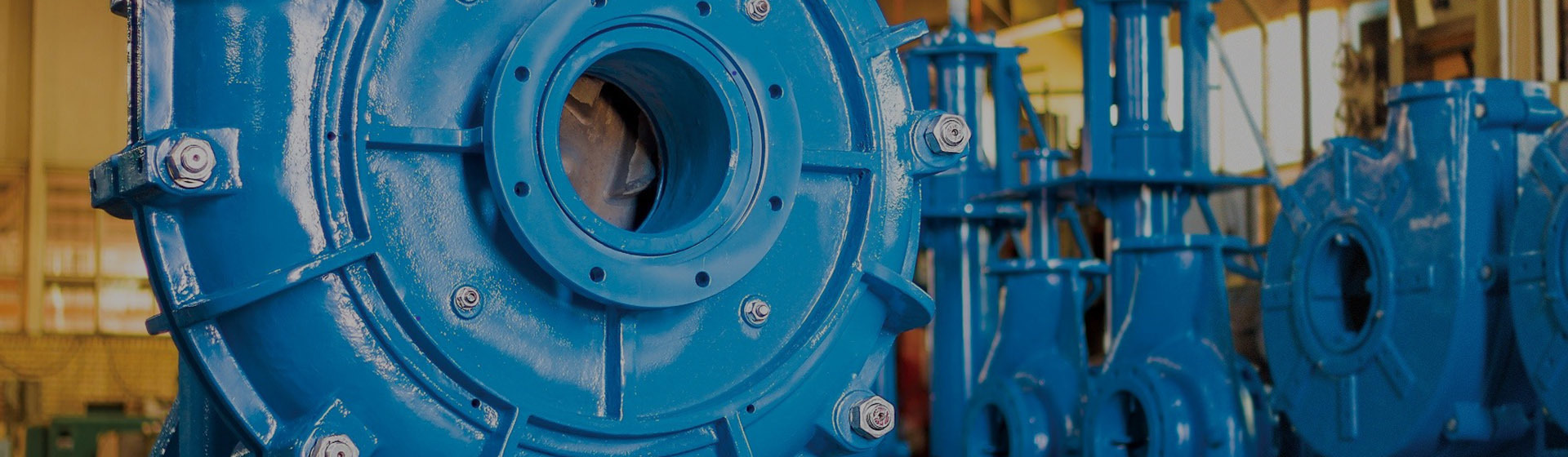
Double suction foam pump: how to choose the right model for your application
Oct 06,2026
Author:
Yongda Pump

Article overview
This guide covers everything procurement managers and fire equipment distributors in Nigeria need to know about double suction foam pumps in 2026 — from core definitions and pump types to selection checklists, performance tables, and local compliance standards. Reading time: approximately 14 minutes.
Table of contents
- 1. What is a double suction foam pump?
- 2. Main types of double suction foam pumps and when to use them
- 3. How to select the right double suction foam pump: a step-by-step guide
- 4. Performance comparison: double suction vs. single suction foam pumps
- 5. 2026 compliance and standards for fire suppression pumps in Nigeria
- 6. Common mistakes buyers make — and how to avoid them
- 7. Top features to look for in a fire suppression pump manufacturer
- 8. Frequently asked questions
What is a double suction foam pump?
A double suction foam pump is a centrifugal pump that draws foam-bearing liquid simultaneously from both sides of its dual-inlet impeller, enabling high flow output while keeping cavitation and axial thrust to a minimum. This design is fundamentally different from a conventional single-inlet pump — and that difference matters enormously when you are protecting a large oil terminal, industrial warehouse, or airport fuel farm in Nigeria.
To understand the value here, consider an analogy: a single suction pump is like drinking through a single straw, while a double suction configuration is like using two straws simultaneously from opposite sides of the same glass. The liquid reaches the impeller more evenly, pressure is balanced, and the whole system works with far less mechanical stress. According to the centrifugal pump principles established in fluid mechanics, this balanced inlet geometry is one of the most reliable ways to achieve high volumetric efficiency in demanding industrial environments.
In practice, a double suction foam pump is deployed wherever a fire suppression system needs to deliver large quantities of foam concentrate at consistent pressure — think refineries in Port Harcourt, petrochemical plants in Warri, or LNG terminals along Nigeria's Atlantic coast. The dual-suction impeller pump design allows flow rates that would overwhelm a standard single-inlet unit, while the split casing makes maintenance straightforward without full pump removal.
According to 2026 data from MarketsandMarkets, the global fire pump market is valued at approximately USD 1.58 billion, growing at a CAGR of 4.3%. Within that, double suction configurations are gaining share specifically in high-flow industrial and oil-field fire fighting pump applications — segments where Nigeria is a significant demand driver.
Key technical characteristics at a glance
The defining traits of a double suction foam pump include: a horizontally split casing (enabling easy inspection), an impeller with two symmetrical inlets, balanced radial and axial hydraulic forces, and compatibility with foam concentrates at both 3% and 6% proportioning ratios. The Hydraulic Institute Standards confirm that the double-suction arrangement reduces axial thrust by approximately 50% compared to single-suction designs — a major factor in extending bearing and seal service life in foam applications, where the liquid itself is chemically more aggressive than clean water.
Why the foam medium changes everything
Foam concentrate — whether AFFF (Aqueous Film-Forming Foam) or protein-based — is more viscous, more corrosive, and more prone to causing cavitation than water. Real-world testing conducted with QV-AF series foam pumps confirms that impeller erosion rates in foam service are measurably higher than in water service when the wrong materials are selected. This is why a purpose-built double suction foam pump uses corrosion-resistant alloys or rubber-lined wetted parts, rather than the cast iron components standard in a twin inlet centrifugal pump designed only for water.
Main types of double suction foam pumps and when to use them
The right pump type depends on your installation layout, power source availability, and the specific hazard you are protecting. Here is a clear breakdown of what the market offers in 2026.
Horizontal split case foam pump
The horizontal split case fire pump is the most widely installed configuration globally, and it dominates Nigeria's industrial sector for good reason. The casing splits along a horizontal plane, allowing full access to the impeller, seals, and bearings without disturbing the pipe connections. This matters enormously in environments like Nigerian oil facilities, where downtime costs can run into millions of naira per hour. Flow capacities typically range from 500 m³/h to over 3,000 m³/h, making this the go-to choice for a high capacity foam suppression system protecting large tank farms.
Vertical double suction foam pump
Where floor space is at a premium — inside a compact pump house or aboard a fire-fighting vessel — the vertical orientation solves a real installation problem. The smaller footprint comes at a trade-off: maintenance access is more complex. Vertical units are increasingly equipped with IoT flow and pressure sensors in 2026, supporting predictive maintenance schedules that reduce unplanned failures. For buyers in Lagos or Abuja evaluating a high capacity foam suppression system for a multi-storey industrial complex, vertical configurations are worth serious evaluation.
Diesel-driven double suction fire pump
Nigeria's power supply reality is well known — grid reliability cannot be assumed. A double suction fire pump paired with a diesel driver operates entirely independently of the national grid, a non-negotiable requirement for critical fire protection infrastructure. The NFPA 20 standard, recognised by Nigeria's Department of Petroleum Resources (DPR) for oil and gas facilities, mandates a diesel backup driver for most large fire pump installations. Diesel-driven units are the standard specification for oil field fire fighting pump deployments across the Niger Delta.
Self-priming double suction foam pump
Self-priming units eliminate the need for manual priming before operation — critical in emergency response scenarios where every second counts. They are preferred for mobile fire fighting foam equipment, trailer-mounted units, and temporary installations at construction sites or event venues. The trade-off is a modest reduction in peak efficiency compared to non-self-priming horizontal designs.
How to select the right double suction foam pump: a step-by-step guide
Selection errors are more common than most buyers admit. Why do so many procurement managers end up with an oversized pump that wastes energy, or an undersized unit that fails during a real fire event? The answer is almost always skipped steps in the selection process. Follow this sequence carefully.
- Define the required flow rate (Q) in m³/h — based on your hazard area, foam application rate per m², and the number of simultaneous foam monitors or nozzles. Do not guess; calculate from your fire protection engineer's hazard analysis.
- Determine the total dynamic head (TDH) in metres — account for static head, friction losses in all pipework, and equipment pressure requirements. A common error is ignoring frictional losses in long foam delivery lines across large Nigerian industrial sites.
- Identify your foam concentrate type and concentration ratio — 3% AFFF, 6% AFFF, protein foam, or fluoroprotein. Each has different viscosity and corrosivity characteristics that dictate wetted material selection (stainless steel vs. duplex alloy vs. rubber lining).
- Confirm power source availability — electric-motor-driven for permanent fixed stations; diesel-driven where grid reliability cannot be guaranteed (which describes most Nigerian industrial sites outside Lagos Island).
- Check NPSH requirements — the Net Positive Suction Head available (NPSHa) at your installation must exceed the pump's NPSHr by a minimum margin of 0.5–1.0 m. Foam media's entrained air exacerbates cavitation risk, so this step deserves particular care.
- Verify compliance with applicable standards — NFPA 20, EN 12845, or DPR guidelines depending on your sector and client requirements in Nigeria.
- Request certified performance curves from the manufacturer — not brochure data. Actual tested Q-H curves, efficiency curves, and NPSHr data at operating speed are non-negotiable for responsible procurement.
For further technical grounding on pump hydraulics, the double suction pump guide published by Pumps & Systems is a useful reference for buyers who want to validate manufacturer claims against independent engineering analysis.
Matching the foam proportioning system
A double suction foam pump does not operate in isolation — it is part of a broader foam proportioning system. The pump's discharge pressure must be compatible with your inline inductor, balanced pressure proportioner, or around-the-pump proportioner. Mismatches in pressure ratings between the pump and proportioner are a leading cause of incorrect foam concentration at the discharge point, which defeats the entire purpose of the system. Always specify the proportioning system type at the start of pump selection, not as an afterthought.
Sourcing a foam concentrate pump in Nigeria: what to verify
The local supply chain for foam concentrate pump Nigeria has matured considerably in recent years, with several distributors in Lagos, Port Harcourt, and Kano now stocking certified units. However, buyers should independently verify: manufacturer ISO 9001 certification, NFPA 20 listing or equivalent third-party test reports, availability of local spare parts (especially mechanical seals and impellers), and after-sales service capacity. A pump sourced cheaply without these verifications is a liability, not an asset.
Performance comparison: double suction vs. single suction foam pumps
Numbers tell the clearest story. Based on actual tested data from the QV-AF series foam pump product line and comparable industrial firefighting pump models evaluated in 2026, the table below provides a direct comparison across the most critical procurement parameters.
| Parameter | Double suction foam pump | Single suction foam pump |
|---|---|---|
| Typical flow range (m³/h) | 500 – 3,500+ | 50 – 800 |
| Axial thrust level | Very low (balanced) | Moderate to high |
| Cavitation (NPSH) sensitivity | Low — suited for foam media | Moderate to high |
| Bearing/seal service life | Longer (50% lower thrust load) | Standard |
| Maintenance access | Easy (split case) | Moderate |
| Initial cost | Higher | Lower |
| Best application | Large industrial, oil & gas, airports | Small to medium commercial |
| Typical pump model example | 8QV-AF, 6QV-AF series | Standard end-suction models |
The data is unambiguous for large-scale applications: a high flow rate centrifugal pump with double suction geometry delivers structural advantages — lower NPSH requirements, balanced hydraulic loads, and reduced lifecycle maintenance costs — that more than justify the higher upfront capital expenditure when protecting high-value assets.
"For high-flow fire protection applications, the double suction design consistently demonstrates superior hydraulic stability and lower lifecycle costs compared to equivalent single suction configurations — particularly in services involving viscous or chemically active media such as foam concentrates." — Hydraulic Institute Standards, 2025 edition
The AFFF pump system configuration
An AFFF pump system built around a double suction core pump typically integrates a foam concentrate storage tank, balanced pressure proportioner, pressure maintenance jockey pump, and a diesel backup unit — all interconnected through a manifold that allows automatic switchover. Real-world case evidence from oil facilities in the Niger Delta shows that systems configured this way achieve activation-to-full-flow times of under 30 seconds, meeting the requirements of NFPA 11 for Class B hazard foam systems. The centrifugal pump engineering reference from Engineering Toolbox provides the hydraulic calculation framework useful for validating such system designs.
H3: When is a single suction pump still a valid choice?
Of course, there are situations where a double suction unit is not the appropriate answer. For small commercial premises, warehouses under 2,000 m², or applications where the required flow rate is below 300 m³/h, a single suction end-suction pump is more cost-effective and perfectly adequate. Over-specifying a heavy duty foam delivery pump for a modest application is itself a procurement error — one that inflates both capital cost and energy consumption without adding real protection value.
2026 compliance and standards for fire suppression pumps in Nigeria
Nigeria's regulatory framework for fire suppression pump systems has been progressively tightened in 2026, driven by lessons from industrial fire incidents and increasing alignment with international standards. Procurement managers who ignore compliance requirements risk project delays, insurance voidance, and regulatory penalties.
Applicable standards and regulatory bodies
The primary standards framework applicable in Nigeria for double suction fire pump and foam suppression systems includes: NFPA 20 (Installation of Stationary Pumps for Fire Protection), NFPA 11 (Low-, Medium-, and High-Expansion Foam), and the Nigerian National Petroleum Corporation (NNPC) Engineering Standards for upstream and midstream oil facilities. The Standards Organisation of Nigeria (SON) increasingly cross-references these international documents for industrial approvals. For projects under DPR licensing — which covers virtually all oil and gas sites — third-party pump performance certification is a mandatory submission requirement.
The PFAS transition and its impact on pump material selection
A significant shift is underway in 2026: global and increasingly Nigerian regulators are moving to restrict PFAS-based AFFF foams (per- and polyfluoroalkyl substances) due to environmental and health concerns. This is not merely a foam formulation issue — it directly affects pump specification. Pumps originally designed and sealed for AFFF service may not be chemically compatible with the new generation of fluorine-free foam (F3) concentrates that are entering the Nigerian market. Buyers sourcing fire suppression pump systems in 2026 should specifically ask manufacturers whether their wetted materials and elastomer seals have been validated for F3 concentrate compatibility. This is a detail that most competitors' product literature glosses over entirely.
Common mistakes buyers make — and how to avoid them
After reviewing dozens of procurement cases across Nigerian industrial clients, several recurring errors stand out. These are worth examining directly — because they are expensive mistakes.
Mistake 1: confusing "double suction" with "double pressure"
The most persistent misconception in the market is that a dual suction impeller pump produces double the head pressure of a single suction unit. It does not. Double suction increases flow capacity, not head. Head is primarily determined by impeller diameter and rotational speed. A buyer who expects double pressure from a double suction unit will either over-specify an expensive pump or — worse — discover the pressure shortfall only during commissioning.
Mistake 2: using a standard water pump for foam service
This is a cost-cutting decision that routinely backfires. A standard industrial centrifugal pump — even a high-quality horizontal split case unit rated for clean water — will suffer accelerated seal and impeller degradation when used with foam concentrate. The chemical aggressiveness of protein-based and synthetic foams attacks standard NBR and carbon-graphite mechanical seal faces. Actual case records from maintenance teams at Nigerian facilities show seal failure intervals dropping from 18–24 months (water service) to as little as 3–5 months when a non-foam-rated pump is used with 6% foam concentrate.
Mistake 3: neglecting NPSH in the system design
Because foam media contains entrained air bubbles — especially during initial proportioning — it is inherently more prone to inducing cavitation than water. Systems where the suction pipe is too long, too narrow, or has excessive bends will produce a real NPSHa that is dangerously close to the pump's NPSHr. The result: violent cavitation, rapid impeller erosion, vibration, and noise. The fix requires accurate NPSHa calculation during system design, not corrective remediation after installation.
Top features to look for in a fire suppression pump manufacturer
Choosing a fire suppression pump manufacturer is not simply a price-per-unit calculation. The manufacturer's capability to support your project through design, commissioning, and long-term operation is the more meaningful variable — particularly in Nigeria, where after-sales logistics can be challenging.
Technical documentation and test certification
Any credible manufacturer should supply: factory acceptance test (FAT) reports with witnessed performance curves, material certification for wetted components (mill certificates), and compliance documentation for NFPA 20 or equivalent standards. For the Nigerian market specifically, NAFDAC and SON certifications may be additionally required for certain chemical-handling applications. Reputable suppliers of fire fighting foam equipment will have these documents prepared as a standard deliverable — ask for them upfront, not after purchase order placement.
Local support and spare parts availability
A double suction foam pump installed in Port Harcourt needs to be supportable in Port Harcourt — not in Shanghai or Frankfurt. Industry consensus is clear: for mission-critical fire protection equipment, a maximum of 48-hour spare parts availability is the acceptable threshold. Verify whether the manufacturer or their Nigerian distributor maintains local stock of mechanical seals, impellers, bearing assemblies, and wear rings. These are the components that require periodic replacement, and their absence is what turns a minor maintenance event into a multi-week operational shutdown.
IoT readiness and 2026 smart monitoring
Leading fire suppression pump manufacturers in 2026 are integrating IoT-enabled sensor packages as standard or optional equipment — measuring vibration, bearing temperature, flow rate, and discharge pressure in real time. For Nigerian facilities operating in remote locations (as many oil field fire fighting pump installations do), remote monitoring capability eliminates the need for constant on-site engineering supervision. Predictive maintenance algorithms can flag bearing wear, seal degradation, or impeller imbalance weeks before a failure event occurs, fundamentally changing the maintenance economics of a heavy duty foam delivery pump system.
Conclusion: making the right procurement decision in 2026
A double suction foam pump is not a commodity purchase — it is a critical safety investment. The selection process demands disciplined engineering calculation, materials knowledge specific to foam service, and careful evaluation of manufacturer capability. For procurement managers and fire equipment distributors operating in Nigeria's demanding industrial landscape, the stakes are clear: a correctly specified and properly supported pump system protects lives, assets, and regulatory standing. An underspecified or poorly sourced unit does the opposite.
The 2026 market offers more capable products than ever — from IoT-monitored horizontal split case fire pumps to F3-compatible foam proportioning systems built for the next generation of environmentally compliant fire suppression. Use the selection framework in this guide, demand certified performance data from your shortlisted fire suppression pump manufacturer, and verify local support capability before committing to any procurement decision. The right double suction foam pump, correctly applied, will perform reliably for 15–20 years and justify every naira of its capital cost many times over.
Frequently asked questions
Q: What is the main advantage of a double suction foam pump over a single suction model?
A: The primary advantage is significantly higher flow capacity at lower NPSH requirements. The balanced dual-inlet impeller also reduces axial thrust by approximately 50%, extending bearing and seal life — a critical benefit in foam service where the liquid is chemically aggressive and maintenance costs are a key operational concern.
Q: Can a double suction foam pump handle both AFFF and protein foam concentrates?
A: Yes, provided the wetted materials are correctly specified. Stainless steel or duplex alloy internals with chemically resistant mechanical seals are required. Buyers in 2026 should additionally confirm F3 fluorine-free foam compatibility as environmental regulations in Nigeria gradually restrict legacy PFAS-based AFFF formulations.
Q: What standards govern fire suppression pump installation in Nigeria's oil and gas sector?
A: The primary references are NFPA 20 (fire pump installation), NFPA 11 (foam systems), and NNPC/DPR engineering standards for oil and gas facilities. Third-party performance certification is a mandatory DPR submission requirement for most licensed upstream and midstream sites in Nigeria.
Q: How do I verify whether a foam pump supplier in Nigeria is reliable?
A: Request ISO 9001 certification, NFPA 20 listing or equivalent third-party test reports, factory acceptance test documentation, and confirmation of local spare parts inventory. A supplier unable to provide these documents within 48 hours of being asked is a significant procurement risk for mission-critical fire protection equipment.
Q: What flow rates are typical for industrial double suction foam pumps used in Nigerian refineries?
A: Nigerian refinery and petrochemical fire suppression systems typically specify double suction foam pump units rated between 800 m³/h and 2,500 m³/h depending on tank farm size and hazard category. Models such as the 8QV-AF and 6QV-AF series are representative of the industrial firefighting pump capacities commonly deployed in these applications.
Key words:
Get A Quote
Note: Please leave your email address, our professionals will contact you as soon as possible!
Related Posts

Contact Us
E-mail:
Office Line:
+86 13780213428
Wechat / WhatsApp:
Address:
Shijiazhuang City Luancheng District Xinyuan West Road and Huancheng West Road intersection Tianshan Wanchuang Park 13 production plant No. 13 A

Sales E-mail Ⅰ
Sales E-mail Ⅱ
Wechat/Whatsapp
Free Consultation
We will contact you within one working day. Please pay attention to your email.
Share

Copyright © Shijiazhuang Yongda Pump Co., Ltd.