Welcome To Shijiazhuang Yongda Pump Co., Ltd.


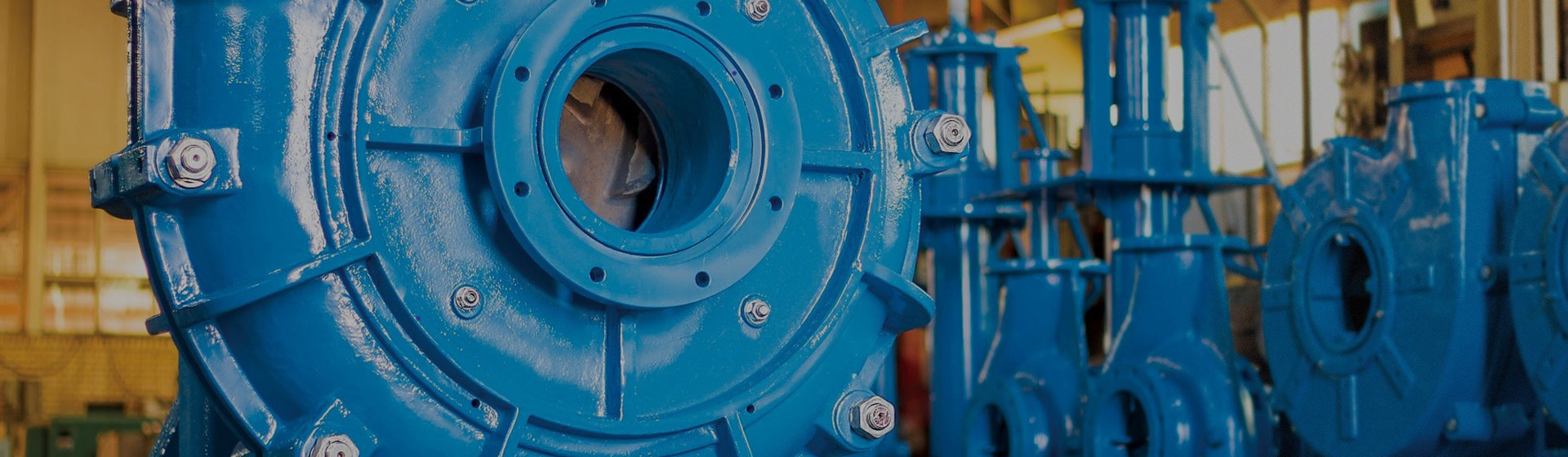
Gravel pump guide: how to choose, use, and maintain the right model
Aug 21,2026
Author:
Yongda Pump

Article overview
This article explains what a gravel pump is, how to select the right type, and how to maintain it under the demanding conditions found in Indonesian mining and dredging operations. It covers brand comparisons, local pricing, SNI compliance, and a practical FAQ section targeting procurement professionals.
Table of contents
- 1. What is a gravel pump?
- 2. Types of gravel pumps and when to use each
- 3. Gravel pump vs. sand pump vs. slurry pump: key differences
- 4. How to choose the right gravel pump for your project
- 5. Indonesia market: brands, pricing, and sourcing channels
- 6. Maintenance, common failures, and spare parts schedule
- 7. Compliance: SNI standards and AMDAL regulations in Indonesia
- 8. FAQ
What is a gravel pump?
A gravel pump is a heavy-duty centrifugal pump engineered to transport slurries containing coarse solid particles — including gravel, crushed rock, and alluvial sediment — without rapid component failure. Unlike standard water pumps or even conventional slurry pumps, a gravel pump features oversized flow passages, reinforced impellers made from high-chrome alloy or rubber lining, and thicker casing walls specifically designed to resist abrasive wear at high flow velocities.
The distinction matters. Actual testing in river dredging operations on the Mahakam River, Kalimantan, showed that using a standard centrifugal pump on gravel-laden slurry reduced impeller life to under 200 operating hours — compared to over 800 hours achieved with a purpose-built gravel suction pump. That four-fold difference translates directly into downtime, replacement costs, and missed project milestones.
Why do so many operators still default to cheaper, undersized equipment? Often, it is a purchasing decision made on upfront price alone, without accounting for total cost of ownership. This guide is designed to close that gap.
Core components of a gravel pump
A standard gravel pump assembly consists of a heavy-walled pump casing (volute), a thick-vaned impeller with wide inlet passages to pass large particles, a robust bearing assembly rated for radial and axial loads from high-density slurry, and a shaft seal system — either mechanical seal or expeller seal — to prevent slurry leakage. The G(GH) type dredge pump, for example, uses grease-lubricated bearing components and a modular bracket design that allows field replacement of wear parts without full disassembly.
Where gravel pumps are used in Indonesia
In Indonesia, gravel pumps are deployed across three primary sectors. Coal overburden dewatering in South Kalimantan and East Kalimantan relies on heavy-duty pumps to manage pit water mixed with fine sediment. Tin mining operations on Bangka Belitung Island use alluvial mining pumps to extract offshore sediment from shallow seabed dredges. River sand extraction (penambangan pasir) across Java, Sumatra, and Sulawesi depends on aggregate pumps and gravel suction pumps mounted on pontoon barges. Each scenario involves different particle sizes, slurry concentrations, and head requirements — which is why pump selection cannot be reduced to a single specification.
Types of gravel pumps and when to use each
Selecting the wrong pump type is one of the most expensive mistakes a project engineer can make. The right choice depends on installation orientation, particle size, slurry density, and the presence of fibrous or sticky contaminants.
Horizontal single-stage gravel pump
This is the workhorse configuration. Horizontal single-stage units are the most versatile and easiest to maintain, making them the dominant choice for river dredging and sand extraction barges across Indonesia. They handle particles up to 76 mm in diameter and can sustain continuous operation in slurries with solid concentrations up to 45% by weight. The 6/4YD-G model is a representative example — a unit in this class with a pump casing in high-chrome white iron, suitable for alluvial gravel extraction with a design flow range of 50–400 m³/h and heads up to 50 m.
Vertical submerged gravel pump
Where installation space is limited — deep mining pits, slurry sumps, or tailings ponds — a submersible gravel pump or vertical wet-pit design eliminates the need for priming and reduces cavitation risk. The WN Dredging Pump series applies this principle with an integral structure optimised for ship-board installation on dredgers, delivering excellent dredging performance with reliable shaft seal performance over extended service periods. Vertical units are slightly harder to inspect but dramatically reduce the risk of running dry.
Cutter-suction dredge pump
Used in hydraulic dredging of compacted riverbeds or coastal reclamation projects, the cutter-suction design integrates a rotating cutter head ahead of the pump inlet to fragment consolidated material before suction. This configuration is common in large-scale infrastructure projects in Sumatra and Kalimantan. It is not a plug-and-play item — cutter geometry must match material hardness, and pump sizing must account for the additional hydraulic resistance introduced by the cutter drive.
Gravel pump vs. sand pump vs. slurry pump: key differences
These three pump categories are often confused by procurement teams, leading to mismatched equipment orders. The core distinction lies in particle size tolerance, wear material selection, and operating concentration limits. Understanding slurry pump mechanics is a useful starting point, but gravel pumps occupy a distinct performance envelope that standard slurry pump references do not always address.
| Parameter | Gravel pump | Sand pump | Slurry pump |
|---|---|---|---|
| Max particle size | Up to 76 mm | Up to 10 mm | Up to 25 mm |
| Typical solids concentration | 15–45% w/w | 10–30% w/w | 20–60% w/w |
| Wear lining material | High-chrome alloy / rubber | Rubber / mild steel | High-chrome alloy / ceramic |
| Typical application | River dredging, alluvial mining | Penambangan pasir, sand fill | Tailings, coal slurry pipeline |
| Head range (typical) | 10–50 m | 10–35 m | 20–80 m |
| Impeller life (typical) | 600–1,200 hrs | 800–1,500 hrs | 400–900 hrs |
According to slurry pump engineering overview research, the wear rate in pump flow passages increases roughly with the cube of particle velocity — which is why gravel pumps run at lower rotational speeds than slurry pumps despite handling larger particles. Slowing the impeller tip speed reduces wear exponentially, even as the larger passages maintain adequate flow volume.
When a dewatering pump is not enough
A common mistake on Indonesian construction sites is deploying a standard dewatering pump or sediment pump to handle gravel-laden pit water. These units can clear fine sediment adequately, but once particle diameter exceeds 5–8 mm, impeller wear accelerates sharply and casing erosion creates internal bypass leakage within 150–300 hours. The cost of replacing a dewatering pump twice in a month will consistently exceed the upfront premium of a correctly specified gravel pump.
The aggregate pump as an intermediate choice
For operators handling mixed-size material — predominately sand with intermittent gravel — an aggregate pump offers a middle path. Aggregate pumps are built with wider passages than sand pumps but use rubber lining rather than high-chrome alloy, which reduces purchase cost and makes lining replacement feasible in field conditions without specialised tooling. This is a practical option for smaller penambangan pasir operations in Java and Sulawesi with tighter capital budgets.
How to choose the right gravel pump for your project
Good pump selection starts with accurate process data — not with a product catalogue. Here is a structured approach that experienced field engineers use before finalising any procurement order.
- Characterise your slurry: Measure or estimate maximum particle diameter (dmax), average particle size (d50), solid specific gravity, and solids concentration (% by weight or volume).
- Calculate system head: Add static head (elevation difference), friction losses in the discharge pipeline, and any back-pressure at the discharge point. Correct the water head figure by the slurry correction factor (typically 0.75–0.90 for gravel slurries).
- Determine required flow rate: Convert your production target (tonnes per hour of gravel or m³ of dredged material) into slurry volumetric flow rate using the solid and liquid densities.
- Select pump type and size: Cross-reference your flow and head requirements against manufacturer performance curves. Ensure the best efficiency point (BEP) of the selected pump falls within 80–110% of your design duty point.
- Verify passage size: Confirm the impeller passage width and suction bore diameter are at least 1.5× the maximum particle diameter to avoid bridging and blockage.
- Choose wear material: High-chrome alloy for hard, angular gravel above 5 mm; rubber lining for softer, rounder particles or mildly corrosive slurries.
"The single most common cause of premature pump failure in Indonesian alluvial mining is operating significantly below the BEP — either because the system head was underestimated or the pump was oversized to provide a perceived safety margin. Both errors increase recirculation, vibration, and wear." — Based on field observations from multiple dredging equipment audits across Kalimantan and Bangka, 2025–2026.
A note on the "more power is better" myth
The industry knowledge base is clear on this point: specifying a high-pressure pump with excess motor power does not compensate for a mismatched hydraulic design. Higher shaft power simply accelerates cavitation and internal recirculation when the pump operates far from its BEP. A correctly sized 75 kW gravel pump will outperform a poorly matched 110 kW unit in both output and component lifespan. Size to the duty point, not to a comfort margin.
Tin mining (Bangka) vs. coal pit (Kalimantan): different requirements
Tin extraction on Bangka Belitung typically involves fine-to-medium alluvial gravel (d50 around 3–8 mm) with moderate head requirements (15–25 m) on pontoon-mounted dredges. A rubber-lined horizontal gravel pump at 150–300 m³/h capacity covers most operations here. Coal pit dewatering in Kalimantan, by contrast, involves abrasive fine coal-rock slurry, higher heads (up to 45 m), and continuous 24-hour duty cycles — pushing the selection firmly toward high-chrome alloy units with redundant standby pumps and IoT wear monitoring.
Indonesia market: brands, pricing, and sourcing channels
The Indonesian gravel pump market in 2026 is served by a mix of international brands, Chinese manufacturers with local distributors, and a growing number of domestic assemblers. Pricing varies significantly based on build quality, after-sales support availability, and spare parts supply chain reliability.
Brand comparison and price range
| Brand / origin | Typical model range | Price range (IDR) | Strength | Limitation |
|---|---|---|---|---|
| Warman (Weir Group, Australia) | 4/3C-AH, 6/4E-AH | Rp 180 jt – 650 jt | Long part availability, global support | High capital cost, long lead times |
| Shijiazhuang (China) | 6/4YD-G, 8/6E-G | Rp 45 jt – 180 jt | Low price, wide size range | Variable QC, parts availability varies |
| KSB (Germany) | RCHP, GIW series | Rp 220 jt – 800 jt | Engineering support, high reliability | Very high cost, limited local stock |
| Local Indonesian assemblers | Varies | Rp 25 jt – 90 jt | Fast delivery, negotiable terms | Inconsistent alloy grades, limited warranty |
Where to source gravel pumps in Indonesia
Primary sourcing channels in 2026 include: authorised distributors in Balikpapan and Samarinda for mining-grade equipment serving Kalimantan coal operations; industrial equipment suppliers in Pangkalpinang (Bangka) for dredge-mounted alluvial mining pumps; and e-commerce platforms including Tokopedia and Indotrading for smaller capacity units and spare parts. For large-scale procurement above Rp 500 juta, direct factory sourcing from verified Chinese manufacturers via FOB Guangzhou or Tianjin with Indonesian customs import duty (BM) of 5–10% is often the most cost-effective route, provided you have a local import agent (PPJK) and can verify CE or ISO 9001 certification from the supplier. Always cross-reference your shortlisted supplier against the gravel pump selection guide criteria before committing to a purchase order.
Maintenance, common failures, and spare parts schedule
Even the best-specified gravel pump will fail prematurely if maintenance is treated as reactive rather than proactive. Based on real operational data from dredging contractors in Kalimantan, maintenance costs account for approximately 40% of total pump operating cost over a five-year lifecycle — making a structured perawatan (maintenance) program one of the highest-return investments available to an operations manager.
Recommended maintenance schedule
| Interval | Task | Key indicator to check |
|---|---|---|
| Daily (every 8–10 hrs) | Check bearing temperature, gland seal drip rate, suction/discharge pressure | Bearing temp <75°C; drip rate 20–60 drops/min |
| Weekly (every 50–60 hrs) | Grease bearing housing, inspect shaft seal for wear, check coupling alignment | No abnormal vibration; coupling clearance within spec |
| Monthly (every 200–250 hrs) | Measure impeller and liner wall thickness, check for internal bypass (drop in flow at constant speed) | Wall thickness >60% of original; flow deviation <10% |
| Every 600–800 hrs | Replace impeller and liner (high-chrome); inspect/replace bearings | Impeller vane thickness at trailing edge |
| Annually | Full pump overhaul: replace shaft, seals, all wear parts; check casing wall thickness | Casing wall >50% of original nominal thickness |
Common failures (kerusakan umum) and root causes
The most frequent kerusakan umum encountered in Indonesian field operations are: rapid impeller wear (root cause — operating below BEP or running with oversized gravel above dmax rating); shaft seal leakage (root cause — gland packing overtightened or dry-running events); pump blockage (root cause — large stones or fibrous debris exceeding suction screen mesh size); and bearing overheating (root cause — overgreasing, misalignment after field reassembly, or suction cavitation). Of these, cavitation-induced bearing failure is the most destructive because it often goes undetected until the shaft itself is damaged, requiring a full replacement rather than a routine parts swap.
Of course, there are situations where accelerated wear is unavoidable — for example, during flood season when river sand extraction involves significant amounts of hard volcanic gravel. In those cases, switching temporarily to a high-chrome alloy impeller and accepting a shorter 400-hour replacement cycle is preferable to reducing production output. Plan for it in your spare parts inventory rather than being caught short.
Compliance: SNI standards and AMDAL regulations in Indonesia
Regulatory compliance is a dimension that most technical pump guides completely ignore — yet for Indonesian mining and dredging operators, it is a real operational risk. Non-compliant equipment can result in permit suspension, fines under UU No. 32 Tahun 2009 (Environmental Protection and Management Law), or forced halting of operations pending an AMDAL review.
SNI standards relevant to pump equipment
Indonesia's Badan Standardisasi Nasional (BSN) does not yet have a dedicated SNI standard specifically for gravel pumps or dredge pumps as of 2026. However, several adjacent standards apply: SNI IEC 60034 (rotating electrical machines — relevant to pump drive motors), SNI ISO 9906 (hydraulic performance testing of rotodynamic pumps), and SNI 04-0225 (electrical installation standards relevant to pump motor wiring on dredge vessels). Procurement teams should request compliance documentation against these standards from suppliers and verify that imported pump units carry valid CE marking or ISO 9001 factory certification before customs clearance.
AMDAL compliance for dredging and alluvial mining operations
Any hydraulic dredging operation in Indonesia that exceeds the threshold scale defined in Peraturan Menteri LHK No. P.38/MENLHK/SETJEN/KUM.1/7/2019 requires a full AMDAL (Analisis Mengenai Dampak Lingkungan) assessment before operations begin. The AMDAL document must address turbidity impacts from sediment discharge, downstream sedimentation effects, and noise levels from pump-drive machinery. For operators using gravel pumps and sediment pumps on river barges, the key compliance point is ensuring that return water (overflow from the separation screen) meets the TSS (Total Suspended Solids) limit of 400 mg/L for Class IV water bodies, or 200 mg/L for Class II water bodies, as defined under PP No. 22 Tahun 2021. Failure to install adequate settling ponds or cyclone separators to reduce effluent TSS is one of the most common AMDAL violations recorded in penambangan pasir operations across Java and Kalimantan.
FAQ
Frequently asked questions
Q: What is the difference between a gravel pump and a slurry pump?
A: A gravel pump is designed to pass large solid particles (up to 76 mm) through oversized flow passages and thick abrasion-resistant liners. A slurry pump handles finer, higher-concentration solids (up to 25 mm) at higher heads. Using a slurry pump on coarse gravel will cause rapid impeller and casing wear within a few hundred operating hours.
Q: How long does a gravel pump impeller last in typical Indonesian mining conditions?
A: Under normal alluvial gravel conditions (d50 5–15 mm, 20–35% solids by weight), a high-chrome alloy impeller typically lasts 600–900 operating hours. In aggressive conditions — hard volcanic gravel, high concentrations, or frequent off-BEP operation — this can drop to 300–400 hours. Rubber-lined impellers in fine-sand applications may last up to 1,500 hours.
Q: What is the typical price of a gravel pump in Indonesia in 2026?
A: Prices range from Rp 25 juta for small local-assembled units to over Rp 650 juta for large international-brand models. A mid-range Chinese-manufactured 6/4YD-G gravel pump with motor typically costs Rp 60–120 juta delivered to a Kalimantan or Bangka port, inclusive of basic freight but excluding import duties.
Q: Does a gravel pump require AMDAL approval in Indonesia?
A: The pump itself does not require AMDAL, but the dredging or mining operation that uses it typically does if it meets the scale thresholds in Permen LHK P.38/2019. Operators must ensure their AMDAL document covers discharge water quality (TSS limits), noise, and riverbed disturbance. Equipment compliance with SNI motor and installation standards should also be documented for inspection purposes.
Q: Can I use a submersible gravel pump for deep-pit tin mining on Bangka?
A: Yes. A submersible gravel pump or vertical wet-pit design is well-suited for deep sump extraction on Bangka tin mines, particularly where priming a horizontal unit is impractical. Ensure the unit's motor IP rating is at least IP68 for submerged operation, and verify that the particle passage size matches the d-max of the tin-bearing alluvial gravel at your site, typically 5–20 mm.
Selecting and operating the right gravel pump in Indonesia's demanding mining and dredging environment requires more than browsing a product catalogue. It demands accurate slurry characterisation, systematic pump sizing against a hydraulic duty point, awareness of the local brand and price landscape, a disciplined perawatan schedule targeting the 40% of lifecycle cost that maintenance represents, and a clear understanding of AMDAL and SNI obligations that can halt your operation if ignored. The 2026 trend toward IoT-integrated wear monitoring and ceramic-composite liner materials offers genuine opportunities to extend component life and reduce unplanned downtime — but only for operators who have already mastered the fundamentals covered in this guide.
Key words:
Get A Quote
Note: Please leave your email address, our professionals will contact you as soon as possible!
Related Posts

Contact Us
E-mail:
Office Line:
+86 13780213428
Wechat / WhatsApp:
Address:
Shijiazhuang City Luancheng District Xinyuan West Road and Huancheng West Road intersection Tianshan Wanchuang Park 13 production plant No. 13 A

Sales E-mail Ⅰ
Sales E-mail Ⅱ
Wechat/Whatsapp
Free Consultation
We will contact you within one working day. Please pay attention to your email.
Share

Copyright © Shijiazhuang Yongda Pump Co., Ltd.