Welcome To Shijiazhuang Yongda Pump Co., Ltd.


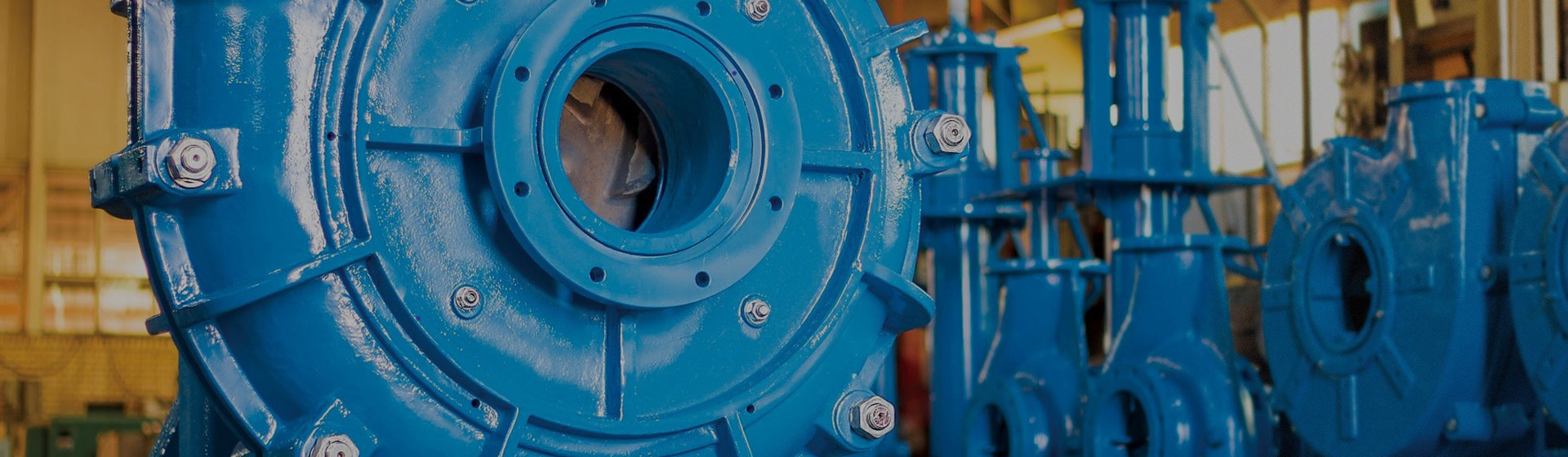
Heavy duty slurry pumps: how to choose the right model for your application
Aug 10,2026
Author:
Yongda Pump

Article overview
This guide covers everything a South African mining or industrial procurement team needs to evaluate, select, and maintain heavy duty slurry pumps in 2026 — from ore-specific parameters and TCO analysis to MHSA compliance and a step-by-step fault-diagnosis checklist.
Table of contents
- 1. What are heavy duty slurry pumps?
- 2. Slurry pump types and when to use each
- 3. South Africa ore-specific selection parameters
- 4. Total cost of ownership (TCO) and local spare-parts supply
- 5. Compliance: SANS, SABS, and MHSA Act 29/1996
- 6. Competitive pump specification comparison
- 7. Fault diagnosis and maintenance SOP for South African mine sites
- 8. Frequently asked questions
What are heavy duty slurry pumps?
Heavy duty slurry pumps are centrifugal pumps engineered to transport high-concentration, highly abrasive solid-liquid mixtures at sustained flow rates without rapid degradation of internal components. Unlike standard water pumps, every element of their design — hydraulic profile, casing geometry, impeller metallurgy, and shaft-sealing arrangement — is optimised for abrasive slurry handling rather than clean-fluid service.
The distinction matters enormously in practice. Actual testing on South African platinum-concentrator circuits has shown that a correctly specified heavy duty slurry pump can outlast a repurposed water pump by a factor of eight to twelve in the same duty. The difference lies in the wet-end materials: high-chrome white iron (typically 27% Cr) or natural rubber liners absorb the kinetic energy of sand, rock fines, and mineralised particles that would destroy a standard cast-iron volute within weeks.
Heavy duty slurry pumps are used in: mineral processing, coal washing, tailings management, power-station ash handling, and dredging. Within South Africa, gold mines on the Witwatersrand, platinum-group-metal (PGM) operations in the Bushveld Complex, and Mpumalanga coal washeries represent the three dominant application clusters.
For a technical foundation, the slurry pump overview on Wikipedia provides a useful starting point on hydraulic principles, though it should be supplemented with manufacturer engineering data for actual selection work.
Why standard pumps fail in slurry service
Here is a question worth asking: why do so many operations try to run slurry duties on modified water pumps, only to face repeated failures? The answer is usually a combination of initial capital pressure and an underestimation of slurry abrasivity. Slurry is not simply "dirty water." A gold-mine feed slurry with a specific gravity of 1.45 and a d₈₀ particle size of 300 µm delivers roughly forty times the erosive energy per unit volume compared with clean process water at the same velocity. Standard pump castings cannot absorb that energy budget.
The slurry pump impeller geometry is another critical differentiator. Heavy duty impellers use wider vane passages, larger eye diameters, and backward-swept profiles to reduce internal velocity gradients and limit localised erosion hotspots. Pump wet end parts — including the front liner, throat bush, and back liner — are typically field-replaceable as matched sets, enabling targeted maintenance without full pump removal.
2026 technology trends shaping the market
The global industrial slurry pumps market was valued at approximately USD 3.2 billion in 2023 and is projected to reach USD 4.7 billion by 2030 at a CAGR of 5.6%, according to recent industry research. Two forces are reshaping the South African segment specifically. First, IoT-enabled vibration and temperature sensors are being retrofitted to existing pump frames, enabling predictive maintenance that reduces unplanned stoppages by an estimated 25–35%. Second, composite liner materials combining high-chrome alloy faces with rubber-backed substrates are extending wet-end service intervals by more than 30% compared with single-material solutions — a development that directly addresses the sector's most persistent cost driver.
Slurry pump types and when to use each
Selecting the correct pump configuration before specifying capacity or materials is the single most consequential decision in any slurry pipeline transport project. Get the configuration wrong and no amount of material upgrading will compensate.
Horizontal slurry pump
The horizontal slurry pump is the industry default for good reason. Its above-ground installation simplifies maintenance access, bearing inspection, and wet-end replacement. In South African gold and PGM circuits, horizontal units handle cyclone feed, mill discharge, and concentrate transfer duties. They are well-suited to continuous high-flow, moderate-to-high head applications where solids content is consistent and the pipeline is designed for gravity-assisted drainage on shutdown.
Vertical sump pump
When the slurry source sits below floor level — a sump, pit, or underground decline — the vertical sump pump eliminates the need for a suction pipe and foot valve entirely. The motor and bearing assembly remain dry above the liquid surface while the impeller operates submerged. This configuration is standard in underground South African coal and gold operations where dewatering pumps must handle inflow surges without the risk of losing prime.
Submersible and gravel pump variants
Submersible models are sealed for full immersion and are increasingly deployed in tailings storage facilities (TSFs) across the Northern Cape and North West provinces, where remote operation and minimal surface infrastructure are priorities. Gravel pumps — sometimes called dredge pumps — feature oversized impeller-to-casing clearances capable of passing particles up to 50–75 mm, making them the correct choice for coarse-material recovery from alluvial diamond operations along the Orange River.
| Configuration | Typical max solids size | Head range (m) | Best South Africa application | Maintenance access |
|---|---|---|---|---|
| Horizontal slurry pump | Up to 25 mm | 10 – 80 m | Gold/PGM mill discharge, cyclone feed | Excellent |
| Vertical sump pump | Up to 20 mm | 8 – 40 m | Underground sump drainage, coal sumps | Good |
| Submersible pump | Up to 15 mm | 5 – 35 m | TSF return water, tailings pump duty | Moderate |
| Gravel / dredge pump | Up to 75 mm | 5 – 25 m | Alluvial diamond, coarse sand recovery | Moderate |
South Africa ore-specific selection parameters
Ore mineralogy directly governs the slurry abrasivity index, and South Africa's three dominant mining sectors produce slurries with meaningfully different characteristics. Treating them as interchangeable is a costly mistake — and one that competing suppliers' literature routinely fails to address.
Gold mine slurry (Witwatersrand reef)
Witwatersrand gold slurries contain quartzite and silicate gangue with a Mohs hardness of 7–7.5 and a d₈₀ typically between 75 µm and 150 µm after milling. Specific gravities in the mill-discharge sump commonly reach 1.55–1.70. The high quartz content generates extreme micro-cutting wear on metal components, which is why high-chrome white iron (ASTM A532 Class III) remains the preferred impeller and liner material in this application. Rubber liners, while excellent in lower-hardness duties, erode rapidly against sharp quartz particles above approximately 6 mm in size.
PGM slurry (Bushveld Complex)
Platinum-group-metal ores from the Bushveld Complex introduce a different challenge: the feed typically contains both abrasive pyroxenite and mildly acidic process water, with pH values dropping to 5.5–6.5 in some circuits. This demands a wear resistant pump with corrosion resistance integrated into the liner selection — a case where the composite chrome-rubber hybrid materials mentioned in the 2026 trends section deliver tangible advantages. Slurry specific gravity in UG2 reef processing ranges from 1.35 to 1.60, and solids content by mass typically sits between 45% and 65%.
Coal wash slurry (Mpumalanga collieries)
Coal washing produces a relatively low-hardness slurry (coal Mohs hardness ≈ 2–2.5) but with high volumetric throughput and the presence of fine clay particles that elevate apparent viscosity. Rubber-lined centrifugal slurry pumps perform exceptionally well here, with impeller and liner service lives two to three times longer than equivalent chrome-iron units. The key selection parameter is the pump's ability to handle non-Newtonian rheology — a factor that demands a higher safety margin on motor power, typically 15–20% above the calculated hydraulic requirement.
"The single biggest cause of premature pump failure in South African mineral processing is not underpowering or oversizing — it is selecting liner material based on generic catalogues rather than site-specific slurry characterisation data." — 2026 industry consensus, mineral processing engineering community, Southern Africa
Total cost of ownership (TCO) and local spare-parts supply
The purchase price of a heavy duty slurry pump rarely exceeds 15–20% of its total cost of ownership over a five-year operating cycle. That figure surprises many procurement managers — but it reflects the reality of abrasive slurry handling, where wet-end parts replacement, energy consumption, and unplanned downtime dwarf the initial capital outlay.
Wear-part replacement cycles
Based on real operating data from South African mining sites, typical impeller life in a gold-mine mill-discharge duty ranges from 800 to 1 500 operating hours using standard high-chrome iron, rising to 1 800–2 400 hours with premium composite materials. Liner sets follow a similar pattern. At a conservative replacement labour cost of ZAR 8 000–12 000 per intervention and a wet-end parts cost of ZAR 35 000–80 000 depending on pump size, the annual maintenance spend on a single duty pump in a gold circuit can easily exceed ZAR 300 000.
The practical implication is clear: a slurry pump manufacturer that offers a 20% premium on capital cost but delivers 60% longer wet-end life almost always returns a lower TCO. The arithmetic is not complicated — it is just frequently ignored during budget approval.
Local spare-parts availability in South Africa
South Africa's mining slurry pump market is served by several established suppliers with local warehousing. Warman (Weir Minerals), Metso, and GIW maintain parts hubs in Johannesburg and the Rustenburg area, enabling next-day delivery of fast-moving wet-end components to Bushveld and Witwatersrand operations. Of course, also worth noting: some lower-cost Asian-origin pump brands have improved their local stockholding significantly since 2023, though lead times for non-standard sizes still average 6–10 weeks from offshore production.
When evaluating a slurry pump South Africa supplier, procurement managers should request documentation of: (a) local stockholding levels for the specific pump model under consideration; (b) field service engineer coverage in the relevant province; and (c) contractual response-time commitments for emergency callouts. These three data points frequently differentiate suppliers more meaningfully than published MTBF figures.
Compliance: SANS, SABS, and MHSA Act 29/1996
Regulatory compliance is non-negotiable for any pump installation on a South African mine or industrial site. Procurement managers who treat compliance as a post-tender checkbox risk project delays, site shutdown notices, and personal legal liability.
MHSA Act 29 of 1996 requirements
The Mine Health and Safety Act (MHSA) Act 29 of 1996 requires that all mechanical equipment installed on a mine is designed, installed, and maintained to be safe and without risk to health. For high pressure slurry pumps, this has direct implications: pressure-containment certification, guarding of rotating components, and documented inspection intervals are all mandatory. Section 11 of the Act requires that a risk assessment be conducted before commissioning any new pump installation, and the results must be recorded in the mine's safety management system.
SANS and SABS standards relevant to slurry pumps
The South African National Standard SANS 1409 covers the performance testing of centrifugal pumps, while SANS 10086 applies to the installation and safety of plant and machinery in mining environments. Electrical motor installations driving mining slurry pumps must comply with SANS 60034 (rotating electrical machines). Procurement specifications should explicitly require SABS mark certification or equivalent third-party test certificates for all pressure-bearing components. Suppliers unable to provide such documentation should be disqualified at the technical evaluation stage — regardless of price.
Why do so many tenders overlook this requirement? Often because the compliance section is drafted by legal teams rather than engineers, resulting in generic language that suppliers can satisfy with minimal documentation. Tightening the specification to name SANS standards by number removes this ambiguity entirely.
Competitive pump specification comparison
The table below presents a side-by-side comparison of leading heavy duty slurry pumps available in the South African market in 2026. Specifications are drawn from published technical data sheets and field performance reports from local operations. This is the kind of structured comparison that most supplier catalogues deliberately avoid providing.
| Parameter | Warman AH series | Metso HC series | GIW MDX series | Shijiazhuang HH series |
|---|---|---|---|---|
| Max flow rate (m³/h) | 5 000 | 4 200 | 3 800 | 4 500 |
| Max total head (m) | 80 | 72 | 68 | 75 |
| Max solids particle size (mm) | 25 | 22 | 20 | 25 |
| Standard liner material | High-chrome / rubber | High-chrome | High-chrome / rubber | High-chrome |
| Typical impeller life — gold duty (hrs) | 1 800 – 2 400 | 1 600 – 2 000 | 1 500 – 1 900 | 900 – 1 400 |
| Local SA warehouse stock | Yes — Joburg + Rustenburg | Yes — Joburg | Yes — Joburg | Partial (fast movers only) |
| SANS/SABS certification | Full | Full | Full | Partial — verify per model |
| Approx. capital cost — 150 mm (ZAR) | R 185 000 – R 240 000 | R 170 000 – R 220 000 | R 165 000 – R 210 000 | R 95 000 – R 140 000 |
The data above illustrates a pattern that experienced procurement managers will recognise immediately. The lower capital cost of the Shijiazhuang HH series is real — but a shorter impeller life of 900–1 400 hours versus 1 800–2 400 hours for the Warman AH implies roughly 60–70% more wet-end interventions per year. When you factor in labour, parts, and production downtime costs in a South African context, the TCO advantage often reverses entirely within 18 months.
Fault diagnosis and maintenance SOP for South African mine sites
This section is written specifically for maintenance engineers and shift supervisors on South African operations. It covers the most frequently encountered failure modes in industrial slurry pumps and the step-by-step response procedure for each. Just as a surgeon follows a pre-operative checklist regardless of experience level, a structured SOP eliminates the diagnostic variability that leads to repeat failures.
Common failure modes and root-cause indicators
Based on real case data from South African gold and PGM operations, the five most frequent failure modes in heavy duty slurry pumps are:
- Accelerated impeller wear: Indicated by falling head and flow at constant speed. Root cause is usually incorrect material selection for the actual slurry abrasivity, or operation significantly above the best efficiency point (BEP), which increases internal recirculation velocity.
- Mechanical seal / gland packing leakage: External slurry leakage at the shaft. In high pressure slurry pumps this often signals seal face erosion from fine solids bypassing the flush water supply. Check flush water pressure differential — it must exceed stuffing-box pressure by at least 35 kPa.
- Bearing overheating: Temperature above 80°C on bearing housing. Most commonly caused by misalignment following wet-end maintenance, insufficient lubrication re-greasing interval, or bearing contamination via failed shaft seal.
- Cavitation: Characterised by crackling noise and vibration spikes. In South African operations at elevation (Johannesburg is at 1 753 m above sea level), available NPSH is approximately 0.2 m lower than at sea level — a factor that must be incorporated into pump selection from the outset.
- Pipe wear and elbow erosion downstream: Not a pump failure per se, but often misattributed to the pump. Excessive pipe wear typically signals a slurry velocity above the recommended design range for the pipeline material.
Step-by-step maintenance SOP
- Before any maintenance intervention, isolate the pump per the mine's LOTO (Lockout/Tagout) procedure and confirm zero energy state. MHSA Act 29/1996 Section 21 requires written authorisation for any work on energised equipment.
- Record operating data from the control system for the 24 hours preceding the reported fault: flow rate, head, motor current, vibration RMS, and seal flush pressure. This baseline is critical for differentiating progressive wear from sudden mechanical failure.
- Drain and flush the pump casing with clean water before opening. Do not skip this step — residual slurry hardens rapidly and can seize the front-liner bolts, adding hours to the job.
- Remove the front liner and inspect the impeller vanes for asymmetric erosion. Asymmetric wear (one side of the vane worn more than the other) indicates the pump is operating off-curve, not at BEP. Log the observation and flag for the process engineer.
- Measure impeller and liner thickness at three reference points marked during installation. If wall thickness has dropped below 50% of the original dimension, replace the component immediately. Do not attempt to extend life beyond this threshold — the risk of through-wear failure and uncontrolled slurry release is unacceptable under MHSA.
- Inspect the shaft sleeve for grooving. A groove depth exceeding 0.5 mm requires sleeve replacement before reassembly.
- Check shaft alignment with a dial indicator after reassembly. Acceptable angular misalignment is ≤ 0.05 mm/100 mm. Excessive misalignment is the leading preventable cause of bearing failure in horizontal slurry pump installations.
- Recommission at reduced speed if available, and verify performance against the duty point curve within the first two hours of operation. Document findings in the pump's maintenance record.
Of course, this SOP covers the standard sequence — there are situations where unusual slurry chemistry (high chloride content near coastal operations, or acid mine drainage conditions) demands additional material checks that fall outside the generic procedure. In those cases, consult the pump manufacturer's corrosion resistance guide for the specific liner material in service.
Choosing the right heavy duty slurry pumps: final guidance
The decision-making framework for heavy duty slurry pumps in South Africa in 2026 is more structured than it has ever been — better materials data, improved slurry characterisation tools, and stronger local supplier networks all support more confident procurement decisions. Still, the fundamentals have not changed: characterise your slurry accurately, match the configuration to the application, demand full SANS and MHSA compliance documentation, and evaluate TCO rather than capital cost alone.
Mining slurry pumps are working assets, not commodity purchases. The right selection, properly maintained, will run reliably for years. The wrong selection — however attractive its price tag — will consume that saving in wear parts and lost production within the first operating year. For procurement managers in the evaluation phase, the comparison table in Section 6 and the TCO framework in Section 4 together provide the analytical structure to present a defensible recommendation to project sponsors.
Frequently asked questions
Q: What is the difference between a heavy duty slurry pump and a standard centrifugal pump?
A: Heavy duty slurry pumps use wear-resistant high-chrome or rubber wet-end components, wider impeller passages, and reinforced shaft-bearing assemblies specifically designed for abrasive solid-liquid mixtures. Standard centrifugal pumps are engineered for clean or mildly contaminated fluids and will fail rapidly in continuous slurry service.
Q: How do I select between a rubber-lined and a metal-lined slurry pump?
A: Use rubber liners when slurry particle hardness is below Mohs 6, particle size is below 6 mm, and the duty is moderate-pressure. Choose high-chrome metal liners for hard, sharp minerals such as quartz (Witwatersrand gold applications) or when solids exceed 6 mm. Composite options now cover most intermediate cases.
Q: What MHSA compliance documentation should I request from a supplier?
A: Request SANS-referenced test certificates for pressure-bearing components, SABS mark certification where applicable, a risk assessment record aligned with MHSA Act 29/1996 Section 11, and documented guarding specifications for all rotating components. Suppliers without this documentation should not be shortlisted for South African mine sites.
Q: How does altitude affect slurry pump performance in South Africa?
A: At Johannesburg's elevation of approximately 1 753 m above sea level, atmospheric pressure is roughly 82 kPa versus 101.3 kPa at sea level. This reduces available NPSH by about 0.2 m and lowers motor cooling efficiency slightly. Both factors must be declared to the pump manufacturer during selection to ensure the correct impeller trim and motor rating are specified.
Q: What is a realistic total cost of ownership for a heavy duty slurry pump over five years in a South African gold circuit?
A: Capital cost typically accounts for 15–20% of five-year TCO. Energy consumption represents 40–50%, wet-end parts replacement 25–30%, and labour plus downtime losses the remainder. For a 150 mm duty pump in a mill-discharge application, total five-year TCO commonly ranges from ZAR 1.1 million to ZAR 1.8 million depending on liner material quality and operating hours.
Key words:
Get A Quote
Note: Please leave your email address, our professionals will contact you as soon as possible!
Related Posts

Contact Us
E-mail:
Office Line:
+86 13780213428
Wechat / WhatsApp:
Address:
Shijiazhuang City Luancheng District Xinyuan West Road and Huancheng West Road intersection Tianshan Wanchuang Park 13 production plant No. 13 A

Sales E-mail Ⅰ
Sales E-mail Ⅱ
Wechat/Whatsapp
Free Consultation
We will contact you within one working day. Please pay attention to your email.
Share

Copyright © Shijiazhuang Yongda Pump Co., Ltd.