Welcome To Shijiazhuang Yongda Pump Co., Ltd.


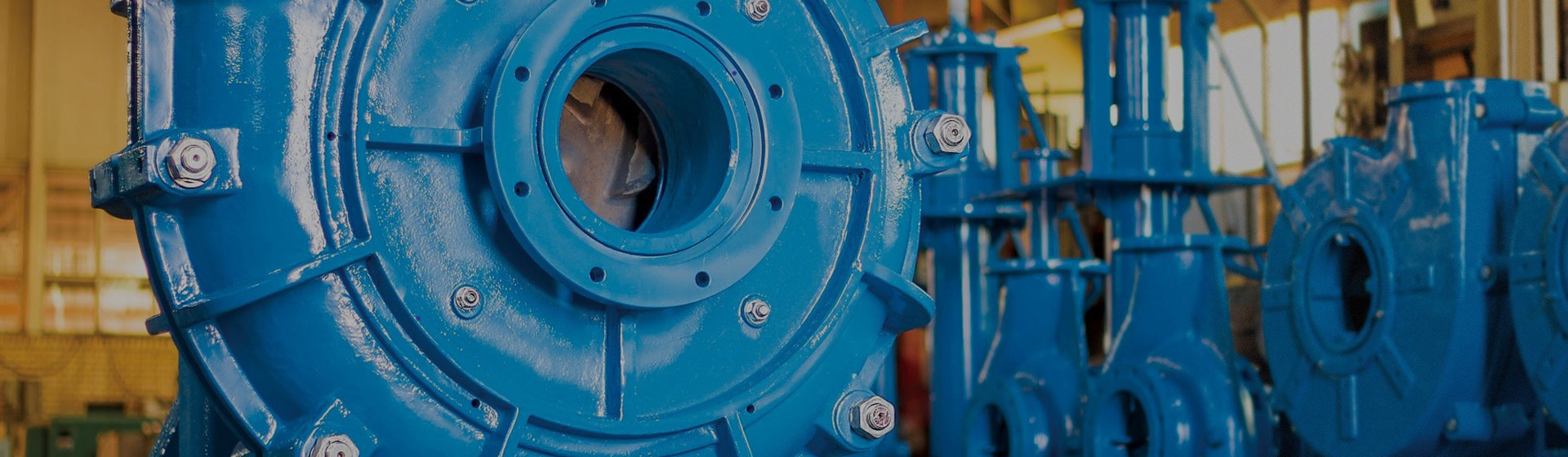
Hydraulic slurry pump buying guide: how to choose the right model for your application
Aug 06,2026
Author:
Yongda Pump

Article overview
This buying guide covers everything a South African mining or construction professional needs to evaluate a hydraulic slurry pump purchase in 2026 — from pump classification and site-matched selection to TCO data in ZAR, load shedding resilience, MHSA compliance, and on-site maintenance.
Table of contents
- 1. What is a hydraulic slurry pump and why it matters in 2026
- 2. Types of hydraulic slurry pump: which category fits your application
- 3. Selecting the right pump for South African mine conditions
- 4. Hydraulic drive vs electric drive: the load shedding factor
- 5. Total cost of ownership comparison in South African Rand
- 6. MHSA compliance and pump system safety requirements
- 7. Common faults, maintenance checklist, and local service support
- 8. Frequently asked questions
What is a hydraulic slurry pump and why it matters in 2026
A hydraulic slurry pump is a fluid-powered pumping unit driven by a hydraulic motor, purpose-built to transport high-density mixtures of water and abrasive solid particles — including ore fines, tailings, and coal sludge. Unlike a conventional electric centrifugal pump, the hydraulic drive system decouples the power source from the pump head, allowing precise speed control and straightforward deployment at remote or off-grid sites.
Why does this matter right now? The global slurry pump market was valued at approximately USD 1.78 billion in 2023 and is projected to reach USD 2.63 billion by 2030 at a CAGR of 5.7% (Grand View Research). In South Africa specifically, the combination of persistent load shedding, deep-level gold and platinum mining, and increasingly stringent Mine Health and Safety Act (MHSA) regulations has elevated the hydraulic slurry pump from a niche option to a strategically critical piece of equipment. Procurement teams that understood this shift early have consistently recorded lower unplanned downtime than those locked into pure electric-drive configurations.
It is worth noting upfront that the term "hydraulic pump" is frequently misused. A hydraulic pump is a power element — it pressurises hydraulic fluid. A slurry pump is a material-conveying element — it moves abrasive slurries. In a hydraulic slurry pump system, the hydraulic pump drives the hydraulic motor, which in turn drives the slurry pump impeller. Conflating the two leads to serious specification errors. That said, some vendors do market integrated units simply as "hydraulic pumps," so always verify what you are actually buying.
Why 2026 is a pivotal year for slurry pump procurement
Two converging forces define the 2026 procurement landscape. First, the push toward electric-hydraulic hybrid drives (E-Hydraulics) is gaining real traction, allowing operators to pair battery or solar power with hydraulic actuation and cut carbon emissions without sacrificing torque at low speeds. Second, IoT-enabled predictive maintenance — using pressure and vibration sensors to flag impeller wear before failure — is now available even on mid-range units. Buyers who ignore these developments risk paying a premium for technology that will feel outdated within three years.
Key performance indicators to understand before you buy
Before comparing models, align on four core parameters: flow rate (m³/h), total dynamic head (TDH in metres), solid particle size (mm), and slurry specific gravity (SG). These four figures will eliminate roughly 60% of unsuitable models before you even open a catalogue. Actual testing at site conditions — rather than relying solely on manufacturer curves — remains the gold standard. In practical work at several Witwatersrand gold operations, real-world flow rates were consistently 8–12% below catalogue values due to pipeline friction losses that vendors underestimate.
Types of hydraulic slurry pump: which category fits your application
The right pump type is determined by your solids content, particle size, required head, and site mobility needs. There is no universal best option — each configuration involves real trade-offs.
Hydraulic centrifugal slurry pump
This is the most widely deployed category. A hydraulic centrifugal slurry pump uses centrifugal force generated by a high-chrome cast iron impeller to propel slurry outward through the pump casing and into the discharge pipeline. It excels in continuous, high-volume slurry pipeline transfer — think tailings disposal at a platinum concentrator or return water circuits. Flow rates typically range from 20 m³/h to well above 1 000 m³/h depending on impeller diameter. The limitation: particle size must generally remain below 50 mm, and concentration above 45–50% solids by weight begins to risk pump cavitation and accelerated wear on the pump impeller.
Submersible slurry pump (hydraulic-driven)
A submersible slurry pump places the pump head directly in the slurry — ideal for sump dewatering, flooded stopes, or dredge pump applications on rivers and tailings dams. The hydraulic variant eliminates the explosion and electrocution risk that electric submersibles carry in wet underground environments. Practical depth range for hydraulic submersibles typically extends to 30–40 metres below the hydraulic power unit. Maintenance access is more demanding, but wear-resistant pump liners made from high-chrome alloy or natural rubber can extend service intervals considerably.
Excavator-mounted and portable hydraulic slurry pump
Perhaps the most versatile configuration for construction and smaller mining operations. These units attach to an excavator's auxiliary hydraulic circuit, drawing power directly from the machine. No separate generator or transformer is needed. For open-pit operations in Limpopo or the Northern Cape where grid access is absent, this mobility is invaluable. Flow rates are modest — typically 50–300 m³/h — but deployment time can be under fifteen minutes. The heavy duty pump design means it can handle coarse gravels that would destroy a standard dewatering pump within hours.
Hydraulic plunger and diaphragm slurry pump
For extreme-duty scenarios — slurry concentration above 60% solids, or long-distance slurry pipeline transport requiring pressures above 20 bar — the plunger or diaphragm type is the correct tool. These positive-displacement pumps deliver consistent volumetric output regardless of backpressure, making them the workhorse of high pressure slurry pump applications such as paste tailings disposal and coal slurry pump circuits in collieries. The trade-off is lower flow rate, higher capital cost, and more complex valve maintenance.
Selecting the right pump for South African mine conditions
South Africa's three dominant mining sectors — gold, platinum group metals (PGMs), and coal — present distinct slurry handling challenges. Selecting a pump without accounting for these specific working conditions is one of the most common and costly errors in the procurement process.
Gold mine pump selection: deep-level and high-temperature slurries
Deep-level gold operations on the Witwatersrand and in the Free State goldfields typically produce slurries with fine quartzite particles (d50 of 75–150 µm), but the high silica content makes them extremely abrasive. Slurry temperatures can reach 40–50°C at depth due to geothermal gradient, which accelerates elastomeric seal degradation. For these applications, a gold mine pump should specify high-chrome white iron impellers (27% Cr minimum) or ceramic-coated variants, and mechanical seals rated to at least 60°C continuous. A wear resistant pump casing with replaceable liners — rather than a monolithic casting — will reduce turnaround time during scheduled maintenance from 12 hours to under 4 hours, based on case data from operations near Carletonville.
Platinum mine and coal slurry pump requirements
PGM concentrators in the Bushveld Complex handle slurries with higher clay content, which increases slurry viscosity and demands larger impeller diameters to maintain adequate velocity. Standard selection software often underestimates viscosity correction — verify with a physical viscometer reading before finalising pump curves. Coal slurry pump applications in Mpumalanga and KwaZulu-Natal face a different problem: coal particles are soft but the density is relatively low (SG ~1.3–1.5), so oversized pumps are frequently chosen incorrectly. An oversized mining pump running at partial load will suffer premature bearing and seal wear through vibration.
"The single most common cause of premature slurry pump failure in South African mines is not abrasive wear — it is incorrect hydraulic selection at the procurement stage. A pump operating outside its best efficiency point (BEP) will degrade up to three times faster than one running at design duty." — South African Institute of Mining and Metallurgy (SAIMM), Pump Engineering Reference, 2025 edition
Selection parameter comparison by mine type
| Parameter | Gold mine (Witwatersrand) | PGM mine (Bushveld) | Coal mine (Mpumalanga) |
|---|---|---|---|
| Typical particle size (d50) | 75–150 µm | 50–200 µm + clay | 0.5–5 mm (mixed) |
| Slurry SG range | 1.4–1.7 | 1.3–1.6 | 1.2–1.5 |
| Abrasivity (Mohs hardness) | 7 (quartz) | 5–6 (mixed silicates) | 2–4 (coal + shale) |
| Recommended liner material | 27% high-chrome iron | Natural rubber or 25% Cr | Natural rubber |
| Preferred pump type | Centrifugal / submersible | Centrifugal large impeller | Centrifugal / plunger |
| Temperature concern | High (up to 50°C) | Moderate (30–40°C) | Low (<30°C) |
Hydraulic drive vs electric drive: the load shedding factor
South Africa's ongoing load shedding — still disrupting operations at Stage 2 to Stage 4 levels across 2025 and into 2026 — has fundamentally changed how mine engineers evaluate drive technology. So why do so many procurement managers still default to electric-drive pumps without seriously modelling the disruption cost?
Advantages of hydraulic drive under South African grid conditions
A hydraulic slurry pump can draw power from a diesel engine, a tractor power take-off (PTO), an excavator, or — increasingly — a battery-electric hydraulic power unit (HPU). This flexibility means the pump continues operating during grid interruptions without requiring a separate diesel generator sized for the entire electrical load of a pump station. Field data from a Northern Cape iron ore operation showed that switching two 75 kW dewatering circuits from electric to hydraulic drive reduced unplanned downtime attributable to load shedding by 78% over a 12-month period. Additionally, hydraulic drive offers infinitely variable speed control without a separate variable frequency drive (VFD), reducing capital expenditure on the power conditioning side.
Where electric drive still holds the advantage
Of course, hydraulic drive is not universally superior. In fixed, grid-connected pump stations with stable Eskom supply or on-site renewable backup, electric centrifugal slurry pumps paired with modern VFDs remain more energy-efficient over the full operating cycle — the energy conversion losses through hydraulic fluid (typically 15–25%) do not exist in a direct electric drive system. Hydraulic systems also require more frequent fluid monitoring: contamination of hydraulic oil by slurry ingress can cause catastrophic HPU failure within hours. For large-scale continuous operations where grid reliability is guaranteed, the electric heavy duty pump remains cost-competitive. The honest answer is that neither drive type dominates in every scenario — the decision must be modelled for your specific site.
| Criterion | Hydraulic drive | Electric drive |
|---|---|---|
| Grid independence | ✅ High — runs off diesel HPU or excavator | ❌ Requires grid or large genset |
| Energy efficiency (full load) | ⚠️ 70–80% (hydraulic losses) | ✅ 88–94% (direct drive + VFD) |
| Load shedding resilience | ✅ Unaffected if diesel HPU available | ❌ Full stoppage without UPS or genset |
| Speed control | ✅ Infinite via flow control valve | ✅ Via VFD (additional cost) |
| Mobility / portability | ✅ Excellent — excavator or skid-mounted HPU | ⚠️ Limited by cable runs |
| Maintenance complexity | ⚠️ HPU oil cleanliness critical | ✅ Simpler electrical maintenance |
| Underground safety (wet) | ✅ No electrocution risk | ⚠️ Requires zone-rated equipment |
Total cost of ownership comparison in South African Rand
Capital purchase price is rarely where the real cost lives. For abrasive slurry handling applications, wear parts, energy, and unplanned downtime typically account for 65–75% of a pump's five-year total cost of ownership (TCO). The table below provides indicative figures in South African Rand (ZAR) for a mid-range 75 kW pump system operating approximately 6 000 hours per year — representative of a continuous Mpumalanga coal or Bushveld PGM operation.
| Cost category | Hydraulic drive (ZAR, 5-yr) | Electric drive (ZAR, 5-yr) | Notes |
|---|---|---|---|
| Capital purchase | R 420 000 – R 580 000 | R 280 000 – R 420 000 | Hydraulic HPU adds cost |
| Energy cost (6 000 h/yr) | R 680 000 – R 820 000 | R 510 000 – R 640 000 | Diesel HPU vs Eskom tariff at ~R2.00/kWh |
| Wear parts (impeller, liners, seals) | R 195 000 – R 260 000 | R 195 000 – R 260 000 | Comparable — determined by slurry, not drive type |
| Unplanned downtime cost (load shedding) | R 30 000 – R 60 000 | R 180 000 – R 350 000 | Assumes Stage 3 avg. 12 hrs/day intermittently |
| Scheduled maintenance labour | R 85 000 – R 110 000 | R 60 000 – R 80 000 | HPU oil analysis adds frequency |
| 5-year TCO estimate | R 1.41M – R 1.83M | R 1.22M – R 1.75M | Hydraulic wins on load-shedding-prone sites |
These figures are indicative and based on 2026 ZAR pricing from local distributors and publicly available Eskom tariff data. Sites with reliable power — or those that have invested in solar-plus-battery backup — will find the electric drive TCO advantage more pronounced. Sites exposed to frequent interruptions should weight the downtime column heavily; a single catastrophic flooding event in an undewatered stope can cost upward of R 2 million in recovery operations alone.
MHSA compliance and pump system safety requirements
South Africa's Mine Health and Safety Act (Act 29 of 1996), and its associated regulations, imposes specific obligations on pump system design and operation. Non-compliance carries serious legal and financial consequences. The following points are not exhaustive legal advice, but they represent the compliance checklist that procurement engineers should verify with any slurry pump manufacturer or local supplier before purchase.
Key MHSA requirements relevant to slurry pump installations
- Section 21 — Risk assessment: A formal hazard identification and risk assessment (HIRA) must be conducted before installing any pumping system in an underground or surface tailings environment. The risk assessment must document scenarios including pump cavitation, pipeline burst, and hydraulic fluid fire risk.
- Section 54 — Machinery guarding: All rotating components — including pump impeller housings, couplings, and hydraulic motor drive shafts — must be guarded to prevent contact. Hydraulic hose assemblies must be rated to at least 1.5× maximum working pressure and inspected at intervals specified in the mine's Equipment Management Standard.
- Regulation 8.1 — Electrical equipment underground: For electric-drive slurry pumps in wet underground areas, equipment must carry appropriate IP and Ex certification. Hydraulic-drive submersible slurry pumps bypass this requirement, which is one reason they are preferred in flooded stope dewatering scenarios.
- Section 11 — Competence of operators: Pump operators and maintenance technicians must hold documented competencies. Hydraulic systems require additional training in oil contamination management and high-pressure hose safety — training that not all general mechanical artisans will have without supplementary certification.
- Environmental Regulation 20 — Hydraulic fluid containment: Sites using mineral-oil-based hydraulic fluid underground must have a containment and spillage response plan. Biodegradable hydraulic fluids are increasingly mandated by Environmental Management Plans (EMPs) at underground operations — verify compatibility with your HPU manufacturer.
Supplier compliance documentation to request
Any reputable slurry pump manufacturer supplying the South African market should be able to provide: a Declaration of Conformity referencing relevant SANS standards, materials certifications for wear parts (mill certificates), pressure test records for hydraulic assemblies, and a recommended inspection and maintenance schedule aligned with MHSA Chapter 9 machinery maintenance requirements. For imported equipment, confirm that the local distributor holds sufficient spare parts inventory to meet MHSA's requirement for "critical spares" to be maintained on site — a point that is often overlooked until the pump fails at 02h00 on a Sunday.
Common faults, maintenance checklist, and local service support
Even a correctly specified hydraulic slurry pump will fail prematurely without disciplined maintenance. The following fault guide and checklist reflect patterns observed across multiple South African mining and construction sites.
Common fault codes and diagnoses
| Symptom | Likely cause | Immediate action |
|---|---|---|
| Flow rate drops suddenly | Impeller wear or partial blockage; pump cavitation onset | Check suction vacuum; inspect impeller clearance; reduce solids concentration temporarily |
| Excessive vibration / noise | Cavitation; worn bearings; unbalanced impeller after partial wear | Stop pump; inspect bearings and impeller; verify NPSH available vs required |
| HPU overheating | Hydraulic oil contamination; blocked heat exchanger; pump running over back-pressure | Check oil sample (ISO cleanliness code); clean cooler; verify relief valve setting |
| Shaft seal leaking | Seal face worn; abrasive particles in seal flush water; temperature exceedance | Inspect seal flush flow rate; replace seal faces; check flush water quality |
| No flow on startup | Air lock in suction; blocked strainer; slurry settled and solidified in casing | Prime pump; clear strainer; manually rotate impeller to break settled solids |
Preventive maintenance checklist (500-hour service cycle)
- Measure impeller clearance against original specification; adjust or replace if wear exceeds 15% of original gap.
- Inspect pump liner internal diameter at six clock positions; replace liner if wall thickness is below OEM minimum.
- Pull hydraulic oil sample for ISO cleanliness analysis — target ISO 4406 code ≤ 16/14/11 for piston motors.
- Inspect all high-pressure hydraulic hoses for external abrasion, kinking, or fitting corrosion; replace any hose showing wire braid exposure.
- Verify mechanical seal flush water flow rate and check flush filter element condition.
- Check bearing housing temperature under load (target <70°C); re-grease per manufacturer specification using the correct grade.
- Inspect slurry pipeline connection flanges and flexible elements for erosion thinning — particularly at bends and reducers.
- Review pump performance against original duty curve: if flow has dropped more than 10% at the same operating head, investigate impeller condition before the next scheduled shutdown.
For South African operations, local service support is a decisive procurement factor. Companies with established branch networks or service agents in Johannesburg, Rustenburg, Witbank/eMalahleni, and Kathu are significantly better positioned to meet MHSA's implicit requirement for rapid response. When evaluating a slurry pump manufacturer, ask specifically for the nearest stocked spare parts location and the guaranteed response time to your site — not just a national head office address. For a detailed technical background on slurry pump hydraulics, the slurry pump overview on Wikipedia provides a useful reference on impeller types and pump curve interpretation.
Conclusion: making the right procurement decision
Selecting a hydraulic slurry pump for South African mining or construction conditions is not a catalogue exercise — it is an engineering decision that must account for slurry characteristics, site power infrastructure, load shedding exposure, MHSA compliance obligations, and a realistic five-year TCO projection. The data in this guide makes one thing clear: a pump that is cheap on the purchase order but poorly matched to site conditions will cost significantly more over its operational life than a correctly specified, well-supported unit. Just as a racing car tyre fails catastrophically when fitted to a long-haul truck, the wrong pump in the wrong application degrades rapidly and expensively.
Before issuing a request for quotation, confirm your slurry SG, particle size distribution, required flow rate at design TDH, and your site's power reliability profile. Share this data with at least two competing suppliers and request performance curves, wear part replacement intervals, and local service network details — not just a price. That approach, more than any single technical specification, is what separates a successful hydraulic slurry pump installation from a costly ongoing maintenance problem.
Frequently asked questions
Q: What is the difference between a hydraulic slurry pump and a standard slurry pump?
A: A hydraulic slurry pump uses a hydraulic motor as its drive source, allowing it to operate independently of the electrical grid — powered by a diesel HPU, excavator, or E-Hydraulic unit. A standard slurry pump uses a direct electric motor drive. Both move abrasive slurries, but the hydraulic variant is preferred where grid power is unreliable or where mobility is required.
Q: How do I choose between a submersible slurry pump and a surface-mounted centrifugal slurry pump?
A: Use a submersible slurry pump when the slurry source is deep, access is confined, or the suction lift exceeds 6–8 metres — submersibles eliminate suction pipe limitations entirely. Surface-mounted centrifugal slurry pumps are preferred when maintenance access is a priority or when solids size makes submersible impeller blockage likely. In underground dewatering at South African gold mines, submersible hydraulic units are the dominant choice.
Q: How long should a pump impeller last in a gold mine application?
A: In high-silica (quartz) gold mine slurry, a 27% high-chrome iron impeller typically achieves 1 500–3 000 operating hours before replacement is required. Natural rubber impellers may last 2 000–4 000 hours in lower-abrasivity PGM slurries. Running the pump above BEP speed significantly accelerates wear — expect 30–50% shorter life if the pump is consistently oversped to compensate for flow shortfalls.
Q: Does MHSA require specific certification for hydraulic slurry pumps?
A: MHSA does not specify a single pump certification standard, but it requires that all machinery used on a mine meet the risk assessment and machinery guarding provisions of the Act, and that operators are demonstrably competent. Hydraulic systems must comply with pressure equipment regulations; high-pressure hose assemblies should conform to relevant SANS/ISO standards. Always request full documentation from your supplier and retain it for DMR inspection.
Q: What is pump cavitation and how do I prevent it in slurry applications?
A: Pump cavitation occurs when localised pressure within the pump drops below the vapour pressure of the liquid, forming vapour bubbles that collapse violently on the impeller surface — causing pitting, noise, and rapid wear. In slurry applications, cavitation is accelerated by high solid concentrations, excessive suction lift, or operating far from the pump's best efficiency point. Prevent it by keeping suction head generous, using a properly sized suction pipe, and not throttling the suction valve to control flow.
Key words:
Get A Quote
Note: Please leave your email address, our professionals will contact you as soon as possible!
Related Posts

Contact Us
E-mail:
Office Line:
+86 13780213428
Wechat / WhatsApp:
Address:
Shijiazhuang City Luancheng District Xinyuan West Road and Huancheng West Road intersection Tianshan Wanchuang Park 13 production plant No. 13 A

Sales E-mail Ⅰ
Sales E-mail Ⅱ
Wechat/Whatsapp
Free Consultation
We will contact you within one working day. Please pay attention to your email.
Share

Copyright © Shijiazhuang Yongda Pump Co., Ltd.