Welcome To Shijiazhuang Yongda Pump Co., Ltd.


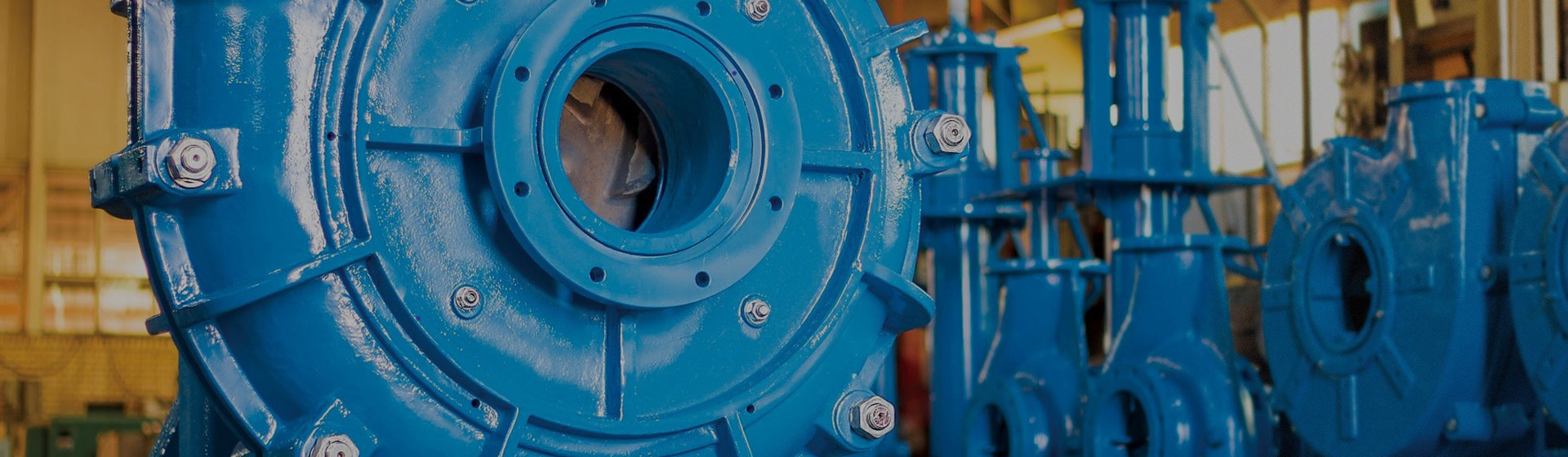
Used slurry pumps for sale: buyer's guide to finding reliable second-hand units
Aug 07,2026
Author:
Yongda Pump

Article overview
This guide is written for mining and engineering procurement professionals in South Africa who are actively evaluating used slurry pumps for sale. It covers unit types, condition-assessment frameworks, realistic 2026 price benchmarks, supplier vetting criteria, and total cost of ownership analysis. Reading time: approximately 14 minutes.
Table of contents
- 1. What is a used slurry pump for sale?
- 2. Why South African operations choose second-hand units in 2026
- 3. Types of used slurry pumps available on the market
- 4. How to evaluate condition before you buy
- 5. Price guide: what to expect in the South African market
- 6. Choosing a reliable slurry pump supplier in South Africa
- 7. Common mistakes buyers make — and how to avoid them
- 8. FAQ
What is a used slurry pump for sale?
A used slurry pump for sale is a previously operated, second-hand or reconditioned pump designed to transport abrasive, high-density slurry mixtures — re-entering the market at a reduced price after its initial industrial deployment. These units are typically sourced from decommissioned mining operations, equipment upgrades, or fleet rationalisation programs. For South African procurement teams operating under tight capital budgets, a well-maintained pre-owned industrial pump can deliver comparable performance to a new unit at 40%–60% of the purchase cost.
It is worth clarifying the terminology upfront, because the market uses several overlapping terms. A second hand slurry pump simply means a pump that has had at least one prior owner, with no guarantee of any remedial work. A reconditioned slurry pump has been disassembled, inspected, and reassembled with worn components replaced to a serviceable standard. A refurbished slurry pump typically implies a more thorough overhaul — closer to original specification — though, as we will discuss later, these labels are not standardised across all dealers.
Understanding this distinction is the first step. Why? Because the difference between a cleaned-up pump passed off as "refurbished" and a genuinely reconditioned unit can mean the difference between 6 months of reliable service and an unplanned shutdown costing your operation hundreds of thousands of rands.
For a technical foundation on how these machines function, the slurry pump overview on Wikipedia provides a useful starting point covering impeller design, casing materials, and hydraulic principles.
Who typically buys used slurry pumps?
The core buyer profiles in South Africa are mine procurement managers at platinum, gold, and coal operations, civil engineering contractors managing tailings or dewatering projects, and plant maintenance supervisors seeking standby or backup units. Budget constraints are universal — but the risk tolerance varies. A standby unit sitting in a pump station needs to be just as reliable as the primary pump; arguably, condition scrutiny should be even higher for backup equipment that sits idle until something goes wrong.
The 2026 market context
According to recent industry research, the global slurry pump market is expected to exceed USD 8 billion in 2026, with second-hand and remanufactured units accounting for roughly 25%–30% of total industrial pump secondary market transactions. In South Africa specifically, the combination of persistent load-shedding costs, rising new equipment import prices (amplified by rand weakness), and growing ESG pressure to embrace circular procurement is structurally driving demand for used pump equipment. This is not a temporary trend — it is a fundamental shift in how South African mining operations manage capital assets.
Why South African operations choose second-hand units in 2026
The financial case is straightforward. Buying a used slurry pump for sale instead of a new equivalent can save a mid-sized mining operation between R180,000 and R600,000 per unit, depending on pump size and specification. Multiply that across a fleet replacement cycle and the capital preservation becomes significant.
Cost savings and capital efficiency
Real-world procurement data from operations on the Bushveld Igneous Complex shows that a new Warman 8/6 FF centrifugal slurry pump can list above R450,000 ex-works. A reconditioned equivalent from a reputable local slurry pump dealer typically trades between R180,000 and R260,000 — a saving that frees up budget for spare parts inventory, liner replacements, or motor upgrades. That is not a marginal improvement; it is the kind of capital efficiency that changes annual CAPEX conversations.
Lead time advantages
New heavy duty slurry pump orders from international manufacturers can carry 12–20 week lead times in 2026, particularly for non-standard configurations. A local used pump equipment dealer with existing stock can often ship within days. For operations dealing with an unplanned pump failure, that difference is critical. Actual experience from procurement teams in Limpopo confirms this: waiting three months for a new unit while a production line sits idle is not an abstract risk — it has happened, repeatedly, and it changes how smart buyers approach inventory planning.
ESG and circular economy alignment
South African mining companies increasingly face sustainability reporting obligations under the JSE Sustainability and Climate Disclosure Guidance framework. Procuring a pre-owned industrial pump instead of manufacturing a new one avoids the embedded carbon associated with raw material extraction and fabrication. For ESG procurement scorecards, this matters. Of course, the environmental benefit only holds if the pump is genuinely serviceable — a unit that fails after 90 days and needs replacement has a worse carbon footprint outcome than simply buying new.
Types of used slurry pumps available on the market
Not all slurry pumps are interchangeable. Specifying the wrong pump type — even at the right price — creates operational problems that quickly erode the cost savings. The South African used market carries several distinct categories, each suited to specific duty conditions.
Overview of common types
| Pump type | Typical application | Used market availability (SA) | Avg. used price range (ZAR) |
|---|---|---|---|
| Horizontal centrifugal slurry pump | High-density mineral slurry transport, mill discharge | High | R85,000 – R420,000 |
| Vertical sump slurry pump | Pit dewatering, underground sumps | Medium | R45,000 – R180,000 |
| Rubber lined slurry pump | Fine particle, corrosive or mildly abrasive slurries | Medium | R90,000 – R350,000 |
| Submersible slurry pump | Tailings dams, flood recovery, deep wells | Low–medium | R60,000 – R240,000 |
| Reciprocating / plunger pump | High-pressure drilling fluid, cement injection | Low | R150,000 – R700,000 |
Matching pump type to your duty conditions
The horizontal centrifugal slurry pump — the Warman-type workhorse — dominates the South African used market because it dominates the installed base. Think of it like the Toyota Land Cruiser of industrial pumps: ubiquitous, well-supported by local spare parts networks, and a known quantity for experienced maintenance teams. The rubber lined slurry pump is the preferred choice where particle size is fine and chemical attack is a concern; the rubber lining absorbs impact energy differently from white iron, and wear rates can be substantially lower in the right application. A mining slurry pump for coarse, high-density platinum or chrome ore slurries, however, demands white iron hard-metal wetted parts — rubber simply wears too fast under those conditions.
How to evaluate condition before you buy
This is where most buyers either protect themselves or expose themselves to serious risk. Condition assessment is the single most important skill in purchasing a used slurry pump for sale — and yet it is the step most often rushed or skipped entirely when urgency pressure is high.
Step-by-step inspection checklist
- Request the strip inspection report: A credible slurry pump dealer should provide a written teardown report with photographs of the impeller, volute liner, throatbush, and bearing assembly before any reconditioning work was performed. If this document does not exist, treat the unit as uninspected.
- Measure impeller and liner wall thickness: Use ultrasonic thickness gauging or direct physical measurement. Industry practice accepts up to 40% wall thickness reduction on white iron liners before replacement is mandatory; anything below 50% of original specification is a red flag for heavy duty slurry pump applications.
- Check shaft and bearing housing runout: Excessive shaft deflection (typically >0.05 mm TIR) indicates bearing damage, seal failure history, or casing misalignment — all of which shorten pump life significantly.
- Verify motor condition independently: Many used pump equipment packages include the motor. Request insulation resistance (megger) test results. A motor with IR values below 1 MΩ at 500 V DC is a liability.
- Confirm spare parts availability: Check that slurry pump spare parts — specifically impellers, liners, and mechanical seals — are available for the specific model from local South African distributors. An orphaned pump model with no local parts supply is a maintenance nightmare regardless of its initial condition.
- Assess operating hours and application history: A pump that ran fine duty (clean water with occasional slurry) will have far more remaining life than an identical unit that spent three years on coarse mill discharge at 65% solids by weight.
Red flags and deal-breakers
Actual testing in the field reveals a consistent pattern: the units that cause the most post-purchase problems are those with repainted external casings that conceal weld repairs on cracked volutes. Always request that any painted surfaces on load-bearing components be inspected with dye penetrant or magnetic particle testing. Hairline cracks in a high-chrome iron casing can propagate under pressure and cause catastrophic failure. This is not a theoretical risk — it has resulted in serious on-site incidents. A fresh coat of yellow paint is not a warranty.
"The total cost of ownership of a reconditioned slurry pump is only lower than new if the reconditioning has been done properly. Buyers who focus solely on purchase price and ignore condition documentation consistently end up paying more over a 12-month horizon." — Senior mechanical engineer, South African mineral processing consultancy, 2026
Price guide: what to expect in the South African market
Slurry pump price benchmarking in South Africa is complicated by exchange rate volatility, import duties on new equipment, and the wide quality range within the "used" category. The following figures reflect 2026 market conditions based on recent transaction data from local dealers and auction platforms.
Understanding the pricing tiers
Pricing breaks into three tiers. Tier 1 covers "as-is" second hand slurry pumps — sold without reconditioning, priced lowest, but carrying the highest risk. Tier 2 covers reconditioned slurry pump units where worn parts have been replaced and the pump has been tested. Tier 3 covers refurbished slurry pump units restored close to OEM specification, sometimes with updated sealing arrangements or upgraded impeller materials. The price delta between Tier 1 and Tier 3 can be 80%–120%, which means a Tier 3 unit sometimes approaches the cost of a new locally-assembled pump — at which point the calculus changes.
Total cost of ownership: the number that actually matters
Purchase price is only one variable. For any used slurry pump for sale, a complete TCO analysis over a 24-month horizon should include: initial acquisition cost, freight and rigging (large industrial slurry pumps can weigh 800 kg to over 3,000 kg — logistics costs are not trivial), first-service parts replacement, mean time between maintenance interventions, and lost production cost per hour of downtime. When these figures are applied honestly, a mid-range Tier 2 reconditioned unit from a reputable slurry pump supplier South Africa typically outperforms both the cheapest Tier 1 unit and the most expensive new import on 24-month TCO.
Choosing a reliable slurry pump supplier in South Africa
The supplier relationship is arguably more important than any single unit's specification. A trustworthy slurry pump supplier South Africa should function as a technical partner, not merely a transaction facilitator. Here is what separates genuine specialists from box-movers.
What to look for in a slurry pump dealer
Established slurry pump dealers operating in South Africa typically maintain workshop facilities capable of full pump teardown, hard-facing impeller restoration, and dynamic balancing. They hold buffer stock of critical slurry pump spare parts for the models they sell — specifically impellers, liners, throatbushes, and mechanical seals. They should be able to provide performance test certificates showing head-flow curve verification after reconditioning. A dealer who cannot provide these documents is not operating to a standard that protects your procurement decision.
Regional presence matters too. A supplier with service centres in Gauteng, Limpopo, and the North West Province can provide on-site technical support when a pump issue emerges at 2 AM during a planned maintenance window. That accessibility has real monetary value that does not appear on a quotation.
PAA: People also ask about used slurry pumps
Q: What is the difference between a reconditioned and a refurbished slurry pump?
A reconditioned slurry pump has been disassembled, worn parts replaced to serviceable limits, and reassembled for operational use. A refurbished slurry pump has typically undergone a more comprehensive overhaul — approaching original factory specification — which may include impeller re-profiling, new sealing systems, and full performance testing. In practice, the distinction is not always enforced consistently by sellers, so always request documentation regardless of the label used.
Q: How do I verify a used pump's operating history in South Africa?
Ask the seller for maintenance records, any site decommissioning documents, and, where available, operating hours logs. On newer units, digital controller records may be extractable. For pumps sourced from mine closures or asset sales, the auctioneer or liquidator often holds original site maintenance documentation. Cross-reference the serial number with the original equipment manufacturer where possible.
Q: Are spare parts readily available for used slurry pumps in South Africa?
For dominant brands — Warman (Weir Minerals), Metso, and GIW — local parts availability is generally good through authorised distributors in Johannesburg and Rustenburg. For older or less common models, parts availability can be problematic. This is a key reason why buyers should confirm parts supply chains before committing to purchase, particularly for models over 10 years old.
Q: What is a realistic lifespan for a reconditioned centrifugal slurry pump?
This depends heavily on duty conditions. In moderate-duty applications (particle size below 6 mm, solids content below 40% by weight), a properly reconditioned centrifugal slurry pump can deliver 18–36 months of service before the next major overhaul. In aggressive mill-discharge or cyclone-feed duty, wet-end wear parts may need replacement every 6–12 months regardless of whether the pump is new or reconditioned. Track wear rates from day one.
Q: How should I compare used slurry pump prices from different suppliers?
Normalise all quotes to a common specification basis: pump size (inlet/outlet diameter), duty point (flow rate in m³/h, total head in metres), impeller material (white iron or rubber), and motor power (kW). Then compare on TCO over 24 months — including freight, commissioning, first-service parts, and estimated maintenance intervals — rather than acquisition price alone.
Common mistakes buyers make — and how to avoid them
Why do so many procurement teams, who are otherwise rigorous in their supplier processes, still end up with problematic used slurry pumps? The pattern tends to repeat across organisations, and it almost always comes down to a handful of avoidable errors.
Mistake 1: Prioritising brand name over condition documentation
A Warman pump in poor condition is not a better purchase than a lesser-known brand in excellent, documented condition. The Warman premium in the second-hand market is real — and for operations with an existing Warman parts inventory, there are genuine compatibility advantages. However, brand name is not a substitute for a strip inspection report. Business analysis from industrial procurement consultants in Johannesburg consistently shows that buyers who skip documentation on prestige brands have higher 12-month maintenance cost variances than those who insist on documentation regardless of brand.
Mistake 2: Ignoring transport and installation costs
A large mining slurry pump for a South African mine can weigh between one and four tonnes. Moving it from a dealer in Johannesburg to a mine in the Northern Cape or Limpopo involves specialised transport, craneage, and possibly civils work to modify pump station foundations. These costs can add R30,000 to R90,000 to the total acquisition — enough to shift the TCO calculation materially. Always get a delivered, installed cost before approving a purchase order.
Mistake 3: Treating "refurbished" as a guarantee
The industry knowledge base makes this clear: "refurbished" and "reconditioned" are not standardised terms in the South African used pump equipment market. Some dealers use them interchangeably. Others use "refurbished" to mean nothing more than a cleaned and repainted exterior. The only way to know what you are buying is to ask specifically: what components were replaced? What tests were performed? What warranty is offered, and what does it actually cover? A reputable slurry pump supplier South Africa will answer these questions without hesitation. One who deflects or speaks in vague generalities should raise immediate concern.
Mistake 4: Buying without confirming parts interchangeability
A pre-owned industrial pump at a compelling price that uses proprietary parts from a manufacturer with no local representation is a long-term liability. Before purchase, map out the complete wear parts bill of materials and confirm local availability and lead times for each item. For slurry pump for mining South Africa applications, where operational continuity is non-negotiable, parts supply chain assurance belongs in the purchase decision, not in a post-purchase discovery conversation.
Conclusion: making the right call on your next used slurry pump
The market for a used slurry pump for sale in South Africa has matured significantly by 2026. Buyers have more information, better tools for condition assessment, and access to a broader supplier network than ever before. The opportunity to reduce capital expenditure by 40%–60% on industrial slurry pump procurement is real — but it is conditional on disciplined evaluation, not just opportunistic price hunting.
The buyers who consistently succeed in this market share a common approach: they insist on documentation, they calculate TCO rather than purchase price, they build relationships with reputable local dealers, and they treat spare parts availability as a non-negotiable criterion. The buyers who consistently struggle are those who treat used pump procurement as a simple transaction — fastest quote wins — and are then surprised when reliability falls short.
Apply the inspection checklist in this guide. Compare on TCO. Partner with a slurry pump supplier South Africa that can demonstrate genuine reconditioning capability. Do those three things, and the cost savings of buying a used slurry pump for sale become real, durable, and repeatable — not a budget line that quietly fills up with unplanned maintenance spend.
Frequently asked questions
Q: How do I know if a used slurry pump for sale is worth the price?
A: Request a strip inspection report with photographs, confirm impeller and liner thickness measurements against OEM minimum specifications, verify motor insulation resistance test results, and calculate 24-month TCO including parts and maintenance. If the seller cannot provide this documentation, the unit is priced as a risk, not as a value.
Q: What brands of used slurry pumps are most common in South Africa?
A: Warman (Weir Minerals) dominates the South African mining market and therefore the used market. Metso and GIW units are also commonly available. For smaller operations and civil applications, brands like Multotec, Enviro Voraxial, and various Chinese OEM-equivalent units circulate. Warman's strong local parts distribution network is a key advantage for reconditioned units.
Q: Is a rubber lined slurry pump better than a metal-lined unit for my application?
A: It depends entirely on particle size and chemistry. Rubber liners outperform metal in fine-particle, mildly corrosive slurries where particle size is below approximately 6 mm. For coarse, high-abrasion duty — such as mill discharge with particle sizes above 8 mm — high-chrome white iron is significantly more wear-resistant. Matching liner material to duty conditions is more important than price or availability.
Q: Can I buy a used slurry pump online in South Africa?
A: Yes — platforms including Machinery Trader, Bidspotter auction listings, and specialist South African industrial equipment portals list used slurry pumps regularly. However, online purchases carry elevated condition risk unless the seller provides full documentation and allows independent inspection. For high-value units above R150,000, arranging a physical inspection before payment is strongly advisable.
Q: What warranty should I expect on a reconditioned slurry pump from a South African dealer?
A: Reputable dealers typically offer 3–6 months warranty on reconditioning workmanship for standard centrifugal slurry pumps, covering bearing failures, seal failures attributable to reconditioning defects, and impeller imbalance. Wear-part consumption (liner wear rates, impeller erosion) is generally excluded, as it is duty-dependent. Any warranty under 90 days on a reconditioned unit is below acceptable market standard — treat it as a pricing-only sale with no quality commitment.
Key words:
Get A Quote
Note: Please leave your email address, our professionals will contact you as soon as possible!
Related Posts

Contact Us
E-mail:
Office Line:
+86 13780213428
Wechat / WhatsApp:
Address:
Shijiazhuang City Luancheng District Xinyuan West Road and Huancheng West Road intersection Tianshan Wanchuang Park 13 production plant No. 13 A

Sales E-mail Ⅰ
Sales E-mail Ⅱ
Wechat/Whatsapp
Free Consultation
We will contact you within one working day. Please pay attention to your email.
Share

Copyright © Shijiazhuang Yongda Pump Co., Ltd.