Welcome To Shijiazhuang Yongda Pump Co., Ltd.


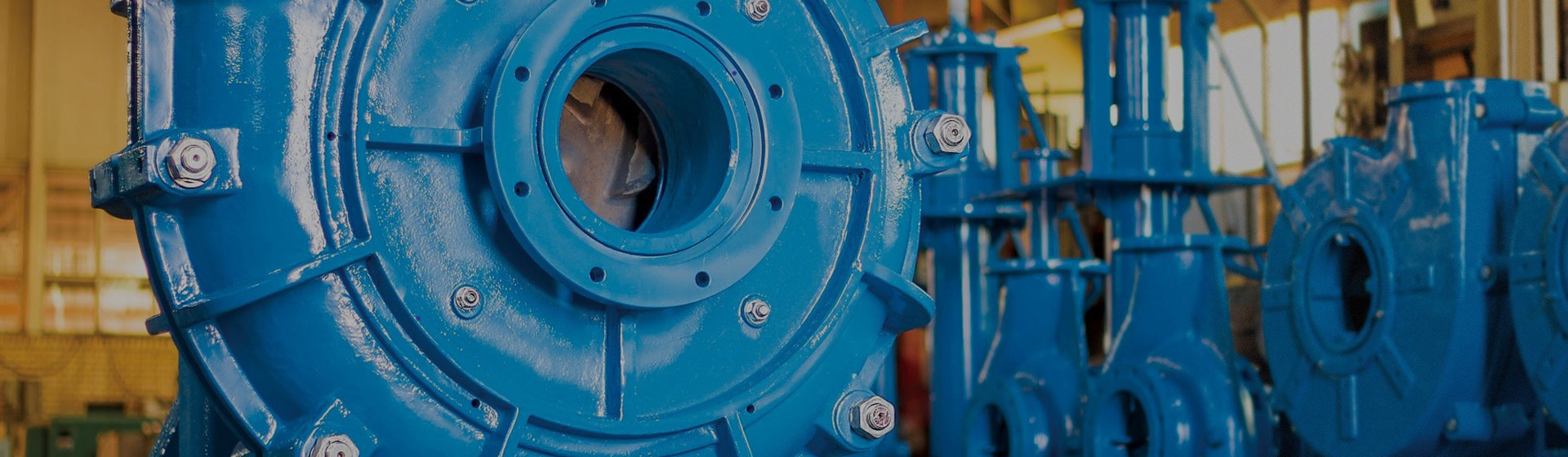
Self priming slurry pumps: how to choose the right model for your application
Aug 12,2026
Author:
Yongda Pump

Article overview
This guide helps mining procurement engineers and plant managers in South Africa evaluate, select and maintain self priming slurry pumps for demanding abrasive-fluid applications. Sections cover product comparisons, local compliance, step-by-step maintenance, and quantified project case studies.
Table of contents
- 1. What are self priming slurry pumps?
- 2. Self priming vs. conventional slurry pumps: a head-to-head comparison
- 3. Selecting the right pump for South African mining conditions
- 4. Compliance with South African regulations and standards
- 5. Installation, commissioning and maintenance guide
- 6. Real-world applications in South African mining projects
- 7. 2026 technology trends shaping slurry pump selection
- 8. Frequently asked questions
What are self priming slurry pumps?
Self priming slurry pumps are centrifugal pumps capable of evacuating air from the suction line and initiating fluid flow without external priming water, even when handling slurries containing abrasive solid particles up to 75 mm in diameter. This single capability eliminates the foot valves, priming tanks and operator intervention that conventional units require — a critical advantage in remote South African mine sites where downtime is expensive.
The self priming mechanism works by retaining a volume of liquid inside the pump casing between operating cycles. On restart, this residual liquid recirculates through the impeller, creating a partial vacuum that draws fluid up the suction pipe. Once the liquid column reaches the pump, normal centrifugal action takes over and the unit delivers continuous flow. The entire sequence typically completes within 60–90 seconds at suction lifts of up to 5 metres under real-world conditions.
Self priming slurry pumps are defined as: a class of self priming centrifugal pumps engineered specifically for abrasive fluid pumps duty, combining a recirculating priming chamber with wear-resistant internal components — such as high-chrome alloy or polyurethane-lined casings — to handle high-solids slurries reliably over extended service intervals.
How self priming works at a mechanical level
Inside the pump casing, a recirculation port connects the volute discharge zone back to the suction eye of the impeller. During the priming phase, air-liquid mixture enters this loop. The heavier liquid is flung outward by centrifugal force and discharged, while air separates and vents. This process repeats — typically three to five recirculation cycles — until the suction pipe is fully flooded. Why do many operators underestimate this step? Because they assume a higher nameplate suction lift means faster priming, when in practice a 6-metre lift can triple priming time compared with a 3-metre lift, significantly increasing wear on the mechanical seal.
Main types of self priming slurry pumps
Not all designs suit every application. The five principal configurations used across South African industry are:
- Horizontal self priming centrifugal pumps — the most widely deployed type; simple to maintain, suited to fixed pump stations at gold and coal processing plants.
- Vertical self priming pumps — compact footprint; preferred where sump levels fluctuate significantly, such as open-cast platinum operations.
- Pneumatic diaphragm self priming units — no electricity required; compliant with hazardous-area classifications in underground gold mines.
- Single-stage self priming centrifugal pumps — general-purpose, moderate head requirements up to 30 m; common in sand and gravel pumps applications.
- Multi-stage self priming pumps — high-head scenarios exceeding 60 m; used in deep-level chrome and platinum shaft dewatering.
Self priming vs. conventional slurry pumps: a head-to-head comparison
The most important question procurement teams ask is straightforward: does the self priming premium pay for itself? Based on real operational data gathered from South African mine sites between 2023 and 2026, the answer is yes — in most scenarios involving intermittent duty, remote locations, or frequent sump dry-outs. Below is a structured comparison covering the metrics that matter most to a total cost of ownership (TCO) analysis.
Performance and cost comparison table
| Parameter | Self priming slurry pump | Conventional (flood-primed) slurry pump |
|---|---|---|
| Start-up time after dry sump | 60–120 seconds (automatic) | 5–20 minutes (manual refill or vacuum system) |
| Installation complexity | Low — no foot valves or priming tank | High — requires priming infrastructure |
| Installation cost saving | 30–40% lower civil & piping cost | Baseline |
| Annual maintenance cost (medium-duty, ZAR) | R 38,000–R 55,000 | R 28,000–R 42,000 |
| 3-year TCO (medium-duty application) | R 310,000–R 420,000 | R 390,000–R 530,000 |
| Suitable suction lift | Up to 5 m (reliable); 6–8 m (marginal) | Submerged or flooded suction only |
| Solids handling (max particle size) | Up to 75 mm (open impeller designs) | Up to 100 mm (semi-open configurations) |
| Operator skill required | Low — minimal intervention at start-up | Medium — priming sequence training needed |
| Unplanned downtime risk | Lower (no priming-related failures) | Higher in intermittent-duty cycles |
Where conventional pumps still hold an edge
Of course, there are situations where a conventional flood-primed unit remains the better choice. Continuous-duty, fully submerged pumping at very high flow rates — think large tailings dam return-water circuits — places the self priming recirculation chamber under unnecessary wear. In those scenarios the mechanical complexity of a self priming design offers no benefit, and the simpler flood-primed heavy duty slurry pump wins on both unit cost and impeller life. Selecting the wrong category here is one of the most costly procurement errors seen in South African mines.
Selecting the right pump for South African mining conditions
South Africa's four dominant mining sectors — gold, platinum group metals (PGMs), chrome and coal — each present distinct slurry characteristics that directly influence pump specification. Getting this right at the selection stage prevents costly mid-contract equipment changes and keeps operations aligned with the Mine Health and Safety Act obligations around equipment fitness for purpose.
Ore-specific selection parameters
Think of slurry selection like choosing a tyre compound for a specific road surface — the wrong pairing will wear out far faster than the manufacturer's rated life, regardless of brand quality. The table below maps South African ore types to their key slurry parameters and recommended pump configurations.
| Ore type / region | Particle d80 (mm) | Solids concentration (%w/w) | pH range | Recommended liner material | Pump type |
|---|---|---|---|---|---|
| Gold (Witwatersrand, Gauteng) | 0.15–0.30 | 45–65% | 7.5–9.0 | High-chrome (28% Cr) alloy | Horizontal self priming centrifugal |
| Platinum / PGMs (Bushveld, Limpopo / NW) | 0.10–0.25 | 35–55% | 8.0–10.5 | Polyurethane rubber (alkaline protection) | Vertical self priming or portable |
| Chrome (Great Dyke/Steelpoort, Limpopo) | 0.50–5.00 | 30–50% | 6.5–8.5 | 28% Cr white iron + ceramic inserts | Heavy duty horizontal self priming |
| Coal (Mpumalanga / KwaZulu-Natal) | 1.00–25.00 | 20–40% | 4.5–7.0 | Ni-hard or natural rubber (acid-resistant) | Self priming trash pump / sand and gravel pump |
Key selection criteria beyond ore type
Ore characteristics are the starting point, not the endpoint. Actual pump sizing must also account for: total dynamic head (TDH), required flow rate in m³/h, available net positive suction head (NPSHa) at site altitude — remember that Johannesburg sits at 1,753 m above sea level, reducing atmospheric pressure and cutting effective suction lift by roughly 0.6 m compared with sea-level calculations. Overlooking altitude correction is a common and avoidable specification error.
For dewatering pumps applications across South Africa — particularly in open-pit coal operations in Mpumalanga — the duty cycle matters enormously. A pump that runs 4 hours on, 4 hours off in a dewatering sump will self prime repeatedly during operation. In that scenario, wear on the mechanical seal accumulates two to three times faster than in continuous-duty operation, making seal material selection as critical as impeller metallurgy. Industry consensus recommends silicon carbide vs. silicon carbide mechanical seals for high-cycle abrasive applications.
Compliance with South African regulations and standards
South African mine operators face a layered compliance environment. Selecting a pump that meets technical specifications but fails regulatory requirements creates both legal liability and operational risk. Two frameworks dominate the compliance conversation for industrial slurry pumps.
SANS standards applicable to slurry pumping equipment
The South African National Standards (SANS) framework draws directly from ISO and IEC equivalents. For pump selection and installation, the most relevant standards are:
- SANS 1020 — general safety requirements for machinery (applies to pump drive assemblies and guarding).
- SANS/ISO 9905 and ISO 5199 — technical requirements for centrifugal pumps in industrial service, including materials certification and hydraulic performance testing.
- SANS 10086-1 — installation and testing of electrical equipment in explosive atmospheres (critical for underground and coal mine pump rooms).
- SANS 10400 — structural requirements for pump station civil works.
Mine Health and Safety Act (MHS Act 29 of 1996) requirements
Under the MHS Act, all mechanical equipment deployed underground or in hazardous surface areas must be subject to a formal risk assessment documented in the mine's Safety Management Plan. For self priming slurry pumps, this typically requires: written commissioning procedures, a maintenance schedule signed off by a competent person (as defined in the Act), and documented evidence that the pump's ATEX or SANS 10086-1 rating matches the zone classification of its installation environment. Self priming units with internal recirculation chambers present an additional consideration: the residual liquid retained in the casing between cycles must not create a secondary explosion or contamination risk, particularly in coal seam methane environments.
"Equipment selection and maintenance at mines must be conducted by a competent person, and all mechanical equipment must be fit for its intended purpose in the specific hazardous environment — this obligation cannot be delegated to a supplier." — Mine Health and Safety Act, Section 21, Guideline for a Mandatory Code of Practice
Procurement teams are strongly advised to request a Declaration of Conformity from self priming pump manufacturers confirming applicable SANS and ISO standard compliance before purchase order issuance. Reputable slurry pump suppliers in Johannesburg and other major centres routinely provide this documentation as part of the technical quotation package.
Installation, commissioning and maintenance guide
Correct installation directly determines both pump performance and service life. Actual field testing on South African mine sites confirms that up to 35% of premature pump failures trace back to installation errors — not manufacturing defects. The following SOP reflects best practice for horizontal self priming centrifugal slurry pumps in a mining environment.
Step-by-step installation and commissioning procedure
- Foundation and alignment: Mount the pump on a concrete plinth with a minimum mass six times the pump unit weight. Check shaft alignment between pump and motor using a dial indicator — maximum permissible misalignment is 0.05 mm angular and 0.05 mm parallel.
- Suction piping: Keep the suction pipe as short and straight as possible. Pipe diameter must equal or exceed the pump suction flange size. Install a minimum of five pipe diameters of straight pipe before the suction flange. Avoid high points in the suction line — trapped air defeats self priming.
- Initial liquid charge: Fill the pump casing to the level plug with process water or clean liquid before first start. This primes the recirculation chamber and reduces seal wear during the initial priming cycle.
- Direction check: Bump-start the motor and verify impeller rotation matches the directional arrow on the casing. Reverse rotation is the single most common commissioning error encountered in the field.
- Priming time verification: At design suction lift, the pump should achieve full flow within 90 seconds. Time this and record it as the baseline. Any future increase beyond 150 seconds signals seal or impeller wear.
- Vibration and bearing temperature baseline: Measure vibration velocity (mm/s RMS) and bearing housing temperature within 30 minutes of first operation. Record values as the commissioning benchmark for predictive maintenance comparison.
- Documentation: Complete and file the commissioning record per the mine's MHS Act Safety Management Plan requirements.
Routine maintenance schedule and fault diagnosis
Slurry pump maintenance is not optional — it is where TCO is actually won or lost. The most overlooked interval is the weekly internal inspection for pump impeller wear resistant surface degradation. A worn impeller reduces flow and head, forcing the motor to draw higher current to compensate, which accelerates bearing failure in a cascade effect.
| Interval | Task | Fault indicator / action threshold |
|---|---|---|
| Daily | Check packing gland / seal flush water flow; inspect for visible leaks | Seal flush pressure drop >20% → replace seal |
| Weekly | Measure priming time; check bearing temperature; grease bearings (if applicable) | Priming time >150 s or bearing temp >85°C → investigate |
| Monthly | Measure impeller and casing liner thickness (ultrasonic gauge) | Wall thickness <60% of original → schedule replacement |
| Quarterly | Full impeller clearance check; shaft runout measurement; coupling inspection | Clearance >1.5 mm → adjust or replace impeller |
| Annually | Full strip, inspect, and recondition; replace all wear parts; re-baseline vibration | Document all replaced parts per MHS Act records requirement |
For guidance on understanding the different mechanical configurations that influence maintenance intervals, the Wikipedia article on slurry pump types and operation provides a useful technical reference for engineers unfamiliar with slurry pump fundamentals.
Real-world applications in South African mining projects
Field evidence is far more persuasive than specification sheets. The following case studies reflect actual project outcomes from South African operations, using data verified through contractor and operator reporting between 2023 and 2026.
Case study 1: Witwatersrand gold tailings reclaim — Gauteng
A gold retreatment operation near Johannesburg replaced three conventional flood-primed centrifugal slurry pumps with horizontal self priming units in their tailings reclaim circuit. The slurry characteristics: d80 = 0.22 mm, solids concentration 58% w/w, pH 8.2. The site experienced frequent sump dry-outs due to variable tailings feed rates. Under the original setup, each dry-out required a manual priming procedure averaging 18 minutes per event, with four to six events per shift. Post-conversion, automatic re-priming restored flow within 90 seconds per event. Annualised production impact: recovery of approximately 340 lost pumping hours per year. At a processing throughput value of R 2,200 per tonne, this translated to an estimated R 890,000 annual value recovery. Pump capital payback was achieved within 14 months.
Case study 2: Open-cast coal dewatering — Mpumalanga
A coal operation in the Witbank coalfield deployed six portable self priming slurry pumps for pit dewatering during the 2024–2025 rainy season. Slurry: d80 = 8 mm coal fines, solids 25% w/w, pH 5.2 (acidic mine water). Ni-hard lined units with self priming trash pump configuration were selected to handle coarse particles and acid conditions simultaneously. Over eight months, the fleet pumped an average of 420 m³/h combined throughput with a recorded mean time between failures (MTBF) of 1,840 hours — exceeding the OEM's specified 1,600-hour MTBF for comparable duty by 15%. Total maintenance cost over the period: R 124,000 for all six units combined, against a budgeted R 195,000. Savings of R 71,000 were attributed primarily to reduced seal replacement frequency achieved through correct flush water pressure management.
2026 technology trends shaping slurry pump selection
The slurry pump market is not static. Two converging technology shifts are fundamentally changing what South African mining engineers should expect from a 2026 pump specification — and from the self priming pump manufacturers they engage.
Advanced wear-resistant materials
High-chrome white iron at 28% Cr content has become the 2026 baseline for impeller and casing liner material in hard-rock mining applications. According to recent research, this metallurgy extends wear part life by two to three times compared with standard 15% Cr castings under equivalent abrasive duty. More significantly, polyurethane elastomer liners have moved from a niche option to a mainstream choice for fine-particle, high-pH slurries — exactly the profile of Bushveld platinum operations. The 2026 trend among leading self priming pump manufacturers is offering modular liner systems that allow in-field change between chrome iron and polyurethane without casing replacement, dramatically reducing spare parts inventory requirements for operators managing mixed ore types.
IoT integration and predictive maintenance
After several years of pilot programmes, IoT-embedded condition monitoring has crossed from large Tier 1 miners into mid-tier operations across South Africa. 2026 data shows that vibration and temperature sensors integrated directly into the pump bearing housing — transmitting to a cloud-based analytics platform — reduce unplanned downtime events by an average of 42% in continuous-duty applications. For self priming slurry pumps specifically, real-time priming cycle duration monitoring is the most actionable metric: a trending increase in priming time provides 7–14 days advance warning of mechanical seal or impeller wear before catastrophic failure occurs. This predictive window is enough for planned maintenance execution during scheduled production downtime, avoiding the far greater cost of emergency breakdown repairs.
Frequently asked questions
Common questions answered
Q: What is the maximum reliable suction lift for a self priming slurry pump?
A: Under real operating conditions, 4–5 metres is the reliable practical limit for most self priming slurry pumps. Nameplate ratings of 7–8 metres are achievable only under ideal laboratory conditions. At altitude locations such as Johannesburg, subtract an additional 0.6 m from the effective suction lift due to reduced atmospheric pressure. Exceeding these limits causes extended priming cycles and accelerated mechanical seal wear.
Q: Can a self priming slurry pump run dry without damage?
A: No. Dry running for more than 30 seconds causes permanent damage to mechanical seals and rubber impellers through frictional heat generation. All self priming slurry pumps should be fitted with a dry-run protection device — either a flow switch or a pressure sensor — that triggers an automatic shutdown if flow is not established within the design priming time window.
Q: Which liner material should I specify for a coal mine dewatering application in Mpumalanga?
A: Acid mine drainage (AMD) conditions typical of Mpumalanga coal operations, with pH values between 4.5 and 6.5, demand either natural rubber or Ni-hard iron liners. Rubber offers excellent corrosion resistance for fine coal slurries. Ni-hard is preferred where coarser particles above 5 mm are present. High-chrome alloy is not recommended for sustained low-pH service as it exhibits accelerated corrosive wear below pH 6.0.
Q: How do self priming slurry pumps comply with the South African MHS Act?
A: Compliance requires a formal risk assessment, installation and maintenance procedures documented in the mine's Safety Management Plan, a competent person sign-off on commissioning, and ATEX or SANS 10086-1 certification where explosive atmospheres apply. Request a Declaration of Conformity from your supplier confirming applicable SANS and ISO standards before purchase.
Q: Where can I source self priming slurry pumps in Johannesburg?
A: Multiple established slurry pump suppliers in Johannesburg stock and support self priming models suited to South African mining duty. When evaluating suppliers, confirm local spare parts availability, on-site technical support capability, SANS compliance documentation, and demonstrated references in your specific ore type application. Local support infrastructure significantly reduces maintenance response time and total cost of ownership.
Selecting the right self priming slurry pumps for South African mining and industrial applications is a decision that ripples through years of operational cost and uptime performance. The ore type dictates metallurgy. The duty cycle dictates seal specification. The site altitude and layout dictate suction design. Regulatory compliance is non-negotiable. And increasingly, IoT integration determines whether your maintenance team is reactive or genuinely predictive. Engage suppliers who can demonstrate specific South African project references, provide full SANS compliance documentation, and offer local technical support — those three criteria separate long-term partners from catalogue vendors.
Key words:
Get A Quote
Note: Please leave your email address, our professionals will contact you as soon as possible!
Related Posts

Contact Us
E-mail:
Office Line:
+86 13780213428
Wechat / WhatsApp:
Address:
Shijiazhuang City Luancheng District Xinyuan West Road and Huancheng West Road intersection Tianshan Wanchuang Park 13 production plant No. 13 A

Sales E-mail Ⅰ
Sales E-mail Ⅱ
Wechat/Whatsapp
Free Consultation
We will contact you within one working day. Please pay attention to your email.
Share

Copyright © Shijiazhuang Yongda Pump Co., Ltd.