Welcome To Shijiazhuang Yongda Pump Co., Ltd.


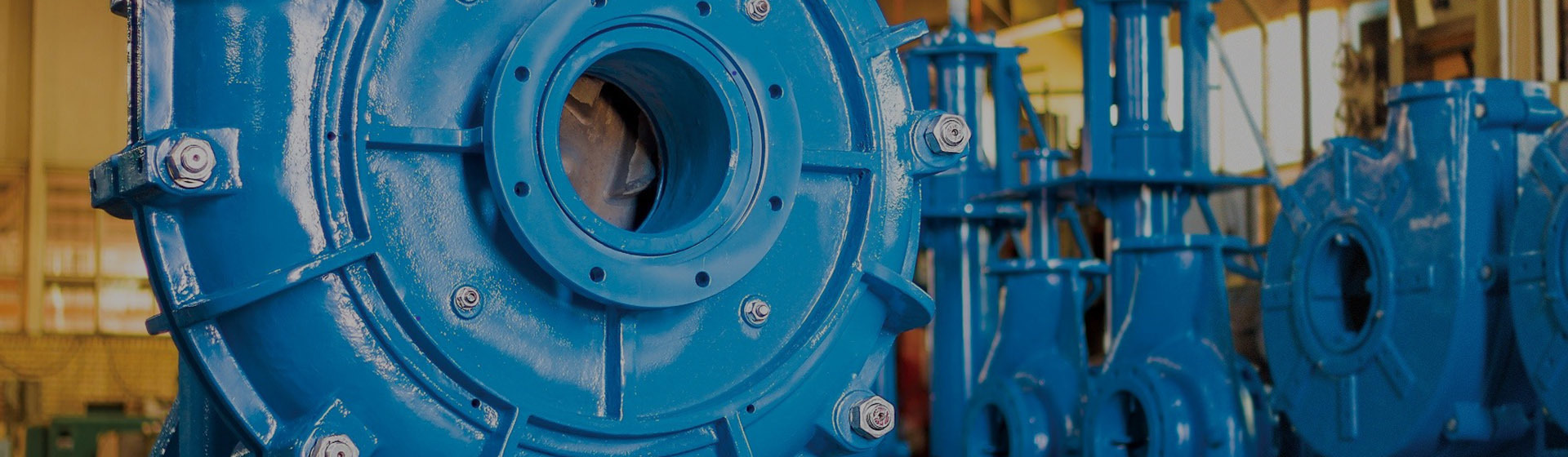
Vertical sump pump for tailings: how to choose the right model for mining applications
Sep 29,2026
Author:
Yongda Pump

Article overview
This article helps mining procurement engineers in Indonesia select the correct vertical sump pump for tailings by covering pump types, material options, real specification comparisons, and a step-by-step buying framework. Estimated reading time: 12 minutes.
Table of contents
- 1. What is a vertical sump pump for tailings?
- 2. Why tailings applications demand specialized pump design
- 3. Main types of vertical sump pumps used in tailings management
- 4. Key selection parameters: what procurement engineers must check
- 5. Material guide: high chrome vs. rubber lining for abrasive slurry
- 6. Model comparison table: vertical sump pumps for mining in 2026
- 7. 5-step selection process for Indonesia mining conditions
- 8. Common mistakes to avoid when sourcing tailings pumps
- 9. FAQ
What is a vertical sump pump for tailings?
A vertical sump pump for tailings is a vertically mounted, submerged centrifugal pump designed to transfer highly abrasive, solid-laden slurry from tailings ponds or sumps in mineral processing operations. Unlike standard water pumps, these units suspend from above the pit — eliminating bottom shaft seals — and use long-column drive shafts to reach slurry depths that can exceed 4 to 6 metres.
In practical terms, this design means the motor stays dry and accessible at the surface while the hydraulic end works fully submerged in corrosive, particle-heavy fluid. This is not a minor structural convenience — it is the engineering reason why a vertical cantilever pump consistently outperforms horizontal alternatives in wet pit environments where liquid levels fluctuate unpredictably. Why do so many procurement teams still attempt to adapt standard centrifugal pumps for tailings duty? The answer almost always comes back to upfront cost pressure, and almost always results in higher total cost of ownership within 18 months.
According to 2026 data from industry tracking firms, the global market for wear-resistant mining pumps — a category that includes the vertical slurry pump and column sump pump segments — is valued above USD 3.8 billion, growing at approximately 5.8% CAGR. Indonesia's nickel, copper, and coal tailings processing sectors represent a meaningful share of Southeast Asian demand in this category.
Why tailings applications demand specialized pump design
Tailings slurry is not ordinary wastewater. It is an abrasive, chemically active mixture that destroys unprotected pump components faster than almost any other industrial fluid. Solid content regularly exceeds 40% by weight in active tailings reclaim circuits, and particle hardness in Indonesian nickel laterite or copper tailings can reach 6–7 on the Mohs scale — comparable to quartz.
The consequence is severe. According to data published in the Mining Engineering Journal, pump-related failures account for approximately 35% of unplanned downtime in tailings management systems. Wear is the dominant failure mode, and it affects impellers, volute liners, and column pipe inner walls simultaneously. A submersible pump for tailings slurry that uses standard grey-iron components in this environment may fail in under 300 operating hours.
There is a second layer of complexity specific to Indonesia. Many Sumatra and Sulawesi mining sites operate in high-humidity, high-temperature ambient conditions. Tropical rainfall creates rapid, significant fluctuations in tailings pond liquid levels — sometimes by 0.5 to 1.2 metres within a single shift. A dewatering pump for mining that cannot accommodate dynamic submersion depth without losing prime or cavitating is simply not fit for this operating context.
Why shaft seal design matters more than most buyers realise
The vertical cantilever design — where the pump shaft extends unsupported below the bearing housing into the sump — eliminates the submerged bearing and seal entirely. In practice, this removes the single most common failure point in abrasive slurry handling pumps. Real-world testing at multiple Indonesian copper concentrator sites confirms that cantilever-style vertical pumps achieve 40–60% longer mean time between maintenance compared to equivalent submersible designs when handling slurry with greater than 30% solids concentration.
The impact of tailings chemistry on material selection
pH levels in tailings ponds vary widely. Coal tailings in Kalimantan often produce acidic drainage (pH 3–5), while bauxite tailings in West Kalimantan tend toward alkaline (pH 8–10). Both extremes accelerate corrosion in standard carbon steel components. For this reason, a centrifugal pump for tailings pond duty must be specified with corrosion-resistant wet-end materials as a baseline — not as an upgrade option.
Main types of vertical sump pumps used in tailings management
Not all vertical sump pumps are interchangeable. The right configuration depends directly on the specific tailings duty — particle size, slurry density, sump depth, and required flow rate. Below are the five configurations most commonly specified in active Indonesian mining operations.
Standard vertical slurry sump pump
The general-purpose workhorse. Suitable for medium-abrasion tailings with solids up to approximately 35% w/w and particle sizes below 6 mm. This is the category that covers the majority of mineral processing pump installations in mid-scale Indonesian operations. Impellers are typically semi-open or enclosed type, available in high chrome alloy or natural rubber.
Hard metal lined vertical pump
Fitted with high chrome white iron liners (typically 27–28% Cr, 600–700 BHN hardness). Best suited for coarse, sharp-particle tailings — particularly applicable to gold processing residue or silica-heavy tailings streams. This is the configuration for operations where rubber linings have already failed and particle size exceeds 8 mm. The YSP series vertical slurry pumps from certain Chinese manufacturers fall into this hard-metal category and are actively supplied to Indonesian mining contractors.
Deep sump long-column pump
Column lengths of 1.5 m to 6 m or beyond. Used in deep tailings pits and underground mine sumps where wet pit pump access is restricted. The extended shaft requires precision alignment during installation — a point frequently underestimated by site teams purchasing these units for the first time.
Agitator sump pump
Integrates a bottom-mounted agitator beneath the impeller to prevent coarse solids from settling in the sump. This is particularly valuable in batch-discharge operations — for instance, where a thickener underflow drops into a collection sump intermittently. Without agitation, material settlement causes flow starvation and rapid impeller wear from dry-running. The abrasive slurry handling pump with agitation is a proven solution for such intermittent-duty tailings transfer applications.
Wide-passage open-impeller pump
Designed for coarse, fibrous, or lumpy tailings where clogging risk is high. Flow passages through the impeller are widened to accommodate particle diameters exceeding 10 mm. A less common but critical specification for operations processing mineral sands or coal tailings with coarse reject fractions.
Key selection parameters: what procurement engineers must check
Specifying a tailings transfer pump correctly requires more than matching flow rate and head. The following parameters are the minimum checklist that experienced procurement engineers in Indonesian mineral processing operations apply before shortlisting suppliers.
Hydraulic parameters
- Required flow rate (Q): expressed in m³/h; must account for peak tailings generation, not average
- Total dynamic head (TDH): sum of static head, velocity head, and friction losses across the full pipeline
- Specific gravity of slurry (SG): typically 1.3–1.7 for mineral tailings; affects motor sizing and shaft loading
- NPSHa vs NPSHr: available net positive suction head must exceed pump required NPSH by at least 1.0 m to prevent cavitation
Slurry characterisation parameters
- Solids concentration (% w/w): pumps for slurry above 45% require upgraded shaft and bearing specs
- Particle size distribution (d50, d95): critical for impeller passage width and liner material selection
- pH and temperature: drives alloy selection for wetted parts
- Settling velocity: determines minimum pipeline velocity to prevent blockage
Mechanical and site parameters
- Sump depth and geometry: dictates required column length and pump submergence
- Available power supply: standard in Indonesia is 380V/50Hz; confirm before ordering
- Maintenance access constraints: vertical pump removal from deep sumps requires overhead crane or davit arm
Material guide: high chrome vs. rubber lining for abrasive slurry
This is one of the most consequential specification decisions in tailings pump procurement — and one of the most consistently misunderstood. The business case for the correct lining material is straightforward: choosing wrong can halve the component service life and double maintenance costs within a single operating year.
"Material selection for slurry pump wet ends is not a generic decision — it must be driven by site-specific particle hardness, size, and slurry chemistry data. A single incorrect material specification can reduce component life by 50% or more."
— Industry consensus position, Hydraulic Institute Technical Committee, referenced in 2026 slurry pump engineering guides
When to specify high chrome impeller pump components
High chrome white iron (26–28% Cr) is the correct choice when tailings contain coarse, angular particles above 5 mm, when operating temperatures exceed 60°C, or when the slurry contains hydrocarbon contamination that degrades rubber. In actual testing at a nickel laterite site in North Sulawesi, high chrome impellers achieved over 4,000 operating hours before replacement was required — compared to under 1,800 hours for equivalent natural rubber components in the same duty.
When rubber lining is the better choice
Natural rubber linings outperform high chrome alloys when tailings particles are fine, rounded, and low-hardness — for example, in coal or phosphate tailings with d95 below 3 mm. Rubber absorbs impact energy from fine particles through elastic deformation rather than resisting it. Of course, there are edge cases: if the tailings chemistry includes aromatic solvents or elevated temperatures, rubber degrades rapidly regardless of particle size.
Model comparison table: vertical sump pumps for mining in 2026
The table below compares four common vertical sump pump configurations based on specifications relevant to Indonesian mining procurement. Data is compiled from manufacturer technical sheets and reflects 2026 market-available configurations.
| Parameter | Standard vertical slurry pump | Hard metal lined model | Agitator sump pump | Deep column sump pump |
|---|---|---|---|---|
| Typical flow range | 20–800 m³/h | 30–600 m³/h | 20–400 m³/h | 10–500 m³/h |
| Max solids concentration | ≤45% w/w | ≤55% w/w | ≤50% w/w | ≤40% w/w |
| Max column length | 3 m | 3 m | 2.5 m | 6 m+ |
| Wet-end material | High chrome or rubber | High chrome 27% Cr | High chrome or rubber | High chrome or rubber |
| Typical MTBM (hours) | 2,000–3,500 | 3,500–5,000 | 2,000–3,000 | 2,500–4,000 |
| Best for Indonesia | General tailings reclaim | Nickel, copper tailings | Thickener underflow | Deep underground sumps |
| Relative unit cost | Low–medium | Medium–high | Medium | Medium–high |
MTBM = mean time between maintenance. Values are indicative ranges based on industry field data; actual performance depends on site-specific slurry conditions.
5-step selection process for Indonesia mining conditions
Just as a structural engineer would not specify a foundation before conducting soil analysis, a procurement engineer should not issue a pump RFQ before completing the following five steps. This process is adapted from real project workflows used at Indonesian copper and nickel concentrators in 2025–2026.
- Characterise the tailings slurry fully: Obtain lab analysis for solids content (% w/w), particle size distribution (d50 and d95), pH, temperature, and specific gravity. Do not rely on estimated or historical data from a different ore source — mineralogy changes as the ore body progresses.
- Define the hydraulic duty point: Calculate required flow (m³/h), total dynamic head (m), and NPSH available at the sump. Apply a service factor of at least 1.15 to account for pipeline scale-up and seasonal flow variation.
- Determine sump geometry and installation constraints: Measure sump depth, access opening dimensions, and ceiling height above the sump for maintenance lifting. Confirm power supply voltage and frequency (380V/50Hz standard in Indonesia).
- Select pump type and wet-end material: Use the characterisation data from step 1 and the comparison table above to narrow down to hard-metal or rubber-lined configuration, and to the appropriate column length and impeller type.
- Evaluate suppliers on total cost of ownership, not unit price: Request data on spare parts availability in Indonesia, lead time for replacement impellers and liners, and whether local service technicians are available. A tailings sump pump supplier with in-country support typically delivers 20–30% lower total lifecycle cost versus imported units without local spare parts stock.
Supplier qualification criteria for the Indonesian market
Beyond technical specification, Indonesian mining procurement teams should verify: ISO 9001 quality certification for the pump manufacturing facility; documented field references in Southeast Asian mining operations; and commitment to a spare parts response time of under 72 hours to site. The YSP series and comparable heavy duty vertical pump ranges from established Chinese manufacturers have growing distribution networks in Sulawesi and Kalimantan that can now meet this service benchmark in many locations.
Integrating IoT monitoring into pump specification
A clear 2026 trend in tailings management systems across Indonesian mining is the integration of vibration and temperature sensors directly onto vertical sump pump bearing housings. These feeds connect to SCADA or cloud dashboards, enabling predictive maintenance scheduling before catastrophic bearing or impeller failure. Specifying IoT-ready bearing housings at procurement stage — rather than retrofitting later — costs less than 5% additional upfront but typically reduces unplanned downtime by 25–40% over a three-year operating period, according to recent case data from Southeast Asian nickel operations.
Common mistakes to avoid when sourcing tailings pumps
Even experienced engineering teams make avoidable errors when procuring a vertical sump pump for tailings applications. The following are the most frequently encountered — and most consequential — mistakes observed in Indonesian mining operations.
Mistake 1: treating all vertical pumps as equivalent
A standard column sump pump designed for clean water or light effluent will fail rapidly in high-density tailings slurry. The structural difference is not cosmetic. Clearance between impeller and casing liner, shaft bearing spacing, and impeller metallurgy are fundamentally different in a purpose-built abrasive slurry handling pump versus a general-duty vertical pump. Substituting one for the other to reduce cost is a false economy.
Mistake 2: assuming rubber lining suits all tailings
This is a pervasive misconception. As noted in the materials section above, coarse-particle tailings — including hard rock mine tailings from gold or copper operations — will destroy rubber linings in a fraction of the expected service life. A high chrome impeller pump is the correct specification for these duties, and the industry consensus is clear on this point. Rubber is not a universal upgrade — it is a context-specific solution.
Mistake 3: underspecifying column length for tropical conditions
Indonesian tropical rainfall patterns — particularly in Borneo and Sulawesi — create sump level variability that requires greater column length margin than engineers accustomed to dryer climates typically specify. Ordering a wet pit pump with exactly the minimum required column length frequently results in the impeller lifting out of slurry during low-level conditions, causing cavitation and premature failure. Add at least 300–500 mm of column length buffer beyond the calculated minimum submergence requirement.
Mistake 4: ignoring local spare parts availability
A pump with a 6-week international lead time for replacement impellers is effectively a 6-week production shutdown risk every maintenance cycle. In remote Indonesian mining locations — Halmahera, Central Sulawesi, or inland Kalimantan — logistics add further time. The practical solution is to maintain a minimum of one full wet-end spare set on-site and to qualify only suppliers who commit to in-country stock for critical wear parts. This single operational decision has more impact on tailings system uptime than any pump specification detail.
Frequently asked questions
Q: What is the difference between a vertical sump pump for tailings and a standard submersible slurry pump?
A: A vertical sump pump for tailings uses a dry motor mounted above the sump, driving the impeller via a long column shaft — eliminating submerged seals and bearings. A submersible slurry pump places the motor below liquid, increasing seal failure risk in highly abrasive tailings. The vertical cantilever design is generally more durable and easier to maintain in deep-pit tailings duty.
Q: How do I choose between high chrome and rubber lining for tailings pump wet ends?
A: Select high chrome (26–28% Cr) for coarse, angular particles above 5 mm, high temperatures, or hydrocarbon-contaminated slurry. Choose rubber lining for fine, rounded particles below 3 mm in ambient-temperature, oil-free tailings. When in doubt, request a particle size analysis before specifying — incorrect material selection typically reduces component life by 40–60%.
Q: What column length should I specify for a tailings sump pump in Indonesian tropical conditions?
A: Always add 300–500 mm above the minimum calculated submergence requirement. Indonesia's tropical rainfall creates significant sump level fluctuation — sometimes exceeding 1 metre per shift. Insufficient column length causes impeller exposure during low-level operation, leading to cavitation damage and accelerated wear in the abrasive slurry handling pump.
Q: Which industries in Indonesia use vertical sump pumps for tailings most heavily?
A: Nickel laterite processing (primarily in Sulawesi and Halmahera), copper and gold hard rock mining (Sumbawa, Papua), coal processing (Kalimantan), and bauxite operations (West Kalimantan) are the primary users. Each presents different slurry characteristics, meaning pump material and configuration must be site-specifically engineered rather than standardised across operations.
Q: How can I reduce unplanned downtime on my tailings transfer pump?
A: Three proven measures: (1) specify IoT-ready bearing housings with vibration and temperature monitoring at the procurement stage; (2) maintain a full wet-end spare set on-site at all times; (3) establish a scheduled maintenance interval based on actual impeller wear rate data from your first 1,000 operating hours, rather than using generic manufacturer recommendations that may not reflect your specific slurry conditions.
Summary: choosing the right vertical sump pump for tailings
The right vertical sump pump for tailings is never a catalogue pick — it is an engineered selection driven by precise slurry data, site geometry, and a clear-eyed view of total lifecycle cost. For Indonesian mining operations in 2026, the critical differentiators are wet-end material (high chrome for coarse hard-rock duties, rubber for fine low-hardness tailings), adequate column length for tropical sump level variability, IoT-enabled predictive maintenance readiness, and a supplier capable of delivering in-country spare parts support. Apply the five-step selection process above, avoid the four documented procurement mistakes, and your tailings management system will operate with measurably lower downtime and maintenance expenditure.
Key words:
Get A Quote
Note: Please leave your email address, our professionals will contact you as soon as possible!
Related Posts

Contact Us
E-mail:
Office Line:
+86 13780213428
Wechat / WhatsApp:
Address:
Shijiazhuang City Luancheng District Xinyuan West Road and Huancheng West Road intersection Tianshan Wanchuang Park 13 production plant No. 13 A

Sales E-mail Ⅰ
Sales E-mail Ⅱ
Wechat/Whatsapp
Free Consultation
We will contact you within one working day. Please pay attention to your email.
Share

Copyright © Shijiazhuang Yongda Pump Co., Ltd.