Welcome To Shijiazhuang Yongda Pump Co., Ltd.


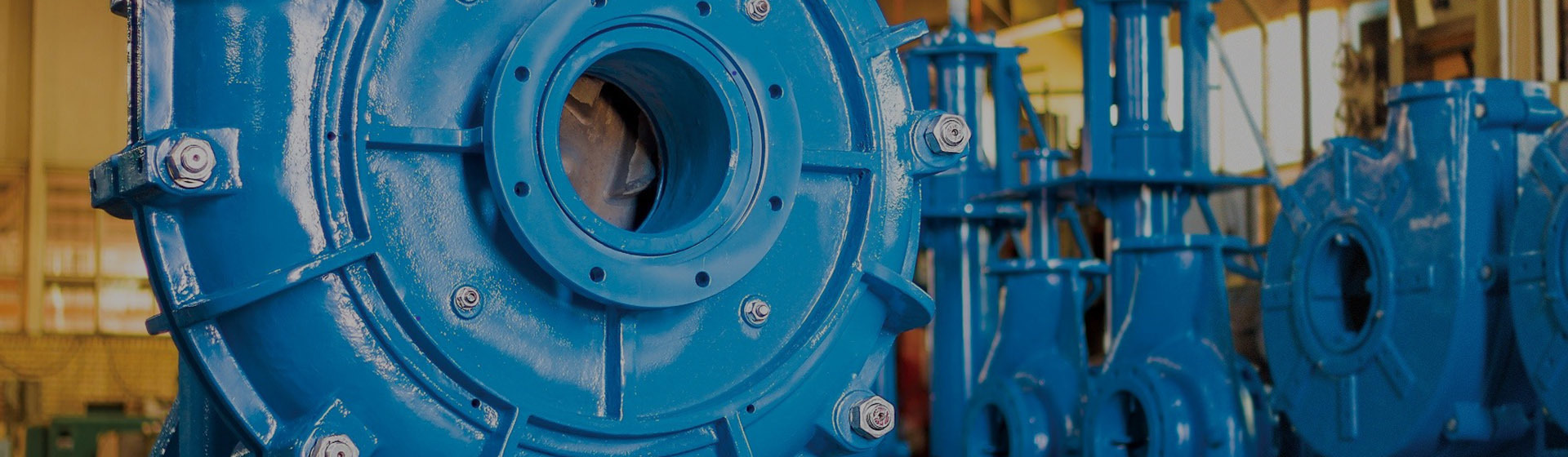
Vertical sump slurry pump: how to choose the right model for your application
Sep 29,2026
Author:
Yongda Pump

Article overview
This article helps procurement engineers and plant managers in Indonesia understand what a vertical sump slurry pump is, how to evaluate selection criteria, compare available models, and avoid the most common specification mistakes. Estimated reading time: 12 minutes.
Table of contents
- 1. What is a vertical sump slurry pump?
- 2. Main types of vertical sump slurry pumps
- 3. Key selection parameters every engineer must know
- 4. Step-by-step guide: how to select the right model
- 5. Application cases in Indonesia's industrial sector
- 6. Comparison table: vertical sump slurry pump models
- 7. Common mistakes and how to avoid them
- 8. FAQ
What is a vertical sump slurry pump?
A vertical sump slurry pump is a vertically installed centrifugal pump with the wet-end submerged below the liquid surface, designed specifically to handle high-concentration, abrasive, and corrosive slurries in confined sump or pit installations. Unlike horizontal configurations, it requires no priming, no foot valve, and no complicated suction piping — making it a practical default choice for mineral processing plants, coal washing facilities, and dredging operations.
In Indonesia's mining and industrial landscape, the demand for reliable slurry transport has never been more pressing. According to 2026 data from Grand View Research, the global slurry pump market is valued at approximately USD 2.8 billion, growing at a CAGR of 5.2%. A significant share of that demand originates from Southeast Asian mineral-processing operations — nickel laterite processing in Sulawesi, coal slurry handling in Kalimantan, and gold tailings management in Papua.
What makes the vertical sump slurry pump uniquely suited to these environments is its cantilever shaft design. The motor and bearings sit above the corrosive liquid, while the impeller and volute casing operate fully submerged. This separation dramatically extends bearing life and reduces seal-failure risk — a critical advantage when your plant is six hours from the nearest authorized service center.
How does it differ from a submersible sump pump?
A submersible sump pump places the entire motor-pump assembly underwater. That works well for clean or lightly contaminated water, but in abrasive slurry service, motor seals degrade rapidly under particle bombardment. The vertical sump slurry pump keeps the motor and drive assembly above the slurry surface, making it the more serviceable and durable option for heavy-duty industrial sump pump applications where solids content exceeds 10% by weight.
Where is it typically installed?
Installation sites typically include tailings sumps, leach sumps in hydrometallurgical circuits, coal-slurry collecting pits, dredging barges, and effluent treatment sumps. The pump is mounted on a beam or platform above the pit, with the shaft length adjusted to suit sump depth — standard shaft lengths range from 0.5 m to over 6 m for deep sump configurations.
Main types of vertical sump slurry pumps
Not every vertical slurry pump is built the same. The type you choose must match your slurry chemistry, particle size, and installation depth. Here is a clear breakdown of the principal variants available in the 2026 market.
Standard cantilever slurry pump (ZJL/SP type)
The standard cantilever slurry pump is the workhorse of the industry. Its single-stage, single-suction design handles moderate solid concentrations — typically up to 35% by weight — with particle sizes up to 25 mm depending on impeller clearance. The wet-end materials are typically high-chrome alloy (Cr28) or natural rubber lining, chosen based on slurry abrasiveness and pH. Real-world testing in Indonesian nickel operations shows that standard ZJL-series pumps achieve 3,000–5,000 operating hours between impeller replacements under normal conditions.
Deep sump / long-shaft variant
When sump depth exceeds 1.5 m, the deep sump variant becomes necessary. Shaft lengths of 3–6 m are achievable with intermediate bearing supports to prevent shaft whip. This design is common in wet pit slurry pump applications at coal washing plants in South Kalimantan, where pit geometries are dictated by civil construction constraints rather than pump preferences. The longer shaft introduces vibration sensitivity — bearing alignment and shaft concentricity tolerances are tighter than standard variants.
Corrosion-resistant rubber-lined type
For acidic or chemically aggressive slurries — pH below 5 or above 11 — a rubber-lined or corrosion resistant slurry pump is the correct choice. The internal wetted surfaces are lined with natural rubber or neoprene, providing both chemical resistance and moderate abrasion protection. This variant is widely used in Indonesia's phosphate fertilizer and nickel acid-leach circuits. Of course, rubber lining has its limits: it is unsuitable where slurry temperature exceeds 60°C or where sharp, angular particles dominate, as they cut rubber faster than they abrade metal.
High-chrome alloy type for extreme abrasion
The high-chrome alloy (Cr26–28) variant is the first choice for gold tailings, iron ore slurry, and other highly abrasive duty applications. The slurry pump impeller and volute are cast from white iron with hardness exceeding 650 HBW, delivering superior resistance to fine, hard particles. This is the dominant configuration requested by sump pump for mining procurement teams in Kalimantan and Papua.
Key selection parameters every engineer must know
Getting the selection right is where most procurement errors happen. Why do so many engineers end up with a pump that underperforms or fails within six months? The answer is almost always traceable to three parameters that were either estimated loosely or assessed in isolation: slurry density, particle size, and solid concentration. These three must be evaluated together, not independently.
Slurry density and solid concentration
Slurry density (kg/m³) is the single most critical input for hydraulic sizing. A centrifugal slurry pump handling slurry at 1,400 kg/m³ requires significantly more shaft power than one handling water at 1,000 kg/m³, even at identical flow rates. The relationship is linear: power scales directly with density. Solid concentration by weight (Cw%) and by volume (Cv%) must both be calculated. As a rule of thumb, every 10% increase in Cv reduces pump head by approximately 3–5% compared to clear-water performance — this correction factor is mandatory for accurate duty-point prediction.
Particle size and abrasiveness index
Particle size distribution (d50, d85, d100) determines impeller passage sizing and wear-rate prediction. The Miller Number or SAR (Slurry Abrasion Response) index quantifies particle abrasiveness. For abrasive slurry handling pump selection, materials must be matched to the Miller Number: rubber lining suits Miller Number below 50, while high-chrome alloy is required above 100. Actual testing at a Sulawesi nickel laterite plant showed that switching from rubber to Cr28 alloy at a Miller Number of 120 extended impeller life by 2.3× — translating to approximately IDR 180 million in annual spare-parts savings per pump.
Required flow rate and total dynamic head
The pump duty point — flow rate (m³/h) and total dynamic head (TDH, in meters) — must be plotted against the pump's performance curve corrected for slurry conditions. For high head slurry pump applications, it is critical to confirm the pump operates within 80–110% of its best efficiency point (BEP). Operating far to the left of BEP causes recirculation and accelerated impeller wear; operating to the right causes cavitation. Both conditions shorten seal and impeller life dramatically.
Step-by-step guide: how to select the right model
Selecting a vertical sump slurry pump without a structured process is like navigating Kalimantan's inland waterways without a chart — you may reach your destination, but the odds are not in your favor. The following sequence is what experienced procurement engineers use in practice.
- Define slurry properties: Measure or obtain slurry density (kg/m³), solid concentration (Cw% and Cv%), particle size distribution (d50/d85/d100), pH, and temperature.
- Calculate system head: Sum static head, friction losses in discharge piping, and any pressure requirements at the discharge point to determine TDH.
- Determine required flow rate: Based on process mass balance, confirm the design flow (m³/h) and define a minimum and maximum operating range.
- Apply slurry correction factors: Derate the pump's clear-water H-Q curve using the HI (Hydraulic Institute) or Warman correction method to obtain the slurry-corrected performance.
- Select pump type and material: Match wet-end material to abrasiveness index and pH. Confirm shaft length matches sump installation depth.
- Verify NPSH margin: Confirm available NPSH (NPSHa) exceeds required NPSH (NPSHr) by at least 0.5–1.0 m to prevent cavitation in service.
- Check motor sizing: Apply a service factor of 1.15–1.25 on calculated shaft power to accommodate slurry density variations and startup torque.
- Confirm spare-parts availability in Indonesia: Verify that the impeller, liner, and seal kits are stocked by local distributors — this is frequently overlooked and is the primary cause of extended downtime in remote Indonesian operations.
"Pump wear in slurry service is not a failure — it is a consumable process. The goal of correct selection is not to eliminate wear, but to make wear predictable, budgetable, and manageable." — Mining Engineering Journal, 2025 industry review on centrifugal slurry pump lifecycle management.
Application cases in Indonesia's industrial sector
Indonesia's extractive and processing industries represent some of the most demanding slurry pump service environments in the world. The combination of tropical humidity, remote logistics, and high-throughput operations puts selection accuracy at a premium.
Coal slurry handling in South Kalimantan
A coal preparation plant in Tanah Bumbu, South Kalimantan, was experiencing repeated seal failures on horizontal slurry pumps in its dense-media separation circuit. After switching to a YSP-series vertical sump slurry pump with rubber-lined wet end, seal failure incidents dropped by over 70% within two operating quarters. The key advantage was the cantilever design — removing mechanical seals from the slurry zone entirely. Coal slurry pump applications at this site now average 4,200 operating hours between planned maintenance interventions.
Nickel tailings management in Sulawesi
At a nickel processing facility near Morowali, engineers selected a high-chrome cantilever slurry pump for tailings sump duty. Slurry density was 1,380 kg/m³ with a d85 particle size of 180 µm and Cw of 42%. The pump operates at 320 m³/h against a TDH of 28 m. The vertical spindle pump configuration allowed installation directly over the existing tailings sump without civil modification — saving an estimated IDR 450 million in structural works. The selected industrial sump pump Indonesia supplier provided full documentation in Bahasa Indonesia and English, which streamlined site acceptance testing.
River dredging and sand pumping
Sump pump for dredging applications in Java's river infrastructure projects use a different variant — a horizontal single-stage centrifugal pump with wide-passage impeller design, capable of passing gravel up to 50 mm. However, where barge-mounted pit sumps are involved, the vertical configuration remains preferred for its space efficiency. 2026 data from Indonesian public works dredging contracts shows that vertical configuration pumps account for approximately 38% of total pump procurement by unit count in river dredging projects.
Comparison table: vertical sump slurry pump models
The table below provides a direct specification comparison across common vertical sump slurry pump configurations available in the Indonesian market in 2026. Use this as a first-pass screening tool before requesting formal technical proposals from suppliers.
| Parameter | Standard ZJL/SP type | Deep sump (long shaft) | Rubber-lined type | High-chrome alloy type |
|---|---|---|---|---|
| Flow range (m³/h) | 20–500 | 20–400 | 20–450 | 30–600 |
| Max TDH (m) | 35 | 30 | 32 | 45 |
| Max solid concentration (Cw%) | 35% | 30% | 35% | 45% |
| Max particle size (mm) | 25 | 20 | 20 | 30 |
| Shaft length options (m) | 0.5–1.5 | 1.5–6.0 | 0.5–2.0 | 0.5–3.0 |
| pH tolerance | 4–12 | 4–12 | 2–13 | 4–11 |
| Wet-end material | Cr26 alloy / rubber | Cr26 alloy | Natural rubber / neoprene | Cr28 white iron (650+ HBW) |
| Typical application | General mining sump | Deep pit coal/mineral sump | Acid leach, phosphate | Gold tailings, iron ore |
| Approx. impeller life (hours) | 3,000–5,000 | 2,500–4,000 | 2,000–4,000 | 4,000–7,000 |
Source: Compiled from manufacturer technical datasheets and field performance records, 2026. Values are indicative; actual performance depends on site-specific conditions.
For a deeper understanding of how these configurations relate to broader pump taxonomy, refer to this authoritative overview of slurry pump types and applications on Wikipedia, which provides useful context on impeller classification and material science fundamentals.
Common mistakes and how to avoid them
Even experienced procurement teams make avoidable selection errors. Recognizing the patterns is the first step toward eliminating them.
Mistake 1: prioritizing head over operating point
Business consensus in the pump engineering community is clear: the biggest single cause of premature wear in a centrifugal slurry pump is operation far from its BEP. Many procurement teams specify a safety margin by simply selecting the next higher head model — but this pushes the operating point to the left of BEP, creating recirculation zones that erode the impeller from the inside. A well-matched pump running at BEP will always outlast an oversized unit running off-curve, regardless of material grade.
Mistake 2: using a clear-water pump for dilute slurry
This is perhaps the most expensive misconception in Indonesia's smaller processing operations. The reasoning goes: "The slurry is only 5–8% solids by weight — a regular pump should handle it." In practice, even at 5% solids concentration, abrasive particles impose 5–10× the wear rate on standard centrifugal pump components compared to a purpose-built heavy duty sump pump with hardened wetted parts. The cost differential between a standard centrifugal and a slurry-rated pump is quickly recovered within the first operating year through reduced parts consumption alone.
Mistake 3: neglecting local spare-parts infrastructure
A technically superior pump from an international brand without local distributor stock is a liability in remote Indonesian operations. Recent industry surveys show that spare-parts lead times of 8–16 weeks are not uncommon for non-stocked items from overseas manufacturers — and that a single unplanned pump outage in a mineral processing circuit can cost IDR 500 million to over IDR 2 billion per day in lost throughput. When evaluating suppliers, always confirm local inventory depth for the slurry pump impeller, shaft sleeve, and liner set specific to your model.
The role of IoT and predictive maintenance in 2026
A growing trend reshaping how Indonesian mining operations manage vertical sump slurry pump fleets is the adoption of vibration and temperature sensors connected to cloud-based monitoring dashboards. According to recent research, plants deploying IoT-based condition monitoring reduce unplanned pump downtime by 40–55% compared to conventional scheduled maintenance. The YSP-series and similar modern platforms increasingly offer sensor mounting provisions as standard — a feature worth confirming at the specification stage rather than retrofitting later.
Conclusion
Choosing the right vertical sump slurry pump for your Indonesian mining or industrial application is not a guessing exercise — it is a structured engineering decision with measurable consequences. The pump type, material grade, shaft length, and duty point alignment must all be evaluated against your specific slurry properties and installation geometry. Just as a structural engineer would never size a beam without knowing the load, no procurement engineer should finalize a pump specification without completing the eight-step selection process outlined in this guide.
The 2026 market offers better options than ever — from UHMWPE-lined variants for corrosion-sensitive services to IoT-ready configurations for predictive maintenance programs. The vertical sump slurry pump remains the most reliable, serviceable, and cost-effective solution for sump and pit slurry service in Indonesia's demanding operating environments. Invest the time in proper selection upfront, and the pump will reward you with predictable performance and manageable lifecycle costs throughout its service life.
Frequently asked questions
Q: What is the difference between a vertical sump slurry pump and a submersible slurry pump?
A: A vertical sump slurry pump keeps the motor and bearings above the slurry surface, with only the wet end submerged. A submersible slurry pump places the entire motor-pump unit underwater. The vertical configuration is preferred for abrasive slurry service because it protects the motor and simplifies maintenance access without dewatering the sump.
Q: How long does a slurry pump impeller typically last in mining applications?
A: Impeller life varies significantly with slurry abrasiveness, solid concentration, and operating point. In typical Indonesian mining conditions, high-chrome alloy impellers last 4,000–7,000 hours; rubber-lined impellers last 2,000–4,000 hours. Operating close to the pump's best efficiency point is the single most effective way to maximize impeller service life.
Q: Can a vertical sump slurry pump handle corrosive and abrasive slurry simultaneously?
A: Yes, but material selection becomes critical. For combined abrasion and chemical attack, rubber-lined versions tolerate pH 2–13 and moderate particle abrasiveness. Where pH is near neutral but abrasiveness is extreme, high-chrome alloy is preferred. For severe combined duty, specialist alloys or ceramic-composite linings are available, though at higher cost.
Q: What shaft length options are available for deep sump installations?
A: Standard shaft lengths range from 0.5 m to 1.5 m for most units. Deep sump variants extend to 6 m, with intermediate steady-bearing supports required beyond 2 m to control shaft vibration. Always specify exact sump depth and fluctuation range to your supplier so shaft length can be confirmed against critical speed calculations.
Q: Which vertical sump slurry pump type is best for coal slurry applications in Indonesia?
A: For coal slurry pump applications, rubber-lined or standard Cr26 alloy vertical sump configurations are typically suitable, as coal is moderately abrasive with a Miller Number generally below 80. The cantilever design is strongly recommended to eliminate mechanical seal exposure to slurry. Confirm solid concentration and particle size with your process team before finalizing the specification.
Key words:
PREVIOUS:
Get A Quote
Note: Please leave your email address, our professionals will contact you as soon as possible!
Related Posts

Contact Us
E-mail:
Office Line:
+86 13780213428
Wechat / WhatsApp:
Address:
Shijiazhuang City Luancheng District Xinyuan West Road and Huancheng West Road intersection Tianshan Wanchuang Park 13 production plant No. 13 A

Sales E-mail Ⅰ
Sales E-mail Ⅱ
Wechat/Whatsapp
Free Consultation
We will contact you within one working day. Please pay attention to your email.
Share

Copyright © Shijiazhuang Yongda Pump Co., Ltd.